

Carpenter bees are large, black, and often mistaken for bumblebees, but unlike their fuzzy cousins, these insects burrow into wood to make their nests. Over time, they can cause significant structural damage to decks, porches, fences, and even wooden furniture. The buzzing may seem harmless at first, but once they start drilling, your woodwork is at risk. This guide explores eight effective, safe, and lasting ways to get rid of carpenter bees, including natural repellents, WD-40, and preventive methods that protect your property for good.
1. Identify Carpenter Bees and Their Damage

Before you take any steps to remove them, it’s crucial to confirm that you’re dealing with carpenter bees and not bumblebees. Understanding their behavior helps you choose the most effective method.
Appearance and Behavior:
Carpenter bees have smooth, shiny black abdomens, while bumblebees appear fuzzy and have yellow markings. Male carpenter bees are often seen hovering around wooden areas, guarding their territory, but they don’t sting. Females, however, are the ones that bore into the wood to create nesting tunnels.
Signs of Infestation:
You’ll notice small, perfectly round holes about half an inch in diameter, usually on untreated or unpainted wood. Beneath these holes, there’s often a pile of sawdust—an indication that bees are actively tunneling inside. If you listen closely, you might even hear a faint buzzing within the wood.
Why They Target Wood
Carpenter bees don’t eat wood; they carve tunnels to lay eggs. They prefer untreated, weathered, or unpainted wood like pine, cedar, or redwood. The holes they create weaken wooden structures and attract other pests like woodpeckers.
2. Seal and Paint Wood Surfaces
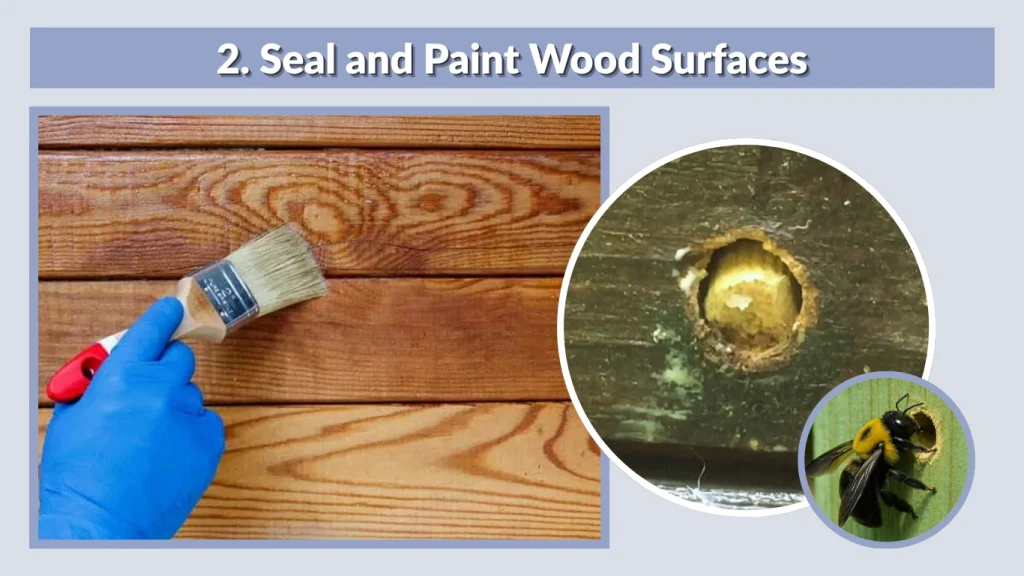
One of the most effective long-term solutions for preventing carpenter bee infestations is properly sealing and painting all exposed wood. These bees prefer soft, untreated surfaces, so a protective layer of paint or varnish acts as a natural deterrent.
Why It Works:
Carpenter bees find it difficult to penetrate painted or sealed wood. The smell and texture discourage them from drilling new holes. It’s an environmentally friendly, non-toxic prevention method that also enhances the appearance of your wooden structures.
Best Surfaces to Treat
Focus on decks, railings, pergolas, soffits, and roof eaves. These are prime spots for carpenter bee activity because they’re often shaded and made of untreated lumber.
Recommended Sealants
Use oil-based paints or polyurethane finishes for maximum protection. Clear varnishes work, but opaque paints provide stronger resistance. Make sure to repaint every one or two years, especially before spring, when carpenter bees start searching for nesting sites.
Pro Tip: If you already have existing holes, fill them before painting to prevent new bees from reusing those tunnels.
3. Use Natural Repellents (Vinegar, Citrus, and Essential Oils)
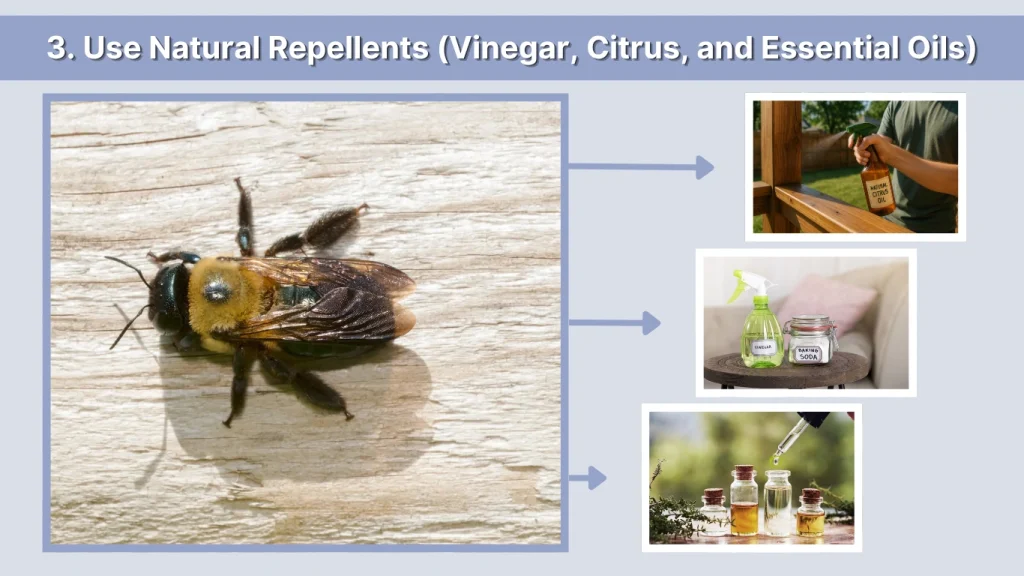
Natural repellents are safe for pets, kids, and the environment, yet they’re highly effective in driving carpenter bees away from wood. These homemade remedies rely on strong odors that bees dislike.
Vinegar Spray
Mix equal parts of white vinegar and water in a spray bottle. Spray directly into carpenter bee holes and around nesting areas daily for several days. The acidic scent disrupts their sense of smell, forcing them to abandon the location.
Citrus Oil Spray
Carpenter bees detest the smell of citrus. Boil lemon or orange peels in water for about 15 minutes, let it cool, and transfer the liquid into a spray bottle. Apply it generously to wooden surfaces, especially under decks and eaves.
Essential Oils
Strong-smelling essential oils like peppermint, tea tree, eucalyptus, and citronella work wonderfully. Mix 10 drops of oil with water and a few drops of dish soap, then spray on the affected areas.
Application Tips
- Apply sprays once daily for three to five days, or until bees disappear.
- Reapply after heavy rain.
- Always test on a small wood section first to avoid discoloration.
These natural repellents offer a chemical-free, safe way to repel carpenter bees, making them ideal for eco-conscious homeowners.
4. WD-40 Spray Method
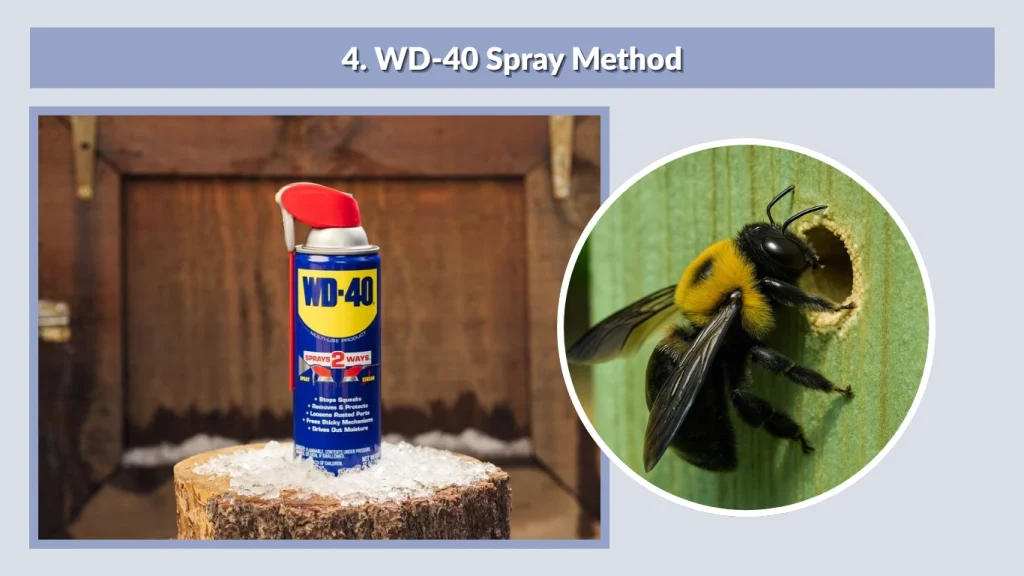
WD-40 isn’t just for loosening bolts—it’s also surprisingly effective in eliminating carpenter bees. Its strong odor and oily consistency either repel or suffocate bees hiding in their tunnels.
How It Works
When sprayed into bee holes, WD-40 coats the inside of the tunnel, cutting off oxygen and forcing bees out. The scent lingers, discouraging new ones from nesting there again.
Step-by-Step Guide
- Locate all active carpenter bee holes.
- Spray WD-40 directly into each hole for two to three seconds.
- Wait at least 24 hours to ensure all bees inside have been driven out or killed.
- Plug the holes with caulk, wood putty, or dowels.
Safety Tip:
Always wear gloves and a mask when spraying. WD-40 can irritate skin or eyes, and it’s flammable, so avoid using it near open flames or plants.
Note:
This method is best for homeowners who don’t mind using chemical options. For a natural alternative, use a vinegar or citrus-based solution instead.
5. Plug Carpenter Bee Holes and Nesting Sites

Once you’ve eliminated the bees or ensured they’ve left, it’s time to seal up the holes to prevent reinfestation. Carpenter bees are drawn to old tunnels, and leaving them open invites new bees every season.
When to Seal
The best time to plug holes is in the evening when bees are less active. This ensures you don’t trap any live bees inside, which could cause further damage as they try to escape.
How to Plug
Use wooden dowels, caulk, or wood putty to fill the holes completely. Smooth out the surface and let it dry before painting or sealing over it. If you have many holes, a putty knife helps cover them evenly.
Prevent Future Tunnels
After sealing, paint or varnish the area to discourage bees from drilling again. A bright, glossy finish works best since bees prefer dull, untreated textures.
Plugging holes not only prevents reinfestation but also restores the strength of your woodwork, keeping it sturdy and visually appealing.
6. Build and Install Carpenter Bee Traps
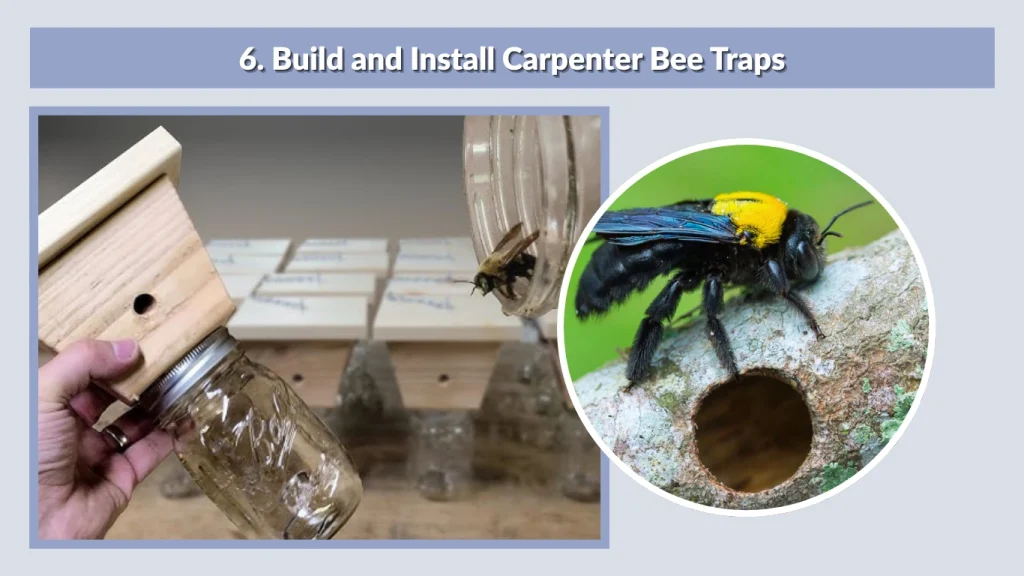
Carpenter bee traps are one of the most practical long-term deterrents. They mimic bee nesting tunnels but lead the insects into a container they can’t escape from.
Why It Works:
Traps attract carpenter bees by resembling their natural nesting environment. Once inside, the bees follow the light and end up stuck in the attached jar.
DIY Trap Option
You can make an effective trap at home with simple tools:
- Cut a small wooden box with angled holes (about ½ inch wide).
- Attach a clear plastic jar or bottle to the bottom.
- Hang it near areas where bees are active.
Placement Tips
- Position traps near decks, eaves, fences, and posts, especially where you’ve seen bees before.
- Install in early spring before nesting begins.
- Empty and clean the jars weekly.
If you prefer convenience, pre-made traps are available at most hardware stores. Over time, these traps significantly reduce carpenter bee populations and prevent new infestations.
7. Use Sound and Light to Repel Bees
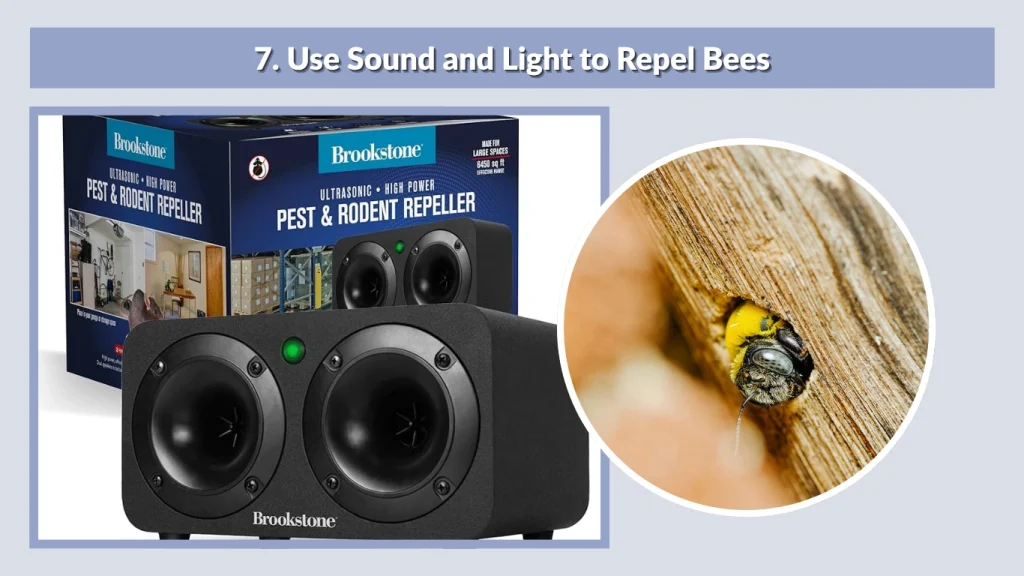
Carpenter bees are naturally sensitive to noise and light. They prefer dark, quiet places for nesting, so disrupting these conditions makes your home unappealing to them. This approach is especially useful for porches, decks, and eaves where they commonly burrow.
Sound Deterrent:
Ultrasonic devices or portable speakers that emit high-frequency vibrations can drive bees away without harming them. Bees find these vibrations irritating, and they usually abandon the area within a few days. You can also use power tools briefly near infested areas to create vibrations that disturb them.
Light Repellent:
Carpenter bees avoid bright, well-lit areas. Installing motion-activated or solar-powered lights near potential nesting sites helps discourage them. The constant brightness interferes with their natural nesting behavior.
Extra Prevention
Keep wooden structures illuminated and noisy during the spring and early summer months when carpenter bees are most active. Combining both sound and light deterrents ensures bees move on without causing further damage. This humane method works best when paired with sealing and repainting wood after bees vacate the area.
8. Encourage Natural Predators & Maintain Clean Surroundings
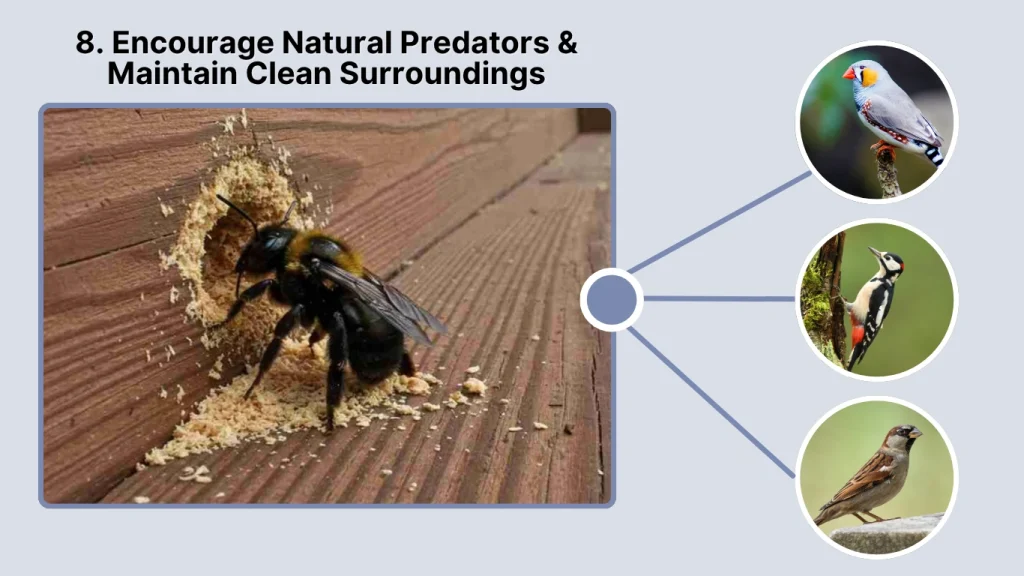
Nature offers its own pest control system—birds like woodpeckers, sparrows, and cardinals naturally feed on carpenter bee larvae. Encouraging these species in your yard can help control bee populations.
Bird Allies:
Install bird feeders or birdhouses near infested areas to attract natural predators. Woodpeckers are especially effective since they can detect larvae hidden in wooden tunnels. While they may cause minor peck marks, it’s still far less damage than what the bees can do over time.
Keep Surroundings Clean:
Carpenter bees are drawn to decaying or unpainted wood. Keep your yard clean by removing old lumber, firewood piles, or damaged boards. Inspect outdoor furniture, playsets, and fences regularly. The cleaner and better-maintained your environment is, the fewer bees you’ll attract.
Regular Maintenance
Every spring, inspect all wooden surfaces for signs of holes or sawdust. Plug new holes immediately, repaint affected areas, and reapply sealant if needed. Consistent upkeep ensures bees won’t return year after year.
Additional Tips for Long-Term Prevention
To ensure carpenter bees don’t make a comeback, a combination of prevention, maintenance, and deterrents is essential. Here are some effective long-term strategies:
- Avoid Softwoods:
Use hardwoods like oak, maple, or mahogany for outdoor construction. Carpenter bees prefer softer woods like pine, cedar, and redwood. - Paint Early in Spring:
Bees become active as temperatures rise. Painting or sealing wooden structures in late winter or early spring keeps them from nesting. - Install Decoy Wasp Nests:
Carpenter bees avoid areas they think are already occupied. Hanging artificial wasp nests can trick them into staying away. - Cover Unused Holes:
If you find small gaps or natural holes in wood, seal them promptly. Even old nail holes can attract bees looking for an easy start. - Combine Methods:
The best results come from using multiple strategies together—natural sprays, traps, sealing, and light deterrents form a strong defense against future infestations.
Consistent monitoring and quick action ensure that your wooden structures stay beautiful, intact, and free of carpenter bee damage.
FAQs
1. How can I get rid of carpenter bees naturally?
Natural repellents like vinegar, citrus oil, or peppermint spray are highly effective against carpenter bees. These strong-smelling solutions irritate their senses and make them abandon nesting sites. Spray affected wood daily for several days and reapply after rain for best results. Pairing this with sealing and repainting wood provides long-term protection.
2. Does WD-40 kill or repel carpenter bees?
Yes, WD-40 both kills and repels carpenter bees. Its oily texture suffocates bees inside their tunnels, while its smell prevents new ones from returning. Spray directly into each hole for a few seconds, wait 24 hours, and then seal the hole with caulk or wood filler. Always wear gloves and work carefully in ventilated areas.
3. Can vinegar permanently remove carpenter bees?
Vinegar works well as a natural repellent but isn’t a permanent fix on its own. While the acidity drives bees away temporarily, they may return if the wood remains untreated. To achieve permanent results, combine vinegar spraying with sealing, painting, and installing traps to stop future infestations completely.
4. How do I keep carpenter bees from coming back every year?
To prevent carpenter bees from returning, paint or seal exposed wood annually, especially before spring. Hang carpenter bee traps early in the season and keep your yard clean of untreated wood. Spraying citrus or peppermint oil weekly during bee season reinforces your protection, discouraging them from nesting again.
5. How can I get rid of carpenter bees without killing them?
If you prefer humane methods, start by using natural scents like citrus or peppermint to repel them. Then, play music or install lights near infested areas—bees will relocate on their own. Once they’ve left, plug all holes with wood filler and paint the surface. This approach keeps your property safe without harming the bees.
