

Biting midges are tiny blood-sucking insects belonging to the family Ceratopogonidae. They are commonly known as no-see-ums, sandflies, punkies, or simply midges. Measuring only 1–3 millimeters in length, they are so small that they can pass through ordinary window screens, which explains why many people feel “bitten by something invisible.”
Unlike mosquitoes, which are easily noticeable, biting midges often go undetected until after they’ve already taken a bite. Despite their size, they inflict disproportionately painful bites that can leave itchy welts, rashes, or even allergic reactions on sensitive individuals.
Biting midges thrive in humid, warm regions and are particularly notorious in Florida, coastal areas, and swampy environments. They are active mainly at dawn and dusk, when conditions are cooler and more humid.
Biting Midges vs. Non-Biting Midges
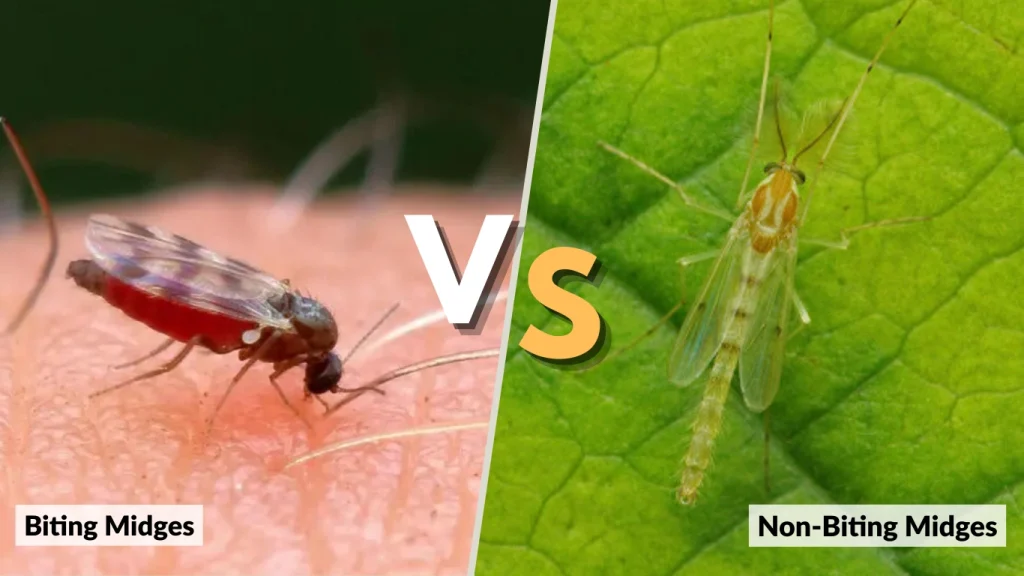
Not all midges are bloodsuckers. It is important to distinguish biting midges from non-biting midges, as the two are often confused due to their similar appearance.
Key Differences
- Biting Midges (Ceratopogonidae): Females require blood to produce eggs. They bite humans, pets, and livestock.
- Non-Biting Midges (Chironomidae): Resemble mosquitoes but do not bite. They feed on plant material or detritus and are completely harmless to humans.
Larvae Differences
- Biting Midge Larvae: Found in moist soil, decaying vegetation, or muddy areas where they feed on organic matter.
- Non-Biting Midge Larvae: Aquatic and often called “bloodworms” due to their red coloration, caused by hemoglobin-like proteins that help them survive in low oxygen.
Identification in Pictures
When magnified, biting midges have short antennae and piercing mouthparts, while non-biting midges have plumose (feathery) antennae and lack biting organs.
Where Do Biting Midges Live?

Biting midges are distributed worldwide but are most problematic in areas with high humidity, standing water, or coastal environments.
Global Distribution
These insects can be found on every continent except Antarctica. They are especially common in tropical and subtropical climates, where moist soil provides perfect breeding conditions.
U.S. Hotspots
In the United States, biting midges are a well-known nuisance in:
- Florida: Beaches and wetlands are heavily infested.
- Texas & Georgia: High activity in warm, swampy areas.
- California: Common in coastal marshes and inland lakes.
- Northern States (Michigan, Wisconsin, Ohio): Seasonal outbreaks during summer.
Seasonal Activity
Biting midges are most active during spring and summer. They typically swarm at dawn and dusk, when temperatures are moderate and humidity levels rise.
Biting Midge Life Cycle

Like mosquitoes, biting midges go through a complete life cycle: egg, larva, pupa, and adult.
Eggs
Female midges lay eggs in moist environments—mud, damp soil, rotting vegetation, or salt marshes. Each female can lay up to 100–200 eggs per cycle.
Larvae
The larvae are tiny, worm-like creatures that feed on organic debris. Depending on temperature and moisture, the larval stage may last two weeks to several months.
Pupae
After feeding and growing, larvae transform into pupae, a short stage that lasts a few days before adulthood.
Adult Midges
Adult midges live for 2–6 weeks. Only females bite, as they need blood to develop their eggs. Males feed on nectar and plant juices.
Biting Midge Bites

Biting midge bites are notorious for causing discomfort far greater than their size would suggest.
How They Bite
Biting midges have cutting mouthparts that slice the skin rather than piercing it like mosquitoes. They then lap up the blood, injecting saliva that contains anticoagulants.
What Bites Look Like
- Small red dots or welts
- Clusters of bites close together
- Intense itching and burning sensation
Symptoms
- Localized swelling
- Severe itchiness lasting hours or days
- In some cases, blister-like lesions
Allergic Reactions
Some people develop hypersensitivity reactions to midge saliva, which can cause large, inflamed patches of skin, secondary infections from scratching, or even systemic allergic responses.
Biting Midges vs. Mosquitoes & Gnats

Because of their tiny size, biting midges are often confused with mosquitoes or gnats, but there are key differences.
Size Comparison
- Biting Midges: Only 1–3 mm long — almost invisible to the naked eye.
- Mosquitoes: Much larger at 3–6 mm, with long legs and wings.
- Gnats: Typically 2–5 mm, often non-biting species, but some can bite.
Bite Differences
- Midges: Cause clustered bites that are extremely itchy and painful.
- Mosquitoes: Leave larger, isolated welts but usually not in dense clusters.
- Gnats: Can leave small punctures but generally less irritating.
Behavior Differences
- Midges swarm in huge numbers, making it possible to get dozens of bites in minutes.
- Mosquitoes bite more selectively, targeting one person at a time.
- Gnats may hover annoyingly but do not always bite.
Are Biting Midges Dangerous?
Biting midges are mostly a nuisance pest, but their bites can have health impacts.
Painful Nuisance
The immediate effect of a bite is intense itching and discomfort. For people with sensitive skin, bites can turn into raised red bumps that last several days.
Disease Transmission
Unlike mosquitoes, biting midges rarely spread human diseases. However, in some regions they transmit livestock and wildlife illnesses, such as:
- Bluetongue virus in sheep and cattle
- Epizootic hemorrhagic disease (EHD) in deer
Risks for Pets
Dogs, horses, and other animals can suffer allergic reactions from repeated bites. In horses, “sweet itch” is a common hypersensitivity to midge saliva, causing hair loss and severe scratching.
How to Treat Biting Midge Bites
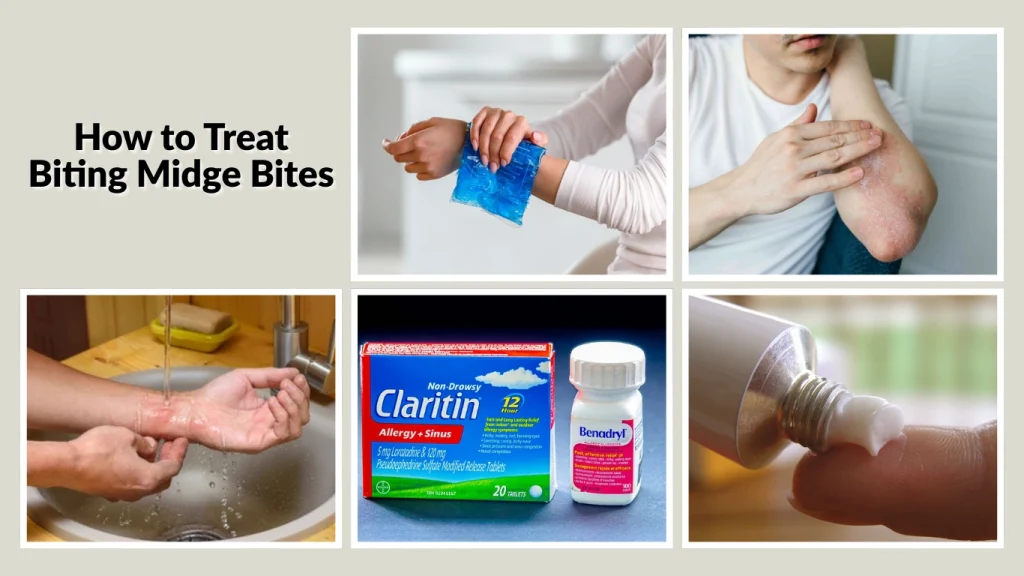
While midge bites are not usually dangerous, the symptoms can be very uncomfortable.
First Aid
- Wash the bite area with soap and cool water.
- Apply a cold compress or ice pack to reduce swelling.
- Avoid scratching to prevent infection.
Medications
- Antihistamines (oral) can help reduce itching and allergic responses.
- Topical corticosteroid creams relieve inflammation.
- Calamine lotion or anti-itch gels soothe irritation.
Home Remedies
- Aloe vera gel to cool the skin.
- Oatmeal paste applied to bites to relieve itching.
- Tea tree oil or lavender oil (diluted) for natural relief.
When to See a Doctor
Seek medical attention if:
- You develop severe swelling or blistering.
- Symptoms spread beyond the bite site.
- Signs of secondary infection appear (pus, warmth, pain).
How to Get Rid of Biting Midges

Controlling biting midges requires both indoor and outdoor strategies, since they breed in moist environments.
In the House
- Install fine mesh insect screens (standard mosquito mesh is too large).
- Use air conditioning, since midges avoid cool, dry environments.
- Set up insect light traps to reduce populations indoors.
Outdoors
- Remove or manage standing water, damp soil, and rotting vegetation.
- Keep lawns and vegetation trimmed, reducing shady resting areas.
- Use CO₂ or suction traps, which attract and capture midges effectively.
Killing Midges
In severe cases, residual insecticides or fogging treatments may be applied around homes, but these should be done carefully to avoid harming beneficial insects.
Best Repellents for Biting Midges

Since midges are relentless biters, repellents are essential for personal protection.
Chemical Repellents
- DEET (20–30%) is highly effective against midges.
- Picaridin offers long-lasting protection and is less greasy.
- Permethrin-treated clothing provides a strong barrier.
Natural Options
- Lemon eucalyptus oil (PMD) is the best plant-based repellent.
- Citronella, lavender, or peppermint oils can help but are less reliable.
Bug Sprays & Lotions
Popular commercial sprays marketed as “no-see-um repellents” often contain DEET or picaridin. For sensitive skin, lotion-based repellents can be gentler while still effective.
Biting Midges in Florida & Other States
Biting midges are common across the U.S., but their impact is most severe in warm, humid states.
Florida
Florida is infamous for biting midges, especially along beaches, wetlands, and mangroves. Tourists often encounter them at dawn and dusk, leading to complaints of mysterious itchy bites. In coastal towns, they’re simply called no-see-ums.
Texas & Georgia
These states report heavy midge activity in coastal marshes and river basins. Summer outdoor activities are often disrupted by swarms.
Midwest & Northern States
Michigan, Wisconsin, and Ohio experience seasonal outbreaks during late spring and summer, especially near lakes and wetlands.
Western States
California, Oregon, and Washington see midges along coastal marshes and forested lakes, where swarms can be intense after heavy rains.
Pictures & Images of Biting Midges
Since biting midges are almost invisible, pictures help highlight their features.
Magnified Appearance
Under magnification, biting midges are revealed as tiny gray or black flies with short antennae and sharp mouthparts. Their wings may appear spotted or transparent.
Bite Marks on Humans
Images of bite reactions typically show clusters of red dots, sometimes raised into itchy welts. In sensitive individuals, the marks may swell into blister-like patches.
Non-Biting vs. Biting Midges
Comparative images show that non-biting midges look like small mosquitoes with long antennae, while biting midges have stockier bodies and cutting mouthparts.
Control & Prevention Strategies
Beyond repellents, long-term control of biting midges involves habitat management and physical barriers.
Barriers
- Install fine-mesh screens (16–30 mesh per inch) on windows and patios.
- Wear long-sleeved shirts and pants, especially during peak hours.
- Use head nets when camping or hiking in heavily infested areas.
Environmental Management
- Remove rotting vegetation and damp organic debris from yards.
- Improve drainage to reduce moist soil breeding grounds.
- Maintain clean animal pens and stables to minimize breeding near livestock.
Traps & Screening
- CO₂-baited traps lure midges effectively in outdoor spaces.
- Screened gazebos or tents provide bite-free zones for outdoor relaxation.
Interesting Facts About Biting Midges
Despite their tiny size, biting midges are full of surprising traits.
- A single female can lay 100–200 eggs in one cycle.
- They are attracted to carbon dioxide, sweat, and body heat, making humans easy targets.
- Swarms can include tens of thousands of individuals, making them feel inescapable.
- Their bites can outnumber mosquito bites in some regions.
- In certain cultures, they’re called “sand gnats” or “punkies,” reflecting their widespread nuisance.
FAQs About Biting Midges
What are biting midges?
Biting midges are tiny blood-feeding flies (1–3 mm) from the family Ceratopogonidae, often called no-see-ums or sandflies.
Where do biting midges live?
They are found worldwide in humid, coastal, or swampy areas, especially in Florida, Texas, Georgia, and along lakes and rivers.
How do you treat biting midge bites?
Wash the area, apply a cold compress, and use anti-itch creams or antihistamines. Severe reactions may require medical attention.
Are biting midges dangerous?
They don’t typically spread diseases to humans but can transmit livestock illnesses and cause allergic reactions in pets and people.
How do you prevent biting midge bites?
Use repellents containing DEET or picaridin, wear long clothing, and install fine mesh screens to block them indoors.
