

Biting midges are tiny blood-sucking flies from the family Ceratopogonidae, commonly known as no-see-ums, sandflies, or punkies. Their size ranges from just 1–3 millimeters, making them nearly invisible to the naked eye. Despite being so small, they are capable of inflicting painful, itchy bites that leave people wondering what bit them.
These insects are especially active in warm, humid regions and are often a nuisance near coastal areas, wetlands, and homes surrounded by vegetation. While mosquitoes are easy to spot, biting midges slip through unnoticed until after the irritation from their bites begins.
It’s important to note that not all midges bite. Non-biting midges, belonging to the family Chironomidae, look similar to mosquitoes but are harmless. Biting midges, however, feed on blood, and it is the females that bite since they require blood meals to develop their eggs.
What Attracts Midges in the House?
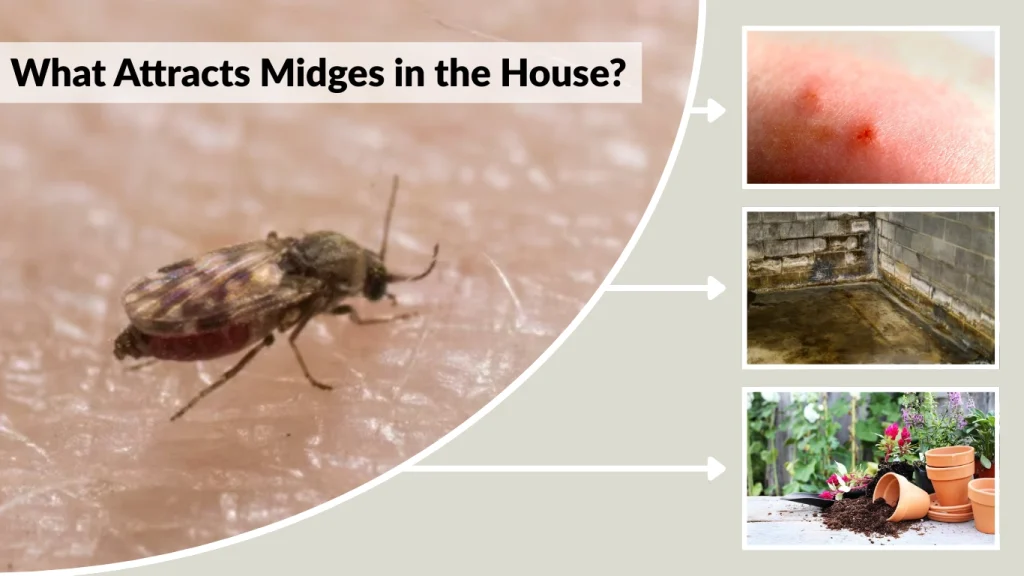
Homeowners are often puzzled about why biting midges seem to invade their living spaces. The reality is that houses provide several ideal attractants for these pests.
Moisture and Standing Water
Like mosquitoes, biting midges are drawn to moist environments. Damp basements, leaky sinks, potted plant soil, and clogged drains can provide the humidity or breeding material they need. Even something as simple as leaving water in a pet’s bowl overnight can attract them.
Lights at Night
Biting midges are phototactic, meaning they are strongly attracted to artificial lights. Porch lights, indoor lamps, and even TV screens near open windows can lure them inside. This is why people often notice them most during evenings and nighttime.
Human Presence
Midges are sensitive to carbon dioxide, body heat, and sweat. This makes humans their natural target. Even inside houses, they can detect CO₂ exhaled during breathing and follow it directly to sleeping or resting people.
By understanding these attractants, homeowners can take proactive steps to make their homes less appealing to these pests.
Biting Midge Bites on Humans
One of the most frustrating aspects of biting midges indoors is their painful and persistent bites.
What Bites Look Like
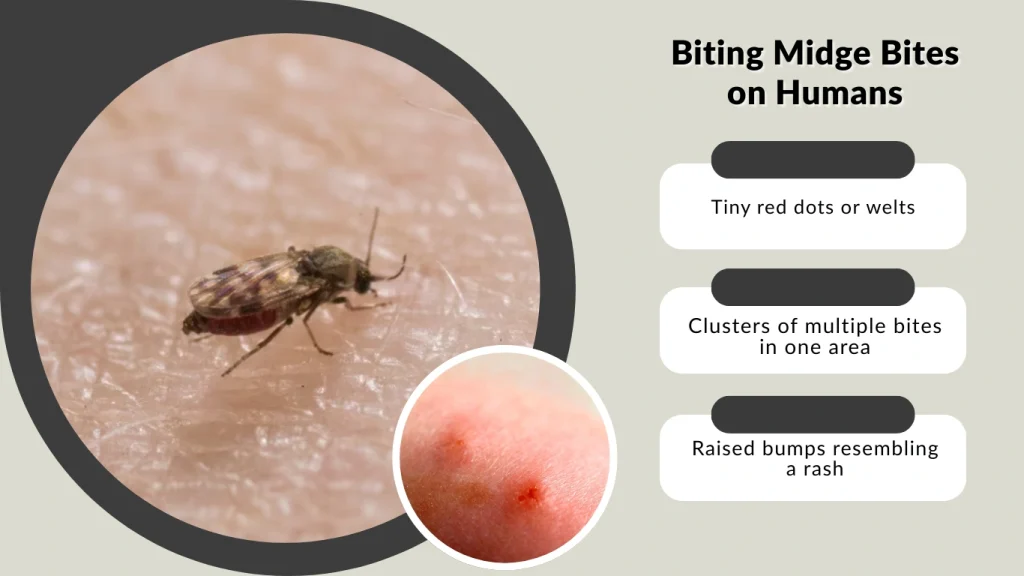
Biting midge bites often appear as:
- Tiny red dots or welts
- Clusters of multiple bites in one area
- Raised bumps resembling a rash
Because midges often swarm, it’s common to have dozens of bites in a short period, usually on exposed skin like arms, legs, and neck.
Bite Symptoms
- Intense itching
- Burning or stinging sensation
- Mild swelling and redness
For many people, the itchiness peaks within the first 24 hours but may linger for several days.
How Long Do Midge Bites Last?
Most bites last between 2–5 days. However, those with sensitive skin or allergies may experience irritation for up to two weeks. Continuous scratching can worsen symptoms and lead to secondary infections.
Pictures & Images (description)
Photos of midge bites often show tight clusters of small red bumps, quite different from mosquito bites, which are larger and more spread out. Some images reveal swelling similar to an allergic rash, especially in children or sensitive adults.
How to Get Rid of Biting Midges in the House
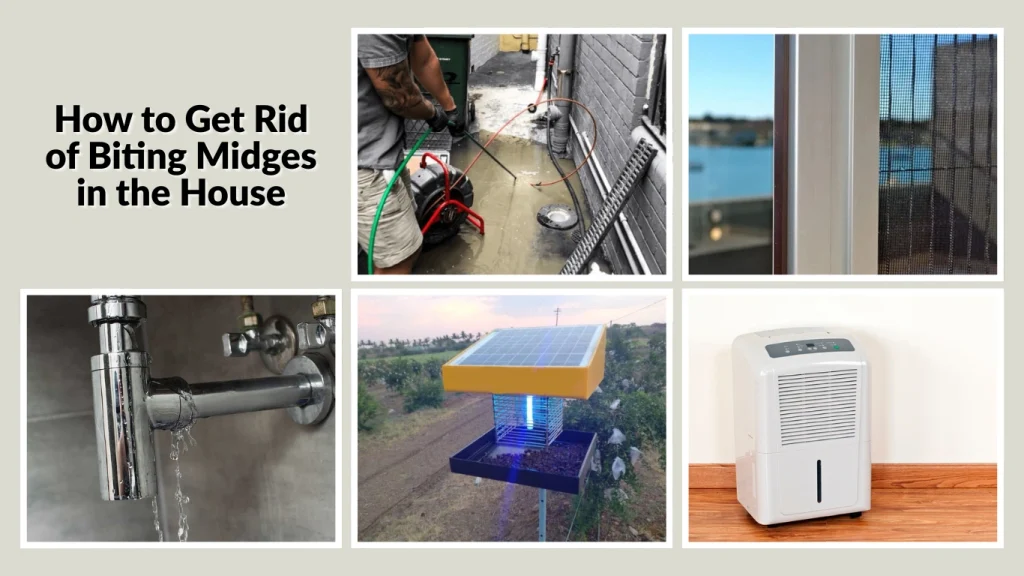
Once midges find their way indoors, they can be very persistent. Eliminating them requires both prevention and active control measures.
Step 1 – Remove Breeding Sources
- Fix leaky pipes and dripping faucets.
- Clean drains regularly to prevent buildup of organic material.
- Avoid leaving standing water in pet bowls or plant saucers.
Step 2 – Improve Barriers
- Install fine mesh screens (at least 16–30 mesh per inch) since normal mosquito screens are too wide.
- Seal cracks around windows, doors, and vents where midges can enter.
Step 3 – Use Traps & Lights
- UV light traps can attract and kill flying midges.
- DIY vinegar or fruit traps can help capture them indoors.
- Sticky fly strips may also reduce their numbers.
Step 4 – Reduce Indoor Humidity
- Use air conditioning or dehumidifiers to make indoor air less suitable for midges.
- Keep kitchens and bathrooms well-ventilated.
By combining these strategies, you can significantly cut down indoor infestations.
How to Get Rid of Biting Midges at Night
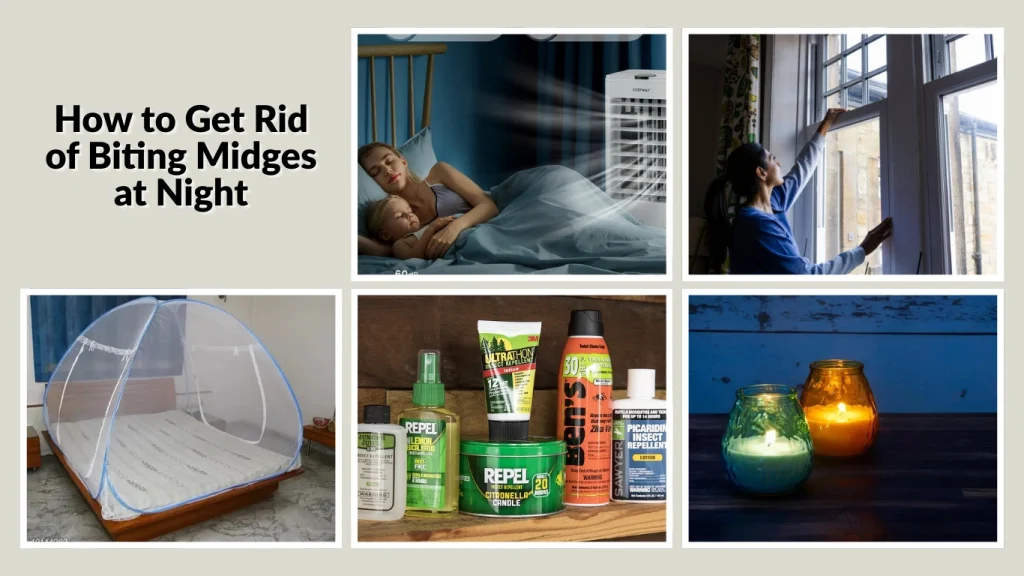
Nighttime is when biting midges are most troublesome since they are drawn to light and humans at rest.
Turn Off Unnecessary Lights
Since midges are highly attracted to light, turning off or dimming unnecessary lamps near windows and doors can help. Outdoor porch lights should be fitted with yellow bug bulbs, which are less attractive to insects.
Sleep Protection
- Use bed nets with fine mesh to create a physical barrier.
- Sleep with air conditioning or fans, since midges avoid cooler, moving air.
- Close doors and windows tightly in the evening.
Nighttime Repellents
- Apply DEET- or picaridin-based repellents before bedtime if midges are active indoors.
- Burn citronella candles or use essential oil diffusers with eucalyptus or lavender to repel them naturally.
With these steps, you can reduce night-time bites and sleep comfortably even in high-risk areas.
What Kills Midges in the House Naturally?
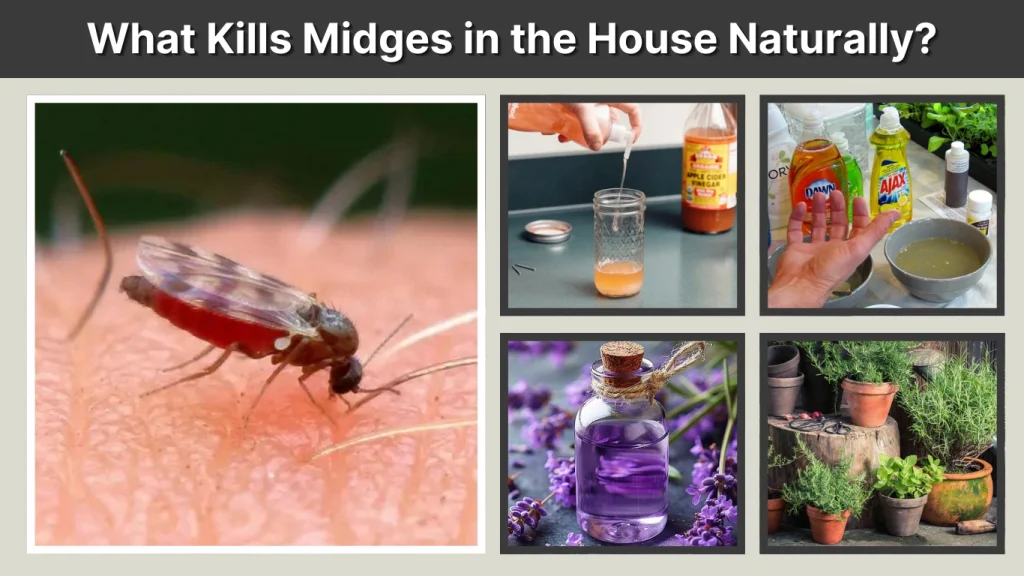
For those who prefer eco-friendly and chemical-free solutions, several natural methods can help control biting midges indoors.
Vinegar Traps
Fill a shallow dish with apple cider vinegar and add a few drops of dish soap. The smell attracts midges, while the soap breaks surface tension, causing them to sink and drown.
Soap Water Solution
A simple bowl of soapy water placed near lights at night can attract and kill midges. They are drawn to the reflection and end up trapped.
Essential Oils
Certain essential oils are known to repel biting midges, such as:
- Lavender oil – Soothing and repels midges.
- Peppermint oil – Strong smell midges dislike.
- Lemon eucalyptus oil – One of the most effective natural repellents.
Indoor Plants
Plants like basil, marigold, and rosemary are natural deterrents. Keeping them near windows or doorways may reduce midge entry.
Best Repellents & Sprays for Biting Midges Indoors
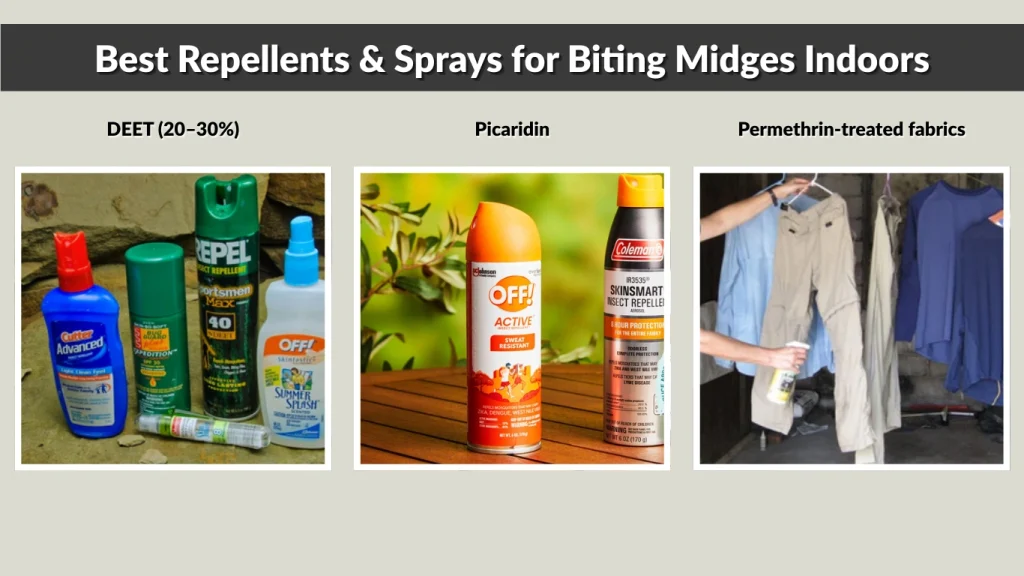
Sometimes, natural methods alone are not enough. In such cases, repellents and sprays provide fast and reliable protection.
Chemical Repellents
- DEET (20–30%) – Effective for several hours, safe when used indoors in well-ventilated areas.
- Picaridin – Less greasy and odorless compared to DEET.
- Permethrin-treated fabrics – Works well on curtains, nets, and clothing.
Natural Sprays
If you prefer non-chemical options, lemon eucalyptus oil sprays and citronella-based products can be effective indoors. They are safe around children and pets when diluted properly.
Bug Sprays for Home Use
Several commercial sprays are designed for indoor insect control. Choose low-toxicity formulations meant for indoor use to avoid harming pets and people. Regular spraying around entry points can help maintain a midge-free home.
Prevention Tips to Keep Midges Out of Your Home
Prevention is always better than cure. By making your home less attractive to midges, you can avoid infestations altogether.
Seal Entry Points
- Inspect and seal cracks and gaps around doors and windows.
- Replace torn or loose screens with fine mesh (at least 16–30 mesh per inch).
Maintain Outdoor Spaces
- Remove standing water from gutters, birdbaths, and plant pots.
- Trim overgrown vegetation and grass to eliminate shady resting areas.
- Keep compost piles covered, as decaying matter attracts midges.
Use Protective Screening
- Install porch screens with ultra-fine mesh.
- Consider screened gazebos or tents for outdoor sitting areas.
- Keep garage and basement vents covered with mesh.
By combining these measures with repellents, you can significantly reduce midge activity indoors and outdoors.
Interesting Facts About Biting Midges
Even though they’re frustrating pests, biting midges are fascinating from a biological perspective.
- A female biting midge can lay 100–200 eggs after a single blood meal.
- They are attracted not only to carbon dioxide but also to lactic acid in human sweat.
- Their small size allows them to pass through standard mosquito nets.
- Biting midges are so notorious in Florida that locals simply call them “no-see-ums.”
- Despite their nuisance, they play an ecological role by pollinating plants and serving as food for fish and birds.
FAQs About Midges in the House
How long do midge bites last?
Most bites last 2–5 days, though people with allergies may experience irritation for up to two weeks.
What attracts midges in the house at night?
They are drawn to lights, carbon dioxide from breathing, and indoor moisture.
How do I kill midges naturally?
You can use vinegar traps, soapy water, essential oils, or indoor plants like basil and marigold.
Can midges live inside houses permanently?
No. While they can survive indoors for several days, they usually need outdoor breeding sites like damp soil or wetlands.
