
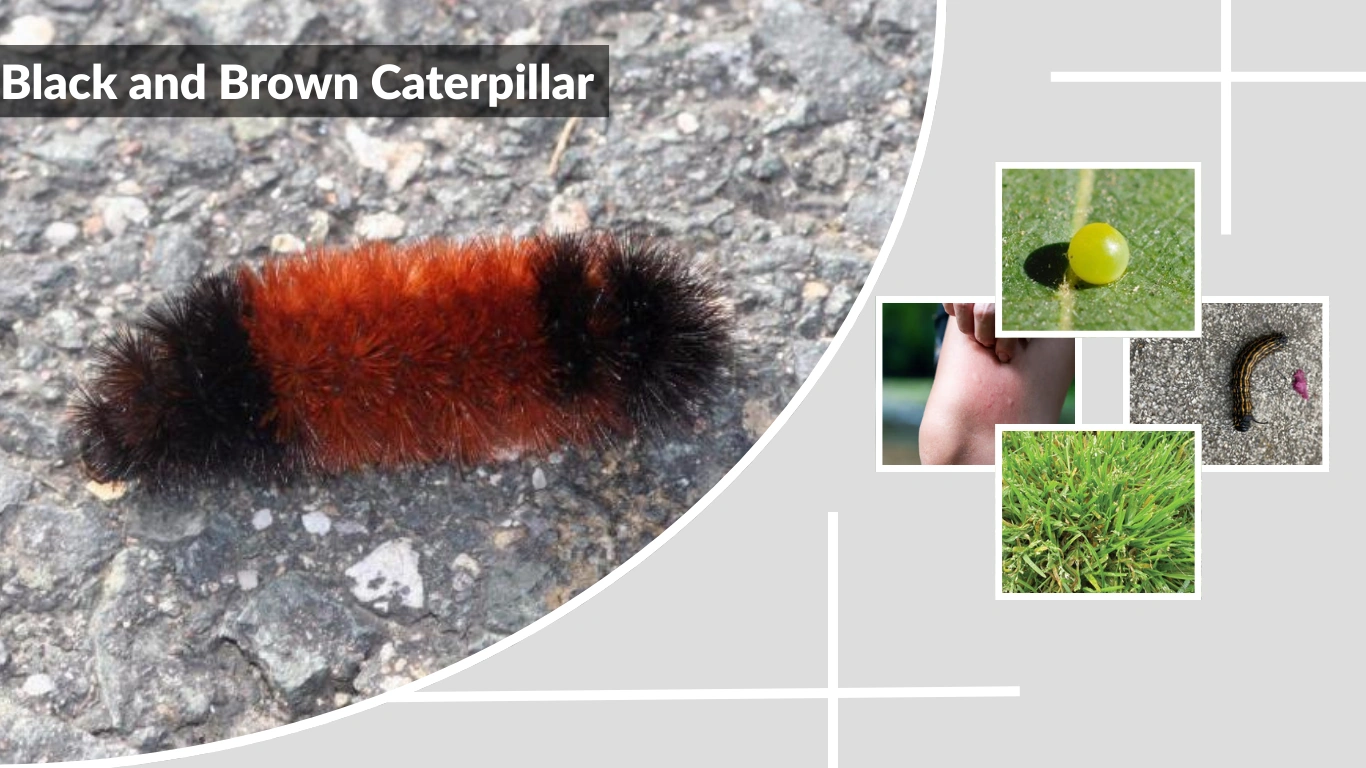
Black and brown caterpillars are some of the most familiar larvae spotted in gardens, fields, and along roadsides. Their fuzzy coats and distinctive color bands often capture attention, raising questions about whether they are dangerous, what they eat, and what they eventually turn into. These caterpillars are best known as woolly bears, the larval form of the Isabella Tiger Moth, and have long been tied to folklore about predicting the weather. Despite their intimidating appearance, they are harmless insects that play an important role in ecosystems. Understanding how to identify them, their life cycle, and their ecological value helps reveal why they deserve respect rather than fear.
Identification of Black and Brown Caterpillars
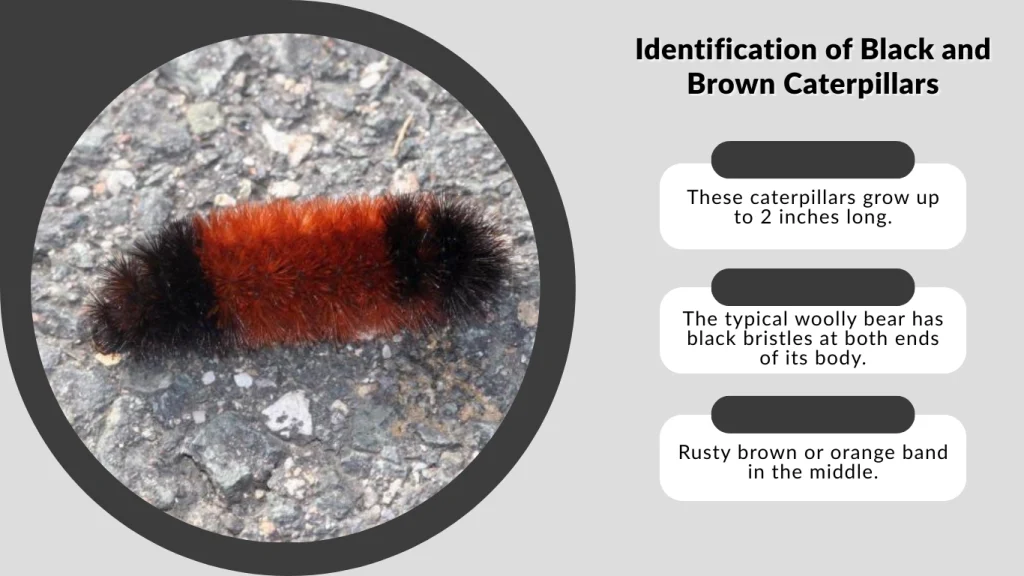
The black and brown caterpillar, commonly known as the woolly bear, is easy to identify thanks to its banded coloration. The typical woolly bear has black bristles at both ends of its body, with a wide rusty brown or orange band in the middle. This gives it the appearance of a fuzzy segmented worm wrapped in two dark coats.
On average, these caterpillars grow up to 2 inches long. Their dense hairs, called setae, serve as protection against predators. When touched, they often curl into a tight ball, making the hairs more prominent and shielding their softer underside.
While most people think of the woolly bear pattern, some black and brown caterpillars may appear almost entirely black or mostly brown. Color variation depends on their age, diet, and even local climate. This variation is partly what led to folklore about their supposed weather-predicting powers.
Common Types of Black and Brown Caterpillars
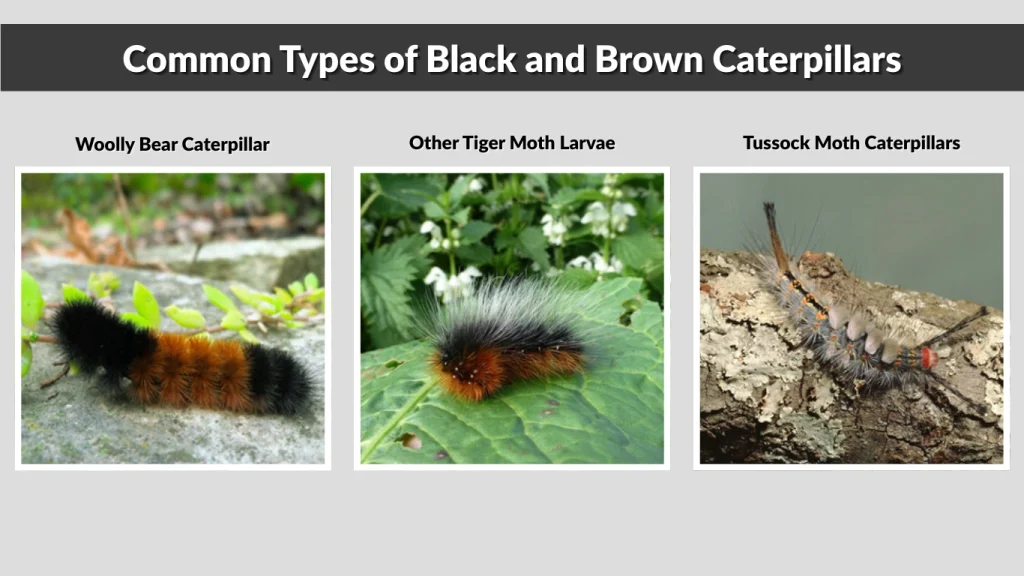
The most well-known type is the woolly bear caterpillar, the larval stage of the Isabella Tiger Moth (Pyrrharctia isabella). However, other fuzzy caterpillars can also appear black and brown and are sometimes confused with woolly bears.
- Woolly Bear Caterpillar: Recognizable by its black ends and rusty brown center band. Very common across North America.
- Other Tiger Moth Larvae: Certain related species also appear bristly and may show dark and brownish patterns, though usually less distinctly banded.
- Tussock Moth Caterpillars: Some species in Texas and the southern U.S. are black or brown and fuzzy, but they often have tufts or longer hairs that distinguish them from woolly bears.
Among these, the woolly bear remains the most widespread and iconic, particularly in the United States.
Are Black and Brown Caterpillars Poisonous?

Despite their spiky look, black and brown caterpillars are not poisonous or venomous. They do not sting, bite, or inject toxins. However, their bristles can sometimes cause mild skin irritation if handled, particularly in people with sensitive skin. This irritation is caused by the hairs themselves, which may break off and create a scratchy or itchy sensation.
For pets, such as cats and dogs, attempting to chew on these caterpillars may result in irritation inside the mouth. While uncomfortable, this is not dangerous, and most animals learn to avoid them after a single encounter.
The hairs are a classic defensive adaptation. Birds, mammals, and reptiles that attempt to eat the caterpillar often find the texture unpleasant, reducing the likelihood of predation. This makes the caterpillar more likely to survive until it can complete its life cycle.
What Do Black and Brown Caterpillars Turn Into?
One of the most common questions about woolly bears is what they become. These fuzzy larvae transform into the Isabella Tiger Moth, a medium-sized moth with yellowish-orange wings decorated with scattered black spots. While the caterpillar stage is striking and easily recognized, the adult moth is more modest in appearance.
The transformation process, known as metamorphosis, involves the caterpillar spinning a cocoon and entering the pupal stage. After several weeks or months, depending on the season, the adult moth emerges. Unlike butterflies, moths are usually nocturnal, and the Isabella Tiger Moth is no exception, flying at night to feed and mate.
Life Cycle of Black and Brown Caterpillars
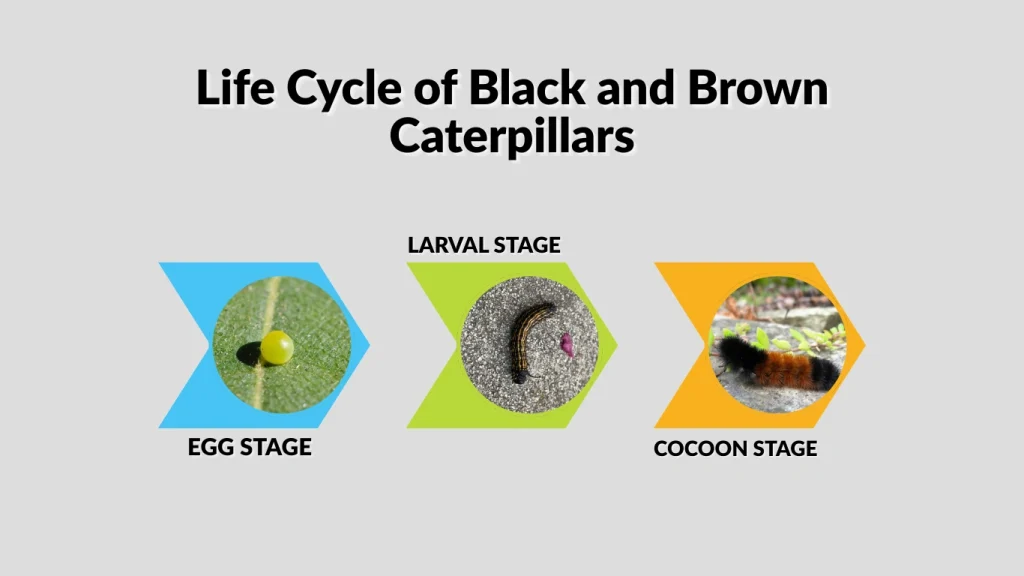
Like all moths, black and brown caterpillars undergo complete metamorphosis, with four main stages: egg, larva, pupa, and adult.
Egg Stage
The cycle begins when female Isabella Tiger Moths lay clusters of eggs on low-growing plants. These eggs are tiny and difficult to spot without close inspection. They hatch in a matter of days or weeks, depending on environmental conditions.
Larval Stage
Once hatched, the caterpillars immediately begin feeding. This is the stage most people notice, as the fuzzy black and brown bands become more obvious as the larvae grow. Throughout this stage, the caterpillar molts several times, shedding its skin to accommodate rapid growth.
In northern regions, woolly bears are often seen in the fall, crawling across roads and sidewalks in search of safe places to spend the winter. In southern climates, including parts of Texas, they may remain active longer, taking advantage of milder winters.
Cocoon Stage (brief intro before expanding later)
When fully grown, the caterpillar spins a cocoon made from silk mixed with its own hairs. Inside, it transforms into a pupa, preparing for the final stage of its life cycle.
Cocoon Stage
When the black and brown caterpillar reaches full size, it stops feeding and searches for a protected location to spin its cocoon. Using silk threads combined with some of its bristles, it creates a fuzzy, protective case around itself. Inside, the caterpillar enters the pupal stage.
This stage is a time of transformation, as the caterpillar’s body undergoes dramatic changes. Though it may appear lifeless from the outside, inside the pupa tissues are reorganized to form the moth. Depending on the climate, this stage can last several weeks or even the entire winter before the adult moth emerges.
Adult Moth Stage
From the cocoon emerges the Isabella Tiger Moth. Adult moths are not as eye-catching as their caterpillar form, but they have their own beauty. Their wings are yellowish-orange with black spots, and they usually have a wingspan of about 2 inches. Unlike their caterpillar stage, adults are nocturnal and spend their time searching for mates and laying eggs to start the cycle again.
The moth stage is relatively short-lived compared to the long larval period. While the caterpillar can live for several months, the moth often survives only a few weeks. During this time, its primary role is reproduction.
Habitat and Distribution
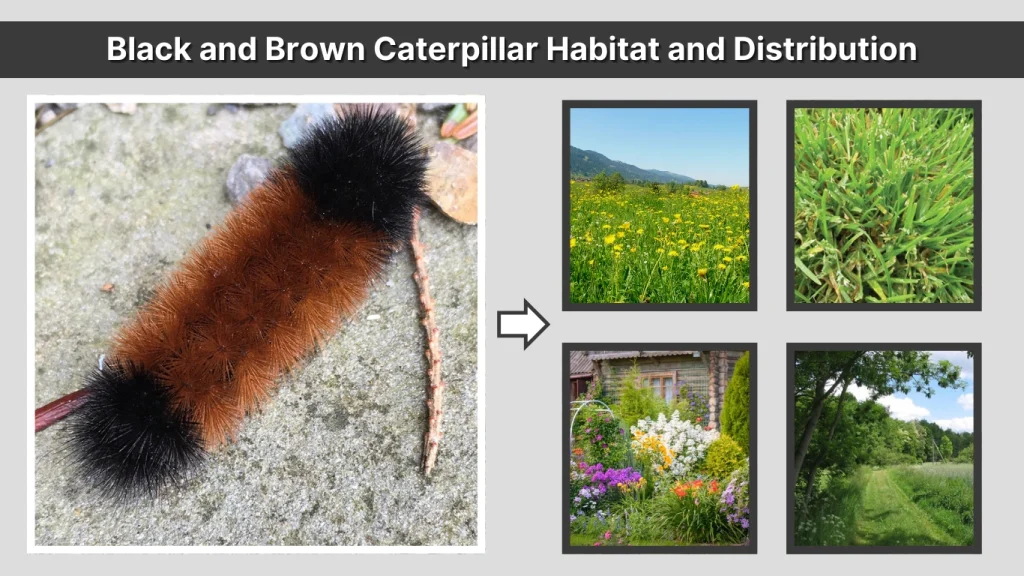
Black and brown caterpillars are widespread across North America and are especially well-known in the United States. They thrive in a variety of habitats, including:
- Meadows and open fields
- Roadsides and grassy ditches
- Gardens and backyards
- Woodland edges
They are highly adaptable and can survive in both rural and urban settings. In northern states, they are particularly visible during autumn when they cross roads in large numbers to seek overwintering sites. In southern regions, they may be active for longer periods because winters are less severe.
Diet of Black and Brown Caterpillars
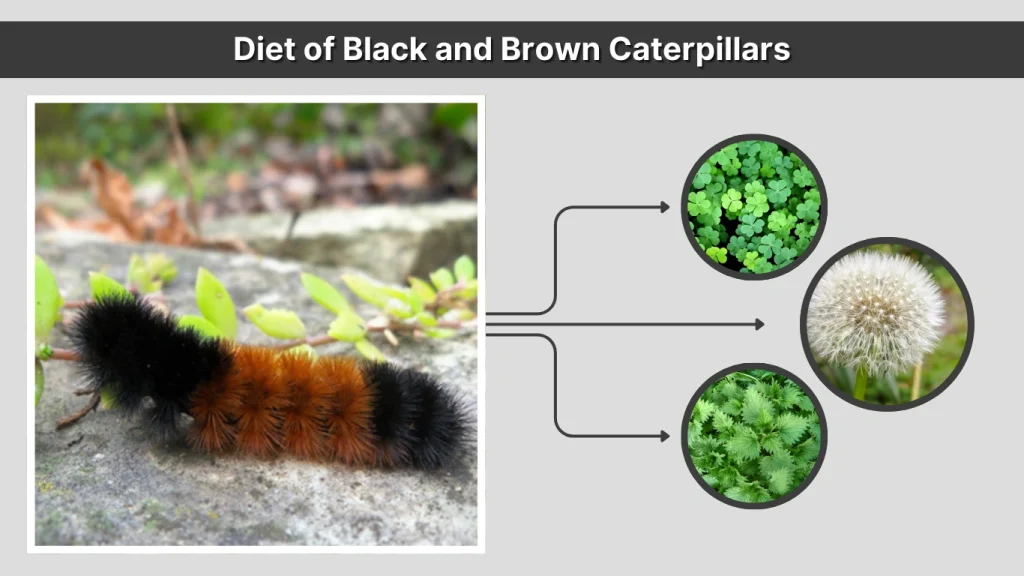
These caterpillars are generalist feeders, meaning they eat a wide variety of plants. This flexibility is one reason they are so successful across different regions. Common foods include:
- Clover
- Dandelions
- Plantains
- Nettles
- Grasses and garden weeds
While they may occasionally nibble on garden plants, they rarely cause serious damage. Their feeding is usually spread out and limited to weeds or wild plants, making them far less of a pest than other caterpillar species.
Behavior and Adaptations
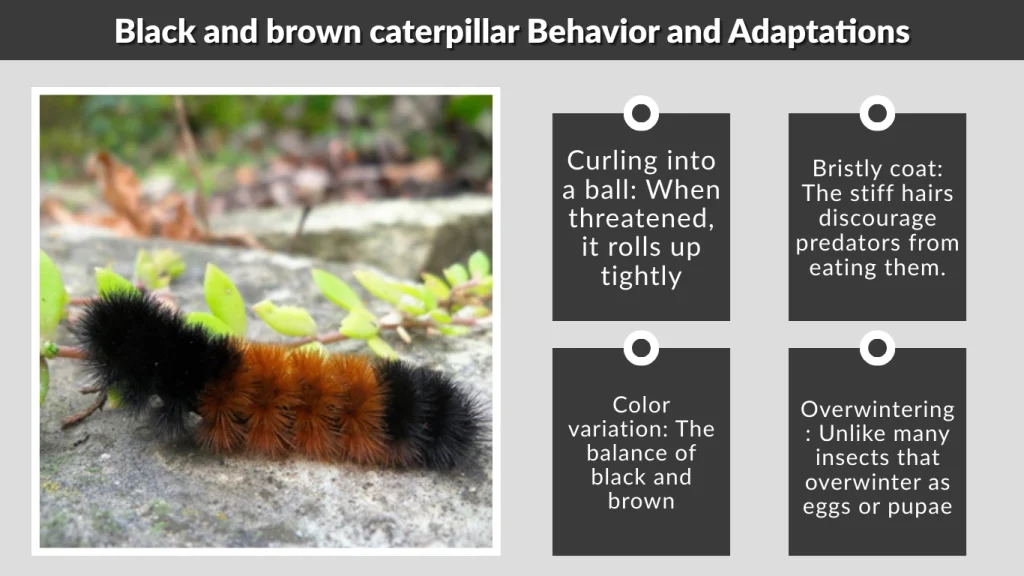
The black and brown caterpillar has several behaviors and adaptations that help it survive:
- Curling into a ball: When threatened, it rolls up tightly, exposing only its bristly coat and protecting its vulnerable underside.
- Bristly coat: The stiff hairs discourage predators from eating them. For some animals, the texture is enough to make them avoid the caterpillar.
- Color variation: The balance of black and brown on their bodies provides camouflage and may signal to predators that they are unpalatable.
- Overwintering: Unlike many insects that overwinter as eggs or pupae, woolly bears can survive cold months as caterpillars. They produce natural antifreeze chemicals that prevent ice from forming inside their bodies.
These adaptations make them hardy survivors, capable of living in diverse climates and enduring harsh conditions.
Folklore and Myths About Black and Brown Caterpillars
One of the most enduring myths about black and brown caterpillars is their supposed ability to predict winter weather. According to folklore, the width of the brown band in the middle of their body indicates the severity of the coming winter. A wide brown band supposedly means a mild winter, while a narrow band suggests a harsher one.
This belief dates back centuries and remains popular today, especially in rural areas. Festivals in some parts of the U.S. even celebrate the woolly bear as a weather forecaster.
However, scientific research shows that the band width is determined by the caterpillar’s age, nutrition, and local environment—not by upcoming weather. Older caterpillars tend to have wider brown bands simply because they have molted more times. While the myth adds charm to their story, it has no scientific basis.
Ecological Importance
Black and brown caterpillars play several important roles in ecosystems:
- Food source: They provide nourishment for birds, mammals, reptiles, and parasitoid insects. Even though their bristles deter many predators, some species have adapted to eat them.
- Plant regulation: By feeding on common weeds and plants, they help control vegetation growth and contribute to plant population balance.
- Pollination: As adult moths, they visit flowers at night, assisting in pollination. Though not as efficient as bees or butterflies, their role still contributes to biodiversity.
By occupying both herbivore and pollinator roles in different stages of life, they help maintain healthy ecosystems.
Interaction with Humans and Pets
Encounters between humans and black and brown caterpillars are frequent, especially in the fall when they are on the move. While they may look intimidating, they are safe to observe. Handling them is discouraged, since their hairs may cause minor irritation, but they do not pose serious health risks.
For pets, the main risk is curiosity. Dogs and cats that try to bite or chew them may experience temporary irritation in their mouths. This is rarely dangerous but can be uncomfortable. Preventing pets from playing with them is the safest approach.
For gardeners, these caterpillars are usually harmless. Their feeding rarely damages crops or flowers significantly, and many people welcome them as signs of seasonal change.
FAQs
Are black and brown caterpillars poisonous to touch?
No, they are not poisonous. Their bristles may cause mild itching or irritation in sensitive individuals, but they do not sting or inject toxins.
Do black and brown caterpillars turn into moths or butterflies?
They turn into the Isabella Tiger Moth, not a butterfly. The moth is yellowish-orange with black spots and is active mainly at night.
Why do black and brown caterpillars appear more in the fall?
In fall, mature caterpillars leave feeding areas to find safe spots for overwintering. This is why they are often seen crossing roads and sidewalks in large numbers.
Can black and brown caterpillars damage gardens?
They may eat leaves from common weeds and plants, but they rarely cause significant damage. Their numbers are not large enough to threaten crops or gardens.
What do black and brown caterpillars eat?
They eat a wide range of plants including clover, dandelions, grasses, nettles, and other low-growing vegetation. Their generalist diet makes them adaptable to many environments.
