
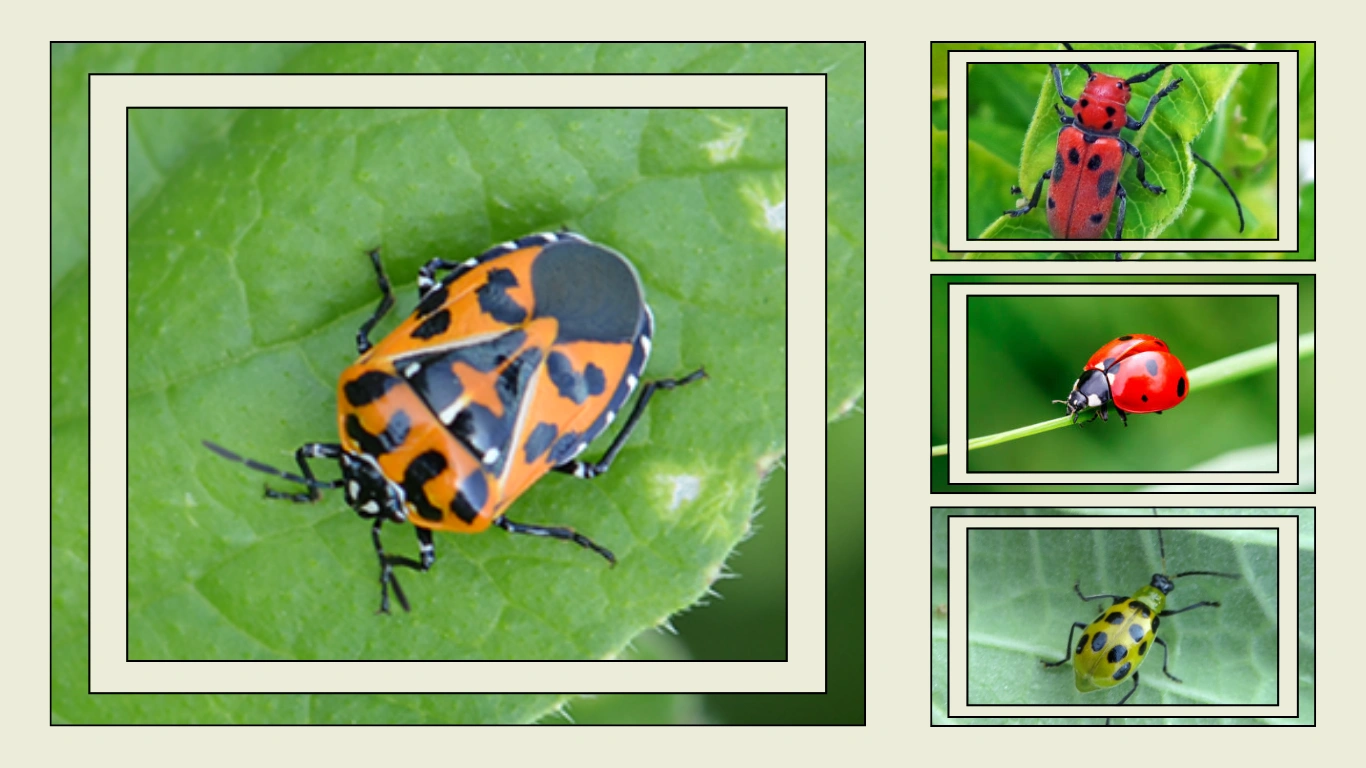
Have you seen a black bug with white spots, or perhaps a tiny insect with red, yellow, or white dots on its back? This guide features 23 uniquely patterned bugs, from beetles and spiders to caterpillars and stink bug nymphs. Whether it’s crawling on a plant or jumping on your wall, use this detailed list to help identify these eye-catching insects by their color patterns and markings.
1. Asian Longhorned Beetle

The Asian Longhorned Beetle is a striking black bug with white spots, known for its distinctive black body covered in white dots and long banded antennae. This beetle has raised concern in parts of the U.S., including New Jersey, due to its invasive nature. If you’ve spotted a tiny black bug with white spots, especially on trees or wooden surfaces, there’s a chance it could be this destructive wood-boring insect.
Identification
- Black body with glossy, hard shell
- Numerous round white spots across the back and wing covers
- Very long black-and-white banded antennae
- Size: Around 1 to 1.5 inches in length
- Legs may have a bluish tint
- Flight-capable but often seen crawling on trees
Color Pattern and Markings
This beetle’s coloration is bold and easy to recognize. Its jet-black exoskeleton is speckled with bright white dots, making it appear almost like a beetle wearing a polka-dotted coat. The antennae, often longer than the body, are distinctly striped in black and white, further enhancing its visual contrast. The symmetry and brightness of the spots make it stand out from other beetles.
Where It’s Commonly Found
You may encounter the Asian Longhorned Beetle in areas with hardwood trees, especially maple, elm, birch, and willow. It has been found in parts of New Jersey, New York, Ohio, and other northeastern U.S. states. While native to Asia, it’s now considered an invasive pest in North America.
2. Spotted Lanternfly Nymph

The Spotted Lanternfly Nymph is a tiny black bug with white spots commonly found during spring and summer in affected regions. While the adult has colorful wings, the early nymph stage is black with distinct white spots, making it easily mistaken for other spotted insects.
Identification
- Small, soft-bodied nymph
- Entire body is black with bright white polka dots
- No wings in early stages
- Grows up to ¼ inch long
- Often found on tree bark, leaves, or stems
Color Pattern and Markings
In the early instars, the nymph displays a jet-black body covered in bright, evenly spaced white spots. As it matures, it transitions to red and black patterns. Its coloration helps camouflage it on bark but also makes it identifiable to observers familiar with invasive insects.
Where It’s Commonly Found
Native to Asia but now invasive in several U.S. states like Pennsylvania, New Jersey, and Virginia, the nymphs feed on a variety of trees including Ailanthus (Tree of Heaven), maple, and grapevine.
3. Harlequin Bug
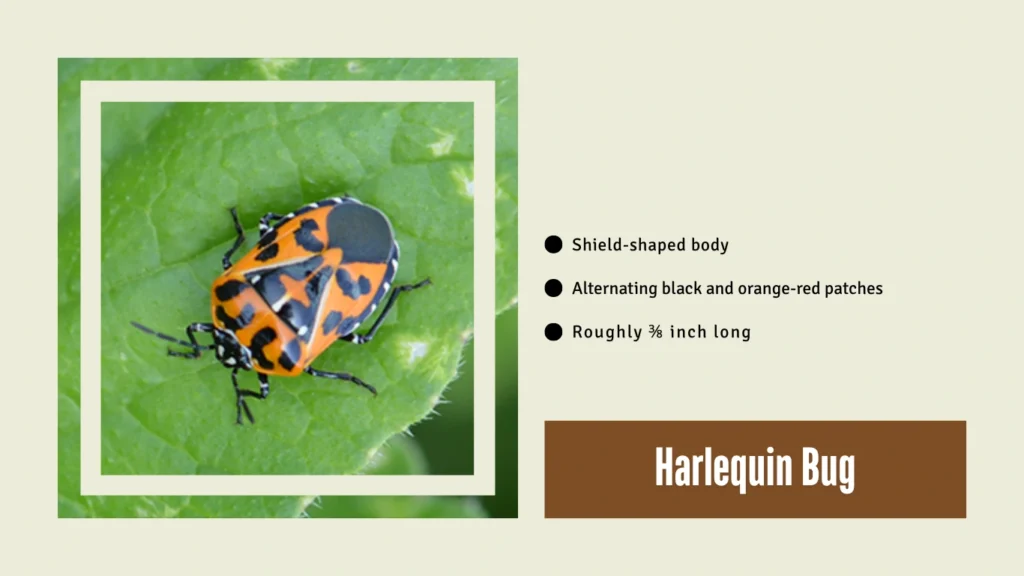
The Harlequin Bug is a brightly colored red and black bug with white spots, often confused with beetles. It belongs to the stink bug family and is notorious for damaging cruciferous vegetables.
Identification
- Shield-shaped body
- Alternating black and orange-red patches
- May display small white specks depending on light and wear
- Roughly ⅜ inch long
- Emits odor when threatened
Color Pattern and Markings
The Harlequin Bug’s vivid black and reddish-orange pattern, often described as harlequin-like or checkerboard, makes it highly visible. Some individuals also exhibit tiny white flecks or edge markings, especially on worn or aging specimens.
Where It’s Commonly Found
Native to Central America but widespread in the southern U.S., especially in gardens or crop fields, this insect is often seen on cabbage, broccoli, and other brassica plants.
4. Milkweed Beetle
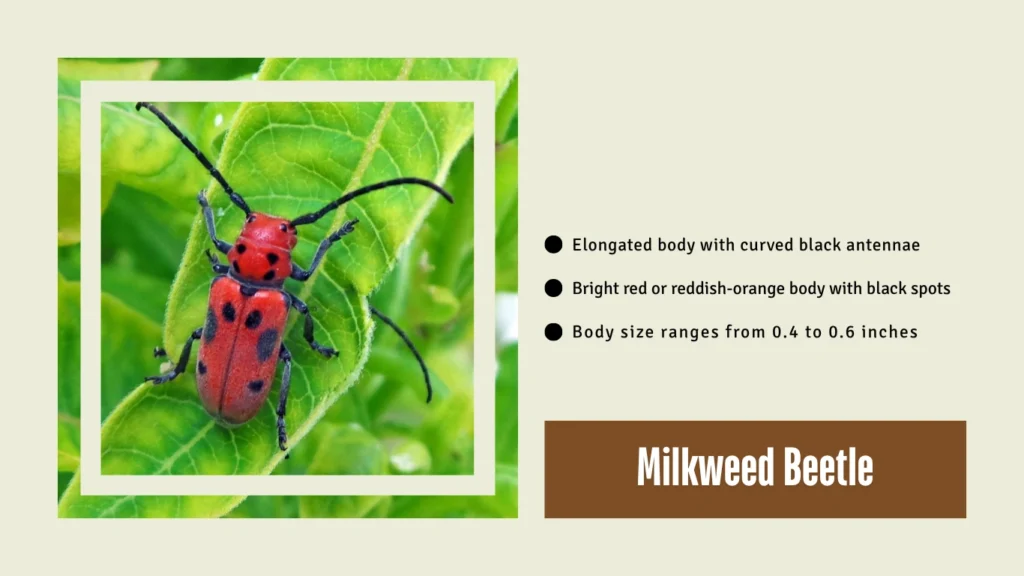
The Milkweed Beetle is a distinctive black bug with red spots often seen feeding on milkweed plants. It belongs to the longhorn beetle family and is known for its vibrant warning coloration that signals toxicity to predators.
Identification
- Elongated body with curved black antennae
- Bright red or reddish-orange body with black spots
- Body size ranges from 0.4 to 0.6 inches
- Legs and antennae are black
- Often seen in pairs or small groups on milkweed
Color Pattern and Markings
This beetle features a red or orange body with several well-defined black spots on its wing covers. The coloration acts as a warning (aposematism), letting predators know it’s toxic due to milkweed consumption. The contrast between the red and black makes it highly visible in gardens and wildflower fields.
Where It’s Commonly Found
Common across North America, especially near milkweed patches in meadows, fields, and roadsides. It’s usually active in late spring through summer.
5. Ladybug (Coccinellidae family)

The Ladybug is widely recognized as a red bug with black and white spots, though it can appear in multiple color variations including yellow, orange, and even black with red or white spots. It is considered a beneficial insect due to its appetite for aphids.
Identification
- Dome-shaped body
- Color varies: red, orange, yellow, or black
- Distinct round spots (black or white) on wing covers
- Size: typically 0.3 to 0.4 inches
- Short legs and antennae
Color Pattern and Markings
Ladybugs exhibit bold, rounded spots contrasting with their background color—usually red or orange with black spots, or black with red or white spots. Some species, like the twice-stabbed lady beetle, are black with two red spots. Others may have white marks on the head or edges, adding to the variety.
Where It’s Commonly Found
Found worldwide in gardens, forests, fields, and even indoors. Often seen on flowering plants or leaves where aphids are present. They’re active during warm months and hibernate in groups through winter.
6. Spotted Cucumber Beetle
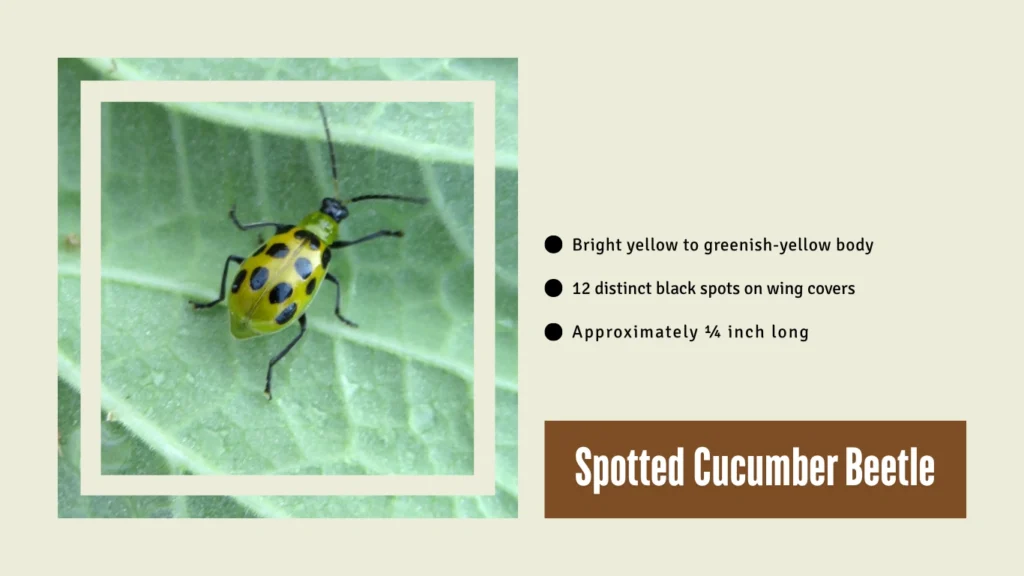
The Spotted Cucumber Beetle is a yellow bug with black spots, often found on garden plants and crops. Despite its attractive appearance, it’s considered a pest due to its damage to cucumbers, squash, beans, and other vegetables.
Identification
- Bright yellow to greenish-yellow body
- 12 distinct black spots on wing covers
- Slender, oval-shaped body
- Approximately ¼ inch long
- Black legs and antennae
Color Pattern and Markings
This beetle features a bright yellow body with bold black circular spots, creating a high-contrast pattern that makes it easy to identify. The spots are evenly spaced and symmetrical. In bright light, the body may show a slight greenish tint.
Where It’s Commonly Found
Common throughout the U.S., especially in gardens and crop fields. It is most active from late spring through early fall, often found on flowers, leaves, and near the base of vegetable plants.
7. Saltmarsh Caterpillar
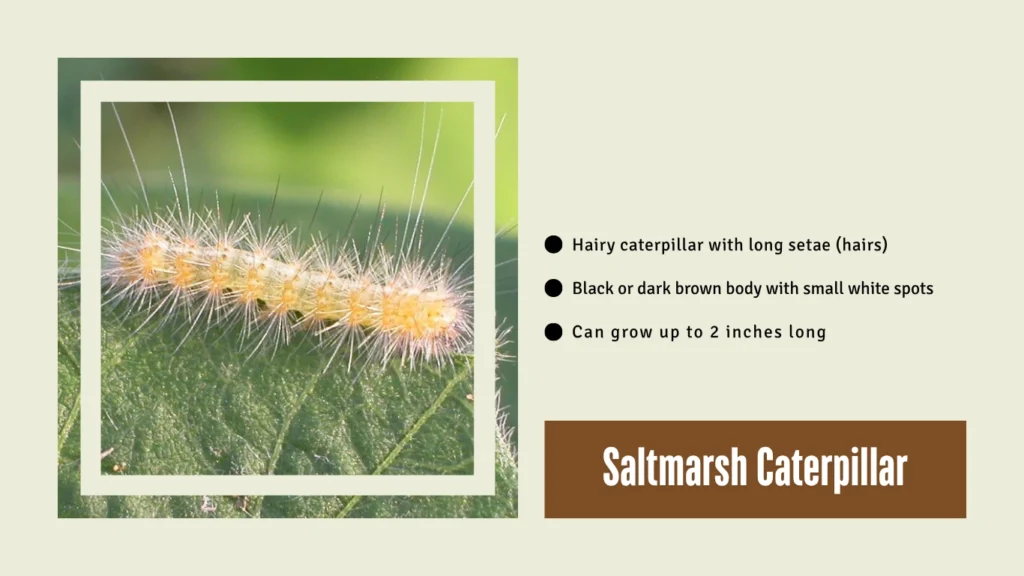
The Saltmarsh Caterpillar is a fuzzy, black with white spots bug in its larval stage, eventually turning into a moth. It is known for its dense hair and speckled appearance, often seen crawling on vegetation in open areas.
Identification
- Hairy caterpillar with long setae (hairs)
- Black or dark brown body with small white spots
- Can grow up to 2 inches long
- Some may show reddish or orange markings depending on maturity
- Moves slowly and curls when touched
Color Pattern and Markings
The caterpillar is covered in long dark hairs with tiny white dots scattered across its body, giving it a speckled or spotted appearance. These white markings vary in density depending on age and region, and they may contrast strongly against the dark fuzz.
Where It’s Commonly Found
Often seen in salt marshes, open fields, and roadsides across North America. It feeds on a wide range of plants, including clover, dandelions, and garden crops.
8. Dalmatian Bug (True Bug Species)
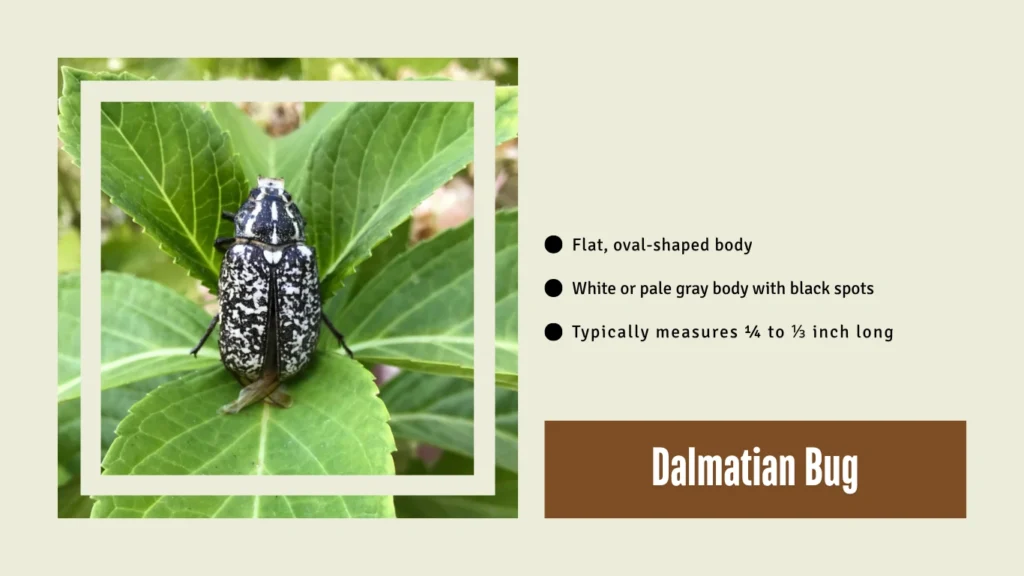
The Dalmatian Bug is a rare but distinctive black and white spotted bug, resembling the color pattern of a Dalmatian dog. It belongs to the true bug order (Hemiptera) and is mostly found on plants or flowers.
Identification
- Flat, oval-shaped body
- White or pale gray body with black spots
- Typically measures ¼ to ⅓ inch long
- Antennae and legs are black
- Moves slowly and feeds on plant juices
Color Pattern and Markings
Its body is pale with irregular black spots, often symmetrical but varied by individual. The contrast is strong, creating a speckled or dotted look that stands out clearly on green leaves or petals. Some may mistake it for a beetle due to its shape and markings.
Where It’s Commonly Found
Most often found in meadows, gardens, or wildflower areas in warmer months. Though not widespread, it appears in localized regions and is sometimes spotted on composite flowers like daisies and sunflowers.
9. Giant Leopard Moth Caterpillar

The Giant Leopard Moth Caterpillar is a black bug with white spots in its moth stage, but its caterpillar form is fuzzy and black with hidden red bands. It’s often mistaken for other woolly caterpillars due to its thick hair.
Identification
- Cylindrical black caterpillar
- Densely covered in black bristles (setae)
- Rolls into a ball when disturbed
- Red or orange rings between segments visible when it curls
- Grows up to 2.5 inches long
Color Pattern and Markings
Though it appears solid black at first, the caterpillar has tiny white speckles on its bristles, and when it curls up, the contrasting red bands underneath add a dramatic warning display. The adult moth, which it eventually becomes, is striking with white wings covered in black leopard-like spots.
Where It’s Commonly Found
Found throughout the eastern United States in gardens, woodlands, and grassy areas. Caterpillars are often seen in late summer to fall, crossing paths or resting on leaves and fences.
10. Zebra Spider

The Zebra Spider is a small black bug with white stripes known for its bold, jumpy movements and excellent eyesight. It belongs to the jumping spider family and is often seen hunting on sunny windowsills or walls.
Identification
- Tiny, compact body (about ¼ inch long)
- Black body with distinctive white horizontal stripes
- Short legs with banded patterns
- Two large front eyes and smaller side eyes
- Moves in short, quick bursts
Color Pattern and Markings
The spider’s name comes from its zebra-like white stripes on a black background, creating a high-contrast appearance. The stripes run horizontally across its back and legs. This pattern helps it blend into light and shadow while stalking prey, but it also makes it easy to identify up close.
Where It’s Commonly Found
Common across North America and Europe, especially on sunny exterior walls, fences, tree bark, and indoors near windows. Active during warm months, it hunts by leaping onto small insects.
11. White-Marked Tussock Moth Caterpillar

The White-Marked Tussock Moth Caterpillar is a colorful and fuzzy tiny black insect with white spots, yellow stripes, and tufts of hair, making it one of the most visually unique caterpillars in North America.
Identification
- Black or dark body with four white toothbrush-like tufts on its back
- Red head with black antennae
- Yellow lines along the sides
- Two black tufts at the front and one at the rear
- Up to 1.5 inches in length
Color Pattern and Markings
This caterpillar displays a striking mix of black, white, yellow, and red, with a heavily patterned body. The white tufts resemble tiny spots or brushes, while the sides are lined with pale yellow streaks. The contrast of its red head and white tufts is a key ID marker.
Where It’s Commonly Found
Usually found on deciduous trees like oak, birch, and apple. It is widespread across the eastern U.S., especially in late summer. Often seen crawling on leaves or tree bark and can sometimes become a defoliating pest.
12. Ornate Checkered Beetle

The Ornate Checkered Beetle is a small black and white spotted bug with an intricate checkered pattern. It belongs to the Cleridae family and is both a predator and a pollinator, often found on flowers and tree bark.
Identification
- Elongated oval body
- Black with irregular white or pale yellow markings
- Size ranges from ⅛ to ⅜ inch
- Short legs and clubbed antennae
- Often rests with wings slightly open
Color Pattern and Markings
This beetle has a mosaic of black and white patches, often forming symmetrical spots or broken stripes along the back. The unique checkered pattern gives it a bold appearance and makes it easy to identify when seen up close.
Where It’s Commonly Found
Common in forests and wooded areas, particularly where dead wood or bark is present. Active from spring through summer, often spotted on tree trunks or flowers where it hunts smaller insects.
13. Speckled Sharpshooter

The Speckled Sharpshooter is a flying black bug with white spots on wings, belonging to the leafhopper family. Though small, it plays a role in spreading plant diseases, making it a concern in some agricultural areas.
Identification
- Slender, elongated body
- Black or dark brown with white speckling on wings
- Typically ⅜ to ½ inch long
- Transparent wings with white patches
- Long legs for jumping
Color Pattern and Markings
The wings of this insect are dark and dotted with tiny white specks, creating a speckled appearance that blends into tree bark. Some individuals may have more pronounced white patches depending on age and lighting.
Where It’s Commonly Found
Native to the southeastern U.S., often found on ornamental plants, grapevines, and shrubs. It can jump or fly short distances and is most active during warm seasons.
14. Desert Cockroach (White-Spotted Nymph Stage)
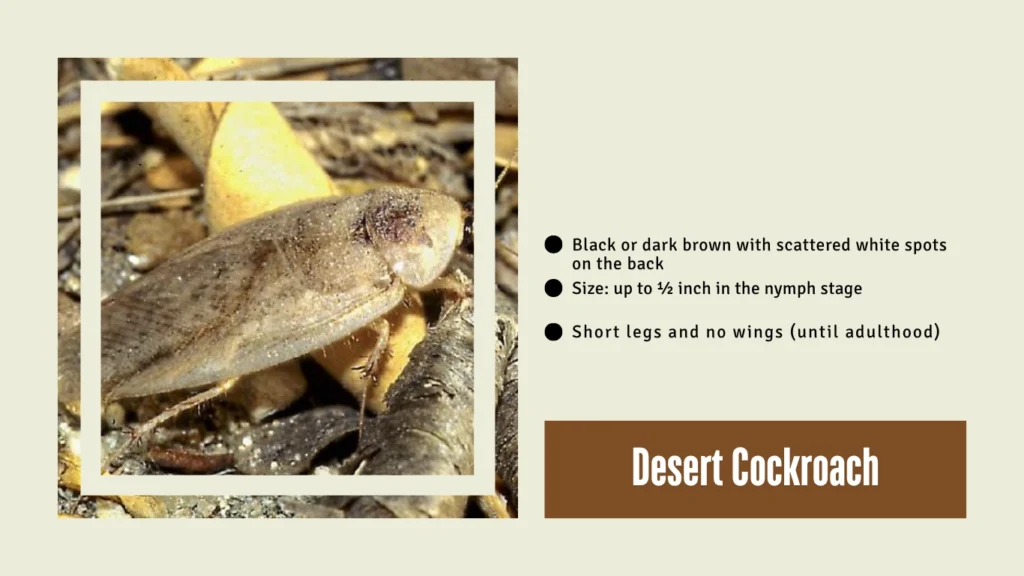
The Desert Cockroach, particularly in its nymph stage, appears as a tiny black bug with white spots, a look that can confuse it with beetles or other harmless insects. These nymphs are more visually striking than their adult counterparts.
Identification
- Oval-shaped, flattened body
- Black or dark brown with scattered white spots on the back
- Size: up to ½ inch in the nymph stage
- Short legs and no wings (until adulthood)
- Moves quickly when disturbed
Color Pattern and Markings
Young nymphs are black with irregular white or cream-colored spots across the thorax and wing pads. These spots may fade or change as the insect matures into a full adult. The contrast between the black base and pale spots creates a speckled, dotted appearance.
Where It’s Commonly Found
Primarily found in arid regions of the southwestern United States. They hide under rocks, leaf litter, or crevices and are mostly nocturnal. Rarely seen indoors.
15. Cotton Stainer Bug (Juvenile Stage)

The Cotton Stainer Bug in its juvenile stage is a red bug with white spots and black legs, commonly seen in warm climates and on flowering or fruit-bearing plants.
Identification
- Bright red or reddish-orange soft body
- Distinct white or cream spots on the abdomen
- Black legs and antennae
- Grows up to ½ inch long
- Moves slowly unless disturbed
Color Pattern and Markings
The nymph’s vivid red body contrasts sharply with small white dots arranged symmetrically along its back. The black legs and antennae create a tri-color appearance—red, black, and white—that’s both eye-catching and useful for identification.
Where It’s Commonly Found
Widespread in tropical and subtropical areas, including southern Florida, the Caribbean, and parts of Central America. They often gather on cotton, hibiscus, and citrus plants, feeding on seeds and staining the cotton fiber—hence the name.
16. Mottled Tortoise Beetle
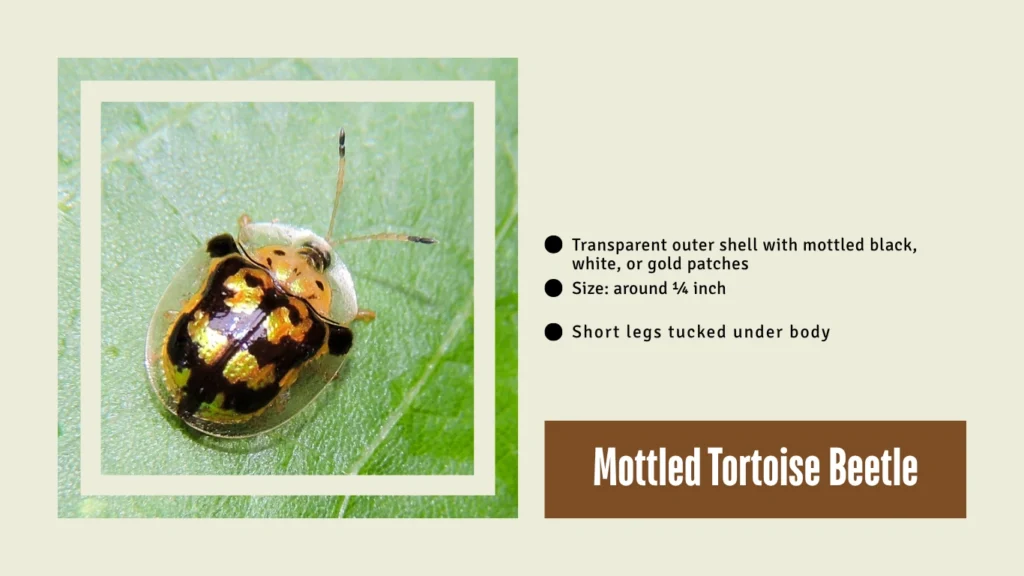
The Mottled Tortoise Beetle is a small bug with white spots, displaying a range of patterns including translucent edges and spotted backs. It’s a member of the leaf beetle family and often found on morning glory and sweet potato leaves.
Identification
- Rounded, dome-like body
- Transparent outer shell with mottled black, white, or gold patches
- Size: around ¼ inch
- Short legs tucked under body
- Clings tightly to leaves when disturbed
Color Pattern and Markings
This beetle shows a mottled black-and-white or yellow-white spotted pattern, sometimes with hints of metallic gold or green. The white spots are often irregular and scattered, making each individual beetle look slightly different. Its clear, shield-like shell gives it a glassy, unique appearance.
Where It’s Commonly Found
Native to North and Central America, found mainly in gardens, fields, and weedy areas. Commonly seen on bindweed, morning glory, and sweet potato plants.
17. Black Vine Weevil

The Black Vine Weevil is a small black bug with white spots, commonly found in gardens and homes. Although it can’t fly, it’s a notorious pest of ornamental plants and shrubs.
Identification
- Oval-shaped, hard body
- Velvety black with small white or pale speckles on the back
- Elbowed antennae
- About ½ inch long
- Crawls slowly and hides in dark areas
Color Pattern and Markings
Its body is covered in tiny white specks or patches, giving it a dusted or peppered look. These white spots are scattered unevenly and may appear more concentrated near the wing covers. The contrast is more visible under direct light.
Where It’s Commonly Found
Widespread in North America, especially in nurseries, gardens, and around the base of potted plants. Indoors, it can occasionally be found crawling along floors or windowsills at night.
18. Green Stink Bug (Nymph Stage)

The Green Stink Bug in its early nymph stage is a bright green bug with white spots, later maturing into a solid green adult. These immature stages are often more colorful and easier to recognize due to their bold markings.
Identification
- Round, beetle-like nymph body
- Bright lime green coloration
- Rows of small white or pale yellow spots on the back
- Size: about ¼ to ½ inch
- Short, dark legs and antennae
Color Pattern and Markings
Juvenile green stink bugs are vibrant in color, with a green body dotted with white or cream-colored spots. As they age, the spots fade and the green becomes more uniform. Some also display small black accents around the edges or near the legs.
Where It’s Commonly Found
Found throughout North America, especially in gardens, crop fields, and weedy areas. Common hosts include beans, tomatoes, and fruit trees. Active during spring through fall.
19. Fungus Beetle
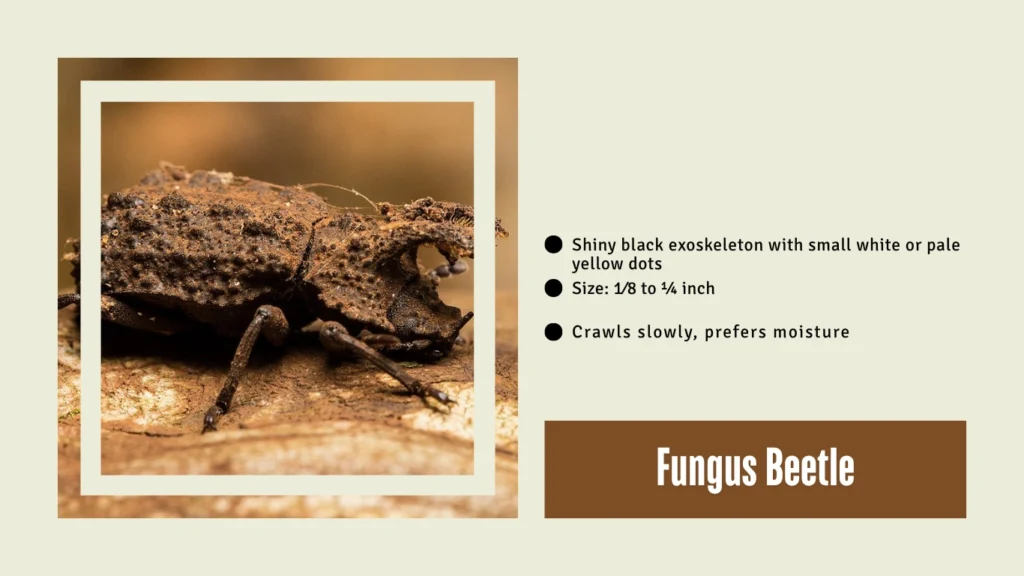
The Fungus Beetle is a small black bug with white spots often found in damp indoor areas, particularly where mold or mildew is present. It plays a role in breaking down fungi and decaying organic matter.
Identification
- Oval-shaped body
- Shiny black exoskeleton with small white or pale yellow dots
- Antennae short and clubbed
- Size: 1⁄8 to ¼ inch
- Crawls slowly, prefers moisture
Color Pattern and Markings
This beetle’s dark glossy body is scattered with tiny white or yellowish dots, giving it a speckled appearance. The spots are not as bold as in beetles like the Asian Longhorned, but they are still clearly visible under light.
Where It’s Commonly Found
Often discovered in basements, bathrooms, or near potted plants indoors. Outdoors, they may live under bark or near decaying wood and fungi. Attracted to damp, dark environments.
20. Minute Pirate Bug

The Minute Pirate Bug is a very small black and white bug that is beneficial in gardens, as it preys on pests like thrips and aphids. Despite its tiny size, it’s an aggressive and efficient predator.
Identification
- Tiny body (1⁄8 inch or less)
- Black head and thorax
- White patches or bands on the wings
- Short antennae and legs
- Often mistaken for gnats due to size
Color Pattern and Markings
These bugs display a contrasting black-and-white pattern, with white triangular markings on their black wings. The pattern forms a rough “X” or “hourglass” shape when viewed from above. Their small size and patterned wings make them identifiable under magnification.
Where It’s Commonly Found
Common in gardens, greenhouses, and crop fields throughout North America. Found on flowers, foliage, or among leaf litter where prey insects gather. Active spring through fall.
21. Jumping Spider (e.g., Bold Jumper)
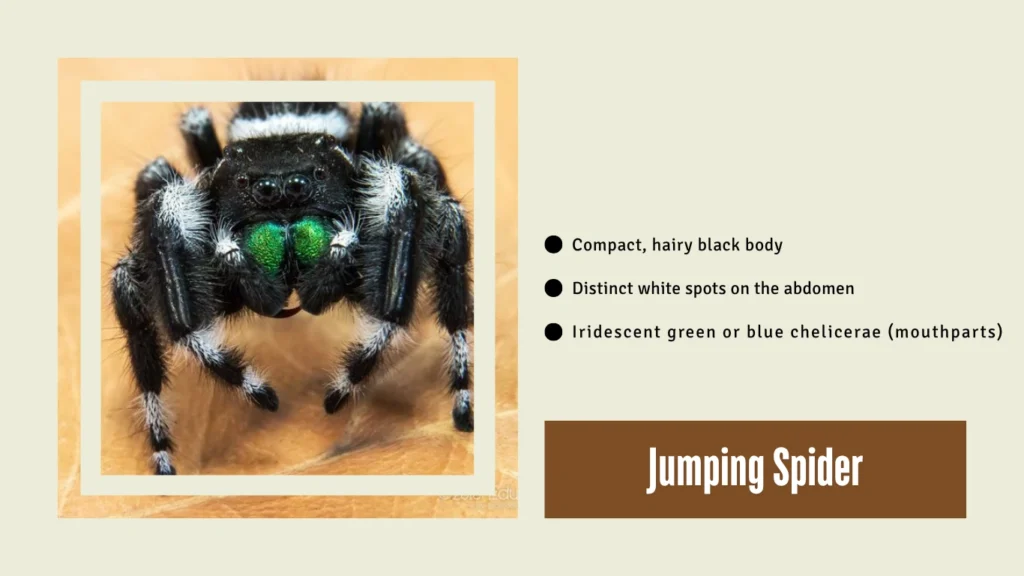
The Jumping Spider, particularly the Bold Jumper species, is a black and red bug with white spots that jumps, commonly seen around homes and gardens. It’s harmless to humans but highly effective at hunting small insects.
Identification
- Compact, hairy black body
- Distinct white spots on the abdomen
- Iridescent green or blue chelicerae (mouthparts)
- Sometimes features red markings or legs
- Jumps rapidly when hunting or threatened
Color Pattern and Markings
This spider has a velvety black body with bold white dots, usually one or three on the abdomen. Some individuals also have reddish or orange bands near the legs or back. The mix of black, white, and red makes it very recognizable, especially when it jumps suddenly.
Where It’s Commonly Found
Found across North America, especially on walls, fences, windowsills, and gardens. Prefers sunny spots where it can ambush prey. Often seen in late spring through fall.
22. White-Spotted Sawyer Beetle

The White-Spotted Sawyer Beetle is a black bug with white spot on back, easily recognized by its single bold white dot and extremely long antennae. It belongs to the longhorn beetle family and is often mistaken for the invasive Asian Longhorned Beetle.
Identification
- Long, cylindrical black body
- One distinct white spot near the upper back (top center of wing covers)
- Very long black antennae, sometimes banded
- Body length: ¾ to 1½ inches
- May produce a faint squeaking noise when disturbed
Color Pattern and Markings
The most notable feature is the single bright white spot on the dark glossy back, contrasting sharply with the beetle’s otherwise all-black appearance. Some individuals may also have faint speckling or fine hairs, but the central white dot is the key ID marker.
Where It’s Commonly Found
Commonly found in pine forests and wooded areas across the northern United States and Canada. Attracted to freshly cut wood and tree trunks. Most active from spring through midsummer.
23. Lace Bug

The Lace Bug is a small white bug with black spots, named for its delicate, lace-like wings. It’s a tiny plant-feeding insect that can become a nuisance on ornamental shrubs and trees.
Identification
- Small, flat-bodied bug
- Whitish or transparent wings with black or brown veins and spots
- Body size: about 1⁄8 inch
- Wings extend beyond the body edge
- Antennae are short and slender
Color Pattern and Markings
The translucent wings are patterned with black dots and reticulated veins, giving the insect a stained-glass or lace-like appearance. The body is often pale with fine black specks visible under magnification. Coloration may vary slightly depending on host plant.
Where It’s Commonly Found
Found on the undersides of leaves of trees like sycamore, azalea, and oak. Widespread in gardens, parks, and wooded landscapes across North America, especially during warm months.
