
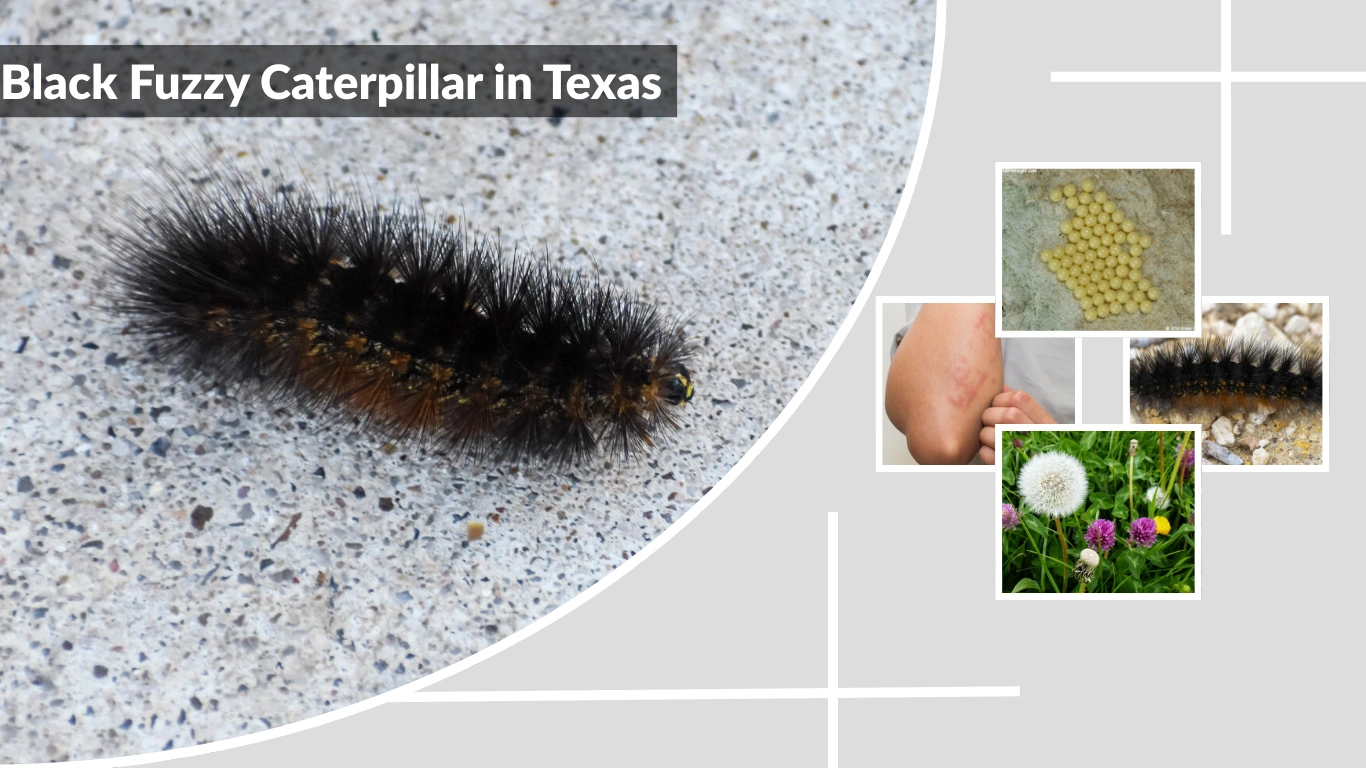
In Texas, spotting a fuzzy black caterpillar crawling across the road or in your garden is a common experience, especially during the cooler months. These caterpillars often spark curiosity—and sometimes concern—among people who wonder whether they are dangerous or what they eventually become. Known widely as woolly bear caterpillars, black fuzzy caterpillars in Texas are harmless creatures that later transform into moths. Despite their intimidating bristly coats, they are an important part of the ecosystem, feeding on plants and serving as prey for birds and other animals. Understanding their appearance, life cycle, and role in nature can help people appreciate rather than fear these fascinating insects.
Identification of Black Fuzzy Caterpillar in Texas

The black fuzzy caterpillar found in Texas is usually the larval stage of the Isabella Tiger Moth (Pyrrharctia isabella). These caterpillars are often called woolly bears because of their thick coat of hairs, or setae, that gives them a furry appearance.
In Texas, you’ll most often see caterpillars that appear completely black or mostly black with faint orange-brown bands across the middle. Their coloration can vary depending on their age, the season, and even the temperature of their environment. Typically, they grow up to 2 inches long and are covered in stiff bristles that act as protection.
Unlike smooth-skinned caterpillars, these bristly ones are instantly recognizable and easy to identify in the field. When touched, they curl up into a ball, hiding their softer undersides from predators. This defensive behavior also helps distinguish them from other fuzzy caterpillars that may be present in Texas gardens.
Black Fuzzy Caterpillar vs. Woolly Bear Caterpillar
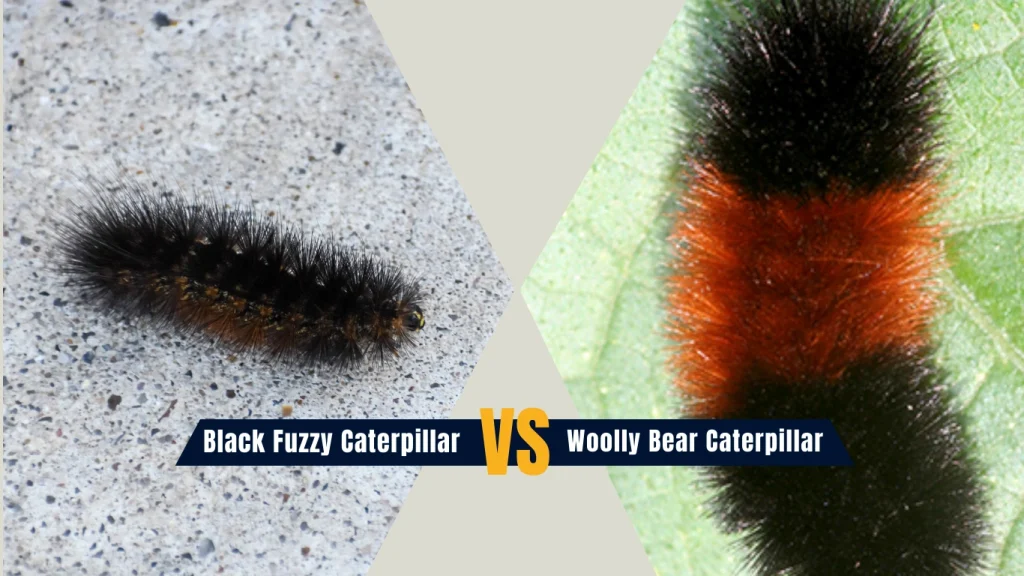
Many people wonder if the black fuzzy caterpillars they see in Texas are the same as the woolly bear caterpillar commonly found in colder parts of North America. The answer is yes—they are closely related.
The woolly bear caterpillar typically has distinct rusty brown bands in the middle, with black sections at both ends. In Texas, however, many appear mostly black, which sometimes causes confusion. These darker forms are still woolly bears but have adapted to the warmer southern climate.
It’s worth noting that other fuzzy caterpillars also live in Texas, including various tiger moth species. However, the black fuzzy type seen most often crossing roads in the fall is almost always the Isabella Tiger Moth caterpillar.
Are Black Fuzzy Caterpillars Poisonous?
One of the most common questions people ask is whether these caterpillars are poisonous. The truth is that black fuzzy caterpillars are not poisonous or venomous. They do not sting, inject toxins, or pose any serious risk to humans.
However, their hairs can cause mild skin irritation in some people, especially those with sensitive skin or allergies. This reaction is not dangerous but may result in itching or a small rash. Pets that try to chew on them may also experience mouth irritation, which usually discourages them from eating the caterpillar.
The bristles serve as a natural defense mechanism. Birds, lizards, and small mammals generally avoid eating them because the hairs are unpleasant to swallow. For humans, the safest approach is to avoid handling them directly. Observing them in their natural environment is a better way to enjoy their presence without risk.
What Does a Black Fuzzy Caterpillar Turn Into?
Another frequent question is whether the black fuzzy caterpillar turns into a butterfly or a moth. The answer is that these caterpillars transform into the Isabella Tiger Moth, a species of moth with yellowish-orange wings and scattered black spots.
This moth is relatively plain compared to its striking caterpillar stage, but it plays an important role in the ecosystem as a pollinator. Adult moths emerge in the spring or summer after pupating, mate, and lay eggs to continue the cycle.
The transformation process, known as metamorphosis, involves the caterpillar spinning a cocoon, entering the pupal stage, and then reemerging as a completely different insect. This remarkable change highlights the complexity of their life cycle.
Life Cycle of the Black Fuzzy Caterpillar
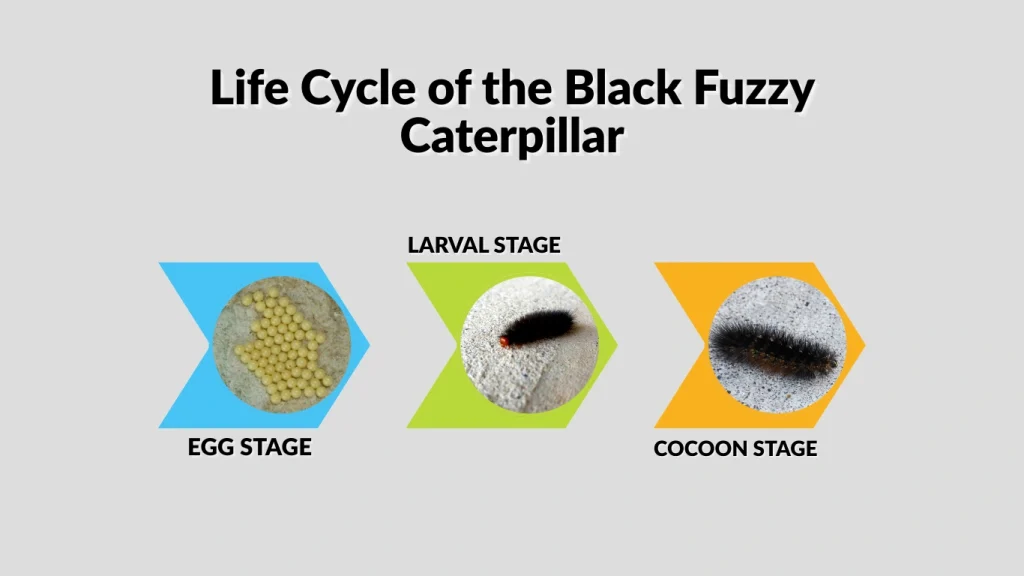
Like all moths, the black fuzzy caterpillar undergoes complete metamorphosis, which includes four distinct stages: egg, larva, pupa, and adult.
Egg Stage
The cycle begins when female Isabella Tiger Moths lay clusters of eggs on low-growing plants. These eggs are small and pale-colored, often going unnoticed by gardeners. Within a couple of weeks, the eggs hatch into tiny larvae that begin feeding immediately.
Larval Stage
This is the stage most people recognize—the black fuzzy caterpillar. During this period, the caterpillar feeds heavily on grasses, weeds, and garden plants. It sheds its skin multiple times in a process called molting, each time growing larger and developing thicker hairs.
In Texas, these caterpillars are often seen in the fall, crossing roads and sidewalks in search of a safe place to spend the winter. Unlike in colder northern climates where woolly bears hibernate under snow, in Texas they may remain active longer due to milder conditions.
Cocoon Stage
When fully grown, the caterpillar spins a cocoon made of silk and its own hairs. This cocoon protects it during the pupal stage, where it undergoes metamorphosis. Inside, its body is completely reorganized, turning from a fuzzy larva into the adult Isabella Tiger Moth.
The cocoon stage can last several months, especially if the caterpillar overwinters in this form. In warmer Texas climates, pupation may be shorter, with adults emerging sooner depending on seasonal temperatures.
Habitat and Distribution in Texas

Black fuzzy caterpillars are widespread throughout Texas and are most noticeable during the fall season. They are commonly seen crossing sidewalks, country roads, and driveways in search of safe places to pupate. Their wide distribution across Texas is due to their adaptability to different environments.
They thrive in gardens, open fields, meadows, and roadsides, where host plants are plentiful. In eastern Texas, where humidity is higher, they take advantage of abundant vegetation. In the drier western parts of the state, they are still present but may concentrate in irrigated areas, grassy pastures, or near riverbanks.
Their seasonal visibility also makes them memorable. In Texas, black fuzzy caterpillars are often spotted during autumn migrations, when they wander more openly to prepare for the next stage of their life cycle.
Diet of Black Fuzzy Caterpillars

One reason these caterpillars are so widespread is their generalist diet. They feed on a variety of low-growing plants, which allows them to thrive in both wild and human-managed landscapes. Some common food sources include:
- Clover and dandelions
- Grasses and garden weeds
- Plantain and nettles
- Garden plants (occasionally, though damage is minimal)
Their feeding habits are opportunistic. They consume what is readily available, which ensures their survival even in changing environments. While they may nibble on garden plants, they are not considered major pests because their populations rarely reach damaging levels.
Behavior and Adaptations
The black fuzzy caterpillar has developed several adaptations that help it survive in Texas’s diverse climates.
One key adaptation is its curling defense behavior. When disturbed, the caterpillar curls into a tight ball, exposing only its bristly hairs. This posture makes it difficult for predators to bite into their softer underside.
Their coloration is another survival trait. While they appear black or dark brown, some individuals show rusty red or orange bands. This coloration not only provides camouflage among soil and dead leaves but may also function as aposematic signaling, warning predators that they are unpleasant to eat.
Another important adaptation is their ability to overwinter as caterpillars. In northern states, they hibernate beneath leaves or snow, while in Texas, milder winters allow some to remain semi-active until they pupate. This flexibility helps them survive across a wide range of habitats and climates.
Interaction with Humans and Pets
Encounters between humans and black fuzzy caterpillars in Texas are frequent, especially during the fall migration season. While many people are intrigued by their fuzzy appearance, some are concerned about whether they pose a danger.
As mentioned earlier, they are not poisonous or venomous, but handling them can cause mild irritation in some people. For safety, it’s best to admire them without touching.
Pets, especially cats and dogs, may show curiosity and attempt to play with or bite them. While this usually results only in temporary mouth irritation, it’s better to keep pets from interacting with them. In rare cases, pets may swallow them, which can cause digestive discomfort but not serious harm.
Overall, these caterpillars are safe co-inhabitants in gardens and yards, and no pest control is necessary.
Black Fuzzy Caterpillar Myths and Folklore
One of the most charming aspects of black fuzzy caterpillars is the folklore surrounding them. Across North America, woolly bear caterpillars (which include the black fuzzy type in Texas) have long been associated with weather prediction.
According to tradition, the width of the brown or orange band on the caterpillar’s body can predict the severity of the coming winter. A wider brown band supposedly means a mild winter, while a narrow band means harsher cold.
In Texas, where many appear almost entirely black, this has sometimes been interpreted as a sign of harsher winters. However, scientific studies have shown that the coloration of woolly bears is influenced by age, nutrition, and environmental conditions—not by weather forecasting abilities.
Despite the lack of scientific basis, the folklore persists and adds to their cultural significance. Festivals in some U.S. states even celebrate woolly bear caterpillars as “weather prophets.”
Ecological Importance in Texas
The black fuzzy caterpillar plays a vital role in Texas ecosystems. As herbivores, they help regulate the growth of weeds and common plants. By consuming large amounts of vegetation, they recycle nutrients and influence plant competition in meadows and fields.
They are also an important food source for birds, small mammals, and parasitic insects. While their hairs deter many predators, some animals have adapted to eat them regardless. This makes them a crucial link in the food chain.
When they transform into Isabella Tiger Moths, they contribute to pollination, visiting flowers at night and helping plants reproduce. Though often overlooked, their role as pollinators supports the diversity of Texas plant life.
FAQs
Are black fuzzy caterpillars poisonous to humans?
No, they are not poisonous or venomous. Their hairs may cause mild irritation or itching on sensitive skin, but they pose no serious health risks. The bristles are simply a natural defense mechanism against predators.
Do black fuzzy caterpillars turn into moths or butterflies?
They turn into moths, specifically the Isabella Tiger Moth. This moth is yellowish-orange with scattered black spots on its wings. Unlike butterflies, moths are usually active at night and are less colorful.
Can black fuzzy caterpillars damage gardens in Texas?
These caterpillars may nibble on plants, but they are not considered harmful garden pests. Their feeding rarely causes significant damage, and they play a beneficial role in natural plant control and ecosystem balance.
What do black fuzzy caterpillars eat?
They eat a wide variety of plants, including dandelions, clover, grasses, nettles, and other low-growing weeds. Their generalist diet allows them to survive in different environments across Texas.
Why are black fuzzy caterpillars seen more often in fall?
During fall, mature caterpillars begin searching for sheltered places to pupate. This is why they are often seen crossing roads, sidewalks, and yards. Their migration during this season makes them much more visible than in other times of the year.
