
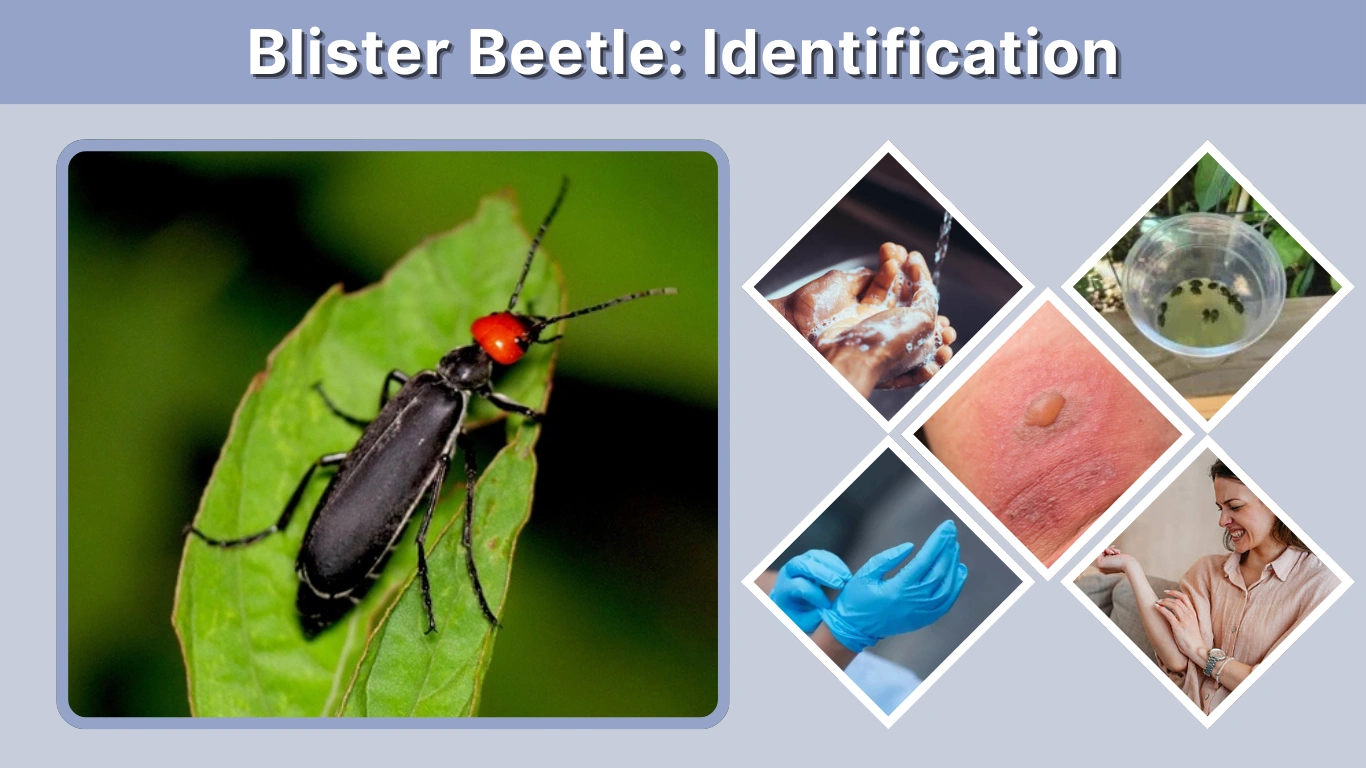
Blister beetles are fascinating yet potentially harmful insects known for producing a chemical that can cause painful skin blisters. Although these beetles play an important ecological role, they can become a concern for farmers, gardeners, and even livestock owners. Learning about blister beetles—their bite symptoms, life cycle, habitat, diet, and control methods—can help you avoid contact and manage infestations effectively. This guide explains how to identify blister beetles, treat their bites, and prevent problems in gardens or agricultural areas.
What Is a Blister Beetle?
A blister beetle is an insect belonging to the Meloidae family, a large group that includes thousands of species worldwide. These beetles are most famous for producing a toxic chemical called cantharidin, which can cause blistering on human skin when the insect is crushed or handled.
Unlike many other beetles, blister beetles have a relatively soft body and long legs. Their appearance may vary widely depending on the species, but most are easy to recognize once you know what to look for.
Blister beetles are often found in agricultural fields, gardens, grasslands, and areas with flowering plants. While adult beetles may damage crops, their larvae can actually help control certain pest populations, making them both beneficial and harmful depending on the situation.
Physical Characteristics
Blister beetles have several unique physical traits that distinguish them from other beetle species.
Key features include:
- Long, narrow bodies
- Soft wing covers
- Long legs and antennae
- Bright or distinctive coloring
- A narrow neck-like area between the head and thorax
Many species display warning colors such as black, yellow, gray, or striped patterns. These colors help warn predators that the beetles contain toxic chemicals.
Most blister beetles range in size from ½ inch to 1 inch long, though some species may be slightly larger.
Types of Blister Beetles
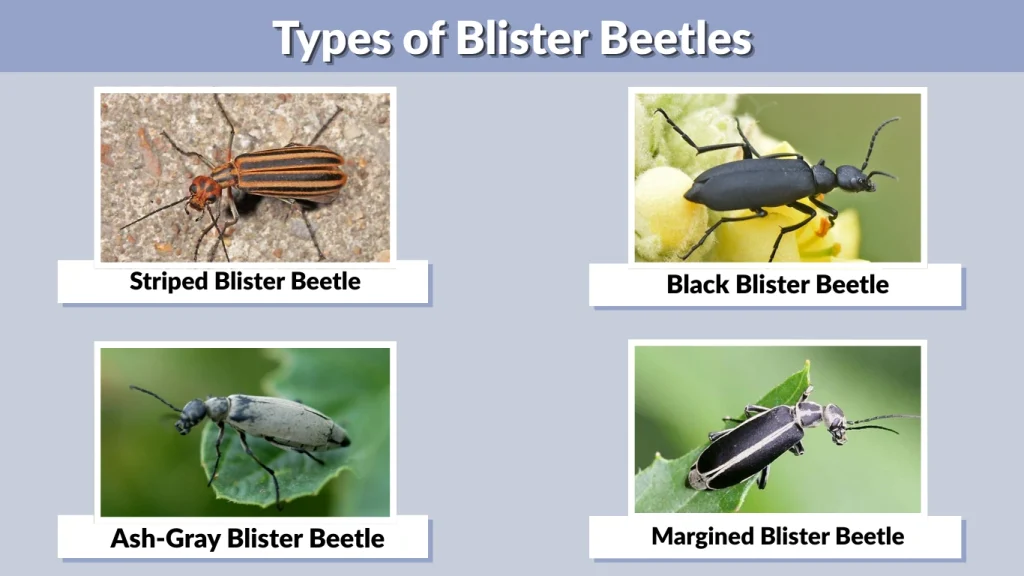
There are more than 7,500 known species of blister beetles worldwide. Some of the most commonly encountered types include:
Striped Blister Beetle
This species is easily identified by its yellow body with black stripes running lengthwise. It is commonly found feeding on crops such as tomatoes and alfalfa.
Black Blister Beetle
These beetles are entirely black and often appear in large groups on plants. They are common in gardens and agricultural areas.
Ash-Gray Blister Beetle
This species has a grayish body with fine hairs, giving it a dusty appearance.
Margined Blister Beetle
These beetles have black bodies with gray margins along their wings, making them easy to distinguish.
Different species may vary in appearance, but all blister beetles share the ability to produce cantharidin, their defensive chemical.
Blister Beetle Bite
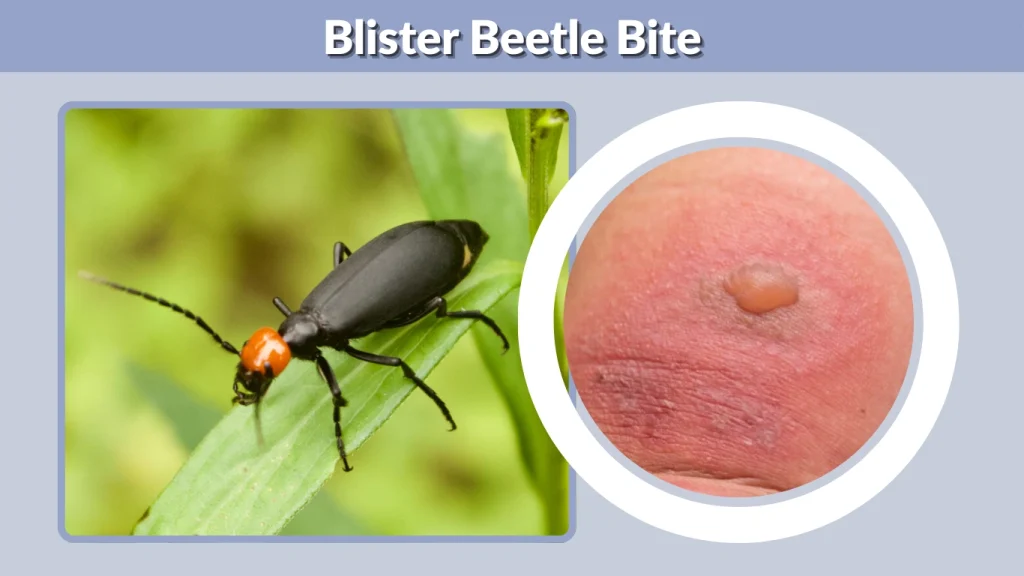
Many people believe blister beetles bite humans, but technically they do not bite in the traditional sense. Instead, the irritation occurs when the beetle releases or leaks cantharidin, a powerful chemical that can cause skin blistering.
When the insect is crushed against the skin or handled directly, this toxin can quickly irritate the skin and create painful blisters.
Symptoms of a Blister Beetle Bite
Contact with blister beetle toxin can cause several symptoms, which may appear within hours of exposure.
Common symptoms include:
- Painful skin blisters
- Redness around the affected area
- Burning or tingling sensation
- Skin irritation or itching
- Swelling
In most cases, these symptoms remain localized to the area where the beetle touched the skin.
The blister may look similar to a burn blister and can last several days before healing.
When to Seek Medical Help
Most blister beetle reactions are mild and heal without serious complications. However, medical attention may be needed in certain situations.
You should consult a healthcare professional if:
- The blister becomes extremely large
- Severe swelling occurs
- Signs of infection appear
- You experience an allergic reaction
People with sensitive skin may experience stronger reactions to cantharidin.
Blister Beetle Bite Treatment
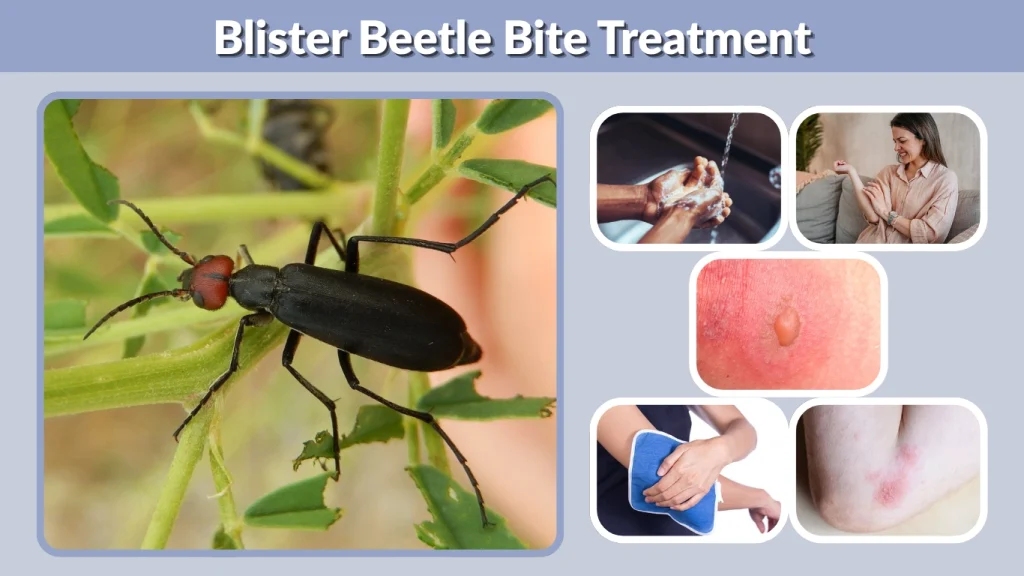
Treating blister beetle skin exposure quickly can reduce irritation and prevent complications. Most cases can be managed with simple first aid at home.
Immediate First Aid
If a blister beetle comes into contact with your skin, take the following steps immediately:
- Wash the area with soap and water to remove any remaining toxin.
- Avoid rubbing or scratching the skin, which can spread the chemical.
- Apply a cold compress to reduce pain and swelling.
- Keep the area clean and dry.
Early cleaning is the most important step to prevent severe blister formation.
Medical Treatment Options
If irritation becomes severe, several medical treatments may help relieve symptoms.
These may include:
- Antihistamines to reduce itching and allergic reactions
- Antibiotic creams to prevent infection
- Corticosteroid creams to reduce inflammation
A doctor may recommend stronger medications if the reaction is severe.
Home Remedies
Several simple remedies can help soothe blister beetle skin irritation.
Popular options include:
- Aloe vera gel, which helps cool and moisturize the skin
- Calamine lotion, commonly used for itching and rashes
- Baking soda paste, which may reduce irritation
These remedies can provide temporary relief while the skin heals naturally.
Blister Beetle Life Cycle
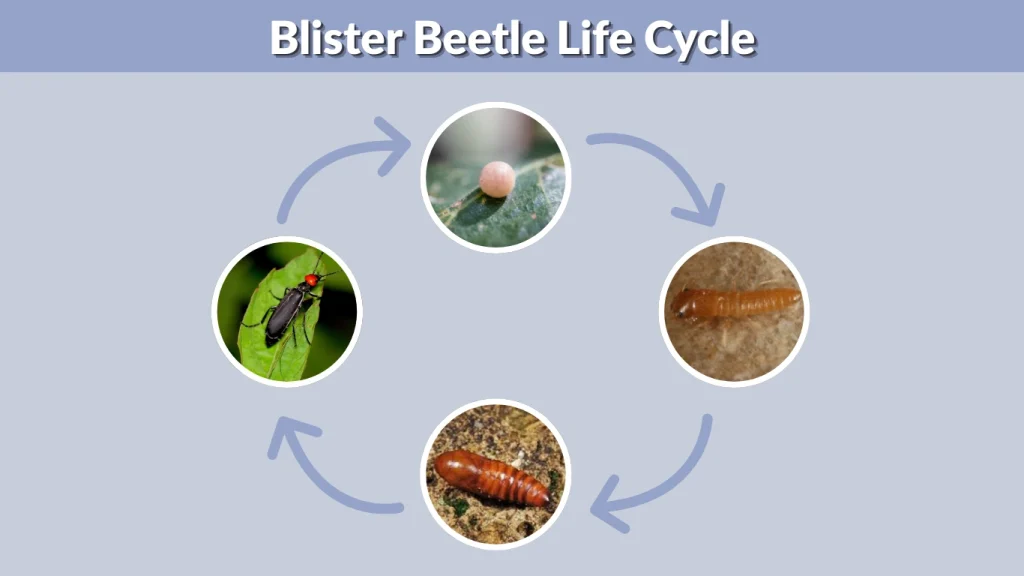
Blister beetles have one of the most unusual life cycles among insects. Their development involves several stages, each with unique behaviors.
The blister beetle life cycle consists of four main stages:
- Egg
- Larva
- Pupa
- Adult
Each stage plays a different role in the insect’s development and survival.
Egg Stage
Female blister beetles usually lay their eggs in soil during late summer. A single female may produce hundreds of eggs at once.
These eggs remain hidden underground until they hatch into larvae.
Blister Beetle Larvae
Once the eggs hatch, the larvae begin an active search for food. Unlike adult beetles, blister beetle larvae often feed on grasshopper eggs or bee larvae.
This feeding behavior can actually help control certain pest populations in agricultural environments.
The larvae go through several developmental stages before entering the pupal stage.
Pupa Stage
After completing the larval development stages, blister beetle larvae enter the pupal stage. During this phase, the insect undergoes a transformation inside the soil. The larva becomes inactive while its body reorganizes and develops the features of an adult beetle.
This stage may last several weeks, depending on environmental conditions such as temperature and soil moisture. Once development is complete, the adult beetle emerges from the soil and begins its life above ground.
Adult Stage
Adult blister beetles usually appear during late spring and summer. At this stage, they begin feeding on plant leaves, flowers, and crops.
Adult beetles often gather in large groups, which can cause significant damage to plants in gardens and agricultural fields. This group feeding behavior is one reason blister beetles are considered agricultural pests.
The adult stage is also when blister beetles produce cantharidin, the chemical responsible for causing skin blisters and protecting the insect from predators.
Blister Beetle Habitat
Blister beetles can live in a wide range of environments, but they are most commonly found in areas where plants and crops are abundant.
Where Blister Beetles Live
These insects typically inhabit:
- Grasslands
- Agricultural fields
- Gardens and farms
- Areas with flowering plants
- Open meadows and prairies
Because adult beetles feed on vegetation, they are often seen on crop plants and flowering weeds during the warmer months.
Geographic Distribution
Blister beetles are found in many parts of the world. They thrive in both temperate and warm climates.
Regions where blister beetles commonly occur include:
- North America
- Europe
- Asia
- Africa
- Parts of South America
Different species are adapted to different climates, but most prefer warm environments with abundant plant life.
Environmental Conditions They Prefer
Blister beetles tend to thrive in environments that provide both food and suitable breeding conditions.
They prefer:
- Warm temperatures
- Dry or moderately moist soil
- Areas with flowering plants
- Fields where grasshoppers are present
Since their larvae feed on grasshopper eggs, blister beetles are often found in locations where grasshopper populations are common.
Blister Beetle Diet
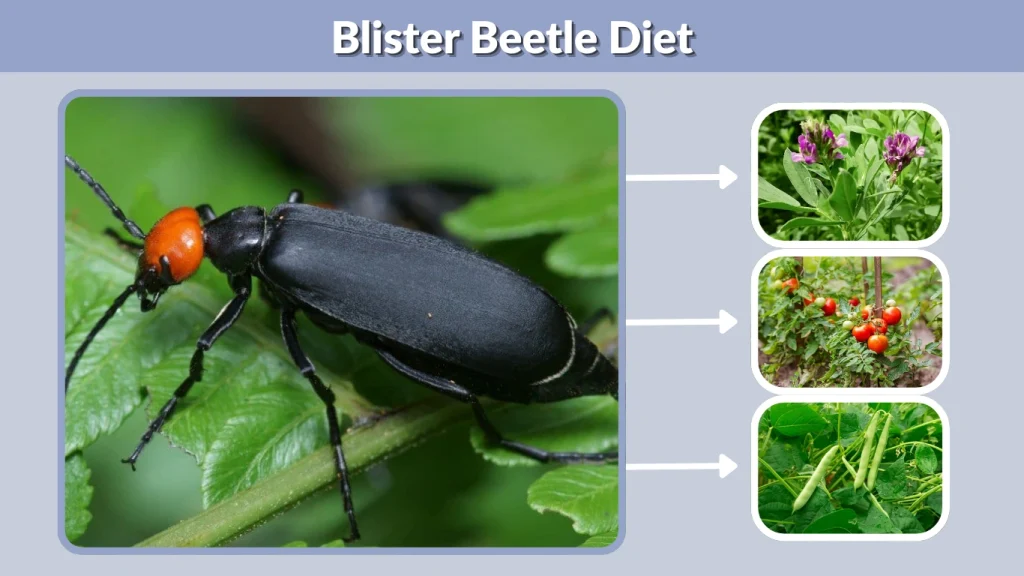
Blister beetles have different diets depending on their stage of development.
What Adult Blister Beetles Eat
Adult blister beetles primarily feed on plant material. They may consume leaves, flowers, and pollen from many types of plants.
Common plants eaten by blister beetles include:
- Alfalfa
- Tomatoes
- Potatoes
- Beans
- Peppers
- Clover
Because they feed in groups, large numbers of beetles can quickly damage crops by stripping leaves and flowers.
What Blister Beetle Larvae Eat
The diet of blister beetle larvae is very different from that of adults.
Most larvae feed on:
- Grasshopper eggs
- Bee larvae (in certain species)
This feeding behavior can actually be beneficial to farmers, because it helps reduce grasshopper populations that might otherwise damage crops.
Crops Commonly Damaged
When blister beetle populations grow large, they can cause noticeable damage to agricultural plants.
Crops most often affected include:
- Alfalfa
- Soybeans
- Tomatoes
- Potatoes
- Corn
- Garden vegetables
Farmers often monitor crops carefully during the summer months when blister beetles are most active.
Blister Beetle Control
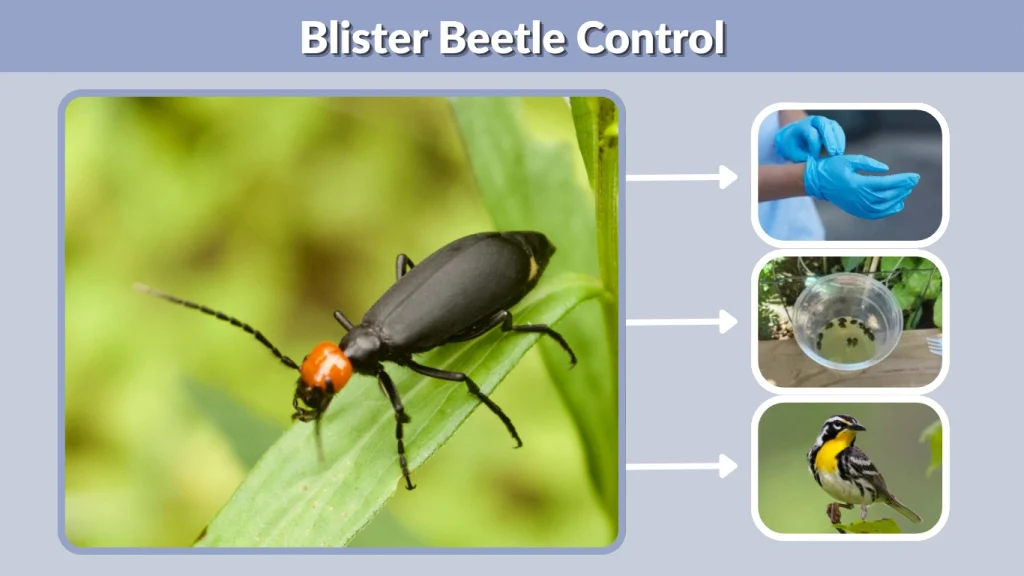
Managing blister beetles is important for both crop protection and human safety. Fortunately, several methods can help reduce beetle populations.
Natural Control Methods
Many gardeners prefer natural approaches when dealing with blister beetles.
Some effective natural control strategies include:
- Removing beetles by hand while wearing gloves
- Shaking beetles off plants into a container of soapy water
- Encouraging natural predators such as birds
It is important not to crush the beetles directly on the skin, since this can release the blister-causing toxin.
Garden and Farm Prevention
Preventive measures can reduce the chances of a blister beetle infestation.
Helpful prevention techniques include:
- Regular crop monitoring
- Removing weeds that attract beetles
- Using row covers to protect plants
- Harvesting crops carefully to avoid trapping beetles in hay or produce
Farmers especially watch for blister beetles in alfalfa fields, where the insects can accidentally become mixed with harvested hay.
Chemical Control
When blister beetle populations become severe, chemical insecticides may be used.
However, chemical control should be used carefully because:
- It may harm beneficial insects
- It can affect pollinators
- Beetles may release toxins even after dying
Integrated pest management strategies are usually recommended to balance control with environmental protection.
Interesting Blister Beetle Facts
Blister beetles are unique insects with several surprising characteristics.
Some interesting facts include:
- There are over 7,500 species of blister beetles worldwide.
- They produce cantharidin, a chemical defense that causes skin blistering.
- This chemical has historically been used in traditional medicine.
- Some species help control grasshopper populations by eating their eggs.
- Blister beetles often appear in large swarms during warm weather.
These insects may look small and harmless, but they possess powerful defensive mechanisms.
Are Blister Beetles Dangerous to Humans and Animals?
Blister beetles can pose risks to both humans and animals if they are handled improperly.
For humans, the primary danger comes from skin contact with cantharidin, which causes painful blisters.
For animals, especially horses, blister beetles can be even more dangerous. If beetles are accidentally mixed into hay and eaten by livestock, the toxin may cause serious illness or poisoning.
Because of this risk, farmers take extra care when harvesting crops such as alfalfa hay, where blister beetles are sometimes present.
How to Prevent Blister Beetle Contact
Avoiding contact with blister beetles is the best way to prevent irritation or injury.
Simple safety tips include:
- Avoid touching unknown insects
- Wear gloves while gardening
- Shake plants before harvesting crops
- Keep pets and livestock away from infested plants
Being aware of these insects and their habits can greatly reduce the risk of exposure.
FAQs
Are blister beetles poisonous?
Blister beetles are not poisonous in the traditional sense, but they produce cantharidin, a toxic chemical that can cause skin blisters and irritation.
Can blister beetles fly?
Yes, blister beetles have wings and can fly. This ability allows them to move easily between plants and crop fields.
Are blister beetles beneficial insects?
In some ways, yes. Their larvae help control grasshopper populations by feeding on grasshopper eggs.
How long do blister beetle blisters last?
Most blisters caused by blister beetle contact heal within a few days to a week, depending on the severity of exposure.
How do you get rid of blister beetles naturally?
Natural removal methods include hand-picking with gloves, shaking beetles into soapy water, and maintaining healthy garden practices to reduce infestations.
Conclusion
Blister beetles are unusual insects that can be both beneficial and problematic. While their larvae help control grasshopper populations, adult beetles can damage crops and cause painful skin blisters through their defensive chemical, cantharidin. Understanding blister beetle identification, habitat, diet, and life cycle can help people avoid contact and manage infestations safely. By using proper prevention and control methods, gardeners and farmers can reduce the risks associated with these insects while maintaining a balanced ecosystem.
