

Blue dragonflies are among the most striking insects in nature, instantly recognizable for their vivid colors, quick movements, and shimmering wings. Their appearance varies from powder blue and bright neon to deep electric hues depending on the species. While often admired for their beauty, blue dragonflies also carry symbolic meaning in cultures worldwide. Understanding their species traits, color variations, and spiritual associations provides a deeper appreciation for these fascinating insects.
Blue Dragonfly Species and Identification
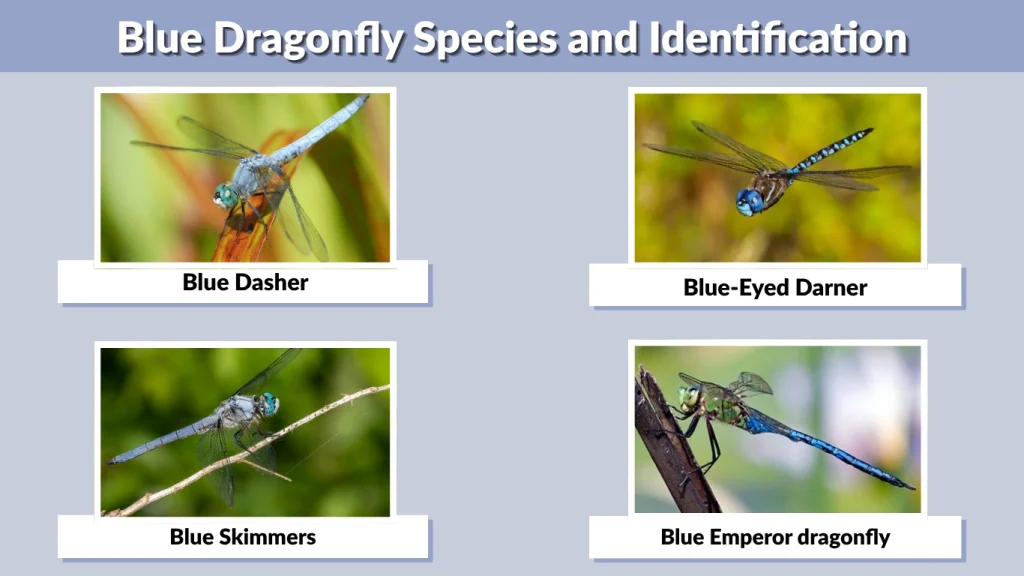
Blue dragonflies include many species across North America, Europe, and Asia. They vary in size, pattern, and coloration, making proper identification important for nature enthusiasts. Some are bold, metallic blue, while others appear pale or powdery depending on age, sex, or environment.
Blue Dasher (Pachydiplax longipennis)
The Blue Dasher is one of the most familiar blue dragonflies in gardens and ponds. Males display a bright blue body with a contrasting black-and-white face. Females are brownish with subtle blue tones. This species prefers sunny habitats and perches on stems or reeds while scanning for prey. Its agility and vibrant color make it popular among photographers and observers.
Blue Darner and Blue-Eyed Darner
Blue darner species are larger dragonflies recognized for their long bodies marked with alternating blue and black segments. The Blue-Eyed Darner stands out due to its striking blue eyes, which reflect light beautifully. These dragonflies are fast flyers, often patrolling large territories near lakes and forest edges. Their intense coloration and powerful flight make them easy to identify mid-air.
Blue Skimmers and Corporals
The Blue Skimmer and Great Blue Skimmer both show powdery, light-blue coloration with broad wings suited for gliding. The Blue Corporal, smaller and darker, has bluish-gray tones that develop as it matures. These species are commonly found near slow-moving water and wetlands, where males defend perching spots during the breeding season.
Other Blue Dragonfly Species
Other species include the Blue Emperor dragonfly, known for its impressive size and bold blue abdomen, and the Blue Darter, which displays vibrant markings across its slender body. Some species shift in color as they age, developing deeper blues or lighter powder finishes, adding complexity to identification.
Color Variations in Blue Dragonflies

Blue dragonflies come in a wide range of shades and mixed-color combinations. Many species exhibit color blends based on environment, temperature, and maturity.
Mixed-Color Species
Some dragonflies combine blue with green, yellow, purple, or white. Blue-and-green species often have metallic bodies that shift between hues in sunlight. Blue-and-yellow dragonflies display bold contrast along the abdomen, while blue-and-purple species show subtle iridescent tones. Blue-and-white combinations appear in pale-winged species or individuals with light abdominal patches.
Black and Blue Combinations
Black-and-blue dragonflies are common, often featuring blue abdomens paired with dark wings or strong black striping. The Widow Skimmer, for instance, may show blue bodies with black wing bands. These dramatic contrasts help males establish dominance in territorial displays.
Blue Wing Variants
Some dragonflies have wings tinted with shades of blue. Others have blue bodies with clear wings, while a few display blue wing veins that shimmer under light. Wing variations help differentiate species and make certain blue dragonflies especially photogenic.
Behavior and Habitat
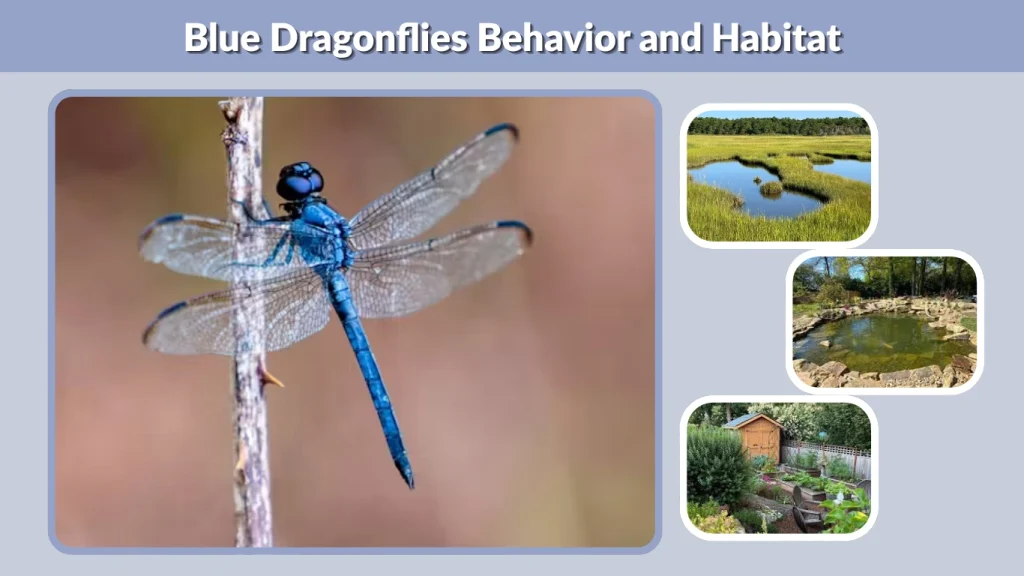
Blue dragonflies inhabit diverse environments, from marshes and ponds to suburban gardens and nature trails. Their behavior often reflects the needs of their species, including territory defense and efficient hunting.
Where Blue Dragonflies Live
Many blue species thrive in warm, sunny climates such as Florida and California. Others inhabit cooler regions, including northern wetlands or shaded forest ponds. Despite environmental differences, all blue dragonflies require water for breeding and rely on open airspace for swift, uninterrupted flight.
Size and Seasonal Appearance
Blue dragonfly species range from tiny, fast-moving individuals to large, slow-gliding types. Seasonal variations affect how intense their coloration appears; some species brighten during mating season, while others fade or shift toward gray-blue later in life.
Symbolism and Meaning of Blue Dragonflies
Blue dragonflies hold powerful symbolic value in many cultures. Their vibrant color, swift movement, and shimmering wings make them symbols of clarity, renewal, and emotional depth. They often appear during warm months, creating connections between natural beauty and deeper spiritual themes.
General Symbolism
Blue dragonflies commonly symbolize peace, communication, and transformation. Their blue color is associated with calmness and emotional balance. When people encounter them, they often interpret the sighting as a reminder to slow down, reflect, or embrace a new phase in life. Their gentle presence encourages trust in intuition and inner wisdom.
Spiritual Meaning
Spiritually, a blue dragonfly is believed to carry messages of truth, honesty, and awareness. The color blue connects to the throat chakra, representing clear communication and personal expression. Many see a blue dragonfly’s appearance as a sign to speak truthfully or embrace spiritual growth. Their visits are often interpreted as protective or guiding experiences.
What It Means When One Lands on You
If a blue dragonfly lands on a person, many cultures view it as a meaningful moment. This gesture may symbolize emotional healing, personal harmony, or the start of a calm period in life. It can also indicate that positive news or clarity is approaching, encouraging the person to remain grounded and open-hearted.
Cultural and Mythical Interpretations
In some traditions, blue dragonflies represent departed loved ones offering comfort or guidance. Certain beliefs connect them to rebirth and the shifting of seasons. In folklore, blue dragonflies are often considered bringers of insight, reminding observers to remain adaptable and aware of their surroundings.
Images, Photos, and Identification Tips
Blue dragonflies are among the most photographed insects due to their bright colors and reflective wings. Identifying them through images is often simple once key features are understood.
Identifying Blue Dragonflies by Appearance
Most blue dragonflies have slender bodies with strong coloration, though shades vary from light powder blue to deep electric tones. Wing types differ by species, with some showing clear wings, others displaying dark tips, and a few exhibiting faint blue tinting or iridescent wing veins.
Photo-Based Identification Tips
Photographs that capture both the body and wings provide the best clues for identifying species. Noting eye color, body segment markings, wing shape, and size differences helps distinguish similar types. Because blue damselflies are often confused with dragonflies, examining body width and wing position at rest is essential.
Blue Dragonfly Rarity and Interesting Facts
How Rare Are Blue Dragonflies?
Blue dragonflies are not extremely rare, but some species—especially deep electric-blue types—are less common than green or brown varieties. Rarity depends on habitat, climate, and season. In northern regions, blue dragonflies appear primarily in late summer, while southern species are seen more frequently throughout the year.
Unique Traits and Behaviors
Many blue species display territorial behavior, defending perches or small patches of water. Their coloration may brighten during mating periods, making males especially vibrant. Some species also shift shades depending on temperature or age, moving from light blue to deeper hues as they mature.
Other Curiosities
Blue dragonflies often appear around flower farms, marshes, and sunny gardens. Their striking color makes them popular subjects for artwork, jewelry, and creative designs. Several businesses—such as inns, gift shops, and florists—use the blue dragonfly in branding due to its associations with elegance and transformation.
Blue Dragonfly Look-Alikes
Blue Damselflies vs Blue Dragonflies
Blue damselflies are frequently mistaken for blue dragonflies due to their similar color. However, damselflies have slimmer bodies, hold their wings together when resting, and fly more delicately. Dragonflies hold their wings flat and have broader bodies, stronger flight patterns, and more pronounced coloration changes.
FAQs
What does a blue dragonfly symbolize?
A blue dragonfly symbolizes peace, clarity, communication, and emotional balance. Its blue color is associated with honesty and truth, while its movement represents transformation and adaptability. Many cultures view it as a reminder to stay calm, centered, and open to new perspectives.
Are blue dragonflies rare?
Some blue dragonfly species are common, while others are less frequently seen. Bright electric-blue types are rarer, especially in cooler climates. Their presence depends on habitat, season, and temperature, but overall, blue dragonflies are not considered rare across their natural ranges.
What does it mean when a blue dragonfly lands on you?
When a blue dragonfly lands on someone, it is often interpreted as a sign of emotional healing or upcoming clarity. Many cultures see it as a message of peace, protection, or personal transformation. This gentle encounter symbolizes trust, calm energy, and positive changes ahead.
How can I identify a blue dragonfly?
Identification involves examining body color, wing pattern, and eye color. Blue dragonflies may display powder, bright, or deep blue tones. Observing wing shape, size, and resting posture helps differentiate them from look-alikes, especially blue damselflies, which hold their wings together and have slimmer bodies.
Where are blue dragonflies most commonly found?
Blue dragonflies inhabit ponds, lakes, marshes, wetlands, and sunny gardens. They thrive in warm climates like Florida and California but also appear in northern regions during summer. Their need for clean water and open flyways makes them common near natural water sources.
