
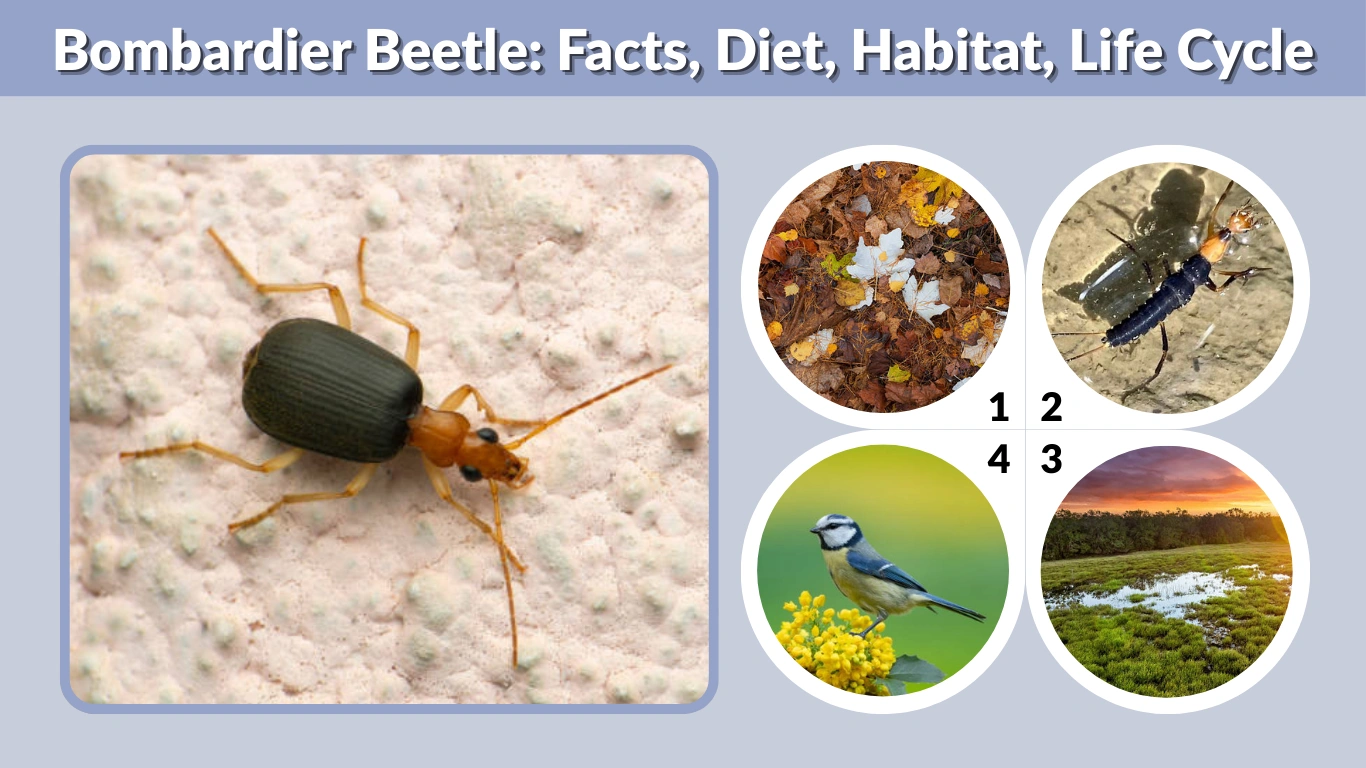
The bombardier beetle is one of the most fascinating insects in the natural world, famous for its remarkable chemical defense system. When threatened, this beetle releases a hot, explosive spray from its abdomen to scare away predators. Found in many parts of the world, bombardier beetles play an important role in controlling other insect populations. In this article, we explore bombardier beetle facts, diet, habitat, larvae, life cycle, and different species to understand how this tiny insect survives and thrives in nature.
What Is a Bombardier Beetle?
The bombardier beetle is a type of ground beetle known for its extraordinary defense mechanism. It belongs to the family Carabidae and is widely recognized for its ability to spray boiling chemicals at potential predators. This unique ability makes the bombardier beetle one of the most studied insects in the animal kingdom.
Bombardier beetles are relatively small insects, usually measuring between 5 and 15 millimeters in length. Their bodies are typically dark brown or black, often with reddish or orange markings on their heads or legs. Despite their small size, they possess a powerful defense system that helps them survive attacks from animals such as birds, frogs, and spiders.
What truly sets bombardier beetles apart from other insects is their chemical defense mechanism. Inside their abdomen, they store two separate chemicals—hydrogen peroxide and hydroquinones. When threatened, these chemicals mix in a special reaction chamber inside the beetle’s body. The reaction produces heat and pressure, resulting in a hot spray that can reach temperatures close to 100°C (212°F).
The beetle can aim this spray toward its attacker with surprising accuracy. The explosive chemical reaction also produces a popping sound, which further startles predators. Because of this defensive ability, many predators quickly learn to avoid bombardier beetles.
Bombardier Beetle Diet
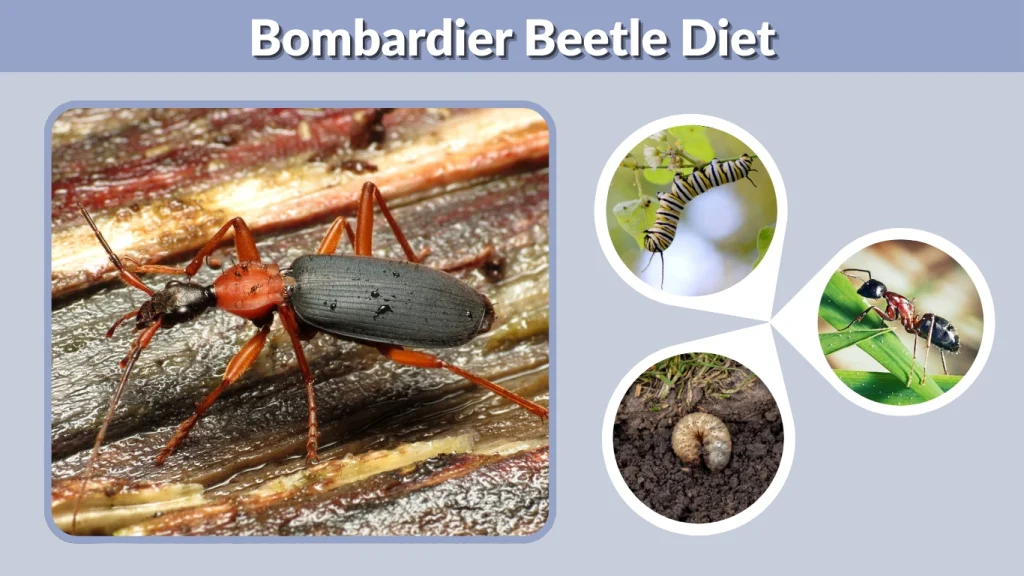
The bombardier beetle is a predatory insect, meaning it feeds on other small animals. Its diet mainly consists of insects and other invertebrates that live on the ground.
What Do Bombardier Beetles Eat?
Bombardier beetles typically eat a variety of small creatures found in their natural habitat. These include insect larvae, small beetles, ants, and other soft-bodied arthropods. Because they hunt at night, they rely on their senses and quick movements to capture prey.
Their strong mandibles allow them to grasp and crush their food effectively. Once they capture their prey, they quickly consume it before moving on to search for more food.
Common Food Sources
Bombardier beetles feed on several types of prey, including:
- Insect larvae
- Caterpillars
- Small beetles
- Ants
- Worm-like invertebrates
By feeding on these organisms, bombardier beetles help control pest populations in their ecosystem. This makes them beneficial insects in many natural environments.
Hunting and Feeding Behavior
Bombardier beetles are active hunters, especially during the night. They usually search for food on the ground, moving through soil, leaf litter, and vegetation. Their ability to move quickly helps them catch small prey that might otherwise escape.
When hunting, the beetle uses its antennae to detect movement and chemical signals from nearby prey. Once it locates its target, it quickly grabs it with its mandibles and begins feeding.
Because they are both predators and prey in the food chain, bombardier beetles must constantly remain alert. Their chemical defense provides protection if a larger animal tries to attack them while they are feeding.
Bombardier Beetle Habitat
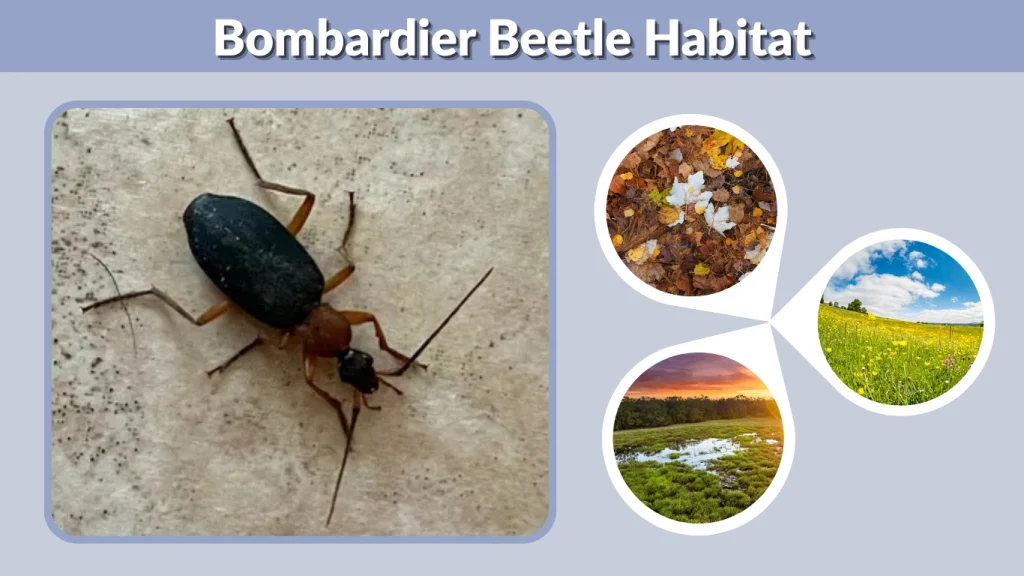
Bombardier beetles live in a wide range of environments around the world. These insects prefer areas where they can easily find food and hide from predators. Because they are ground-dwelling beetles, they usually stay close to the soil surface and spend much of their time under natural cover.
Where Do Bombardier Beetles Live?
Bombardier beetles are found on every continent except Antarctica. They thrive in many climates, from temperate forests to tropical regions. Their adaptability allows them to survive in different ecosystems as long as food and shelter are available.
These beetles often hide during the daytime and become active at night. Their nocturnal behavior helps them avoid predators and extreme temperatures.
Typical Natural Habitats
Bombardier beetles commonly live in places that provide moisture and protection. Some of their most common habitats include:
- Forest floors covered with leaf litter
- Grasslands and meadows
- Riverbanks and wetlands
- Agricultural fields
- Gardens and parks
These environments provide the beetles with plenty of small insects to hunt and many hiding places such as rocks, logs, and soil crevices.
Environmental Conditions They Prefer
Bombardier beetles generally prefer moist and shaded environments. Soil with organic material, fallen leaves, and decaying wood provides both shelter and hunting grounds. These conditions also help protect them from extreme heat and dryness.
Because they live close to the ground, bombardier beetles play an important role in the soil ecosystem, where they interact with many other small organisms.
Bombardier Beetle Larvae
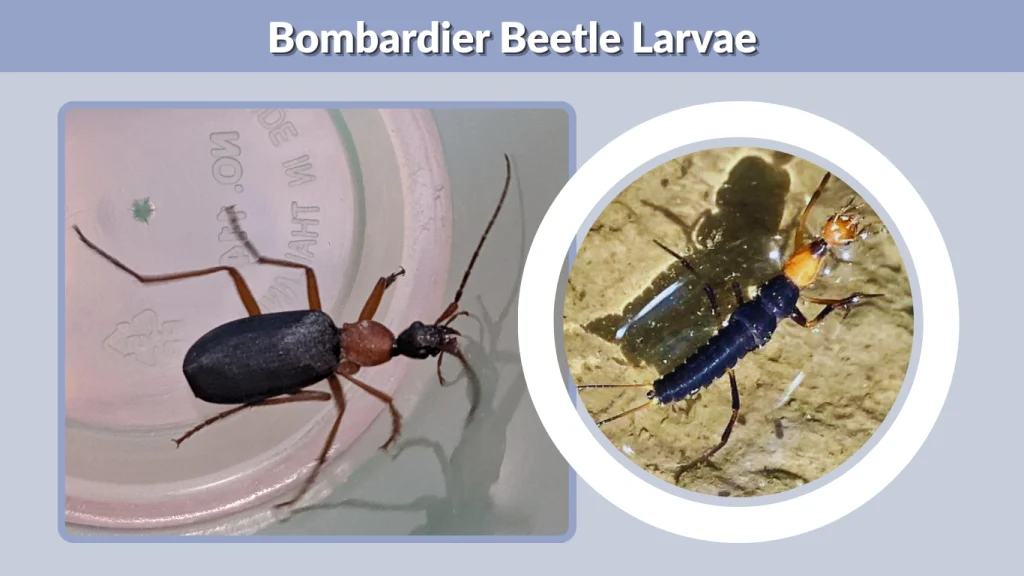
Like many insects, bombardier beetles go through several developmental stages before becoming adults. The larval stage is particularly interesting because their behavior and lifestyle differ significantly from the adult beetles.
What Do Bombardier Beetle Larvae Look Like?
Bombardier beetle larvae are elongated, worm-like creatures with segmented bodies and small legs near the front. Their appearance is quite different from the adult beetle, but they share similar predatory instincts.
These larvae are usually pale or light-colored and spend most of their time hidden underground or inside host nests.
Larval Behavior and Lifestyle
Bombardier beetle larvae often behave as parasitoids, meaning they develop by feeding on the eggs or larvae of other insects. Many species specifically target the nests of ground-dwelling insects.
For example, some bombardier beetle larvae enter the nests of other beetles or insects and consume their eggs. This behavior provides them with a steady food supply while they grow.
Development of Larvae
During the larval stage, the young beetle focuses on feeding and growing. As it consumes food, it gradually increases in size until it is ready to transform into the next stage of development.
Once fully grown, the larva forms a protective chamber in the soil where it will begin the transformation process known as pupation.
Bombardier Beetle Life Cycle
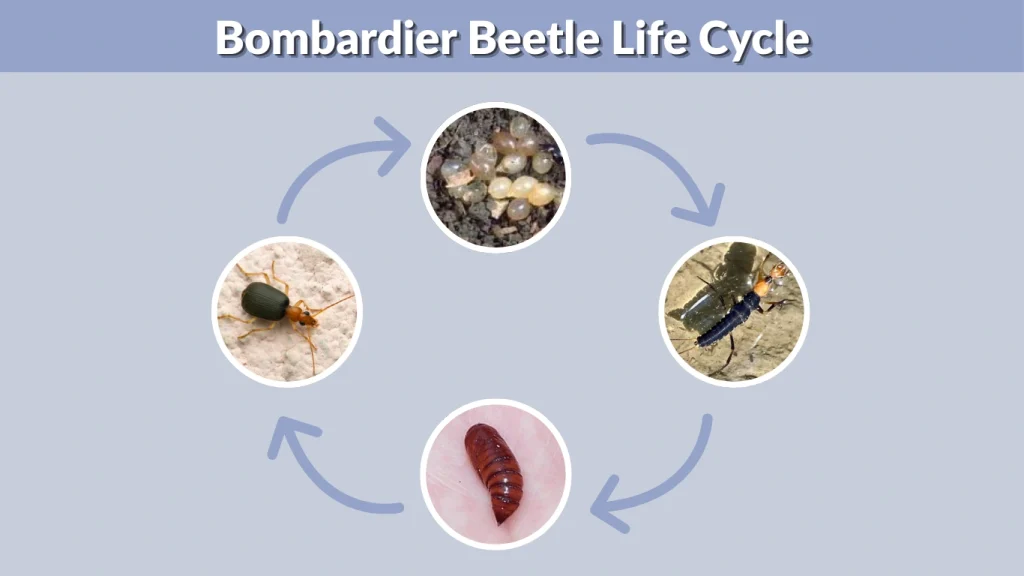
The life cycle of the bombardier beetle follows the typical complete metamorphosis pattern seen in many beetles. This process includes four major stages: egg, larva, pupa, and adult.
Egg Stage
The life cycle begins when a female bombardier beetle lays eggs in the soil or near suitable habitats. The eggs are usually placed in protected areas where the young larvae will have access to food once they hatch.
Depending on environmental conditions, the eggs may hatch within a few days or weeks.
Larval Stage
After hatching, the larvae begin feeding immediately. This stage is focused entirely on growth and development. The larvae may spend several weeks feeding on insect eggs or small organisms.
As they grow, the larvae molt several times, shedding their outer skin to allow their bodies to expand.
Pupal Stage
Once the larva has reached full size, it enters the pupal stage. During this phase, the insect remains inactive while its body undergoes major transformation.
Inside the pupal chamber, the larva gradually develops into an adult beetle with wings, legs, and its unique chemical defense system.
Adult Stage
The final stage of the life cycle is the adult bombardier beetle. Adult beetles emerge from the soil and begin searching for food and mates. At this stage, they possess the famous chemical spray defense that protects them from predators.
Adult bombardier beetles may live for several months, depending on environmental conditions.
Bombardier Beetle Species
There are more than 500 known species of bombardier beetles around the world. These species belong to several genera within the ground beetle family.
Major Bombardier Beetle Genera
Some of the most well-known genera include:
- Brachinus
- Pheropsophus
- Aptinus
Each genus contains multiple species that vary in size, coloration, and habitat preferences.
Notable Bombardier Beetle Species
Several species have been widely studied by scientists due to their unique defensive abilities. Examples include:
- Brachinus crepitans
- Pheropsophus jessoensis
- Brachinus elongatulus
These species demonstrate the same explosive chemical defense that characterizes bombardier beetles, though their size and appearance may differ slightly.
Differences Between Species
While all bombardier beetles share the same defensive mechanism, species may differ in several ways:
- Body size
- Color patterns
- Habitat preferences
- Geographic distribution
These variations allow different species to adapt to specific environments around the world.
Predators and Survival Strategies
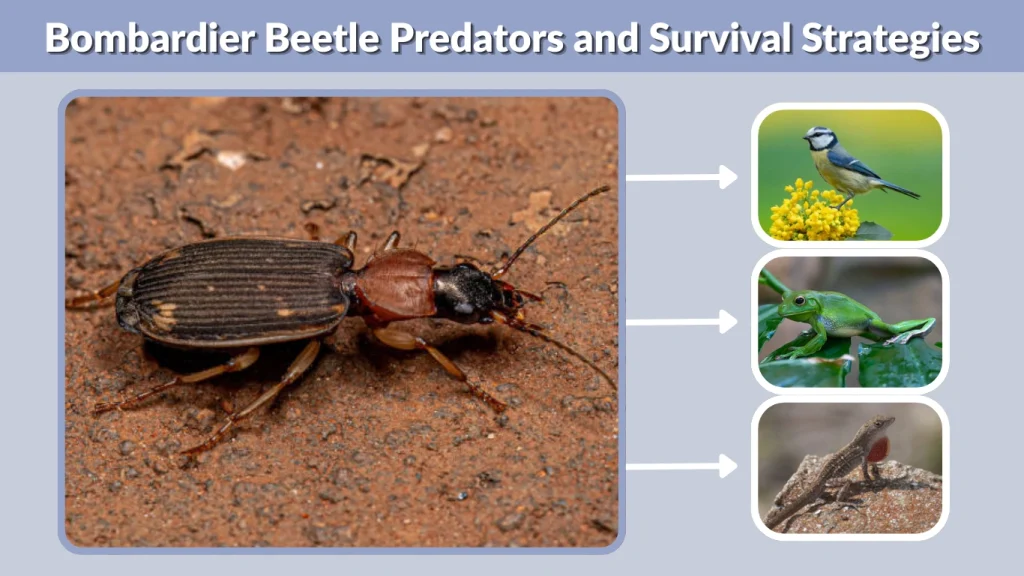
Even with their powerful chemical defense, bombardier beetles still face threats from predators. However, their explosive spray gives them a significant advantage when defending themselves.
Natural Predators
Some animals that attempt to prey on bombardier beetles include:
- Birds
- Frogs
- Lizards
- Spiders
Many predators quickly learn to avoid bombardier beetles after experiencing their chemical spray.
Defense Strategies
The primary defense of the bombardier beetle is its hot chemical spray, which can be directed at attackers with impressive accuracy. The sudden burst of heat, sound, and chemical irritation often causes predators to retreat immediately.
This remarkable defense mechanism has allowed bombardier beetles to survive for millions of years.
Bombardier Beetle Facts
Bombardier beetles are known for several unique traits that make them stand out among insects. Their chemical defense system, behavior, and biological structure have fascinated scientists for decades.
Interesting Bombardier Beetle Facts
One of the most interesting facts about bombardier beetles is their ability to produce a boiling chemical spray. When a predator threatens the beetle, it rapidly ejects the hot chemical mixture in short bursts. This spray is both hot and irritating, making it highly effective for defense.
Another surprising fact is that the beetle can fire multiple bursts in rapid succession. Instead of releasing the spray all at once, the bombardier beetle ejects it in a series of quick pulses. This pulsing action allows the beetle to maintain pressure and continue spraying until the predator retreats.
Bombardier beetles are also nocturnal insects, meaning they are most active during the night. They spend much of the daytime hiding under rocks, logs, or leaf litter to avoid predators and extreme temperatures.
Despite their powerful defense, bombardier beetles are generally harmless to humans. While their spray can cause mild irritation if it touches skin, it is not dangerous and rarely causes serious injury.
Physical Characteristics
Bombardier beetles have a distinctive body structure that helps them survive in their environment. Their bodies are typically elongated and slightly flattened, which allows them to move easily through soil, leaf litter, and small crevices.
Most species have long legs and strong mandibles, which help them capture prey and move quickly when threatened. Their heads are often reddish or orange, while the rest of their bodies are darker in color.
Another important feature is the specialized abdominal chamber used for their defense system. This chamber contains the chemicals and enzymes needed to produce the explosive spray.
Importance of Bombardier Beetles in the Ecosystem
Bombardier beetles play an important role in maintaining balance within their ecosystems.
Role in Pest Control
Because they feed on many small insects and larvae, bombardier beetles help control pest populations in natural environments and agricultural areas.
Contribution to Biodiversity
These beetles are also part of a complex food web that includes many other organisms. Their presence helps support biodiversity and ecological stability.
Conclusion
The bombardier beetle is one of nature’s most fascinating insects. Its explosive chemical defense, predatory diet, and complex life cycle make it unique among beetles. Found in many habitats around the world, bombardier beetles play an important role in controlling insect populations and maintaining ecological balance. By understanding their behavior, habitat, and life cycle, we gain a deeper appreciation for the remarkable adaptations that allow these tiny creatures to survive in the wild.
