

Botfly bites are not ordinary insect bites—they are parasitic infestations caused when botfly larvae burrow into the skin. These painful lesions develop as the larvae grow beneath the surface. Recognizing the symptoms early helps prevent serious infection and ensures proper removal and recovery.
Appearance and Identification

Botfly bites look unlike typical bug bites.
- Shape: Raised, red bump resembling a boil or cyst.
- Texture: Firm, with a small central hole (larva’s breathing spot).
- Pain Level: Increasing tenderness as the larva matures.
- Movement: Some people feel slight wriggling beneath the skin.
- Location: Common on scalp, arms, back, or legs in humans; around the neck or belly in animals.
Early Botfly Bite Stages
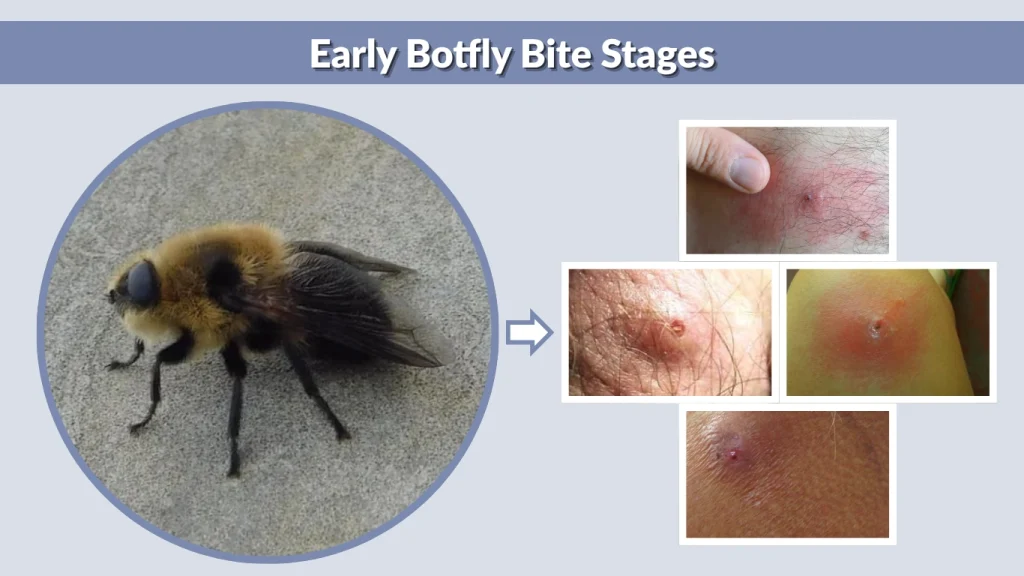
The infection starts as a minor irritation similar to a mosquito bite. Within a few days, the area swells and becomes painful. As the larva grows, the bump enlarges, forming a pustule-like sore with a visible opening. This stage usually lasts between 5 to 10 days before symptoms intensify.
Botfly Bites on Humans
Humans become hosts when mosquitoes carrying botfly eggs land and deposit larvae on the skin. The larvae burrow through pores, causing inflammation and pain. Early detection is crucial—once mature, larvae can reach 2 cm in length. The bite site remains red, sore, and often leaks fluid until the larva is removed.
Botfly Bite on Dogs

Dogs are frequent victims, especially those in rural or tropical areas. Botflies lay eggs on grass, and when a dog brushes against it, larvae penetrate the skin. Symptoms include excessive licking, swelling, and visible breathing holes. Without treatment, infections can spread or leave scars after removal.
What Does a Botfly Bite Feel Like?
A botfly bite feels like a sharp sting at first, followed by itching and throbbing pain. As the larva grows, people often report pulsing sensations or movement under the skin. The discomfort worsens until the parasite is expelled or surgically removed.
Botfly Bite Stages

Botfly bites progress through several clear stages:
- Initial Stage: Red, itchy bump forms where the larva entered.
- Larval Growth Stage: Swelling increases as the larva feeds under the skin.
- Breathing Stage: A small hole appears in the center for air.
- Maturation Stage: The larva becomes visible or moves beneath the skin.
- Exit Stage: After 4–6 weeks, the larva leaves the skin, leaving an open wound that needs cleaning.
Botfly Bite Symptoms
Common symptoms include:
- Continuous pain or itching
- Redness and swelling around the wound
- Fluid discharge or pus
- Sensation of movement under the skin
- Fever or infection in severe cases
These signs indicate an active larval presence, requiring quick medical or manual removal.
Botfly Bite Treatment

Treatment depends on how advanced the infestation is.
- Suffocation Method: Cover the wound with petroleum jelly, adhesive tape, or bacon fat to cut off oxygen, forcing the larva out.
- Manual Extraction: Once visible, use sterilized tweezers to pull out the larva gently.
- Medical Assistance: Doctors may use local anesthesia and surgical tools for safe removal.
- Aftercare: Clean the area with antiseptic and apply antibiotic ointment to prevent infection.
Botfly Bites on Cats and Other Animals
Cats and small pets can also suffer from botfly infestations, especially near wooded areas. Symptoms include lumps, scratching, and discharge. Vets typically remove the larva manually and prescribe antibiotics. Keeping pets indoors during botfly season helps avoid exposure.
How to Identify a Botfly Bite
A botfly bite can be distinguished by its painful swelling with a small air hole. The wound doesn’t heal like normal bites and worsens over time. The presence of movement or bubbling around the sore strongly suggests a botfly larva beneath the skin.
How to Prevent Botfly Bites
- Use insect repellents when outdoors.
- Keep pets groomed and checked regularly.
- Avoid resting in shaded, humid areas where botflies thrive.
- Wear long sleeves and pants in tropical regions.
These habits greatly reduce exposure to carrier insects like mosquitoes or flies.
FAQs
What does a botfly bite look like?
A botfly bite looks like a swollen red bump with a tiny hole in the center. It often resembles a boil or abscess and may leak fluid. The hole serves as a breathing opening for the larva living beneath the skin.
Do botfly bites hurt?
Yes, botfly bites are painful and progressively worsen as the larva grows. The pressure and movement under the skin create a throbbing sensation, which can become unbearable without treatment or removal.
How can I tell if I have a botfly bite?
If you notice a lump that becomes increasingly painful, with a central hole or slight movement inside, it could be a botfly bite. Unlike mosquito bites, botfly lesions persist and don’t heal until the larva exits or is extracted.
What happens if a botfly bites you?
When a botfly bites, the larva burrows into your skin and grows inside. It feeds on tissue fluids for weeks before emerging. If untreated, the area can become infected, leaving scars after healing.
How to treat a botfly bite at home?
Apply petroleum jelly or tape to block oxygen, encouraging the larva to emerge. Once visible, remove it carefully with tweezers and clean the wound thoroughly. Seek medical help if redness, swelling, or fever persists afterward.
