

Brown beetles are among the most widespread insects found across homes and gardens. These beetles come in various sizes, shapes, and shades of brown—ranging from small carpet beetles to large ground or June beetles. While some are harmless scavengers, others can damage fabrics, wooden furniture, and stored foods. Knowing how to identify and manage them helps prevent infestations and protect your home.
Identifying Brown Beetles

- Color: Shades range from light tan to reddish or dark brown.
- Shape: Oval or elongated bodies with hard shells (elytra).
- Size: Tiny (2–4 mm) to large (over 25 mm) depending on species.
- Antennae: Short to medium length, sometimes clubbed or segmented.
- Wings: Most species can fly; some are weak fliers or flightless.
- Habitat: Found indoors (carpets, pantries) or outdoors (gardens, wood).
- Behavior: Nocturnal, attracted to lights, warmth, and organic material.
- Diet: Feed on fabrics, wood, grains, or decaying plant matter.
- Signs of Presence: Small holes in fabrics, larvae skins, or dead adults near windows.
Common Types of Brown Beetles

Brown beetles belong to different families, and each type behaves uniquely. Understanding these species helps you recognize what kind of pest you’re dealing with.
Brown Carpet Beetles
Among the most common indoor pests, carpet beetles are small, round, and covered in fine scales that give them a mottled brown or black look.
- Size: 2–4 mm long.
- Habitat: Carpets, wool clothing, upholstered furniture, and old fabric storage boxes.
- Damage: Larvae—not adults—cause real harm by chewing fibers, feathers, and even stored food.
These beetles often appear near windowsills or closets where they lay eggs in fabric crevices. Regular vacuuming and sunlight exposure deter them effectively.
Ground and Longhorn Beetles
Brown ground beetles are shiny, fast-moving insects usually seen outdoors under stones or mulch. They are actually beneficial predators that feed on smaller insects.
Longhorn beetles, on the other hand, have elongated bodies and distinct long antennae. Many brown longhorn species infest decaying or untreated wood. If found indoors, they may have entered through firewood or old furniture.
Click and Prionid Beetles
Click beetles are slender, brown beetles known for their ability to flip upright by snapping their bodies—creating a “click” sound. They are mostly harmless but can startle homeowners.
Prionid beetles, large and heavy-bodied, are night fliers attracted to light. Their larvae live in soil or rotting wood, feeding on plant roots or decaying matter. Although intimidating, they rarely cause indoor damage.
June Beetles and Scarabs
The brown June beetle is a familiar summer visitor. These medium-sized beetles are glossy brown with soft bodies and short antennae. They emerge at dusk, fly toward porch lights, and sometimes bump into windows.
A close relative, the Japanese beetle, sometimes appears brownish and feeds heavily on plants and lawn roots, causing significant outdoor damage.
Minute Brown Scavenger Beetles
These tiny brown beetles are frequent kitchen invaders. They thrive in damp areas, feeding on mold, crumbs, or organic residue. Though harmless to humans, they can become a nuisance in poorly ventilated spaces or food cupboards.
Color and Pattern Variations
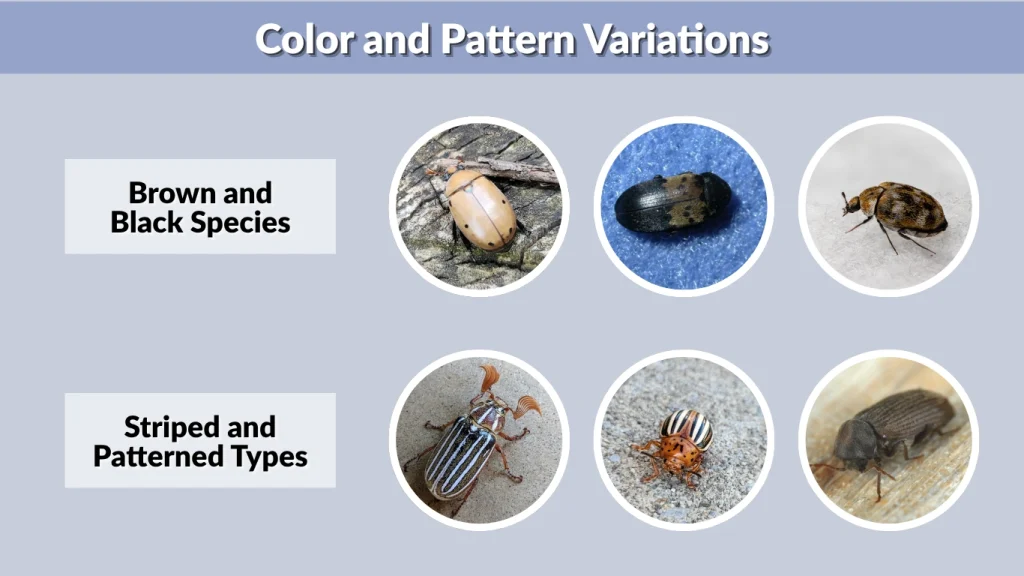
Brown beetles exhibit many shades and markings that help distinguish them from roaches or other insects.
Brown and Black Species
Certain species, like the brown beetle with black spots or black and brown striped beetles, have darker patches or glossy surfaces. These may belong to the carpet beetle or wood-boring families. Some possess distinct black bands across their shells, creating a striking pattern that aids in identification.
Striped and Patterned Types
Other brown beetles have light or white stripes, such as the brown and white striped beetle or brown beetle with white lines. These patterns often indicate specific species within the Anobiidae or Dermestidae families, both known for feeding on dried organic matter. Recognizing these patterns helps in determining whether a beetle is a harmless outdoor visitor or a potential household pest.
Size-Based Classification
Tiny Brown Beetles
The smallest brown beetles—like the minute brown scavenger beetle—measure less than 3 mm. They often appear near windows, kitchen counters, or stored grains. Despite their size, infestations can be difficult to detect because they hide deep in cracks and under baseboards.
Large Brown Beetles
Larger species such as June beetles, Prionid beetles, and Stag beetles range from 1 inch to 2 inches long. They are primarily outdoor dwellers but sometimes fly indoors, attracted by bright lights. While they look intimidating, they usually don’t cause structural damage inside homes.
Brown Beetles in the House

Typical Indoor Locations
Brown beetles tend to hide in quiet, undisturbed places:
- Under rugs, carpets, and furniture legs
- Inside kitchen cupboards or pantries
- Around windowsills and light fixtures
- In closets containing wool, silk, or leather
They prefer dark corners where food crumbs, lint, or natural fabrics are present.
Signs of Infestation
- Small, irregular holes in fabric or carpet fibers
- Dead adult beetles on window ledges
- Tiny larvae or shed skins in drawers or floor cracks
Finding these clues early allows you to take action before the infestation spreads.
Why They Enter Homes
Brown beetles are attracted by warmth, food odor, and moisture. They can enter through open doors, vents, or cracks in foundations. Some hitchhike inside through old furniture, stored grains, or secondhand clothes. Once indoors, they seek quiet, dark spaces to breed.
Flying Brown Beetles

Night Activity
Many brown beetles are active flyers at night, especially during warm, humid seasons. They’re attracted to porch lights, open windows, and reflective surfaces. Homeowners often notice them buzzing around lamps or outdoor lights after dusk.
Common Flying Species
- Brown Flying Beetle: A general term for harmless beetles that wander indoors seeking light.
- Tiny Flying Brown Beetle: Typically refers to pantry pests such as cigarette or drugstore beetles that infest stored goods.
- Brown Flying Beetles at Night: These are often June beetles or longhorn beetles emerging from nearby soil or garden areas.
Turning off unnecessary exterior lighting and sealing entry points helps reduce nighttime visitors.
Regional Appearances
Brown beetle species vary slightly by location, influenced by climate and local vegetation.
Southern and Coastal Regions
- Florida & Texas: Warm weather and high humidity attract carpet beetles, longhorn beetles, and June beetles.
- California: Known for brown click beetles and prionid beetles, often drawn to lights near gardens or patios.
Midwestern and Northern Areas
- Ohio & Michigan: Brown carpet beetles and ground beetles are common household invaders, particularly in older wooden homes.
- Northeast U.S.: Cooler regions host wood-boring beetles that infest beams, flooring, and stored firewood.
While types differ slightly, the management methods remain the same—cleanliness, sealing gaps, and controlling humidity.
Lifecycle of Brown Beetles
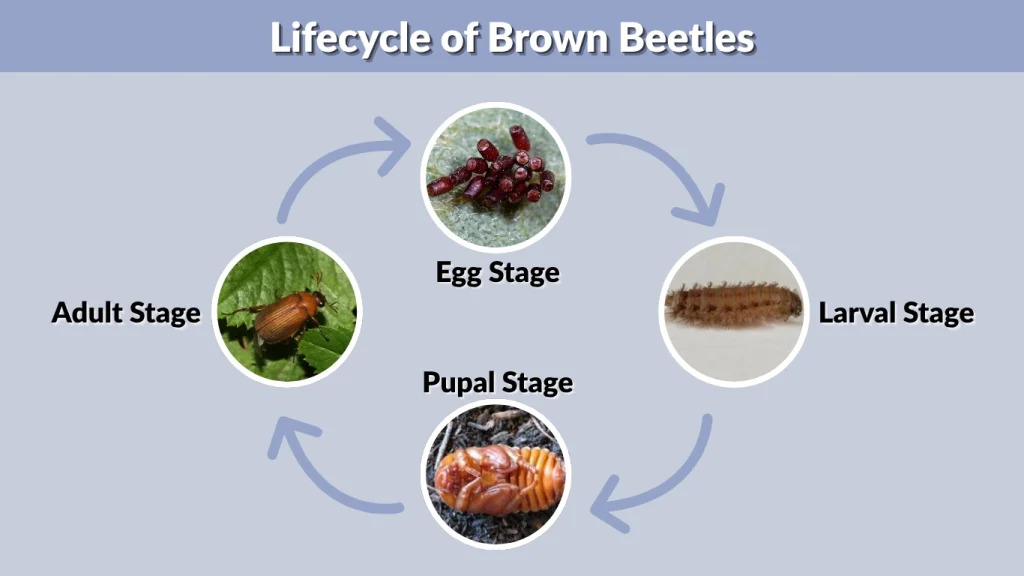
Understanding the beetle life cycle is key to long-term prevention.
- Egg Stage: Female beetles lay eggs in hidden spots like fabric folds, cracks, or decaying wood.
- Larval Stage: The larvae are the most destructive phase, feeding on organic material such as wool, wood, or grains.
- Pupal Stage: After several weeks or months, larvae form cocoons in quiet corners to pupate.
- Adult Stage: Adults emerge to reproduce. They typically live a few weeks to months, depending on species.
By targeting both larvae and eggs through regular cleaning, you can prevent a new generation from developing indoors.
Brown Beetles vs. Cockroaches
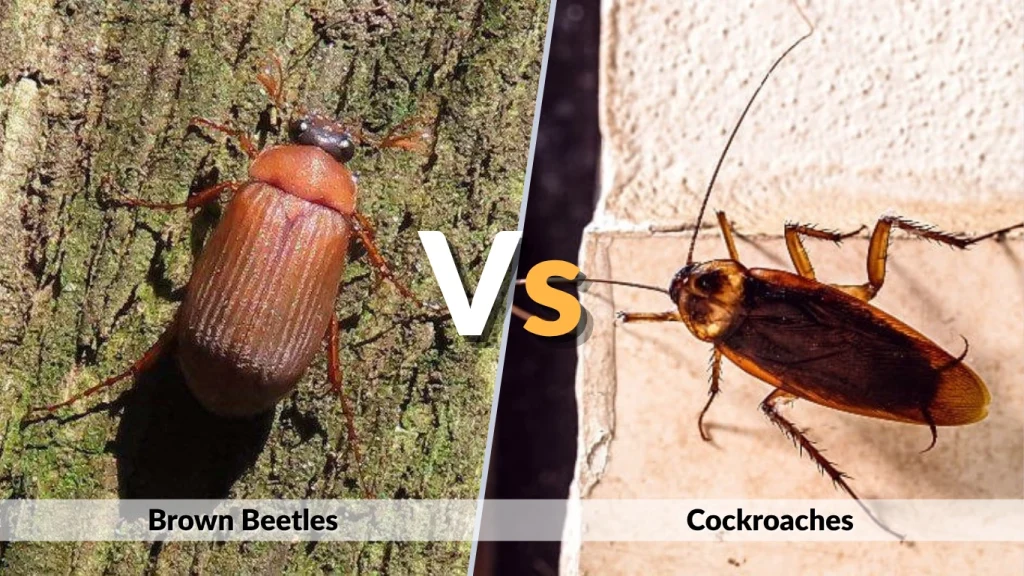
These insects are often mistaken for one another, but there are clear differences:
| Feature | Brown Beetles | Cockroaches |
| Body Texture | Hard outer shell (elytra) | Soft, flexible body |
| Shape | Oval or rounded | Flat and elongated |
| Antennae | Short to medium length | Very long and whip-like |
| Movement | Crawl slowly or fly | Move quickly and hide fast |
| Habitat | Fabrics, wood, plants | Moist kitchens, drains, trash areas |
| Health Risk | Harmless | Spread bacteria and allergens |
Recognizing these differences helps avoid unnecessary panic and ensures the right pest control approach.
Are Brown Beetles Dangerous?
Most brown beetles are not dangerous to humans or pets. They don’t bite, sting, or carry disease. However, certain species can cause economic damage through fabric destruction or food contamination.
- Carpet Beetles: Damage wool, silk, and furs.
- Wood-Boring Beetles: Weaken wooden furniture and beams.
- Pantry Beetles: Spoil dry foods such as flour, rice, and pasta.
While their impact is more material than medical, ignoring an infestation can lead to costly repairs or replacements.
How to Get Rid of Brown Beetles

1. Inspection
Start by identifying where the beetles are coming from. Check around:
- Pantry shelves and containers
- Carpet edges and under furniture
- Attic or basement storage boxes
- Window frames and cracks in flooring
2. Cleaning and Prevention
- Vacuum thoroughly — especially along baseboards and upholstery seams.
- Wash fabrics in hot water (above 120°F / 49°C) to kill larvae and eggs.
- Seal food in airtight jars and clean shelves regularly.
- Repair window screens and weather stripping to prevent outdoor beetles from entering.
3. Natural Remedies
- Diatomaceous Earth: A fine powder that dehydrates and kills beetles naturally.
- Essential Oils: Scents like cedarwood, peppermint, and lavender repel adult beetles.
- Sticky Light Traps: Useful for catching flying beetles overnight.
4. Professional Pest Control
If the infestation spreads or involves structural wood damage, contact a licensed exterminator. They can use targeted insecticides or fumigation treatments to eliminate larvae deep within walls or floors.
Prevention Tips
- Keep indoor humidity below 50%.
- Store wool garments and blankets in sealed containers.
- Regularly inspect attic, basement, and crawl spaces.
- Avoid leaving outdoor lights on for long periods at night.
- Examine used furniture or rugs before bringing them indoors.
- Maintain a clean kitchen and promptly dispose of food waste.
Consistency is crucial—small cleaning habits prevent beetles from settling and breeding.
FAQs
What are the small brown beetles in my house?
They are often carpet beetles or pantry beetles feeding on fabrics, food, or dust. Identifying their exact type helps determine if you need cleaning or food storage adjustments.
Do brown beetles bite or sting?
No. Brown beetles are non-aggressive and don’t possess stingers or biting mandibles strong enough to harm humans.
Why do I see brown beetles near lights at night?
Most brown beetles are phototactic, meaning they are attracted to light. Porch or lamp lighting draws them indoors unintentionally.
How can I stop brown beetles from returning?
Maintain cleanliness, vacuum regularly, store food properly, and seal all entry points. Replace or deep-clean infested rugs and fabrics to break their breeding cycle.
Are brown beetles beneficial outdoors?
Yes. Many outdoor brown beetles like ground or stag beetles help control pests and decompose organic matter, playing a valuable role in the ecosystem.
