

Brown carpet beetles are one of the most commonly misunderstood household insects. Many people mistake them for bed bugs, tiny cockroaches, or other small brown bugs found in carpets, beds, and closets. Although they do not bite, their larvae can damage fabrics and sometimes cause skin irritation. Understanding how to identify brown carpet beetles, recognize their larvae, and track their life cycle is essential for controlling infestations early and protecting clothing, furniture, and stored materials from long-term damage.
What Is a Brown Carpet Beetle?
A brown carpet beetle is a small scavenger beetle from the Dermestidae family. These beetles feed mainly on natural fibers such as wool, silk, cotton, leather, feathers, pet hair, and dead insects. Indoors, they are attracted to carpets, upholstered furniture, wardrobes, bedding, and stored fabrics.
Adult brown carpet beetles are often seen near windows or light sources because they are drawn to sunlight. However, the real problem usually remains hidden. The larvae live deep inside carpets, clothing, furniture cracks, and storage areas, where they quietly feed and grow for months. Most property damage and skin reactions linked to brown carpet beetles come from the larval stage, not the adult beetles.
Brown Carpet Beetle Identification

- Small, oval, hard-shelled beetles
- Body color ranges from light brown to dark brown
- Some appear black and brown or slightly striped
- Average adult length: 2–5 mm
- Fine scales or hairs on the shell
- Larvae are brown, elongated, and hairy
- Often found in carpets, closets, beds, drawers, and furniture
- Common signs include shed skins, fabric holes, and crawling larvae
Correct identification is important because brown carpet beetles are frequently confused with bed bugs or tiny roaches. Unlike bed bugs, carpet beetles can fly, have wings, and do not depend on human blood.
Brown Carpet Beetle Size and Color Variations
Brown Carpet Beetle Size
Adult brown carpet beetles are extremely small—roughly the size of a sesame seed. Because of this, people often describe them as “tiny brown carpet beetles.” Larvae, however, grow longer than adults and are easier to spot. Fully developed larvae can reach up to 6–7 mm and are usually noticed when they crawl across walls, floors, or bedding.
Light Brown vs Dark Brown Carpet Beetles
Brown carpet beetles vary widely in shade. Some appear light tan or golden brown, while others look dark brown or almost black. Color can change depending on the species, age, lighting conditions, and the tiny scales covering their bodies. This variation explains why many people search for “light brown carpet beetle,” “dark brown carpet beetle,” or “all brown carpet beetle.”
Black and Brown Carpet Beetles
Certain carpet beetle species display mixed coloring, including black-and-brown patterns or faint striping. These are often described as “brown and black carpet beetles” or “brown striped carpet beetles.” Because of their compact shape and dark markings, they are commonly mistaken for small cockroaches or bed bugs.
Brown Carpet Beetle Larvae

What Do Brown Carpet Beetle Larvae Look Like?
Brown carpet beetle larvae are usually carrot-shaped, brown to dark brown, and covered in bristle-like hairs. They move slowly and may curl their bodies when disturbed. The hairs on their bodies can break off and cause skin irritation, which is why people sometimes believe they have been bitten.
Where Brown Carpet Beetle Larvae Are Found
Larvae prefer dark, quiet, undisturbed areas where natural fibers collect. Common locations include carpets, rugs, mattress seams, wardrobes, drawers, furniture joints, air vents, and pet sleeping areas. They are rarely seen in open spaces unless the infestation is advanced.
Why Larvae Cause the Most Damage
Unlike adults, larvae feed continuously. They chew through wool clothing, blankets, carpets, felt, leather goods, and even taxidermy or stored food products. Over time, this feeding leads to bald patches in carpets, holes in fabrics, and the presence of shed larval skins.
Brown Carpet Beetle Life Cycle

The brown carpet beetle life cycle has four stages: egg, larva, pupa, and adult. Females lay eggs in hidden areas close to food sources. Eggs hatch within one to three weeks.
The larval stage lasts the longest and can continue for several months, depending on temperature and food availability. During this stage, larvae actively feed and grow, causing nearly all household damage. They eventually pupate in dark cracks before emerging as adult beetles. Adults mainly focus on reproduction and are often seen near windows rather than in feeding areas.
Are Brown Carpet Beetles Harmful?
Brown carpet beetles are not considered dangerous, but they can still cause real problems inside a home. Their larvae damage carpets, clothing, blankets, furniture stuffing, and any item made from natural fibers. Over time, this destruction can become costly, especially when stored clothing, rugs, or upholstery are affected.
From a health perspective, brown carpet beetles do not spread disease. However, the tiny hairs on larvae can trigger allergic reactions and skin irritation in sensitive individuals. This condition is often called carpet beetle dermatitis. Symptoms may include red bumps, itching, and mild swelling, which many people mistakenly assume are insect bites.
Do Brown Carpet Beetles Bite?
Brown carpet beetles do not bite humans or pets. They have no interest in blood and lack the mouthparts needed to bite skin. What people often describe as “brown carpet beetle bites” are actually skin reactions caused by contact with larval hairs or shed skins.
These reactions can look similar to bed bug bites, flea bites, or allergic rashes. The irritation usually appears on exposed skin such as the arms, neck, stomach, or legs. Removing larvae, thoroughly cleaning infested areas, and washing affected fabrics typically stops the problem.
Brown Carpet Beetle vs Bed Bug

Behavior Differences
Brown carpet beetles feed on fabrics, hair, feathers, and organic debris. Bed bugs feed exclusively on blood and hide close to sleeping areas. Carpet beetles are often seen near windows, while bed bugs remain hidden in mattresses, bed frames, and wall cracks.
Appearance Differences
Carpet beetles are oval, hard-shelled, and can fly. Bed bugs are flat, wingless, and become swollen after feeding. Carpet beetle larvae are hairy, while bed bug nymphs are smooth and pale.
Health and Home Impact
Bed bugs cause true bites and blood loss. Brown carpet beetles damage belongings and may cause allergic rashes but do not feed on people. Correct identification prevents unnecessary panic and ensures proper treatment methods.
Signs of a Brown Carpet Beetle Infestation
An infestation is not always obvious at first. Common warning signs include small brown beetles crawling near windows, slow-moving hairy larvae on walls or floors, shed larval skins, and holes in wool clothing, blankets, or carpets.
Some people notice unexplained skin irritation before they ever see the insects. Discovering damage in stored fabrics, drawers, or closets is often the moment homeowners realize brown carpet beetles are present.
How to Get Rid of Brown Carpet Beetles
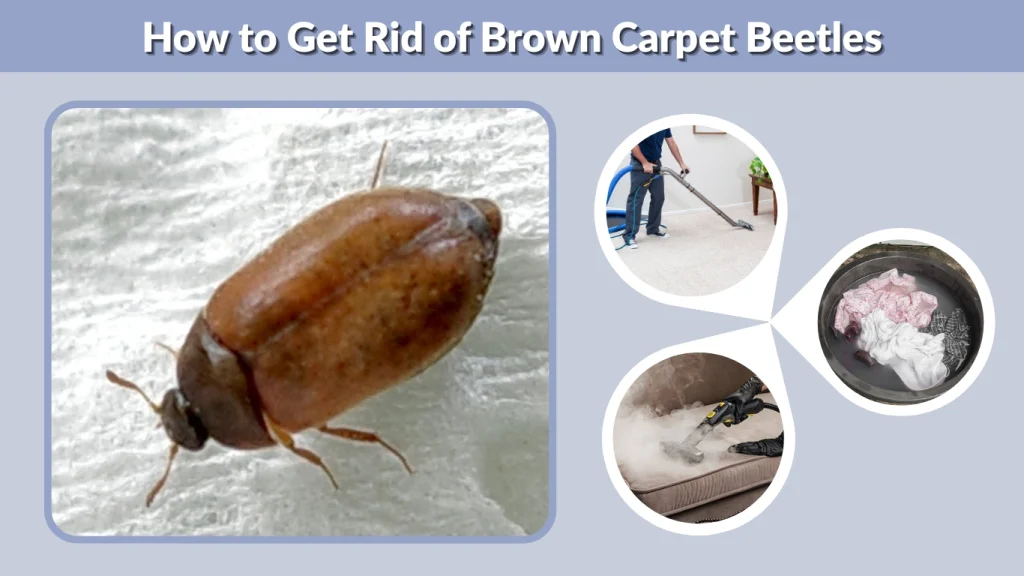
- Thoroughly vacuum carpets, rugs, mattresses, furniture seams, baseboards, and cracks
- Dispose of vacuum bags immediately after cleaning
- Wash infested clothing and fabrics in hot water and dry on high heat
- Freeze delicate items that cannot be washed
- Remove lint, pet hair, and dust buildup
- Apply boric acid or food-grade diatomaceous earth in hidden areas
- Use residual insecticides in severe infestations
- Contact professional pest control for large or recurring problems
Consistency is critical. One deep cleaning rarely solves the issue because eggs and hidden larvae may remain.
Natural Ways to Control Brown Carpet Beetles
Essential Oils and Natural Repellents
Clove oil, peppermint oil, eucalyptus oil, lavender, and cedar are often used to repel adult beetles. While they do not kill infestations alone, they can help discourage adults from laying eggs.
Deep Cleaning and Habitat Removal
Regular vacuuming, washing pet bedding, reducing clutter, and sealing fabric storage containers remove the food sources larvae depend on. This environmental control is the foundation of long-term success.
How to Prevent Brown Carpet Beetles
Preventing reinfestation requires routine care. Store seasonal clothes in airtight bags or boxes. Clean closets and drawers regularly. Inspect second-hand furniture and clothing before bringing them indoors. Remove bird nests near windows, seal wall cracks, and maintain a dust-free environment. These steps greatly reduce the chance of future outbreaks.
FAQs
Are brown carpet beetles harmful to humans?
Brown carpet beetles are not dangerous, but their larvae can damage fabrics and cause allergic skin reactions. The irritation comes from larval hairs, not bites, and usually disappears once the infestation is removed.
Can carpet beetles really be brown?
Yes. Carpet beetles appear in many shades, including light brown, dark brown, black, and brown-striped forms. Color varies by species, lighting, and age, which is why people often describe them differently.
Why am I seeing tiny brown carpet beetles in my house?
Tiny brown carpet beetles usually indicate a hidden food source such as carpets, stored clothes, pet bedding, or dust buildup where larvae are feeding and developing.
How long does a brown carpet beetle infestation last?
Without treatment, infestations can persist for many months. With consistent cleaning and control, most infestations significantly decline within several weeks.
Do brown carpet beetles live in beds?
They do not prefer beds, but larvae may hide in mattresses, blankets, or bed frames if hair, lint, or natural fibers are present.
