

Brown grasshoppers are among the most common insects found in fields, gardens, and even homes. Their earthy tones help them blend perfectly into soil, dry grass, and leaves, making them masters of camouflage. Unlike the brighter green grasshoppers often seen in summer, brown grasshoppers thrive in drier environments. They symbolize grounding, resilience, and adaptation — living proof of how color evolution helps species survive changing seasons and habitats.
Identification and Appearance
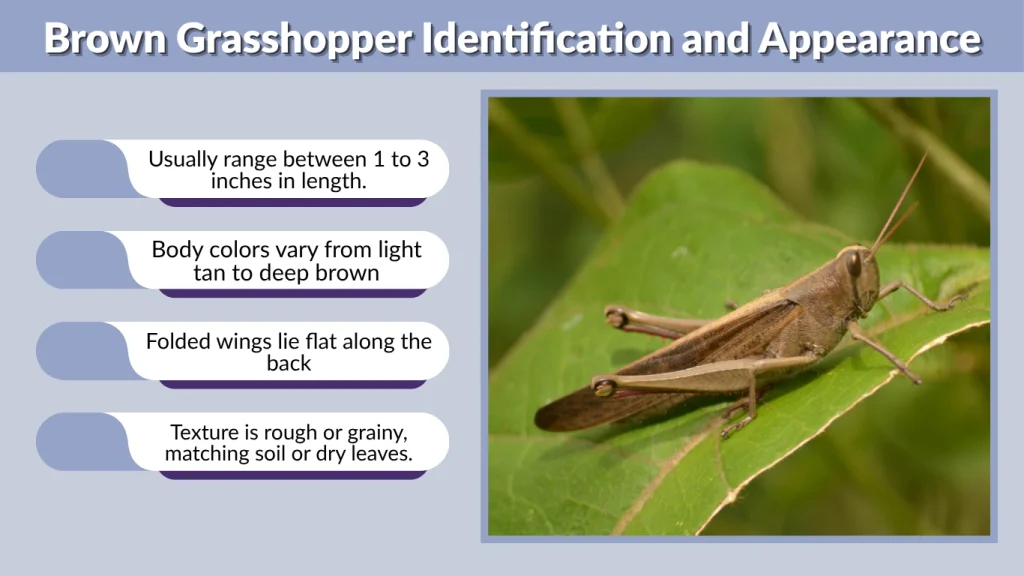
Physical Characteristics
- Usually range between 1 to 3 inches in length.
- Display short antennae and strong hind legs built for jumping.
- Body colors vary from light tan to deep brown for camouflage.
- Folded wings lie flat along the back; some species have visible veins.
- Texture is rough or grainy, matching soil or dry leaves.
Color Variations
- Light brown types blend into dry grass or sand.
- Dark brown and reddish-brown species thrive in rocky or shaded habitats.
- Some show green-brown blends to survive in mixed vegetation.
- Patterns include stripes, spots, or faint ridges for added concealment.
- Color deepens with age or after molting in warm climates.
Distinctive Traits
Certain species have long antennae, yellow-striped legs, or even spotted wings. Their brown tones may shift slightly after each molt, depending on environmental humidity and temperature. Adults are fully winged and capable of short flights, though they typically prefer jumping to escape danger. Up close, their rugged texture and earthy palette reflect the landscapes they inhabit — dry fields, forest floors, and open plains.
Habitat and Distribution

Where Brown Grasshoppers Live
Brown grasshoppers are found on nearly every continent except Antarctica. In the United States, they are especially abundant in states such as Florida, Texas, and California, where dry conditions suit them best. They inhabit farmlands, grassy meadows, roadside vegetation, and even suburban gardens.
Globally, they thrive in regions with warm, arid climates — Africa’s savannas, Australia’s bushlands, and southern parts of Europe all host multiple brown species. Their ability to blend with soil and dry vegetation gives them an edge in open, predator-rich environments.
Seasonal Adaptations
While green grasshoppers are often seen during spring and early summer, brown grasshoppers dominate the landscape in late summer and autumn. Their color helps them absorb heat efficiently and survive in cooler months. Some species, known as winter grasshoppers, remain active during mild winters, burrowing into leaf litter or soil for warmth. Their earthy hue not only provides camouflage but also protects them from excessive sunlight and temperature changes.
Behavior and Diet

Feeding Habits
Brown grasshoppers are herbivorous, feeding mostly on grasses, leaves, and crops. They prefer dry, sunlit areas with plenty of low vegetation. Their powerful mandibles allow them to chew through thick stems, making them efficient grazers. While they sometimes nibble on agricultural plants like corn or wheat, small populations rarely cause significant harm. They also play an ecological role by recycling plant matter and enriching the soil.
Flight and Movement
These insects rely primarily on jumping as their mode of movement. Their muscular hind legs act like springs, propelling them several times their body length. Some species, especially those with longer wings, can glide short distances or fly to escape predators. Brown grasshoppers are generally less agile than their green counterparts but compensate with better camouflage. When startled, they often leap away and quickly vanish into the ground cover.
Defense and Reactions
Brown grasshoppers use a fascinating defense mechanism — they excrete a brown liquid or “grasshopper spit” when handled or threatened. This harmless fluid, sometimes mistaken for poison, is actually a stress response meant to deter predators. Some species produce clicking or rasping noises during flight by rubbing their wings together, warning nearby threats to stay away. Their brown coloration also provides a form of passive defense, letting them remain unseen even when motionless on soil or bark.
Their behavior reflects efficiency and survival: they remain active during daylight, feed steadily throughout the warmest hours, and rest beneath plants or soil clumps at night. This daily rhythm helps them maintain energy and avoid unnecessary exposure to predators.
Types of Brown Grasshoppers
Common Species
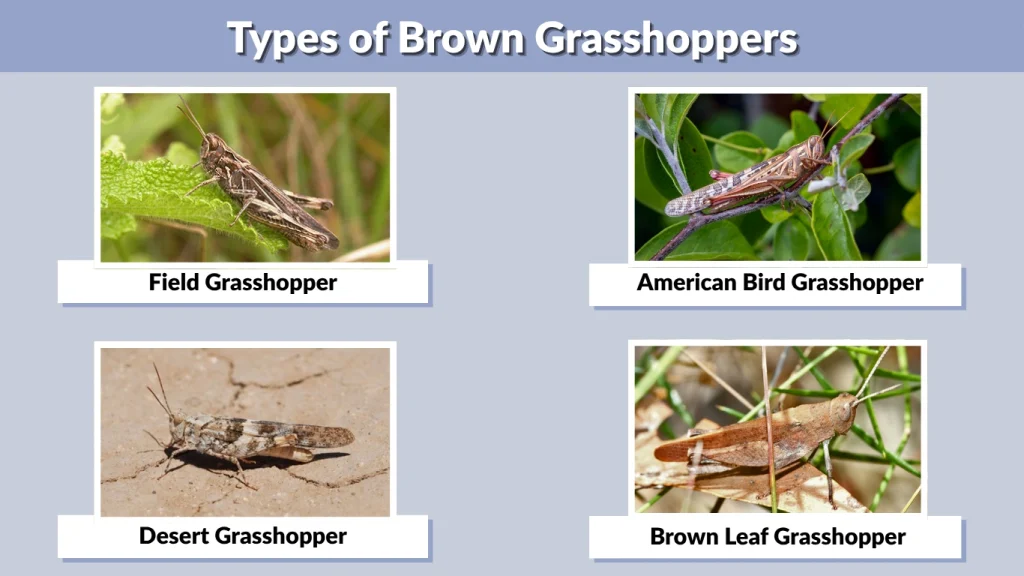
There are several species of brown grasshoppers found around the world, each with distinct markings and sizes:
- Field Grasshopper (Chorthippus brunneus) – Common across Europe and North America, typically light brown with faint stripes and a short, sturdy body.
- American Bird Grasshopper (Schistocerca americana) – Found in the southern U.S. and Mexico; larger in size and capable of long glides.
- Desert Grasshopper (Trimerotropis spp.) – Adapted to dry, sandy areas in Texas and Arizona, with excellent camouflage against rocks.
- Brown Leaf Grasshopper – Resembles a curled leaf and is mostly seen in tropical Asian forests.
Each of these species uses color as a survival advantage. Their natural tones make them nearly invisible against dirt, bark, or dry leaves — a perfect example of evolutionary design.
Giant and Regional Variants
Some regions host particularly large brown grasshoppers.
- In Florida, big brown varieties can reach nearly four inches in length.
- Texas and California have robust, thick-bodied types that resemble small locusts.
- The brown long-horned grasshopper has notably long antennae, giving it an elegant yet fierce look.
- Reddish-brown grasshoppers thrive in desert areas, blending in with the clay-colored soil.
Each variant demonstrates how the brown grasshopper adapts to its environment, using both color and body structure to survive extreme conditions.
Brown Grasshopper vs Green Grasshopper
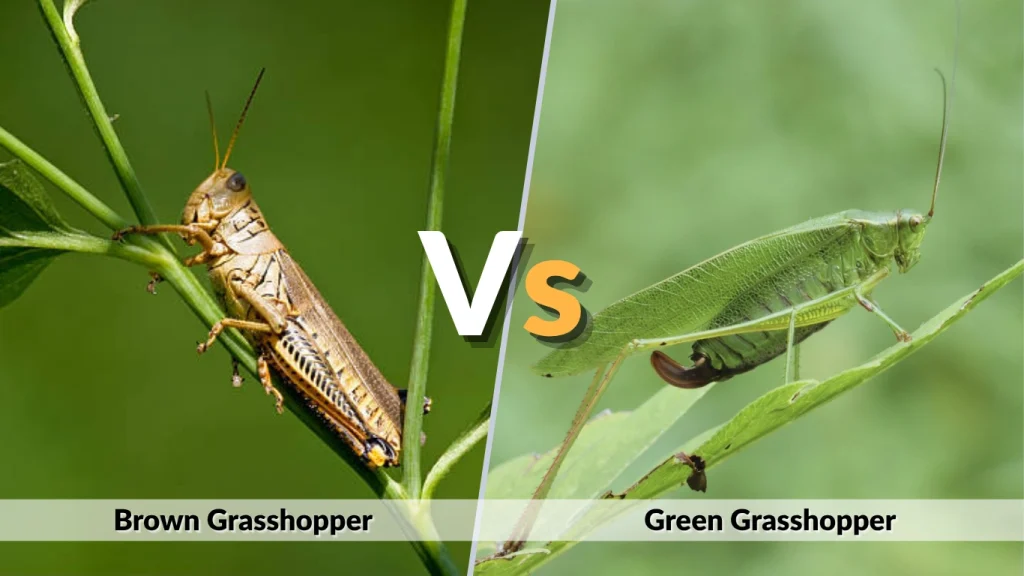
| Feature | Brown Grasshopper | Green Grasshopper |
| Color | Brown, tan, or reddish tones | Bright green or yellow-green |
| Habitat | Dry soil, rocky ground, open fields | Moist meadows, leafy plants |
| Camouflage | Blends with dirt or dead vegetation | Hides among fresh leaves |
| Active Season | Late summer to fall | Spring to mid-summer |
| Behavior | Slow-moving, more grounded | Agile, frequent flier |
Why the Color Difference Exists
The main difference between brown and green grasshoppers lies in environmental adaptation.
Green grasshoppers are more common in humid, vegetated areas where lush plants dominate. Their green coloration helps them disappear among leaves.
Brown grasshoppers, however, thrive in drier and dustier climates. Their color offers better concealment among dry grass, soil, or bark. Interestingly, some grasshoppers can even shift shades after molting, turning greener or browner depending on temperature and light exposure. This natural adaptability shows their incredible ability to adjust to surroundings for survival.
Symbolism and Spiritual Meaning
General Meaning of Seeing a Brown Grasshopper
Seeing a brown grasshopper often carries symbolic meaning. It represents grounding, patience, and inner strength. While green grasshoppers symbolize growth and change, brown ones remind us to stay practical and connected to our foundations. Their earthy color reflects stability and balance — a message to move forward with confidence and focus.
In the House or Dreams
Finding a brown grasshopper in your home is sometimes viewed as a sign of protection or transformation. Spiritually, it may mean that a period of steady progress is beginning. Dreaming of a brown grasshopper can symbolize persistence, determination, or the need to take a careful step before making a big decision.
In some interpretations, a grasshopper landing indoors also hints at luck and opportunity, suggesting new beginnings that emerge through patience.
Cultural and Spiritual Beliefs
Across cultures, grasshoppers hold deep symbolic importance:
- Native American traditions associate them with good fortune and positive leaps in life.
- In Chinese folklore, they symbolize abundance and creativity.
- In Islamic interpretation, a brown grasshopper in the house may represent patience during trials or divine reminders to stay humble.
Overall, the brown grasshopper’s symbolism aligns with resilience, grounding energy, and slow but meaningful progress.
Brown Grasshoppers and Safety

Do Brown Grasshoppers Bite or Harm People?
Brown grasshoppers may look intimidating, but they are completely harmless to humans. They neither sting nor carry venom. The “stinger” often noticed on some females is an ovipositor, a harmless structure used to deposit eggs in soil. When threatened or handled, they may release a brown spit, a harmless defensive secretion used to deter predators.
Agricultural Impact
In small numbers, brown grasshoppers pose no serious threat. However, large populations can damage crops, grasses, and ornamental plants. They feed on stems and leaves, leaving ragged holes behind. Farmers manage them through natural predators like birds and frogs or through environmentally safe methods. Despite occasional outbreaks, grasshoppers remain vital to ecosystems — serving as food for wildlife and aiding in plant decomposition.
Interesting Facts About Brown Grasshoppers
- Their color deepens in hotter climates, helping regulate body temperature.
- Brown grasshoppers can leap up to 20 times their body length in a single jump.
- Some species produce a clicking sound mid-flight to distract predators.
- The brown coloration provides superior camouflage during autumn and droughts.
- They are found in nearly every country, proving their adaptability.
- Grasshoppers have existed for over 250 million years, making them one of the oldest surviving insect lineages.
- In some cultures, brown grasshoppers are considered messengers of balance and renewal.
FAQs
What does a brown grasshopper mean spiritually?
A brown grasshopper symbolizes stability, patience, and grounded energy. It’s a reminder to stay steady and focused during times of change, encouraging gradual but meaningful growth.
Are brown grasshoppers poisonous or dangerous?
No. Brown grasshoppers are harmless and non-poisonous. They may secrete a brown liquid when touched, but it’s simply a mild defense mechanism and not toxic.
Why are some grasshoppers brown and others green?
Color differences come from environmental adaptation. Brown grasshoppers thrive in dry, dusty habitats, while green ones live in lush, leafy environments. Both colors provide camouflage in their respective habitats.
What does it mean to find a brown grasshopper in your house?
It’s often seen as a sign of good luck or stability. Spiritually, it may suggest that grounding energy is entering your home or that you’re being guided to slow down and stay balanced.
Where are brown grasshoppers most commonly found?
They are widespread in North America, Europe, and Asia — especially in dry fields, meadows, and gardens. In the U.S., they’re abundant in Florida, Texas, and California, where warm climates support their life cycles.
