
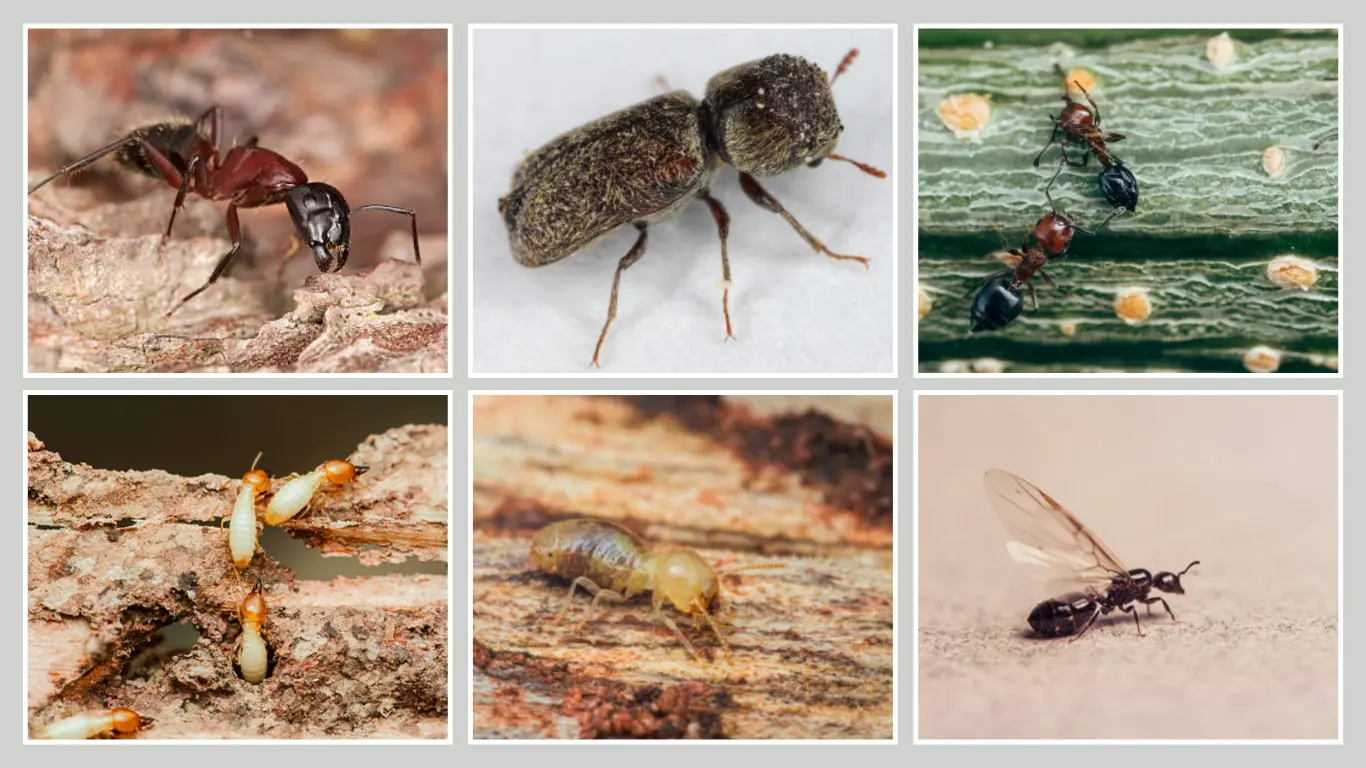
Termites are destructive pests, but they’re not the only bugs that can raise alarm. Several insects look surprisingly similar to termites, especially during their swarming stage or when found in damp, wooden areas. From carpenter ants to booklice, these look-alikes can lead to misidentification and unnecessary panic. Here, I’ll introduce you to 8 bugs that resemble termites and explain how to spot the differences through body shape, wings, antennae, and behavior.
1. Carpenter Ants
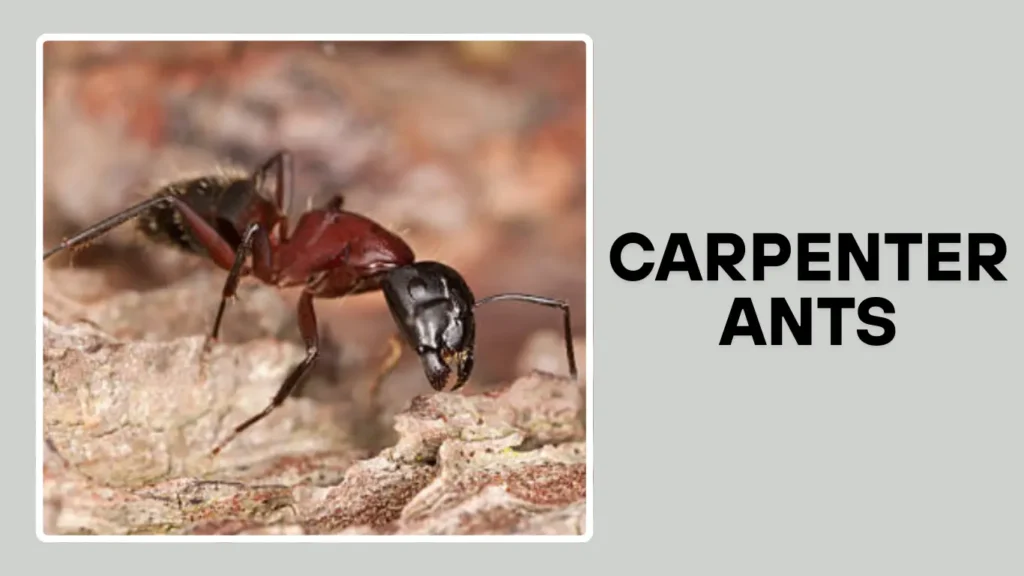
Carpenter ants are one of the most commonly misidentified pests when it comes to termites. They are large, black or reddish ants that build nests in wood but do not actually eat it. During their mating season, they develop winged forms (called alates) that look very similar to winged termites, often causing confusion.
Waist Comparison with Termites
Carpenter ants have a distinctly narrow, pinched waist, whereas termites have a broad, uniform waist. This is one of the most noticeable visual differences when comparing the two.
Antennae Comparison with Termites
The antennae of carpenter ants are elbowed (bent at an angle), while termites have straight, bead-like antennae.
Wing Comparison with Termites
Both carpenter ants and termites have four wings during their swarming phase. However, carpenter ants’ front wings are noticeably longer than the hind wings, while termites have equal-sized front and back wings.
Behavior and Damage Comparison with Termites
Carpenter ants excavate wood to build nests but do not consume it. Termites eat wood, causing internal structural damage. Also, termite damage usually appears more hidden and hollowed from the inside out, while carpenter ant damage tends to look cleaner with smooth tunnels.
2. Powderpost Beetles

Powderpost beetles are wood-boring insects that can cause damage resembling termite activity. Their larvae live inside wood and produce fine, powdery frass (wood dust), which often leads people to mistake their presence for termites.
Waist Comparison with Termites
Unlike termites, powderpost beetles don’t have a clearly segmented waist — their bodies are typically compact and cylindrical, making this comparison less useful in adult form. Termites, in contrast, have a broad waist without narrowing.
Antennae Comparison with Termites
Powderpost beetles have short, clubbed or serrated antennae, differing greatly from termites’ straight and bead-like antennae.
Wing Comparison with Termites
Adult powderpost beetles have hardened front wings (elytra) that cover their flying wings beneath. Termites, on the other hand, have soft, equal-sized wings that are easily shed after swarming.
Behavior and Damage Comparison with Termites
Powderpost beetle larvae bore tiny holes into hardwoods and leave behind powdery dust. Unlike termites, which consume wood from the inside, powderpost beetles’ damage is often more visible on the surface and includes small, round exit holes.
3. Acrobat Ants
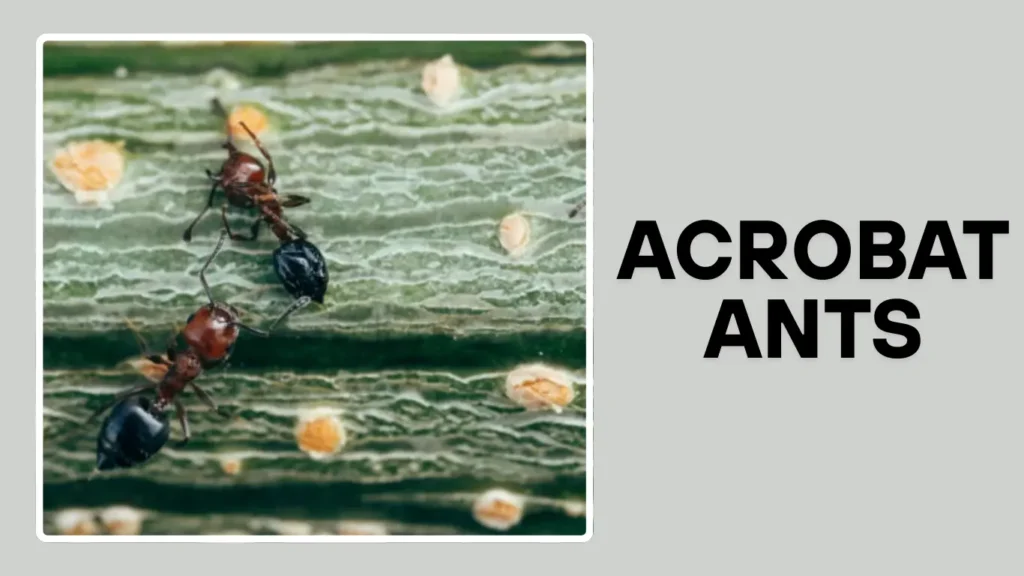
Acrobat ants are small to medium-sized ants often found in decaying wood and wall voids. Their behavior and wood association sometimes cause them to be mistaken for termites, especially when seen in or near structural wood.
Waist Comparison with Termites
Acrobat ants have a narrow waist with two segments, making them visibly different from the broad-waisted body of termites.
Antennae Comparison with Termites
Their antennae are bent or elbowed, clearly unlike the straight antennae of termites.
Wing Comparison with Termites
Acrobat ants rarely swarm indoors, but when they do, their front wings are longer than their back wings, unlike termites whose wings are equal in length and fragile in appearance.
Behavior and Damage Comparison with Termites
Acrobat ants don’t eat wood, but they nest inside decayed wood or old termite galleries, making them easy to confuse with termites. While termites destroy wood from within, acrobat ants often move into already damaged or hollow areas.
4. Dampwood Termites

Dampwood termites are a species of true termites, but they are often mistaken for drywood or subterranean termites due to their appearance and behavior. They thrive in moist, decaying wood and are usually larger than other termite species.
Waist Comparison with Termites
Since they are termites, dampwood termites also have a broad, straight waist, just like subterranean and drywood termites. There is no visible pinch or narrowing in the midsection.
Antennae Comparison with Other Termites
Dampwood termites possess straight, bead-like antennae, just like other termite species, distinguishing them from ants and beetles.
Wing Comparison with Other Termites
Their wings are equal in length, transparent or slightly smoky, and longer than the body. This matches the typical termite wing structure, though dampwood termites are often larger in overall size.
Behavior and Damage Comparison with Other Termites
Unlike subterranean termites, dampwood termites require high moisture to survive and will not infest dry wood or structures without a moisture source. Their damage is often found in rotting logs, leaky decks, or wood in contact with soil, and it appears clean and smooth, unlike the muddy tunnels of subterranean termites.
5. Drywood Termites
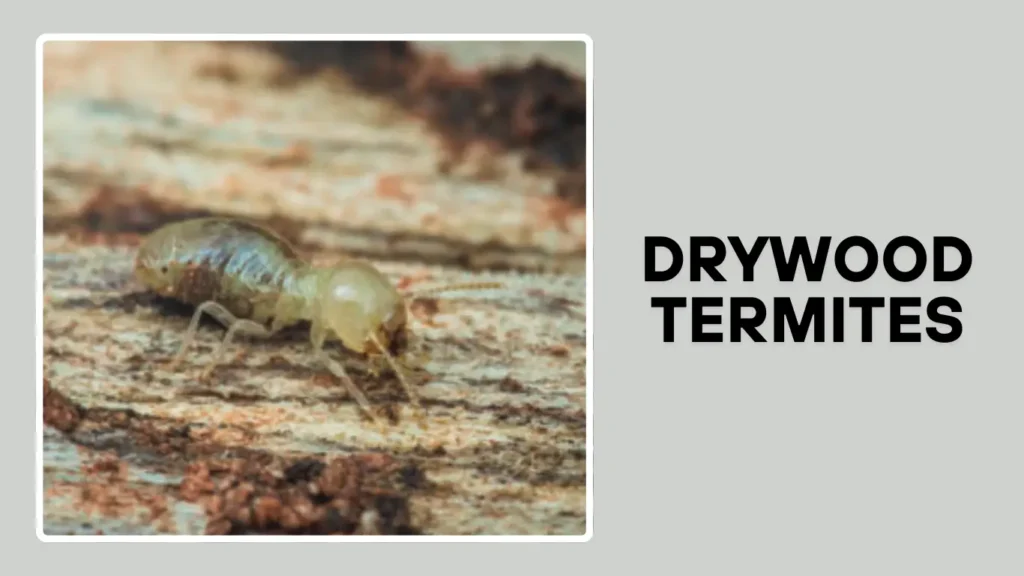
Drywood termites are also true termites but are often misidentified as carpenter ants or other wood-damaging pests. They infest dry wood and are typically found in attics, furniture, and framing structures without contact with soil.
Waist Comparison with Termites
As a termite species, drywood termites also have a broad waist, consistent with other termites and unlike ants or beetles.
Antennae Comparison with Other Termites
Drywood termites have straight antennae similar to their subterranean and dampwood counterparts. This feature helps differentiate them from ants, which have bent antennae.
Wing Comparison with Other Termites
They have equal-sized wings, which are slightly veined and shed easily after swarming. This wing structure is standard across all alate termites.
Behavior and Damage Comparison with Other Termites
Drywood termites do not need moisture or soil contact to survive. They infest dry, sound wood and leave behind pellet-like droppings (frass). Their damage is dry, hollowed-out wood with no mud, unlike subterranean termites, which build mud tubes and require moisture.
6. Booklice (Psocids)
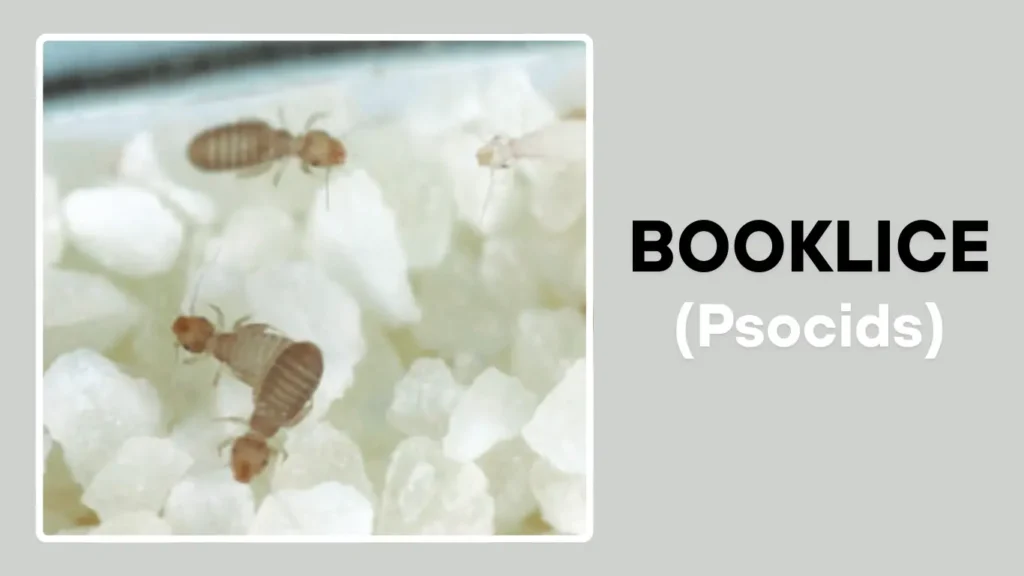
Booklice are tiny, soft-bodied insects often found in damp environments like bathrooms, kitchens, or near leaky pipes. While harmless, their pale color and small size can cause them to be mistaken for young or worker termites.
Waist Comparison with Termites
Booklice have a slender, almost invisible waist, but their entire body is more elongated and soft, making the distinction from termites subtle. Termites, especially workers, also appear soft-bodied and pale, leading to confusion.
Antennae Comparison with Termites
Booklice have long, thread-like antennae, which are more flexible and often longer than termite antennae. Termite antennae are beaded and relatively straight, with a more uniform appearance.
Wing Comparison with Termites
Most booklice are wingless, especially the ones commonly found indoors. If wings are present (in some outdoor species), they are not equal in length and lie flat over the body—unlike the equal-sized, upright wings of swarming termites.
Behavior and Damage Comparison with Termites
Booklice do not eat wood and cause no structural damage. They feed on mold, fungi, and organic material, typically in moist areas. In contrast, termites consume cellulose and cause serious damage to wooden structures.
7. Winged Ants

Winged ants (also known as alates) are the reproductive form of ants that swarm during mating seasons. They are the most commonly mistaken insect for termites, especially when flying in large numbers.
Waist Comparison with Termites
Winged ants have a narrow, clearly pinched waist, while termites have a broad, straight-sided body with no pinched section, making this a key visual difference.
Antennae Comparison with Termites
Ants have elbowed (bent) antennae, whereas termites have straight antennae with tiny bead-like segments.
Wing Comparison with Termites
Winged ants have two pairs of wings, but the front wings are noticeably larger than the back wings. Termites have two pairs of equal-sized wings that extend beyond their bodies and fall off easily.
Behavior and Damage Comparison with Termites
Winged ants do not eat wood (except for carpenter ants who nest in it). Most ant species do not damage structures. Termites, on the other hand, eat wood and can silently cause extensive structural harm if left untreated.
8. Ghost Ants
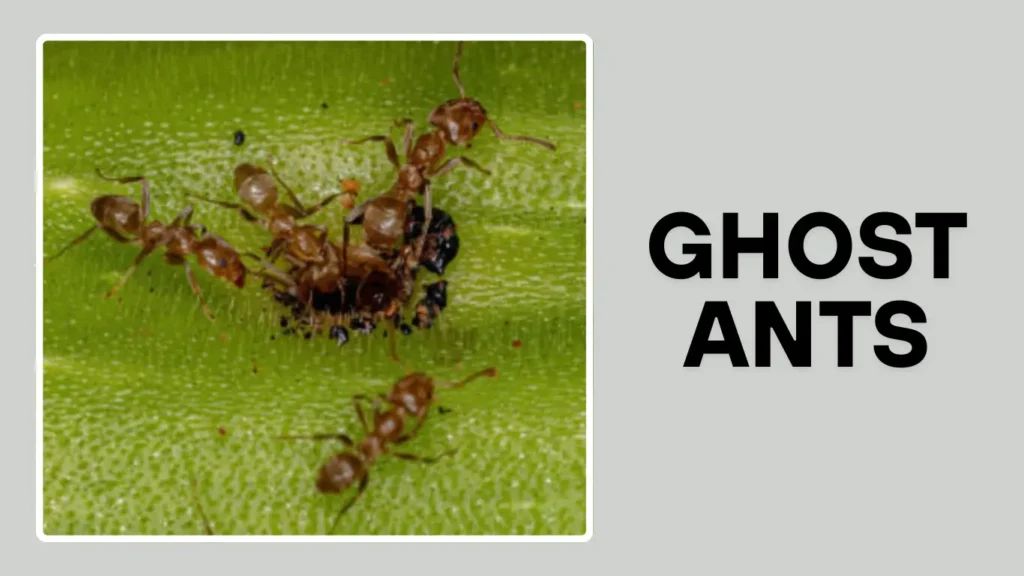
Ghost ants are tiny, pale-bodied ants with dark heads and nearly translucent legs and abdomens. Their unusual coloring sometimes causes people to confuse them with young termites, especially when seen in moist areas or on wooden surfaces.
Waist Comparison with Termites
Ghost ants have a very narrow and segmented waist, which contrasts sharply with the broad, unsegmented waist of termites. This key body shape difference helps distinguish between the two.
Antennae Comparison with Termites
Like most ants, ghost ants have bent (elbowed) antennae, while termites feature straight, bead-like antennae. This difference is clear even under light magnification.
Wing Comparison with Termites
Ghost ants are typically wingless in their worker form. Only reproductive forms (which are rarely seen) have wings, and even then, their wings are unequal in length, unlike the equal-length wings of swarming termites.
Behavior and Damage Comparison with Termites
Ghost ants do not consume or nest in wood. They are nuisance pests that prefer sugary foods and are commonly found in kitchens, bathrooms, and wall voids. Termites, in contrast, actively eat wood and cause structural damage that often goes unnoticed until it’s severe.
Comparison Table
| Insect Name | Waist Shape | Antennae Type | Wing Type | Wood Damage | Main Habitat |
| Termites | Broad, no pinch | Straight, bead-like | Two pairs, equal in size | Yes, eat wood | Moist/dry wood, inside walls |
| Carpenter Ants | Narrow, pinched | Elbowed | Unequal wings (front > back) | Yes, nest in wood (don’t eat) | Damp wood, wall voids |
| Powderpost Beetles | Cylindrical, compact | Clubbed or serrated | Hardened outer wings (elytra) | Yes, tiny exit holes | Hardwood, furniture |
| Acrobat Ants | Narrow, two segments | Elbowed | Rarely seen; front wings longer | Sometimes (nest only) | Rotting wood, wall gaps |
| Dampwood Termites | Broad | Straight | Equal-sized wings | Yes, in wet wood | Logs, decks, moisture-prone wood |
| Drywood Termites | Broad | Straight | Equal-sized wings | Yes, in dry wood | Furniture, attics, framing |
| Booklice (Psocids) | Slender, soft-bodied | Long, thread-like | Usually wingless or uneven | No | Moldy, humid indoor spots |
| Winged Ants | Pinched | Elbowed | Unequal-sized wings | No | Soil, walls, near buildings |
| Ghost Ants | Very narrow, segmented | Elbowed | Typically wingless | No | Kitchens, wood, moist areas |
