

Bumblebee nests are temporary seasonal homes built to support a colony’s growth, reproduction, and survival. Unlike honeybees, bumblebees do not produce large hives or store excess honey, but their nests still play a vital role in pollination and ecosystem health. These nests can be found underground, in dense vegetation, or even in man-made structures like bird boxes. In this guide, we’ll explore how to identify a bumblebee nest, understand its life cycle, decide when removal is necessary, and learn safe, bee-friendly ways to get rid of or relocate one if required.
Bumblebee Nest Identification
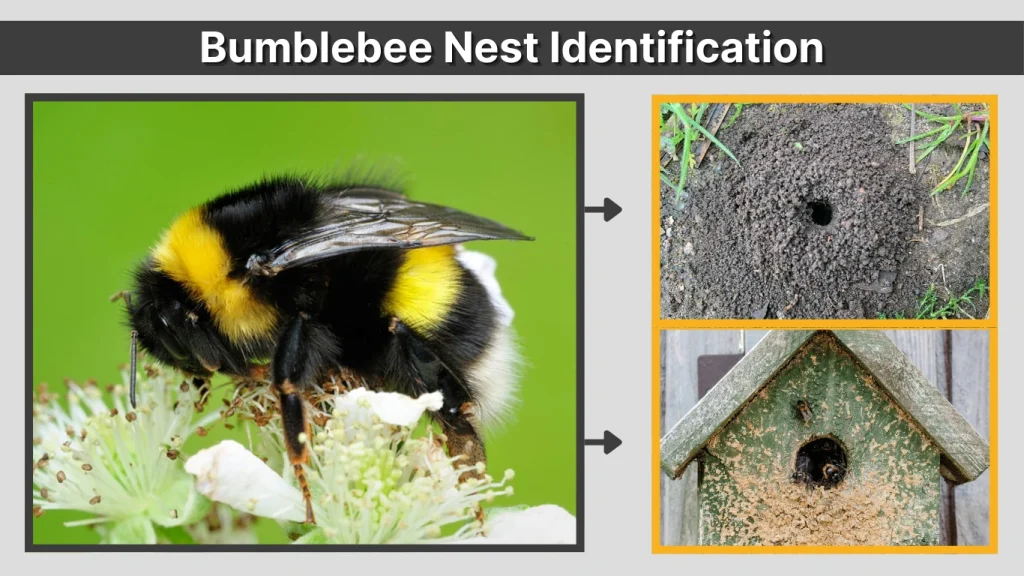
Bumblebee nests are usually small and discreet compared to the large, structured hives of honeybees. Recognizing their unique appearance and location is essential for distinguishing them from wasp nests or other insect colonies.
What Does a Bumblebee Nest Look Like?
Bumblebee nests are often irregular in shape and made of wax cells surrounded by pollen, nectar, and insulating materials like dried grass or moss. The interior looks messy compared to the neat hexagonal combs of honeybees, with brood cells and food storage clustered together.
Common Nesting Locations
Bumblebees frequently choose sheltered spots for nesting, such as abandoned rodent burrows, compost heaps, thick grass tussocks, or inside bird boxes. Some species also nest under sheds, in wall cavities, or other hidden areas close to flowers.
Signs of a Bumblebee Nest Nearby
You might notice multiple bees repeatedly entering and leaving a small opening in the ground or vegetation. The entrance may be surrounded by loose soil or plant material, and you may hear a faint buzzing sound from within when standing nearby.
Bumblebee Nest Life Cycle

Bumblebee nests follow a seasonal cycle, starting in spring and ending by late summer or early autumn. Each stage plays a vital role in the survival of the colony and the continuation of the species.
Spring Nest Formation
In early spring, a queen emerges from hibernation and searches for a suitable nesting site. Once found, she constructs the first wax cells, lays eggs, and begins raising the first generation of worker bees.
Summer Colony Growth
By summer, the colony is at its peak, with dozens to hundreds of workers collecting nectar and pollen. The queen focuses on laying eggs while workers expand the nest and care for the brood.
Late Season Decline
As autumn approaches, the colony produces new queens and males. After mating, the new queens find places to hibernate, while the rest of the colony, including the old queen, naturally dies off, leaving the nest abandoned.
Should You Remove a Bumblebee Nest?
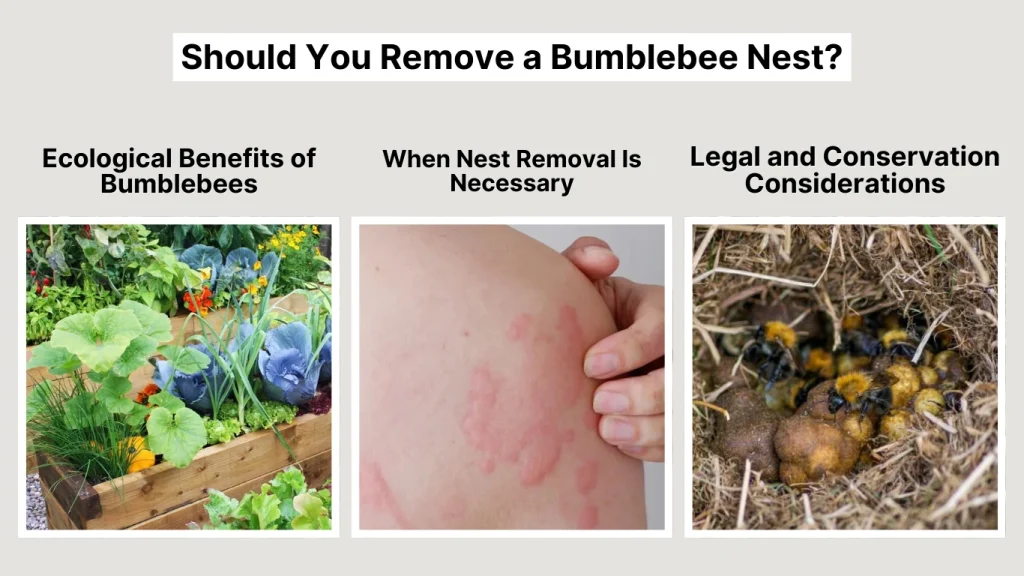
Bumblebees are valuable pollinators, and their nests are temporary, lasting only a few months. In most cases, removal is unnecessary and should be avoided unless there is a direct safety concern.
Ecological Benefits of Bumblebees
Bumblebees play a crucial role in pollinating wildflowers, fruits, and vegetables. Removing a nest unnecessarily can disrupt local pollination and harm biodiversity.
When Nest Removal Is Necessary
Removal may be needed if the nest is in a high-traffic area, poses a risk to allergic individuals, or obstructs essential structures. Even then, non-lethal relocation is the preferred option.
Legal and Conservation Considerations
In some regions, bumblebees are protected species, meaning their nests cannot be destroyed without proper permissions. Always check local wildlife regulations before taking action.
How to Get Rid of a Bumblebee Nest Safely

Safely removing or relocating a bumblebee nest requires caution, proper timing, and, ideally, professional help. Since colonies naturally die off at the end of the season, waiting until they vacate is often the safest option.
Non-lethal Relocation
If immediate removal is necessary, contact a beekeeper or licensed pest control professional who uses bee-friendly relocation methods. They can transfer the nest to a safer location without harming the bees.
Deterring Bumblebees Naturally
Reduce attractants by removing flowering weeds near high-traffic areas and sealing potential nesting sites after the bees have left. Using strong-smelling, non-toxic repellents like citronella near unused nesting sites can discourage new colonies.
Professional Removal Options
When dealing with a nest in a risky location, trained professionals have the equipment to relocate it safely. They typically work in cooler hours of the day or at night when most bees are inside and less active.
How to Prevent Bumblebees from Nesting Near Your Home
Preventing bumblebee nests starts with making potential nesting areas less attractive. This can be done through regular property maintenance and habitat management.
Habitat Management
Keep lawns trimmed, clear dense piles of grass or leaves, and avoid leaving open cavities such as unused bird boxes or rodent burrows. Removing these potential sites reduces the chances of a queen establishing a nest in spring.
Regular Inspections of Vulnerable Areas
Check sheds, garages, wall cavities, and garden edges for early signs of nesting, especially in spring. If you spot activity early, you can discourage nesting before the colony develops.
FAQs
How long do bumblebee nests last?
Most bumblebee nests last for just one season, typically from spring to early autumn, after which the colony dies and the nest is abandoned.
Do bumblebees reuse their nests?
No, bumblebees do not reuse old nests. Each spring, new queens build fresh nests in different locations.
How many bees live in a nest?
A typical bumblebee nest houses between 50 and 400 bees, depending on the species and environmental conditions.
Can bumblebees damage property?
Bumblebees do not chew wood or cause structural damage. However, nests in wall cavities or roof spaces may be inconvenient due to bee activity.
Are bumblebee nests bigger than honeybee hives?
No, bumblebee nests are much smaller than honeybee hives, both in size and population. They are often less noticeable and easier to overlook.
