
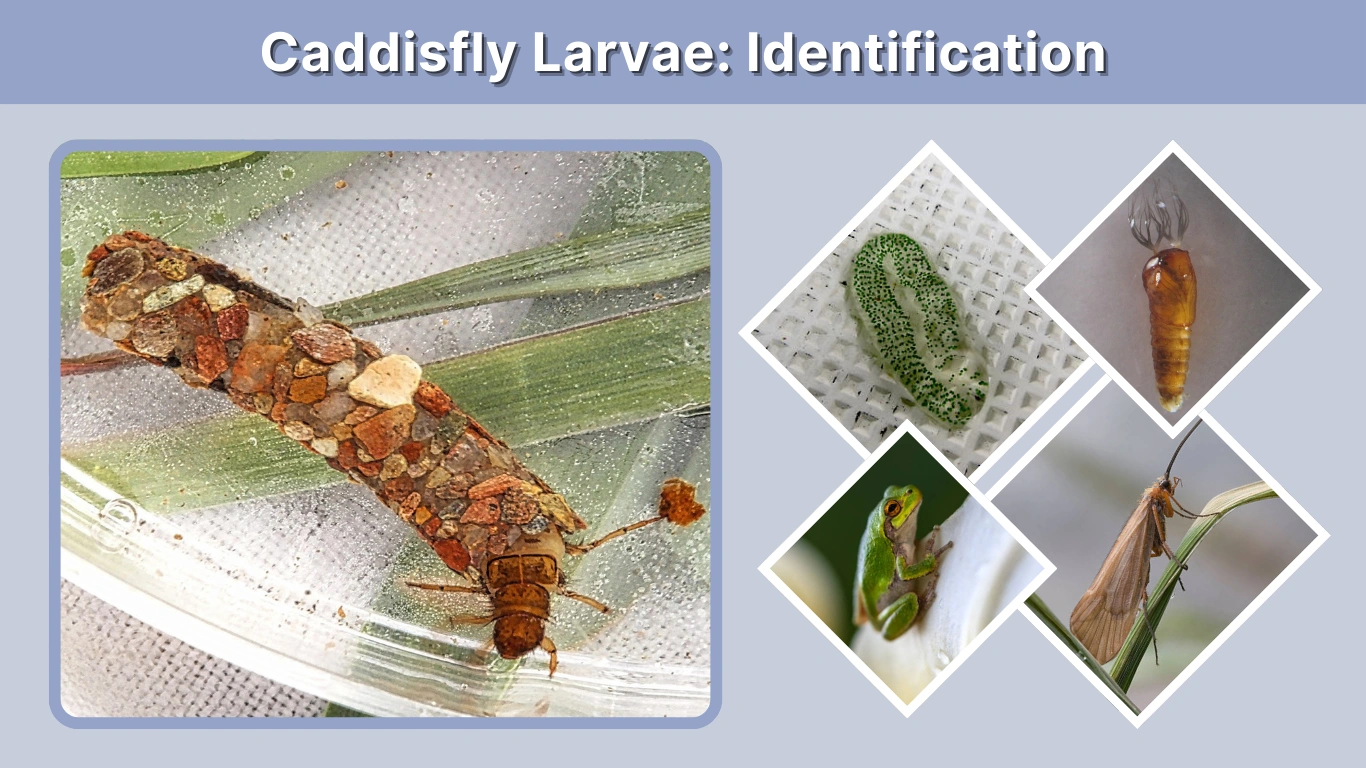
Caddisfly larvae are small aquatic insects commonly found in freshwater streams, rivers, ponds, and lakes across the world. Best known for the protective cases they build from sand, twigs, or leaves, these larvae play a vital role in aquatic ecosystems and food chains. Understanding caddisfly larvae helps students, nature enthusiasts, and anglers recognize water quality, insect life cycles, and the hidden biodiversity living beneath the surface of freshwater habitats.
What Are Caddisfly Larvae?
Caddisfly larvae are the juvenile, aquatic stage of insects belonging to the order Trichoptera. While adult caddisflies resemble small moth-like insects, their larvae live entirely underwater and spend most of their life cycle in freshwater environments. This larval stage is the longest and most important phase of their development.
These larvae are considered essential members of freshwater ecosystems. They help break down organic matter, recycle nutrients, and form a major food source for fish, amphibians, and other aquatic animals. Because many species are sensitive to pollution, scientists often use caddisfly larvae as biological indicators to measure water quality and ecosystem health.
Caddisfly larvae are closely related to moths and butterflies, sharing the same complete metamorphosis process: egg, larva, pupa, and adult. However, unlike their flying relatives, caddisfly larvae have evolved specialized structures that allow them to breathe, feed, and survive underwater.
Physical Characteristics of Caddisfly Larvae
Caddisfly larvae have soft, elongated bodies that resemble tiny caterpillars. Their bodies are usually divided into a hardened head, a thorax with legs, and a flexible abdomen. The head capsule is well developed and contains strong chewing mouthparts used to scrape algae, shred plant material, or capture prey.
Most species have three pairs of true legs located on the thorax, which help them crawl along rocks, sediment, and aquatic plants. At the rear end of the body, hook-like structures called prolegs allow them to anchor themselves to surfaces or inside their cases. Many larvae also possess filament-like gills along the abdomen, enabling them to absorb oxygen directly from the water.
One of the most distinctive physical features of many caddisfly larvae is their protective case. Depending on the species, these cases may be made from sand grains, tiny stones, leaves, bark, or shells, all bound together with silk produced by the larva. The case not only provides camouflage but also protects the larva from predators and strong currents.
Identification Features of Caddisfly Larvae

Caddisfly larvae can be recognized by a combination of body structure, behavior, and habitat. They are especially easy to identify when found inside their characteristic portable cases in streams and ponds.
Common identification features include:
- Soft, segmented, caterpillar-like body
- Hardened head with visible jaws
- Three pairs of jointed legs near the front
- Hooked prolegs at the rear for gripping
- Gills along the abdomen
- Tube-shaped or cone-shaped protective cases
- Often attached to rocks, wood, or aquatic plants
These features help distinguish caddisfly larvae from other aquatic insects such as mayflies and stoneflies, which lack portable cases and have different tail or gill structures.
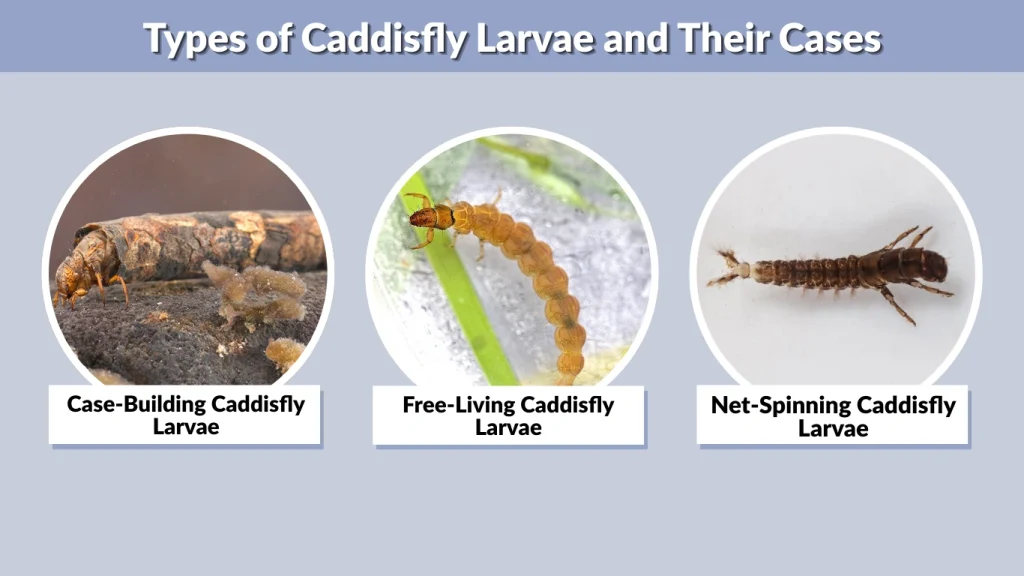
Types of Caddisfly Larvae and Their Cases
Case-Building Caddisfly Larvae
Case-building species are the most widely recognized type of caddisfly larvae. They construct portable shelters using materials found in their environment, including sand grains, leaf fragments, pine needles, or small pebbles. Each species tends to build a distinctive case shape, which can help scientists identify them. These cases protect larvae from predators, stabilize them in flowing water, and provide camouflage.
Free-Living Caddisfly Larvae
Free-living caddisfly larvae do not build portable cases. Instead, they move freely across streambeds and vegetation, often hiding under rocks or debris. These species are typically more active and are often predatory, hunting smaller aquatic insects and organisms.
Net-Spinning Caddisfly Larvae
Net-spinning larvae construct silk nets attached to rocks or submerged wood. These nets act as underwater traps that capture drifting food particles, algae, and tiny organisms. This feeding strategy is especially effective in fast-flowing streams, where currents continuously deliver food.
Habitat and Distribution
Caddisfly larvae inhabit a wide range of freshwater environments, including cold mountain streams, slow-moving rivers, forest ponds, wetlands, and large lakes. Most species prefer clean, well-oxygenated water, although some can tolerate moderately disturbed habitats.
They are found on every continent except Antarctica, making them one of the most widespread groups of aquatic insects. Larvae typically live on the bottom of water bodies, clinging to rocks, burrowing into sediment, or attaching themselves to aquatic plants. Their exact habitat depends on the species, water temperature, current speed, and available food sources.
Life Cycle of Caddisflies
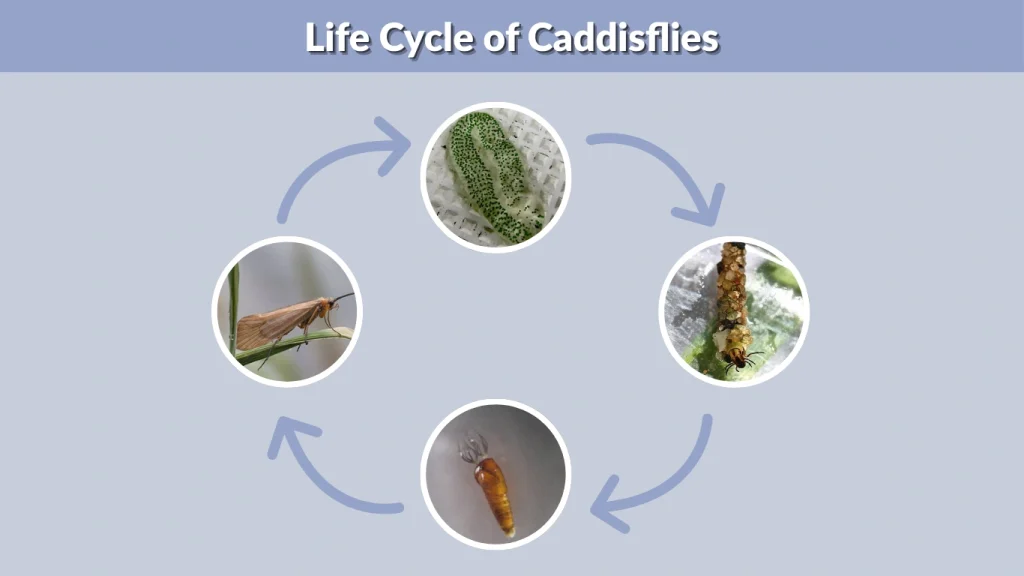
Caddisflies undergo complete metamorphosis, meaning they pass through four distinct stages during their development. The larval stage can last from several months to more than a year, depending on the species and environmental conditions.
Main stages of the life cycle include:
- Eggs laid on or near water surfaces
- Larvae feeding and growing underwater
- Pupae transforming inside protective shelters
- Adults emerging as winged insects
Diet and Feeding Behavior
Caddisfly larvae show remarkable diversity in feeding habits, which allows them to occupy many different roles within freshwater ecosystems. Some species are herbivores that graze on algae growing on rocks and aquatic plants. Others are detritivores that shred and consume decaying leaves, wood fragments, and organic debris that fall into the water. A smaller number of species are predators, actively hunting tiny aquatic insects, worms, and crustaceans.
What Do Caddisfly Larvae Eat?
Most caddisfly larvae feed on a mixture of algae, microscopic organisms, and decomposing plant matter. Their strong chewing mouthparts are adapted for scraping, cutting, or capturing food. Net-spinning species filter fine particles from flowing water, while free-living species often stalk and ambush prey.
Feeding Strategies
Depending on the species, caddisfly larvae may function as grazers, shredders, collectors, or predators. These varied feeding strategies help recycle nutrients, break down plant material, and keep freshwater ecosystems balanced. Through their feeding, they convert organic matter into forms that can be used by other organisms in the food web.
Ecological Importance of Caddisfly Larvae
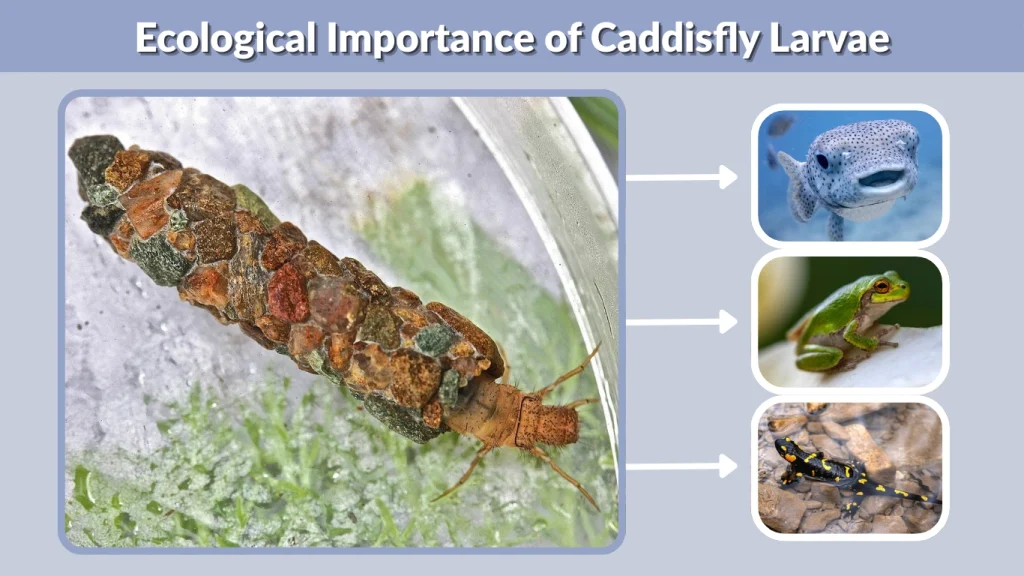
Caddisfly larvae play a central role in freshwater ecosystems. By feeding on algae, decaying plants, and microorganisms, they help regulate organic material and prevent excessive buildup on streambeds. Their case-building and movement also influence sediment distribution, contributing to the physical structure of aquatic habitats.
They are a crucial food source for many animals, including fish, frogs, salamanders, aquatic birds, and larger insects. Trout and other freshwater fish rely heavily on caddisfly larvae, which is why these insects are especially important in fly-fishing and aquatic biology studies.
Because many species are sensitive to pollution, changes in caddisfly populations can signal shifts in water quality. A healthy, diverse caddisfly community often indicates clean, well-oxygenated water. For this reason, scientists and environmental agencies frequently monitor caddisfly larvae when assessing stream and river health.
Caddisfly Larvae vs Similar Aquatic Insects

Caddisfly larvae are often confused with mayfly and stonefly larvae because they share similar habitats. However, several key differences help separate them.
- Caddisfly larvae vs mayfly larvae: Mayfly larvae usually have long tail filaments and flattened bodies, while caddisfly larvae typically lack long tails and often live in portable cases.
- Caddisfly larvae vs stonefly larvae: Stonefly larvae are more heavily flattened, with visible tails and strong legs adapted for fast currents, while caddisfly larvae are softer and often concealed inside cases or nets.
- Body structure: Caddisfly larvae have a hardened head and thorax with a softer abdomen, whereas mayflies and stoneflies show more uniform body hardness.
- Behavior: Caddisfly larvae often remain anchored to surfaces or hidden in cases, while mayflies and stoneflies move more freely.
- Identification value: Case construction is one of the easiest ways to recognize caddisfly larvae in natural settings.
Understanding these differences is useful for students, nature observers, anglers, and water-quality researchers.
Interesting Facts About Caddisfly Larvae
Caddisfly larvae are among the few insects capable of producing silk underwater. They use this silk to bind case materials together, anchor themselves to rocks, and spin feeding nets. Each species builds a unique case design, ranging from straight tubes to spiral or curved structures.
Some larvae decorate their cases with specific materials to match their environment, providing excellent camouflage. In certain species, case shape and material selection are so precise that scientists can identify the species simply by examining the case. These fascinating building behaviors make caddisfly larvae a favorite subject in aquatic ecology and evolutionary studies.
FAQs
What are caddisfly larvae?
Caddisfly larvae are the aquatic juvenile stage of insects in the order Trichoptera. They live in freshwater habitats such as streams, rivers, ponds, and lakes. Many species build protective cases from sand, leaves, or small stones, which makes them easy to recognize in natural environments.
Where are caddisfly larvae commonly found?
Caddisfly larvae are found worldwide in clean freshwater environments. They commonly live on rocks, submerged wood, aquatic plants, and streambeds. Most species prefer cool, oxygen-rich water, which is why they are often abundant in clear streams and healthy rivers.
What do caddisfly larvae eat?
Caddisfly larvae feed on algae, decomposing plant matter, microorganisms, and small aquatic animals. Some species graze on surfaces, others shred leaves, and net-spinning species filter food from moving water. Their feeding habits help recycle nutrients and support freshwater food webs.
How can you identify caddisfly larvae?
Caddisfly larvae can be identified by their soft, segmented bodies, hardened head capsules, and three pairs of legs near the front. Many species live inside portable cases made of sand or plant material. These cases are one of the clearest signs of caddisfly larvae.
Why are caddisfly larvae important?
Caddisfly larvae are important because they support aquatic ecosystems, serve as food for fish and wildlife, and help break down organic matter. They are also valuable indicators of water quality, as healthy populations usually reflect clean, well-oxygenated freshwater habitats.
