

Camel crickets, often mistaken for spiders due to their long legs and jumpy behavior, are common invaders in basements and dark corners of homes. While they don’t bite or sting, their sudden movements and appearance can be unsettling. In this article, you’ll learn how to identify different types of camel crickets, understand their habits and diet, and discover proven ways to eliminate and prevent infestations using traps, sprays, and moisture control methods. Whether you’re dealing with a single bug or a full-blown infestation, this guide covers everything you need to know.
What Are Camel Crickets?
Camel crickets, also known as cave crickets or spider crickets, are humpbacked, wingless insects with long antennae and powerful hind legs. Unlike regular house crickets, they don’t chirp, but their sudden, high jumps can startle anyone who encounters them. These insects thrive in damp, dark environments and are often found in basements, crawl spaces, and sheds.
Key Camel Cricket Facts
- Belong to the Rhaphidophoridae family
- Active at night and avoid light
- Can jump several feet when disturbed
- Do not make noise like true crickets
- Often appear in groups, especially in moist areas
Identifying Camel Crickets
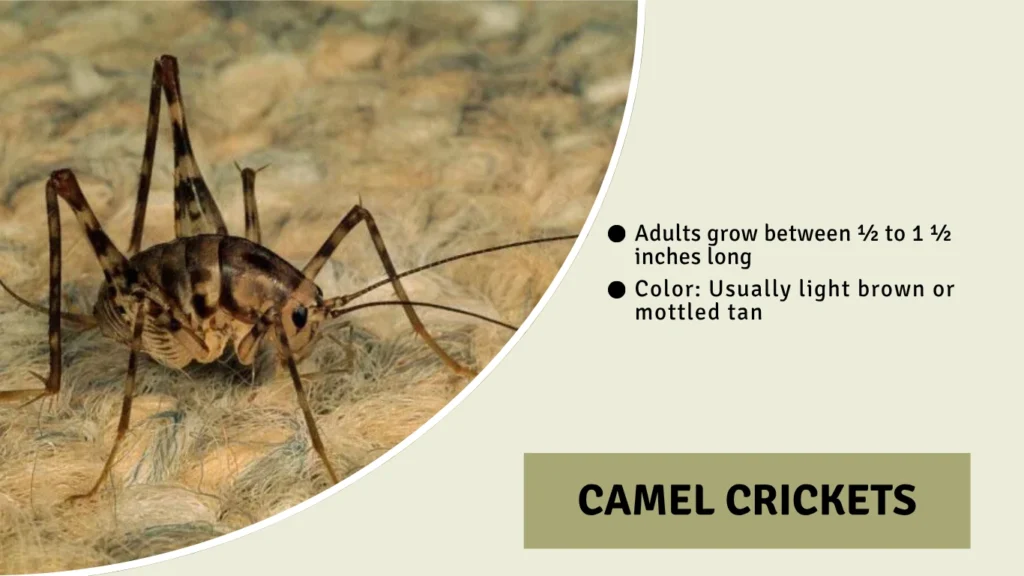
Recognizing a camel cricket is essential for proper control. Their unique shape and behavior make them easy to distinguish once you know what to look for.
Camel Cricket Pictures & Images
Camel crickets have a distinctive appearance: a large, arched back resembling a camel’s hump, long spindly legs like a spider, and a light brown to tan color. Viewing close-up images can help distinguish them from other similar-looking pests like spiders or common crickets.
Camel Cricket Size & Appearance
- Adults grow between ½ to 1 ½ inches long
- Color: Usually light brown or mottled tan
- Body shape: Hump-backed with long legs
- Nymphs: Smaller versions of adults, without wings or chirping ability
Common Species
- Greenhouse Camel Cricket – Often found near plants or moist soil
- Spotted Camel Cricket – Has speckled or patterned body
- Japanese Camel Cricket – Introduced species found in some U.S. states
- Square-Legged Camel Cricket – Named for its uniquely shaped legs
Camel Crickets vs Spider Crickets
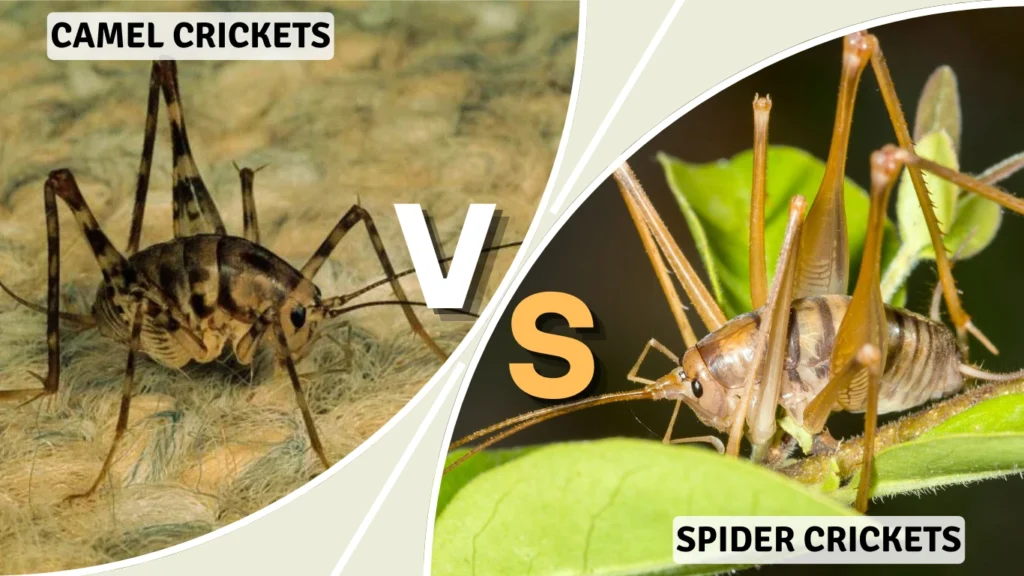
The terms camel cricket and spider cricket are often used interchangeably—and for good reason. They’re actually the same insect. The nickname “spider cricket” comes from their spider-like appearance: long legs, fast movement, and a hunched body.
Why People Confuse Them
- Both names refer to camel crickets (Rhaphidophoridae)
- Their creepy look and tendency to jump unexpectedly make them resemble spiders
- Nocturnal habits and preference for dark areas add to the confusion
- Unlike true spiders, they do not spin webs or have fangs
So whether you call them spider crickets or camel crickets, you’re talking about the same harmless—but startling—insect.
Camel Crickets in House and Basement
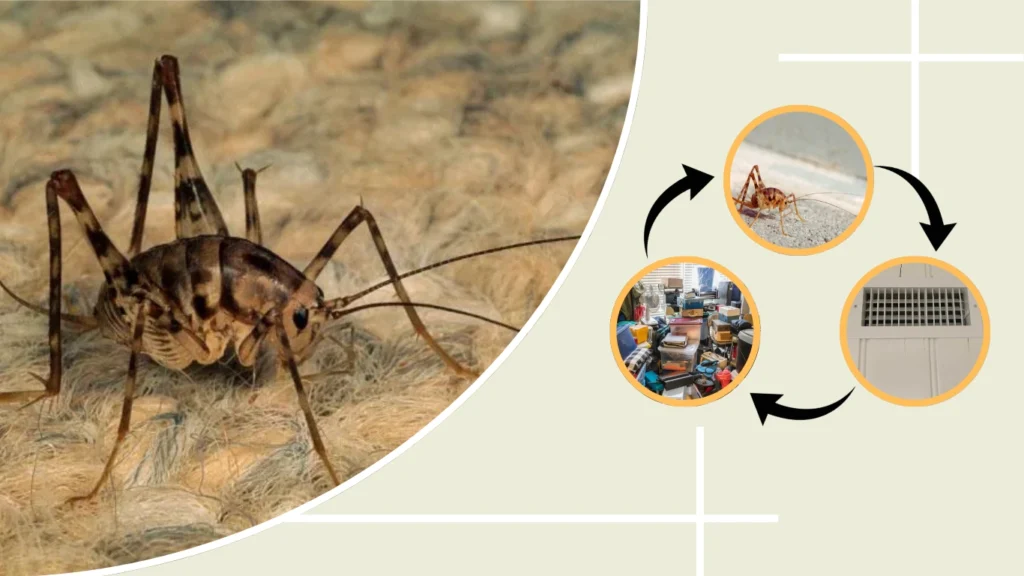
One of the most common places people find camel crickets is inside the basement or lower levels of the home. These insects seek out cool, moist, and dark areas where they can hide and breed.
Why They Invade Homes
- High moisture and humidity attract them
- Cracks or open vents allow them easy entry
- Cluttered storage and cardboard boxes create ideal shelter
Signs of Camel Cricket Infestation
- Seeing multiple crickets in dark, damp corners
- Chewed fabrics, clothes, or cardboard
- Sudden jumping insects when you enter a basement or garage
- Spotting nymphs and adults during late summer and fall
Are Camel Crickets Dangerous?
Camel crickets may look intimidating, but they are not harmful to humans or pets. Despite their large legs and quick jumps, they do not bite, sting, or transmit diseases. Most of the fear surrounding them comes from their sudden movements and spider-like appearance.
Do Camel Crickets Bite or Sting?
- No, they do not bite or sting
- They lack fangs or venom
- They may jump toward people when startled, but this is a defense mechanism—not aggression
Is the Camel Cricket Bite Poisonous?
- There’s no such thing as a camel cricket bite—they don’t have mouthparts suited for biting skin
- No venom or toxin is present
- They are more nuisance than threat
In short, they may look scary, but camel crickets are not dangerous or poisonous.
What Do Camel Crickets Eat?
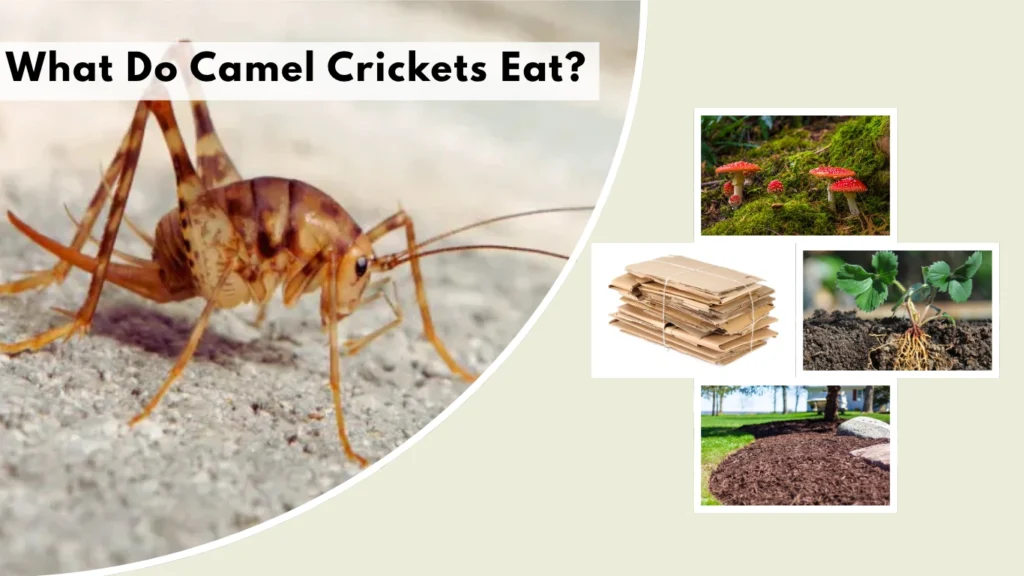
Camel crickets have a varied and opportunistic diet, which helps them thrive in both indoor and outdoor environments. They feed on a mix of organic matter and household items.
Common Foods Camel Crickets Eat
- Fungi, plant roots, and mulch (especially outdoors)
- Cardboard, wood, and paper in storage areas
- Fabric, carpet, and clothing when indoors
- Dead insects or even other crickets in tight environments
Their diet often leads them to damage stored belongings, making them a frustrating pest for homeowners.
FAQs
Are camel crickets dangerous to humans?
No, camel crickets are not dangerous. They don’t bite, sting, or carry diseases. They can be startling due to their sudden jumping but are harmless.
Do camel crickets bite?
No. Camel crickets do not bite. They don’t have the mouthparts needed to pierce skin, and they don’t show any aggressive behavior toward humans or pets.
What attracts camel crickets to my house?
Moisture, darkness, and clutter are the main attractions. Basements, crawl spaces, and storage rooms with cardboard boxes are common hiding places.
What is the best insecticide for camel crickets?
Look for pyrethroid-based sprays such as bifenthrin or deltamethrin. These are effective for both indoor cracks and outdoor barriers. For natural control, boric acid and diatomaceous earth work well too.
How big do camel crickets get?
Adult camel crickets typically range from ½ inch to 1 ½ inches in length. Some species may appear larger due to their long legs and hunched posture.
