
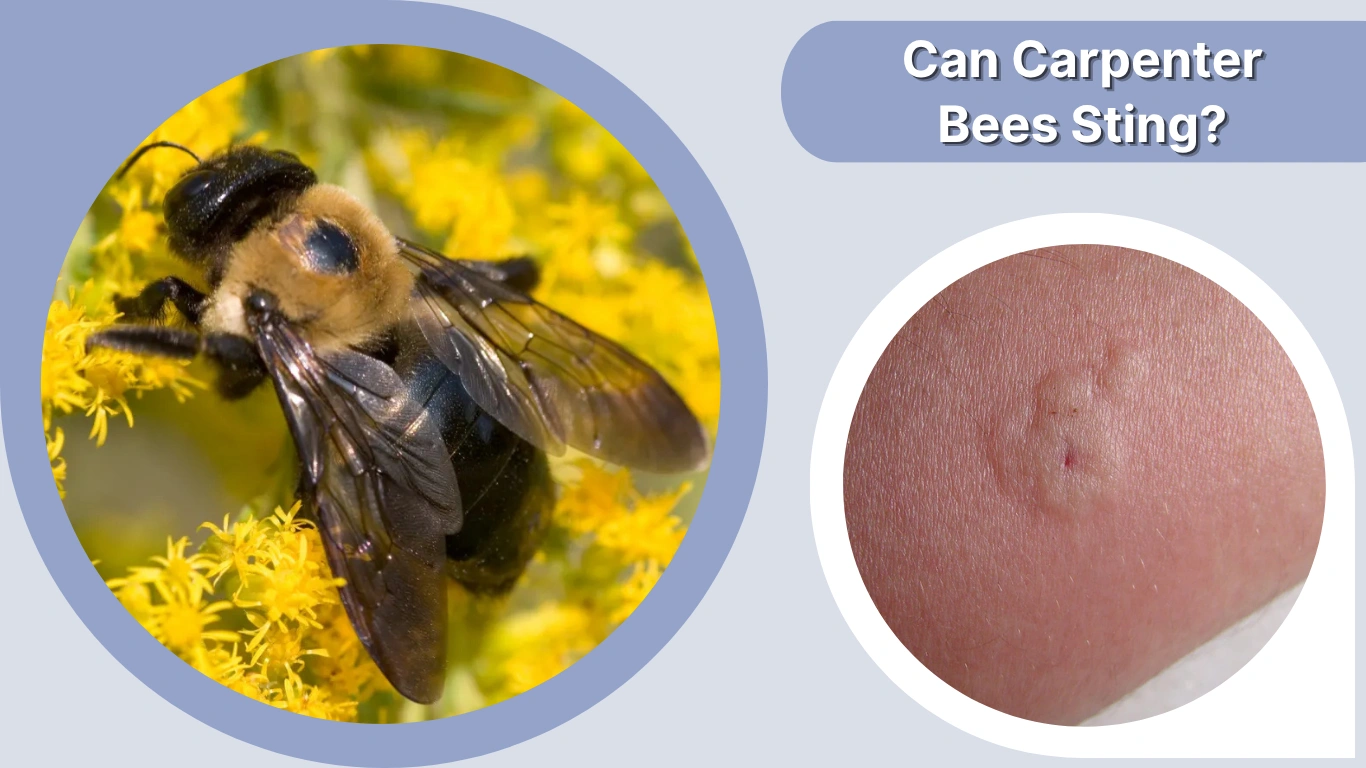
Carpenter bees are large, buzzing insects often seen hovering near wooden decks, fences, or eaves. Their appearance and sound can seem intimidating, leading many to wonder if these bees sting. The truth is that carpenter bees are far less dangerous than they look — only female carpenter bees can sting, and they do so rarely. Understanding their behavior and sting potential helps ease unnecessary fear while keeping you safe.
Understanding Carpenter Bees
Carpenter bees belong to the genus Xylocopa, known for drilling small holes into wood to build their nests. Unlike honey bees, they do not live in large colonies. Instead, female carpenter bees usually burrow tunnels into untreated or weathered wood to lay their eggs.
They are often mistaken for bumble bees because of their similar size and fuzzy thorax, but carpenter bees have shiny, hairless abdomens, while bumble bees appear more fuzzy. Despite their intimidating presence, these bees are essential pollinators and rarely pose any threat unless provoked.
Can Carpenter Bees Sting?
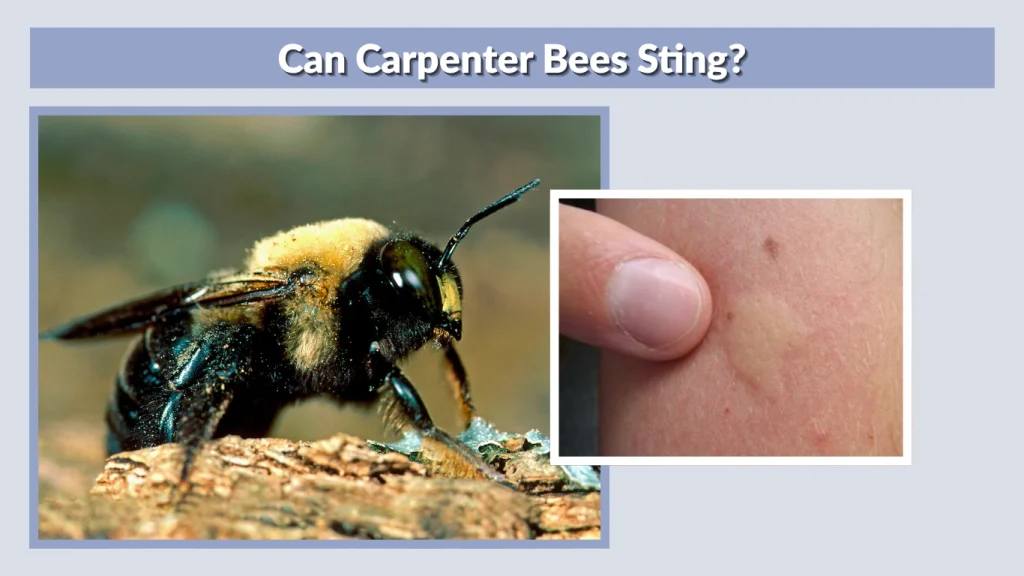
Yes, carpenter bees can sting — but only under specific conditions. Female carpenter bees have stingers, while males do not. Even females, however, are non-aggressive and will only sting when they feel directly threatened, such as being handled or trapped.
Most encounters with carpenter bees are harmless. They prefer to focus on nest-building and foraging for pollen rather than defending their territory. Their sting is painful but typically mild compared to wasps or honey bees. In most cases, the reaction involves short-term redness, itching, or swelling that subsides within a day.
Can Male Carpenter Bees Sting?
No — male carpenter bees cannot sting. They lack stingers entirely, making them completely harmless to humans and pets. However, their behavior often gives the opposite impression.
Male carpenter bees are highly territorial and tend to hover aggressively near anyone approaching their nesting site. They may buzz loudly, dart back and forth, or even fly close to your face. Despite this show of bravado, it’s purely a bluff. Since males have no stingers, they pose no real danger — just noisy intimidation.
Can Female Carpenter Bees Sting?
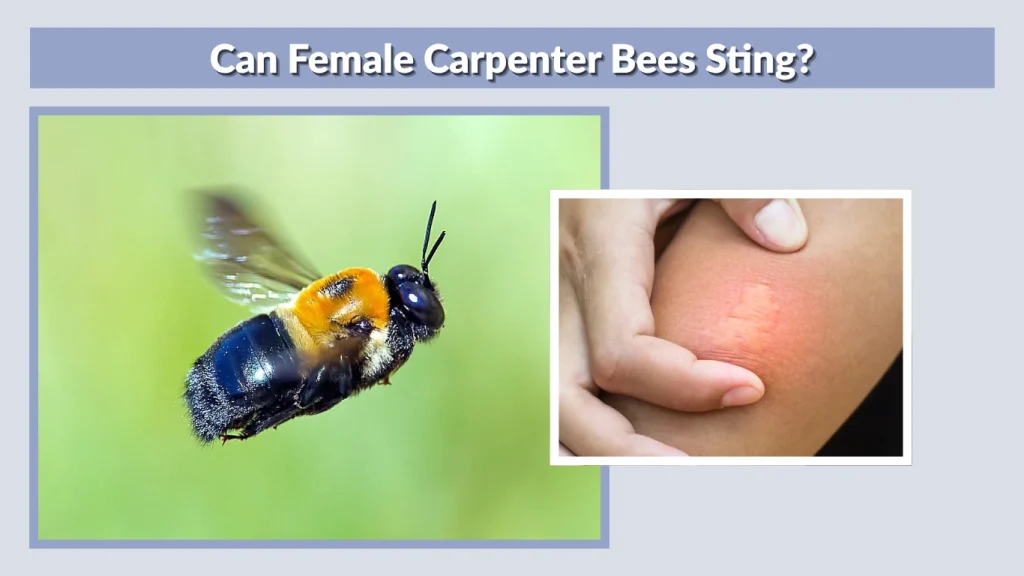
Only female carpenter bees have stingers, and they are the ones capable of delivering a sting. However, these females are calm and focused primarily on nesting and caring for larvae. A female will sting only when she feels directly threatened — for instance, if someone tries to swat or squeeze her.
Unlike honey bees, female carpenter bees have smooth stingers, meaning they can sting multiple times without dying. Their stingers do not have barbs, allowing them to withdraw easily after an attack. Fortunately, multiple stings are rare because these bees avoid confrontation unless absolutely necessary.
How Many Times Can a Carpenter Bee Sting?
Because of their smooth stinger, female carpenter bees can sting more than once. In contrast, honey bees die after stinging because their barbed stingers tear from their bodies. Carpenter bees, on the other hand, can retract their stinger without injury, allowing repeated use if they feel seriously threatened.
That said, carpenter bees are not naturally aggressive, so multiple stings are uncommon. If one occurs, it usually happens when someone disturbs a nest or handles the bee directly. Their ability to sting more than once doesn’t make them dangerous — only cautious defenders of their space.
Do Carpenter Bees Bite or Sting?

A common misconception is that carpenter bees bite, but that’s not true. They chew wood with their strong mandibles to create nesting tunnels, but they do not bite humans or animals. The chewing marks they leave behind often look like small, perfectly round holes about the size of a pea in untreated wood.
While their chewing may damage wooden structures over time, it poses no risk of physical harm to people. If you notice holes near your porch or eaves accompanied by sawdust, it’s a sign of carpenter bee nesting — not biting.
Can Carpenter Bees Sting Humans and Pets?
Carpenter bees rarely sting humans, but it can happen if a female feels cornered or threatened. The sting usually causes a small, red bump with mild pain and swelling that fades within a few hours.
For pets, such as dogs or cats, the risk is minimal. Curious pets might get too close to a nesting site, leading to a defensive sting. Symptoms include local swelling, redness, or excessive licking of the area. In most cases, these reactions are mild and short-lived.
To stay safe:
- Avoid waving or swatting at buzzing carpenter bees.
- Keep pets away from nesting holes.
- Wear light-colored clothing when working near wood structures during nesting season (spring and early summer).
Do Carpenter Bees Die After Stinging?
Unlike honey bees, carpenter bees do not die after stinging. Their stingers are smooth and can be easily retracted without tearing their body. This allows female carpenter bees to sting multiple times if necessary.
When a honey bee stings, its barbed stinger gets stuck in human skin, leading to the bee’s death when it tries to fly away. Carpenter bees, however, evolved differently — their stingers are built for defense, not sacrifice. Still, even though they can sting repeatedly, they almost never do unless persistently provoked. This makes them one of the least aggressive stinging bees around homes and gardens.
Can Carpenter Bees Sting Multiple Times?
Yes, female carpenter bees can sting several times. Because their stingers don’t have barbs, they can pull them out easily after each sting. This means they’re physically capable of multiple stings, but such behavior is extremely rare.
Carpenter bees are solitary insects, not hive defenders like honey bees. Their instinct is to protect their nest from direct threats, not to attack in groups. So, while multiple stings are possible, most people who encounter carpenter bees never get stung even once.
Identifying a Carpenter Bee Sting
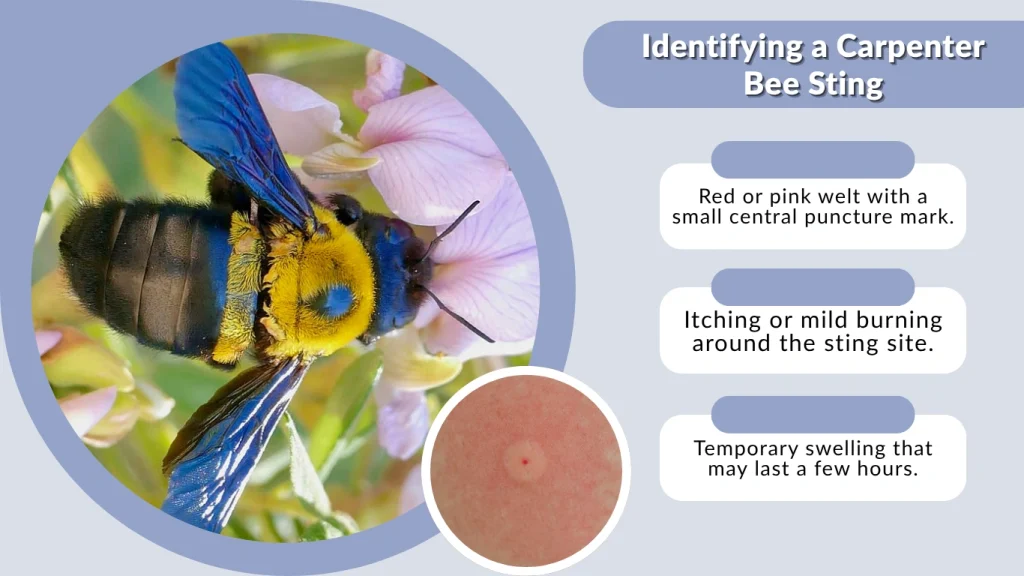
A carpenter bee sting looks similar to a mild wasp or bumble bee sting. It usually appears as a small red bump with slight swelling and localized tenderness. Pain is sharp at first but fades quickly.
Common signs include:
- Red or pink welt with a small central puncture mark.
- Itching or mild burning around the sting site.
- Temporary swelling that may last a few hours.
For treatment:
- Wash the sting area with soap and water.
- Apply a cold compress to reduce swelling.
- Use an antihistamine or aloe vera gel for itching.
If swelling spreads, or if you have difficulty breathing, it could indicate an allergic reaction requiring medical attention.
Are Carpenter Bees Dangerous?
Carpenter bees are not dangerous to humans. Their sting is mild, and most individuals never experience one. The only real risk comes from allergic reactions, which are rare. For pets, carpenter bee stings cause minor discomfort at most.
However, carpenter bees can be destructive to wood. Females drill small, round holes in wooden structures like fences, decks, and rafters to create nesting tunnels. Over time, repeated tunneling may weaken the wood or attract woodpeckers searching for larvae.
To protect wooden areas:
- Paint or seal exposed wood to deter nesting.
- Use hardwood instead of untreated softwood in outdoor structures.
- Plug existing holes with wood filler once bees leave in late summer.
Carpenter bees are beneficial pollinators, so controlling them should focus on prevention rather than extermination.
Carpenter Bee Behavior and Nesting Facts
Carpenter bees are solitary but may nest near each other in suitable wooden areas. Females drill a tunnel about half an inch wide and several inches deep, where they lay eggs and store pollen for their larvae. Males hover nearby to guard the nesting site but cannot sting.
The buzzing and hovering behavior might look threatening, but it’s mostly a territorial display. The bees are more interested in protecting their burrow than attacking humans.
Quick Facts About Carpenter Bee Stings
- Only female carpenter bees can sting.
- Males are harmless, though they often appear aggressive.
- Females can sting more than once because their stingers are smooth.
- Carpenter bees do not die after stinging.
- Stings are mild and rarely require medical care.
How to Avoid Carpenter Bee Stings
To minimize risk of stings or property damage:
- Avoid swatting at hovering bees.
- Stay calm and move slowly near nesting sites.
- Seal unpainted or weathered wood during springtime.
- Use natural deterrents like citrus oil or almond oil around potential nesting areas.
- Keep pets away from buzzing carpenter bees, especially near wooden decks or fences.
These simple precautions reduce both stings and wood damage while keeping the bees safe.
FAQs
Can carpenter bees sting without dying?
Yes. Carpenter bees have smooth stingers, so they can sting multiple times and survive each one. Unlike honey bees, they don’t lose their stinger when stinging.
Can a male carpenter bee sting you?
No. Male carpenter bees cannot sting because they don’t have stingers. They only hover and buzz loudly to protect their nesting territory.
How many times can a carpenter bee sting you?
A female carpenter bee can sting several times, though it’s extremely rare. They prefer to flee rather than sting unless directly threatened.
Can carpenter bees sting dogs or cats?
Yes, but rarely. Pets may get stung if they sniff too close to a nest. Stings cause mild swelling that usually heals within a day. A cold compress can help reduce discomfort.
Do carpenter bees bite or sting humans?
Carpenter bees do not bite humans. They chew wood for nesting but use their stinger only for defense. Stings are mild and non-lethal in most cases.
