
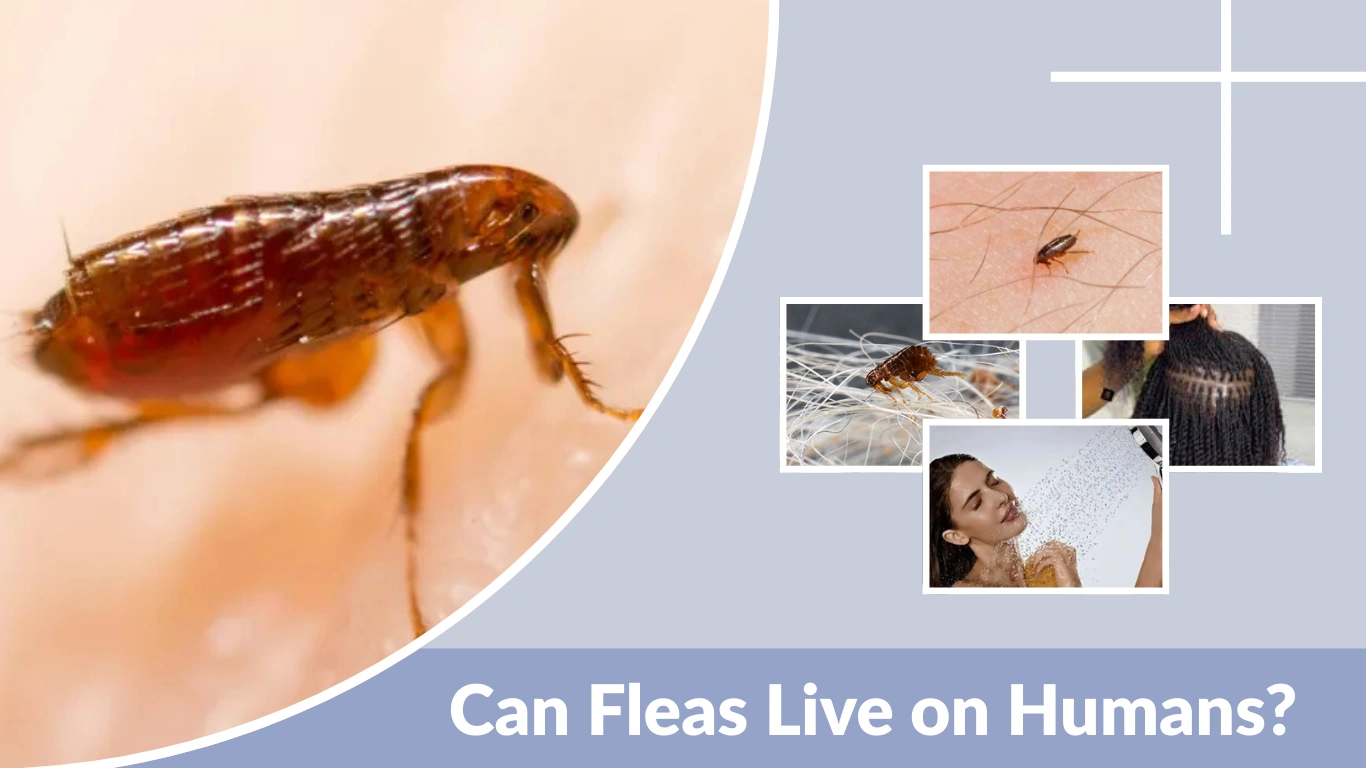
Fleas are a common problem for pets and wildlife, and people often worry whether these pests can live on humans, in human hair, or even survive in homes without animals. While fleas certainly bite humans, surviving on the human body long-term is another matter entirely.
This article explains which fleas can bite humans, whether cat and dog fleas can live on us, how long fleas survive on skin or clothing, whether they can live in human hair, and how to prevent flea exposure. By the end, you’ll understand exactly what fleas can and can’t do when it comes to living on humans.
Can Fleas Live on Humans?

Fleas can bite humans, but almost no flea species can actually live on us. Humans are considered “accidental hosts,” meaning fleas jump onto us temporarily when they cannot find an animal host like a dog, cat, rabbit, or rodent.
Fleas prefer animals because fur creates a warm, protected environment where they can hide, feed, reproduce, and complete their life cycle. Human bodies simply do not provide this environment. Even if fleas jump onto people, they cannot stay long.
Why Fleas Cannot Survive on Humans Long-Term
- Human skin is too smooth for fleas to grip
- Humans do not have dense fur that shelters fleas
- Body temperature varies more than animals’ coats
- Daily bathing removes fleas quickly
- Their eggs roll off immediately and die
- Humidity on human skin is not ideal for flea survival
In short, fleas may jump onto us to feed, but they cannot set up a permanent home.
Can Cat Fleas Live on Humans?

Cat fleas (Ctenocephalides felis) are the most common flea species worldwide. They are also the main fleas found on both cats and dogs. While cat fleas frequently bite humans, they do not live or reproduce on us.
They may land on your legs or ankles when you walk past an infested pet or carpet, but they fall off shortly after feeding.
Can Cat Fleas Live in Human Hair?
Cat fleas cannot truly live in human hair. Human hair is too sparse, and the scalp is not warm or sheltered enough for fleas to cling to.
Key reasons they cannot stay in human hair:
- Human hair shafts are too thick and too widely spaced
- Fleas cannot attach or lay eggs
- The scalp produces oils that repel fleas
- Fleas get washed away with normal showering
Cat fleas can jump into your hair briefly, but they cannot remain there.
How Long Cat Fleas Can Live on Humans
A cat flea might survive on a human for a few minutes to a few hours. They cannot feed properly, cannot reproduce, and almost always fall off within a short time. They die soon after if they cannot return to an animal host.
Can Dog Fleas Live on Humans?
Dog fleas (Ctenocephalides canis) behave similarly to cat fleas. They may bite humans, especially around the ankles, but they cannot survive on human skin.
Dog fleas prefer the protected undercoat of dogs, where they can hide near the skin while feeding. Humans don’t offer this type of environment.
Can Dog Fleas Live in Human Hair?
It is extremely unlikely. Dog fleas cannot grip human hair or navigate it the way they can thick animal fur.
Reasons dog fleas don’t stay in human hair:
- Humans lack dense undercoat fur
- The scalp is too exposed
- Fleas fall off easily
- Human hair does not provide nesting areas
As with cat fleas, they may jump onto a human head for a moment but cannot remain there.
How Long Dog Fleas Can Stay on Humans
Dog fleas may survive up to several hours, but they leave after feeding or fall off because humans are unsuitable hosts. Without a dog or cat, they die quickly.
Can Other Animal Fleas Live on Humans?
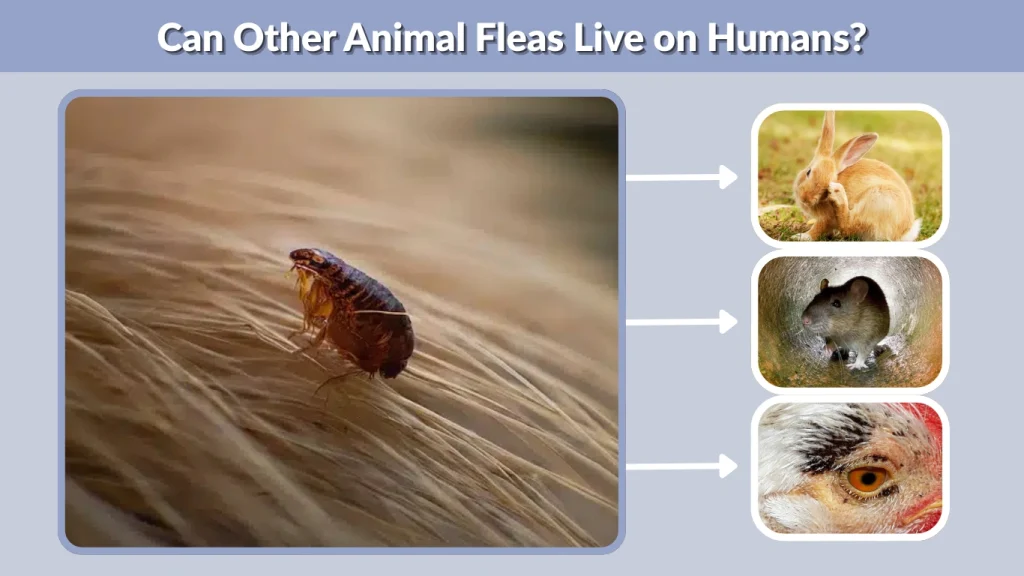
Many animals carry their own species-specific fleas, and people sometimes come into contact with them. However, almost none of these fleas can live on humans.
Rabbit Fleas
Rabbit fleas can hop onto humans and bite, but they cannot stay or reproduce.
Rat Fleas
Rat fleas can bite humans and may spread disease, but they cannot live on humans long-term.
Bird Fleas
Often found in old bird nests near homes, these fleas may bite humans but leave quickly.
Chicken, Hedgehog, Guinea Pig, Horse, Squirrel, and Wild Rabbit Fleas
These may bite humans in close contact situations but will not remain on human bodies.
Snow Fleas and Water Fleas
Neither species is a true flea, and they cannot bite or live on humans at all.
Can Fleas Live in Human Hair?

Fleas can jump into human hair, but they do not live there. They cannot attach to hair shafts the way head lice do, and the scalp environment is not suitable for their survival.
They may briefly hide in hair if disturbed or if they jump upward, but they fall out easily.
Can Fleas Live on Human Pubic Hair?
No. Pubic hair is too sparse and short. Fleas need dense fur for hiding and nesting, and they cannot grip this type of hair. Only pubic lice, not fleas, live in that region.
Can Fleas Live on Hairy Humans?
Even very hairy humans cannot support flea life cycles. Hair density is still far too low compared to animal fur.
Can Fleas Live on Human Clothing?
Fleas can cling temporarily to human clothing, especially fabrics with texture like socks, cuffs, pant legs, or seams. Clothing gives fleas a way to hitchhike into homes, but it does not allow them to live or reproduce.
Once a flea is on clothing, it is simply waiting to jump to a more suitable host—usually a dog, cat, or small animal.
How Long Fleas Survive on Clothing
- Unfed adult fleas can survive 24–48 hours on clothing
- Once fed, they need another blood meal within hours or they die
- Flea eggs cannot stick to clothing and fall off
- Larvae cannot develop on clothing due to lack of food
- Fleas die faster in dry indoor environments
Washing clothing in hot water kills fleas instantly.
Can Fleas Live in Human Homes Without Pets?
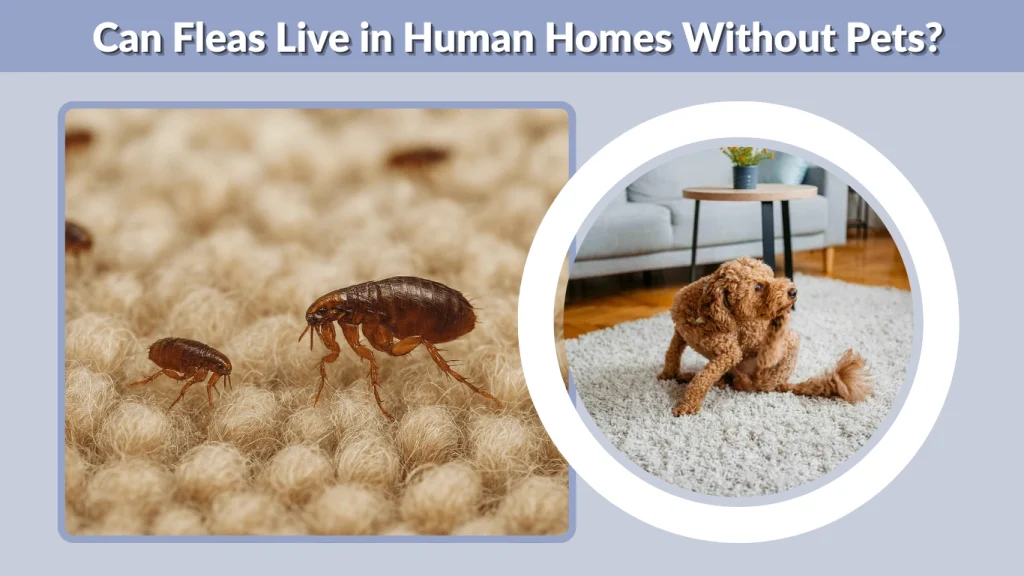
Fleas can survive indoors even when no pets are present, particularly if the home has warm temperatures, thick carpeting, or upholstery they can hide in.
However, the fleas are not living on humans—they are simply living in the environment, waiting for a suitable animal host.
How Fleas Enter Homes Without Pets
- Rodents (rats or mice) bring fleas into walls and attics
- Wildlife like squirrels or raccoons introduce fleas in crawl spaces
- Secondhand furniture or rugs may carry flea eggs
- Visiting pets can temporarily drop fleas indoors
Once fleas are inside, they may bite humans until they die out or the infestation is treated.
Lifespan of Fleas Indoors
- Adults: Up to 2–3 months if humidity is high
- Pupae: Can stay dormant for 6–12 months
- Larvae: Survive only if organic matter (skin flakes, flea dirt) is present
A warm house with thick carpeting is the perfect environment for fleas to persist even without pets.
Can Fleas Live and Reproduce on Humans?

For fleas, living on humans and reproducing on humans are two completely different conditions. Almost all flea species can bite humans, but they cannot reproduce on humans.
Fleas need:
- Thick fur to lay eggs in
- Stable humidity
- Consistent blood meals
- A protected environment to hide between feedings
Humans cannot provide any of these.
Human Flea Species (Rare)
The human flea Pulex irritans can bite humans and animals, but even this flea does not reproduce well on human bodies. These fleas are now rare in developed countries.
Why Fleas Drop Off Humans Quickly
- They cannot cling to human skin
- Human movement shakes them loose
- Showering removes them
- Clothing friction knocks them off
- Humans provide poor feeding access compared to animals
Even if a flea jumps onto a human for a temporary blood meal, it does not remain there.
Can Fleas Live on Humans Without Pets?
Fleas can bite humans even when no pets are present, but they cannot survive on humans for long-term feeding. If a house has a flea problem without pets, it almost always comes from:
- Rodents in walls
- Fleas left behind by previous tenants
- Wildlife nesting in vents or attics
- Fleas brought in on clothing or luggage
Fleas eventually die without suitable animal hosts, but they may continue biting until the home is treated.
Can Fleas Live on Humans Alone?
No. Fleas cannot sustain themselves or breed on humans alone. A flea infestation cannot occur solely from human hosts.
Why Fleas Bite Humans

Fleas bite humans for simple reasons: they are hungry, and a person is the nearest warm body available. Humans give off the same signals that attract fleas to animals:
What Attracts Fleas
- Body heat
- Exhaled CO₂
- Skin moisture
- Movement
- Light and shadow changes
Ankles and lower legs are the most commonly bitten areas because they are closer to the floor where fleas live.
Why Some People Get Bitten More Than Others
Some individuals naturally attract more flea attention due to:
- Body chemistry
- Higher body temperature
- Certain blood types
- Skin bacteria differences
- Salt levels in sweat
- Frequent contact with pets
It’s similar to why mosquitoes prefer certain people.
How to Get Rid of Fleas on Humans
Immediate Steps
- Shower thoroughly with warm soapy water
- Scrub legs, ankles, and hairline
- Use an anti-itch or anti-inflammatory cream
- Change into fresh, clean clothes
Showering removes fleas instantly because they cannot cling like lice.
Home Cleaning Measures
To stop repeated bites, treat the environment:
- Vacuum carpets, rugs, and upholstery thoroughly
- Wash bedding, blankets, and clothing in hot water
- Use flea sprays or powders on carpets
- Treat pets if present with vet-approved flea preventatives
- Use dehumidifiers (fleas struggle in dry environments)
Vacuuming is especially effective because it removes eggs, larvae, and adult fleas at once.
When to Seek Medical Attention
- Large areas of swelling
- Painful or infected bites
- Fever or flu-like symptoms
- Signs of flea-borne illnesses (rare but possible)
- Suspected rat flea bites in high-risk areas
If you see a burrowing lesion (tiny black dot in the center), it may be a parasitic jigger flea and requires urgent treatment.
How to Prevent Fleas from Biting Humans
Personal Protection
- Wear socks or long pants around infested areas
- Use repellents containing DEET, picaridin, or lemon eucalyptus
- Avoid sleeping near animal bedding
- Keep skin covered when handling infested pets
Home Prevention
- Treat pets monthly with flea preventatives
- Wash pet bedding frequently
- Vacuum floors and furniture regularly
- Seal cracks where rodents may enter
- Keep grass trimmed and outdoor areas clean
Preventing fleas at the source is the best way to avoid bites altogether.
FAQs
Can fleas live on human heads or scalps?
No. They may jump there but cannot live or lay eggs.
Can fleas survive on humans long-term?
No. They fall off quickly and die without animals.
Can fleas live on humans without pets?
They can bite humans, but they cannot live or reproduce on us.
Can flea eggs or larvae stay on humans?
No. Eggs fall off immediately and larvae cannot survive on skin.
