
Carpenter ants are one of the most common household pests that can cause structural damage to wood. Identifying carpenter ants correctly is essential to prevent infestations and differentiate them from other species like termites or black ants.
This guide covers everything you need to know about carpenter ants identification, carpenter ants with wings identification, and how to identify carpenter ants with images and charts.
Carpenter Ant Identification Guide
How to Identify Carpenter Ants
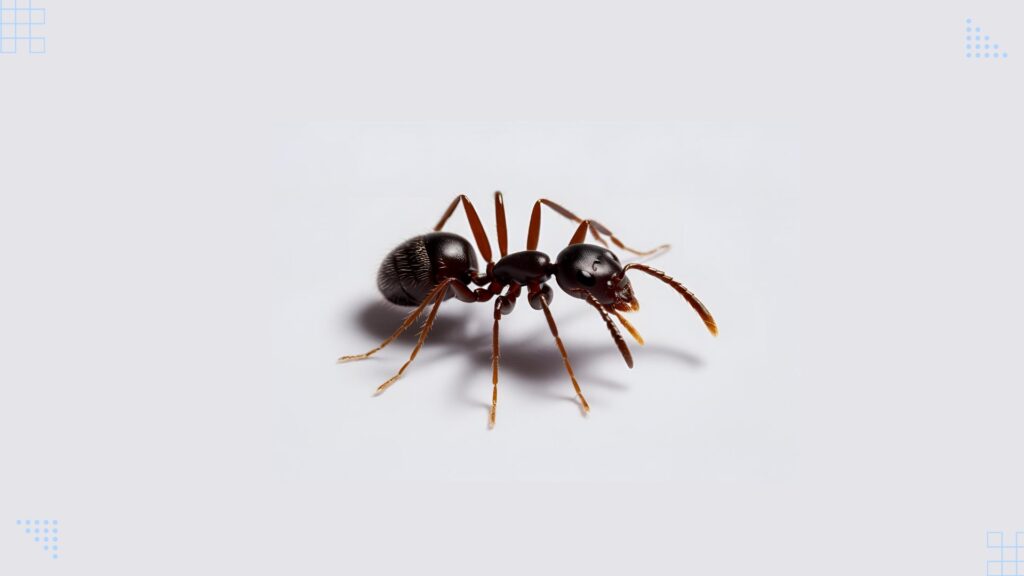
Carpenter ants are larger than most common ants and have distinct features. Here’s what to look for:
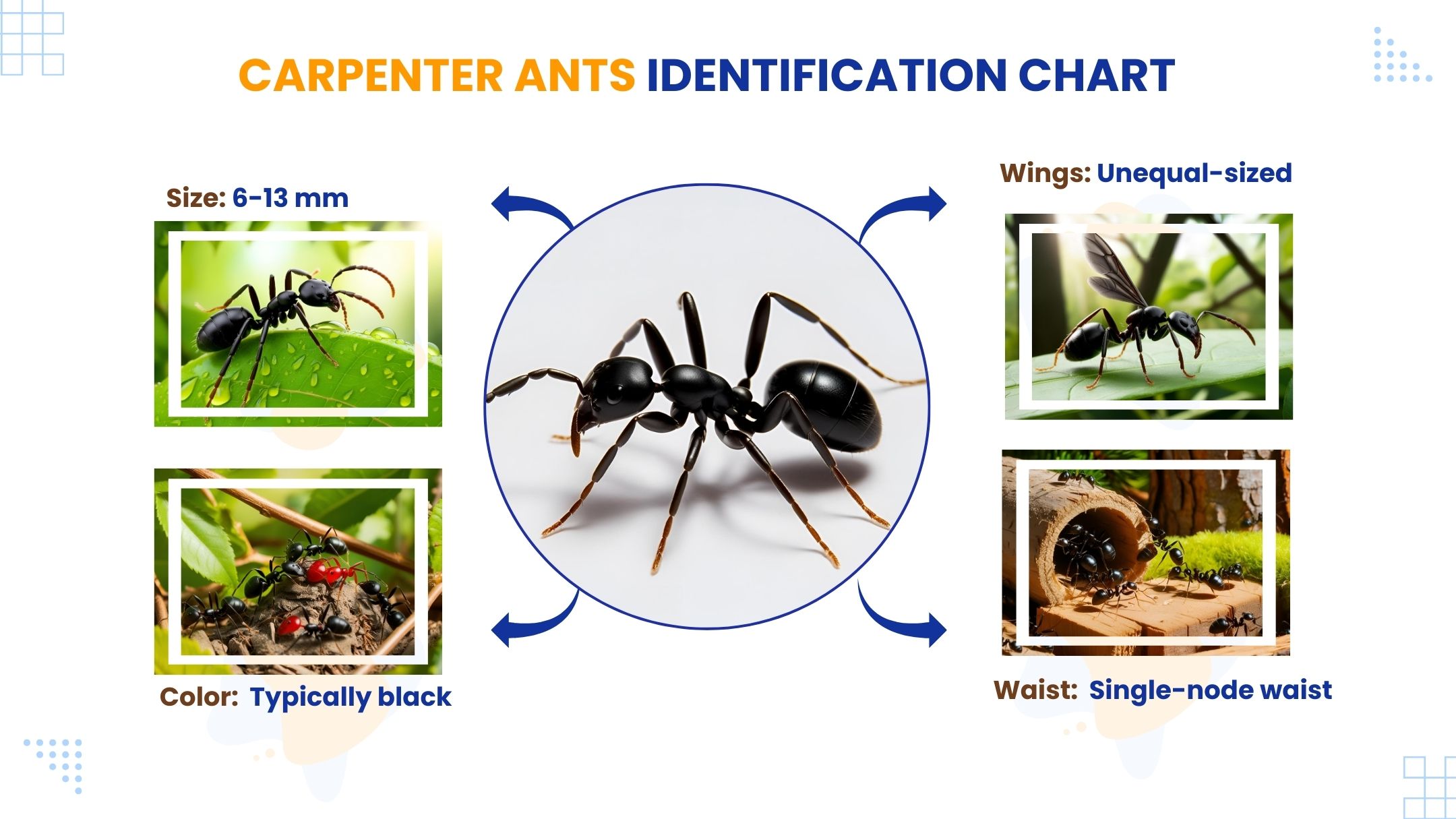
- Size: Ranges between 6-13 mm, with some queens reaching 20 mm.
- Color: Typically black, but some species have red, brown, or yellow hues.
- Antennae: Bent at an angle, unlike termites’ straight antennae.
- Waist: Carpenter ants have a single-node waist.
- Thorax: Smoothly rounded, whereas some ants have a bumpy thorax.
- Wings: Winged carpenter ants identification is essential, as they resemble termites but have unequal-sized wings.
Carpenter Ant Identification Chart

For a quick comparison, use this carpenter ant identification chart:
| Feature | Carpenter Ant | Black Ant | Termite |
|---|---|---|---|
| Size | 6-20 mm | 2-5 mm | 5-12 mm |
| Color | Black, red, brown | Black, brown | White, light brown |
| Antennae | Bent | Bent | Straight |
| Waist | One node | Two nodes | Thick, uniform body |
| Wings | Unequal-sized | No wings | Equal-sized |
Carpenter Ants with Wings Identification
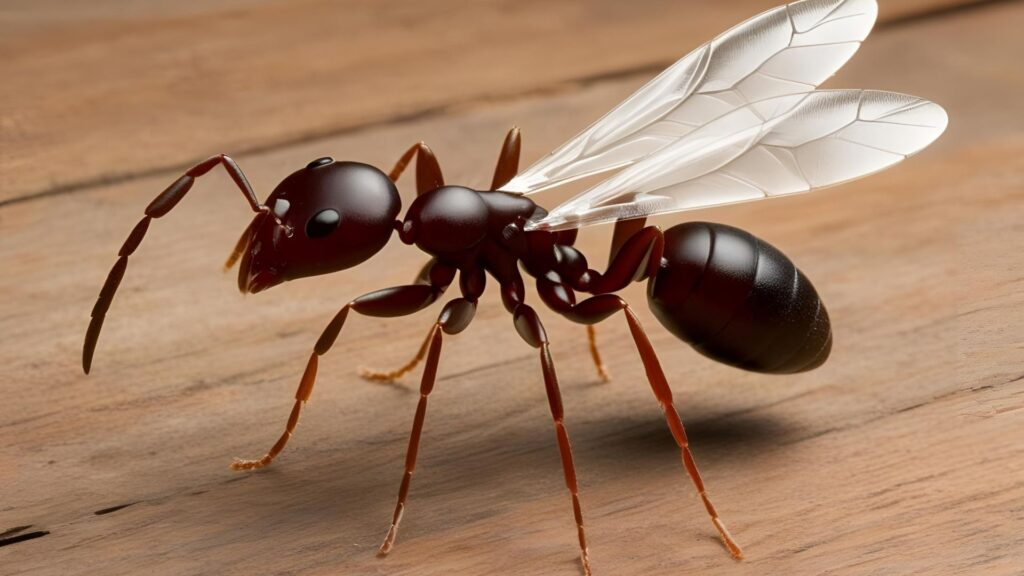
During mating season, winged carpenter ants emerge, often confused with termites. Key identifiers include:
- Unequal wing sizes (front wings larger than hind wings).
- Thick, well-defined waist, unlike termites’ uniform body.
- Bent antennae, whereas termites have straight ones.
- Dark-colored bodies, compared to termites’ pale bodies.
Carpenter Ant Queen Identification
The carpenter ant queen is the largest member of the colony, reaching up to 20 mm. Queens have larger wings, a robust body, and a thicker thorax compared to worker ants. They shed their wings after mating and begin new colonies.
Carpenter Ant Habitat Identification

Carpenter ants prefer moist and decaying wood for nesting. They are commonly found in:
- Homes:
- Walls, attics, windowsills, door frames.
- Wooden furniture, beams, and insulation panels.
- Outdoors:
- Tree stumps, logs, fences, firewood.
- Trees, fences, and wooden decks outside.
- Texas Carpenter Ants Identification: Found mainly in humid regions, these ants prefer rotting wood and damp conditions.
Carpenter Ant Damage Identification
Unlike termites, carpenter ants do not eat wood but excavate it to create nests. Carpenter ants identification damage includes:
- Small, smooth tunnels inside wood structures.
- Fine, sawdust-like frass around nests.
- Hollow-sounding wood when tapped.
Evidence of Carpenter Ants
To detect a carpenter ant infestation, look for:
- Frass (wood shavings) near baseboards, windows, or wooden beams.
- Rustling sounds inside walls at night.
- Visible trails of ants, particularly after sunset.
- Flying ants indoors, indicating a mature colony nearby.
Carpenter Ants Identification and Control
How to Find Carpenter Ants in Your Home
If you suspect an infestation, check:
- Moist Wood: Near sinks, bathrooms, and basements.
- Wooden Furniture: Beams, insulation panels, and structural wood.
- Outdoor Structures: Trees, fences, and wooden decks.
How to Detect Carpenter Ants
- Nighttime Activity: Carpenter ants forage at night.
- Food Trails: Look for trails leading to food sources.
- Tapping Sounds: Hollow wood may indicate an infestation.
Carpenter Ants Identification and Control Methods
Carpenter ants can cause structural damage if left unchecked. To prevent infestations, seal entry points by closing cracks in windows, doors, and walls. Apply weather stripping where needed. Reduce moisture by fixing leaks, improving ventilation, and keeping firewood or debris away from your home. Bait traps and chemical treatments can help eliminate colonies—use ant bait strategically and apply insecticide dust in nest openings. If the infestation is severe, professional extermination may be necessary. Consulting a pest control expert ensures complete removal and long-term protection.
Carpenter Ant Information and Behavior
Carpenter ants follow a hierarchical structure with queens, workers, and winged reproductives. Their behavior includes:
- Foraging for Food:
- Sugar-based foods such as honeydew and nectar.
- Protein sources like dead insects and household crumbs.
- Nesting Inside Wood:
- Preferring damp and rotting wood.
- Establishing satellite colonies near food sources.
- Swarming During Mating Season:
- Winged ants appear in spring and summer.
- New queens establish colonies after shedding wings.
Conclusion
Carpenter ants can cause serious damage if left untreated. This guide provides all necessary details for carpenter ants identification, including how to recognize carpenter ants in home, distinguish them from termites, and apply effective control methods. By understanding their behavior and habitat, you can take proactive steps to protect your property from infestation.
Stay vigilant, monitor for signs, and take action to keep your home safe from carpenter ants!
