

A carpet beetle infestation is one of the most commonly overlooked household pest problems. Because adult beetles are small and often appear near windows, many people ignore them until clothing, carpets, or furniture begin to show damage. In reality, carpet beetle infestations develop quietly, hidden deep inside fabrics, storage areas, and furniture. Understanding how to recognize early signs, identify larvae, and distinguish a true infestation from a single stray beetle is essential for stopping damage before it spreads throughout the home or even into vehicles.
What Is a Carpet Beetle Infestation?
A carpet beetle infestation occurs when carpet beetles successfully breed indoors and their larvae establish feeding sites. While adult beetles may enter a home from outdoors, an infestation begins only when eggs are laid near food sources and larvae start feeding on natural materials.
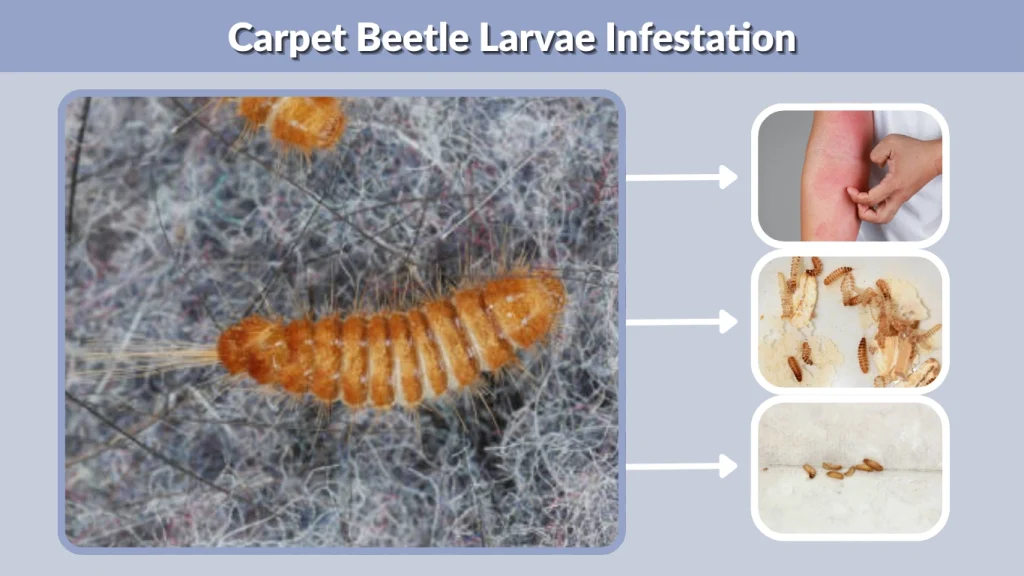
Carpet beetle larvae are the true cause of infestation. They feed on wool, silk, leather, feathers, pet hair, dead insects, and fabric dust. Because they hide in dark, undisturbed areas, infestations can continue for months before homeowners realize there is a problem. By the time adults are seen regularly, larvae are often already widespread.
Do Carpet Beetles Really Infest Homes and Cars?
Yes, carpet beetles do infest indoor environments. Homes, apartments, and even vehicles can support infestations when natural fibers and debris are present. In houses, infestations commonly develop in carpets, closets, drawers, storage boxes, upholstered furniture, and bedding.
Cars can also become infested. Floor mats, fabric seats, trunks, and stored blankets provide shelter and food, especially when pet hair, crumbs, or outdoor debris collect. Because cars are warm and rarely deep-cleaned, larvae can survive unnoticed for long periods.
However, seeing one adult beetle does not automatically mean an infestation exists. Adults often enter through open windows. A true infestation is confirmed when larvae, shed skins, or repeated beetle sightings are observed over time.
Signs of a Carpet Beetle Infestation
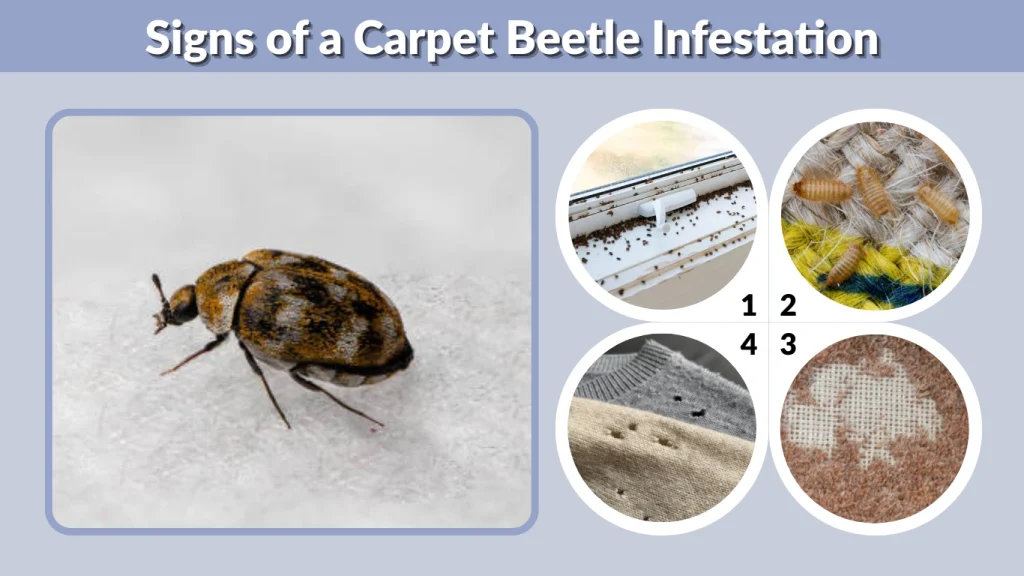
- Adult beetles appearing repeatedly near windows or lights
- Hairy larvae crawling on carpets, furniture, or walls
- Shed larval skins in closets, drawers, or along baseboards
- Holes or thinning in wool clothing, rugs, or blankets
- Damage to stored fabrics, felt items, or pet bedding
- Accumulations of lint, hair, and fabric debris near feeding areas
- Unexplained itchy skin reactions
- Beetles present in more than one room
Recognizing these early signs is critical. Infestations become harder to control once larvae spread into multiple locations.
What Does a Carpet Beetle Infestation Look Like?
Early-Stage Infestation
In the early stage, homeowners may only notice one or two adult beetles near windows or light fixtures. Larvae remain hidden in closets, under furniture, or inside carpets. Fabric damage is minimal, and shed skins may go unnoticed.
Moderate Infestation
As the infestation grows, larvae become easier to spot. People may see them crawling along baseboards or walls. Shed skins accumulate, and small holes begin to appear in clothing, blankets, or rugs. Adult beetles are seen more frequently.
Severe Infestation
In severe cases, larvae are widespread throughout the home. Damage to fabrics becomes obvious, and beetles may appear daily. Multiple rooms show signs of activity, and infestations may extend into storage areas or vehicles.
Carpet Beetle Larvae Infestation
Why Larvae Mean Active Infestation
Larvae indicate that eggs have hatched and that feeding is actively occurring. Adults alone may only be passing through, but larvae confirm that the environment is supporting beetle development. Because larvae can live for months, they are responsible for nearly all structural and fabric damage.
Most Common Larval Hiding Places
Carpet beetle larvae prefer dark, undisturbed areas. Typical locations include carpets and rugs, mattress seams, closets, drawers, storage boxes, furniture joints, air vents, under baseboards, and inside cars. They are especially attracted to places where hair, lint, or natural fabrics collect.
How Many Carpet Beetles Is an Infestation?
One carpet beetle does not always mean an infestation. A single adult may have flown inside by accident. However, repeated sightings over several days, finding larvae, discovering shed skins, or noticing fabric damage strongly suggests an active infestation.
If beetles continue appearing despite cleaning, or if larvae are found, the problem should be treated as a true infestation and addressed immediately.
Black Carpet Beetle Infestation vs Other Species

Black carpet beetles are one of the most destructive carpet beetle species. Their larvae are longer, darker, and feed aggressively on carpets, wool, stored fabrics, and furniture padding. Brown and varied carpet beetles cause similar problems but may appear in different colors and patterns.
Despite appearance differences, infestations caused by black, brown, or varied carpet beetles are treated in almost the same way. All species rely on hidden larvae, natural fiber food sources, and undisturbed areas. Control methods should focus on eliminating larvae and removing the environments that allow them to survive.
How to Know If You Have a Carpet Beetle Infestation
Confirming an infestation requires careful inspection. Start by checking window sills, baseboards, and light fixtures for adult beetles. Next, examine carpets, rugs, mattress seams, sofa cushions, closets, drawers, and stored fabrics.
Look specifically for hairy larvae, shed skins, and damaged natural fibers. Vacuum a suspicious area and inspect the contents of the vacuum canister. If larvae or multiple beetles are present in several areas, an infestation is active. Inspect vehicles, storage rooms, and pet resting areas as well.
How to Get Rid of a Carpet Beetle Infestation

- Perform thorough vacuuming of carpets, rugs, furniture, mattresses, baseboards, and cracks
- Dispose of vacuum bags or empty canisters immediately
- Wash infested fabrics in hot water and dry on high heat
- Freeze delicate items for several days
- Remove lint, dust, pet hair, and clutter
- Apply boric acid or food-grade diatomaceous earth to hidden areas
- Use residual insecticides in cracks, crevices, and carpet edges
- Hire professional pest control for heavy or recurring infestations
Eliminating larvae and their food sources is the foundation of long-term control.
Carpet Beetle Infestation Treatment Options
Non-Chemical Treatment Methods
Non-chemical control focuses on sanitation and environmental change. Frequent vacuuming removes larvae and eggs. Heat treatment through washing or drying kills all life stages. Freezing delicate fabrics is also effective. Removing bird nests, pet hair buildup, and stored organic debris cuts off food sources.
Chemical Treatment Methods
Residual insecticides and insect growth regulators can be applied to cracks, baseboards, closets, and carpet edges. These products help kill hidden larvae and prevent eggs from developing. Chemicals are most effective when combined with deep cleaning.
Professional Treatment
Professional exterminators use a combination of inspection, targeted chemical treatments, and monitoring. They are especially helpful for severe infestations, widespread damage, or repeated reinfestation.
Why Carpet Beetle Infestations Keep Coming Back
Recurring infestations usually happen because larvae were missed, food sources remained, or new beetles entered from outside. Stored clothing, rarely cleaned rooms, attic spaces, and vehicles often serve as unnoticed breeding sites. Without routine cleaning and proper fabric storage, infestations can restart months later.
How to Prevent Carpet Beetle Infestation
Prevention relies on maintenance. Vacuum carpets, furniture, and storage spaces regularly. Store seasonal clothes in sealed containers. Wash fabrics before long-term storage. Inspect second-hand furniture and clothing. Remove bird nests near buildings, seal cracks, and reduce indoor dust and lint. These steps greatly reduce the chances of reinfestation.
FAQs
What are the main signs of a carpet beetle infestation?
The main signs include repeated sightings of adult beetles, hairy larvae in carpets or closets, shed skins, holes in clothing or rugs, and damage to natural fiber items.
Does one carpet beetle mean you have an infestation?
No. One beetle may enter from outside. Infestation is likely when larvae, shed skins, fabric damage, or repeated beetle sightings are present.
How long does a carpet beetle infestation last?
Without treatment, infestations can last many months. With consistent cleaning and control, activity often declines significantly within a few weeks.
Can carpet beetles infest beds, sofas, and cars?
Yes. Carpet beetles can infest mattresses, upholstered furniture, closets, and vehicles where natural fibers, hair, or debris are available.
Are carpet beetle infestations harmful to humans?
They are not dangerous, but larvae can damage property and cause allergic skin reactions in some people.
