

Carpet beetles are small household pests, but the damage they cause can be surprisingly serious. Their larvae feed on natural fibers, destroying carpets, clothing, furniture, and stored fabrics. In many homes, infestations go unnoticed until holes appear in clothes or itchy skin rashes develop. Effective carpet beetle treatment is not just about killing adult beetles—it requires targeting larvae, deep cleaning hidden areas, and preventing reinfestation. This guide explains proven home treatments, natural solutions, and professional options to fully eliminate carpet beetles.
What Carpet Beetle Treatment Really Means
Carpet beetle treatment is a complete control process rather than a single spray or cleaning session. It focuses on eliminating all life stages—eggs, larvae, and adults—while removing the food sources that allow infestations to continue. Adult carpet beetles are often seen near windows, but they cause little damage. The real destruction comes from larvae feeding deep inside carpets, closets, furniture, and air vents.
A successful treatment plan combines intensive cleaning, physical removal, targeted insect control, and long-term prevention. Whether the infestation involves black carpet beetles or varied carpet beetles, the core treatment principles remain the same. Ignoring early signs often allows larvae to spread, making control more difficult and costly.
Signs You Need Carpet Beetle Treatment

Early detection reduces fabric damage and lowers treatment costs. Most infestations show warning signs before becoming severe.
- Larvae crawling in carpets, wardrobes, or furniture seams
- Irregular holes in clothes, blankets, rugs, or upholstery
- Shed larval skins near baseboards or inside drawers
- Adult beetles appearing on windowsills
- Unexplained itchy rashes on exposed skin
Why Carpet Beetle Larvae Are the Main Target
How Larvae Damage Homes
Carpet beetle larvae are responsible for nearly all destruction linked to infestations. They feed on wool, silk, cotton, leather, fur, feathers, pet hair, and even food crumbs trapped in carpets. Unlike adult beetles, larvae avoid light and remain hidden for months, quietly damaging fabrics and furniture padding. Their slow feeding allows infestations to expand without obvious movement, making early treatment essential.
Where Larvae Commonly Hide
Larvae prefer dark, undisturbed areas where natural fibers collect. Common hiding places include deep carpet edges, under furniture, inside air vents, along baseboards, in closets, storage boxes, and folded clothing. Pet bedding, lint buildup, and upholstered furniture are also frequent nesting zones. Effective treatment requires locating and cleaning these hidden areas, not just visible floor surfaces.
Carpet Beetle Larvae Treatment Methods

Successful control starts with killing larvae at the source and removing their food supply.
- Intensive vacuuming of carpets, furniture, closets, and baseboards
- Washing infested fabrics in hot water and drying on high heat
- Steam treatment for carpets, mattresses, and upholstered furniture
- Freezing delicate items sealed in bags
- Using insect growth regulators to stop development
Vacuuming should be slow and detailed, focusing on edges, cracks, and hidden zones. Bags must be sealed and discarded immediately to prevent reinfestation. Heat treatments are especially effective because larvae and eggs cannot survive high temperatures.
Home Treatment for Carpet Beetles
Home treatment is the foundation of any carpet beetle control plan. Without thorough cleaning, chemical treatments alone rarely solve infestations. Begin by decluttering affected rooms and removing stored fabrics. All washable clothing, bedding, and curtains should be laundered in hot water and dried on high heat. Items that cannot be washed can be sealed and frozen or treated with steam.
Vacuum carpets slowly, especially along walls, under furniture, and inside closets. Upholstered furniture should be vacuumed along seams and cushions. After vacuuming, clean floors, shelves, and drawers with hot soapy water or vinegar solution to remove food residue and eggs. Sealing cracks, reducing lint buildup, and controlling indoor humidity further reduce larval survival.
Consistent repetition is critical. Home treatment is not a one-time event but a multi-week process that removes current larvae while preventing new generations from developing.
Natural Carpet Beetle Treatments

Natural treatments are popular for mild infestations or for households seeking non-toxic and pet-friendly options. While they may not replace professional extermination in severe cases, they are effective support methods.
- Diatomaceous earth applied to cracks and carpet edges
- Boric acid for hidden nesting areas
- Vinegar solutions for surface cleaning
- Cedarwood, clove, or peppermint oils as repellents
- Sun-heat exposure for infested fabrics
Diatomaceous earth and boric acid damage larvae by dehydrating them, while essential oils help deter adult beetles from laying eggs. These methods work best when combined with deep cleaning and routine inspections.
Chemical and Spray Treatments
Carpet Beetle Treatment Sprays
Insecticide sprays provide residual protection when applied to baseboards, carpet edges, closet cracks, and furniture frames. Products labeled for carpet beetles usually contain residual chemicals and growth regulators to kill larvae and prevent egg development.
Carpet and Furniture Treatment
When using sprays, focus on cracks, carpet edges, under furniture, inside closets, and behind baseboards. Avoid soaking carpets or fabrics. Light, targeted application works best. Always allow treated areas to dry fully before allowing children or pets to enter. Sprays alone will not solve infestations unless combined with vacuuming and heat.
Carpet Beetle Treatment Safe for Pets
Choose products labeled safe for indoor use and follow directions exactly. Keep pets out of treated rooms until sprays dry completely. Pet bedding should be washed on high heat or replaced. Natural methods like steam, vacuuming, and diatomaceous earth can be used in sensitive areas to reduce chemical exposure.
Heat Treatment for Carpet Beetles
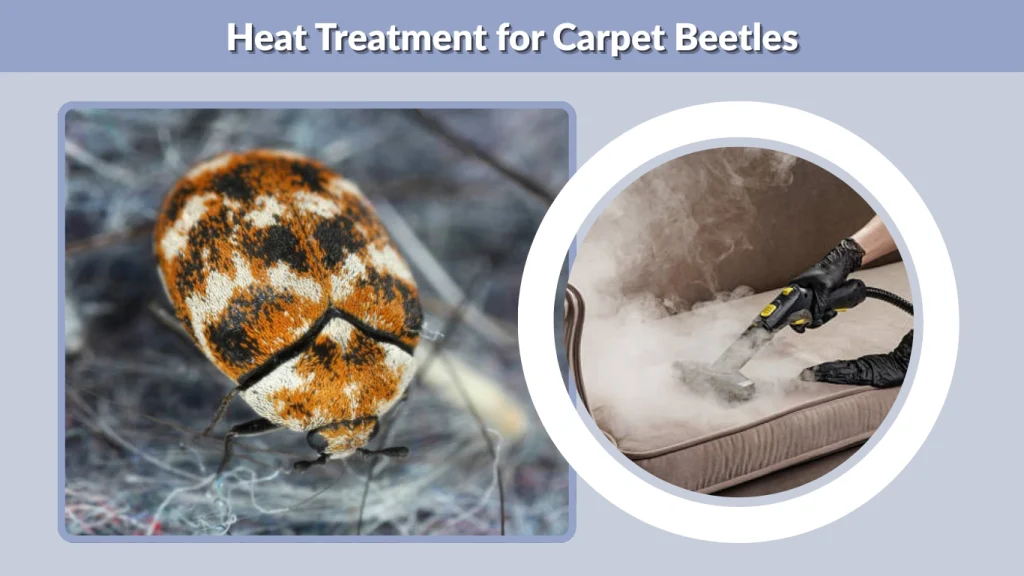
Heat is one of the most powerful tools against carpet beetles because it kills eggs, larvae, and adults instantly.
- Professional whole-room heat treatment
- Steam cleaning carpets and furniture
- Hot dryer cycles for fabrics
- Sealed-bag heat exposure for delicate items
Professional heat treatment raises room temperatures high enough to eliminate all life stages. Steam works well for carpets and upholstery, while dryers are ideal for clothing, blankets, and curtains. Even short heat exposure can stop active infestations when combined with cleaning.
Professional Carpet Beetle Treatment
Professional carpet beetle treatment becomes necessary when infestations are widespread, recurring, or hidden deep inside structures. Exterminators start with detailed inspections to locate nesting sites, species, and infestation levels. Treatment plans often combine residual insecticides, insect growth regulators, steam, and follow-up visits.
Professionals also identify entry points, moisture problems, and food sources that homeowners may overlook. While home treatments handle many infestations, professional services provide faster results and stronger long-term protection for severe cases.
Carpet Beetle Treatment Cost
What Affects the Cost
Treatment cost depends on infestation severity, size of the home, number of rooms affected, and treatment method. Spot treatments are cheaper, while whole-home or heat treatments cost more.
DIY vs Professional Cost Comparison
DIY treatment costs mainly involve cleaning supplies, sprays, steamers, and replacement fabrics. Professional treatment includes inspection, labor, chemicals, and follow-ups. Early action always reduces overall cost and fabric loss.
Black and Varied Carpet Beetle Treatment
Black carpet beetles, varied carpet beetles, and furniture carpet beetles are controlled using the same treatment approach. The difference lies in how deeply larvae may spread and what materials they prefer. Black carpet beetle larvae often burrow deeper into carpets and furniture, making vacuuming and edge treatments especially important. Regardless of species, eliminating larvae and food sources remains the core strategy.
Carpet Beetle Dermatitis and Rash Treatment

Carpet beetles do not bite, but their tiny hairs can cause allergic skin reactions.
- Wash affected skin with mild soap
- Apply hydrocortisone or anti-itch creams
- Use antihistamines to reduce irritation
- Apply cold compresses to soothe inflammation
- Seek medical advice if symptoms persist
Removing beetles from the home is essential to prevent repeated reactions.
Carpet Beetle Bite and Allergy Treatment
So-called “carpet beetle bites” are actually allergic responses to larval hairs. Symptoms include red patches, itching, and small bumps. Treatment focuses on skin relief and eliminating the infestation source. Without proper carpet beetle treatment, skin reactions often return even after symptoms temporarily fade.
Will Bed Bug Treatment Kill Carpet Beetles?
Some bed bug treatments can kill carpet beetles because many insecticides overlap. However, bed bug control focuses on beds and wall cracks, while carpet beetle treatment must target carpets, closets, furniture padding, and fabric storage. Relying only on bed bug treatment often leaves beetle larvae behind, allowing infestations to continue.
Long-Term Prevention After Treatment
After successful treatment, prevention becomes the priority. Vacuum weekly, wash stored fabrics periodically, and inspect closets and carpets regularly. Store seasonal clothing in sealed containers, reduce humidity, clean air vents, and remove lint buildup. Routine monitoring prevents small beetle populations from becoming damaging infestations again.
FAQs
Can carpet beetles be completely eliminated?
Yes, carpet beetles can be fully eliminated when all life stages are targeted. Successful treatment combines deep cleaning, heat exposure, and residual insect control. Follow-up inspections and preventive cleaning are essential. Without long-term prevention, small surviving populations can rebuild and cause reinfestation.
What is the best home treatment for carpet beetles?
The best home treatment includes detailed vacuuming, hot washing of fabrics, steam cleaning carpets, and targeted sprays or natural powders. Heat kills larvae and eggs, while vacuuming removes food sources. Consistency over several weeks is key to fully breaking the carpet beetle life cycle.
How much does professional carpet beetle treatment cost?
Professional carpet beetle treatment cost varies based on infestation size, home layout, and treatment type. Small infestations may only require localized treatments, while severe cases involve multiple visits or heat treatment. Acting early reduces damage and prevents higher extermination costs.
How do you treat carpet beetle rash and dermatitis?
Carpet beetle rash treatment focuses on soothing allergic skin reactions. Washing the area, using anti-itch creams, and taking antihistamines often reduce discomfort. If rashes last more than a few days or become severe, medical attention is recommended alongside proper home pest control.
Are natural carpet beetle treatments effective?
Natural treatments can be effective for light infestations and prevention. Diatomaceous earth, essential oils, heat, and intensive cleaning reduce beetle populations. However, heavy infestations often need stronger chemical or professional treatment, with natural methods supporting long-term control.
