
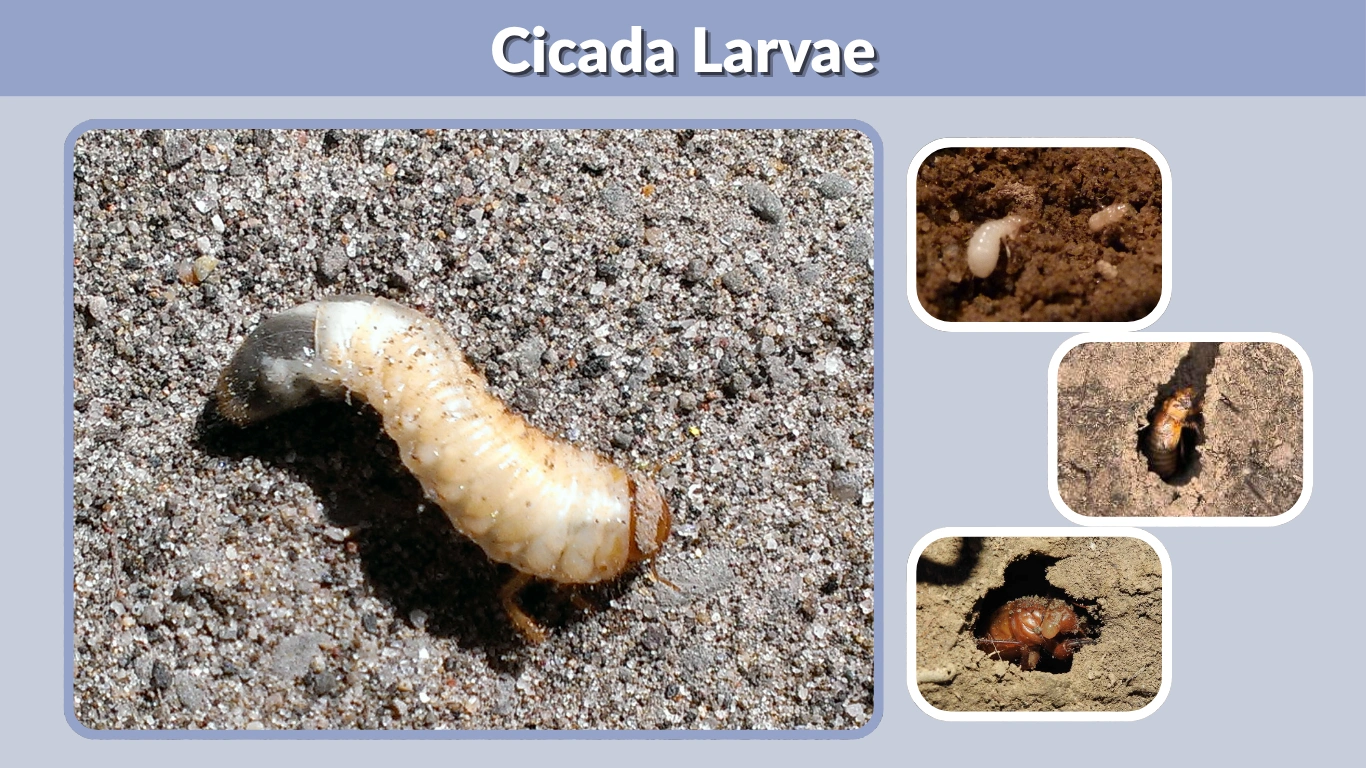
Before the loud summer buzz of cicadas fills the air, their lives begin silently beneath the soil as larvae. These underground insects spend years feeding and growing before emerging as adults. Although often confused with grubs or worms, cicada larvae are unique in both appearance and behavior. Hidden from view, they live a secretive life that lasts far longer than most insects. This article explores how cicada larvae live, eat, and develop, and their fascinating role in the ecosystem.
Understanding Cicada Larvae
What Are Cicada Larvae?
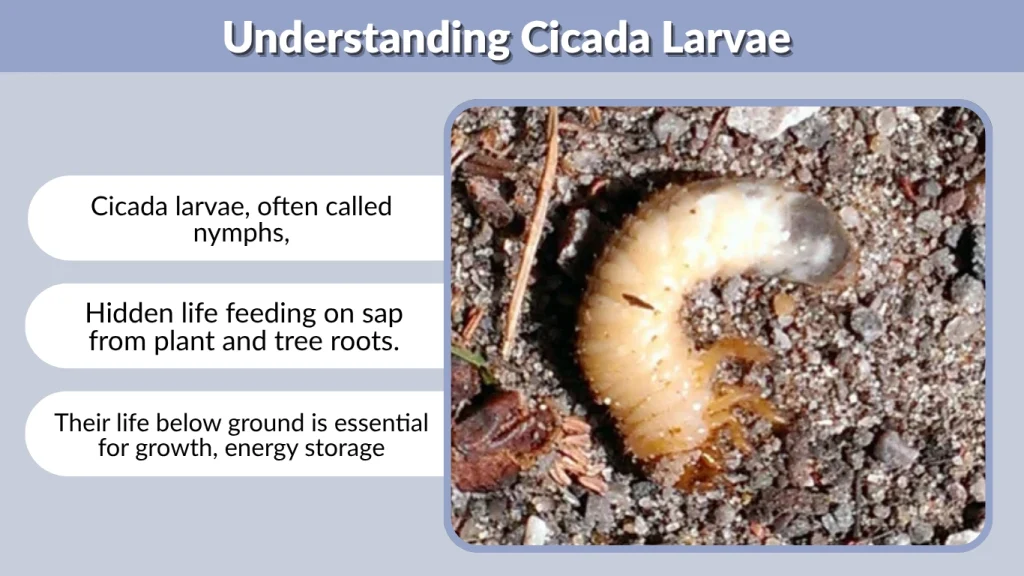
Cicada larvae, often called nymphs, are the underground stage of the cicada’s life cycle. After hatching from eggs laid in tree branches, they drop to the ground and burrow into the soil. Here, they begin a long, hidden life feeding on sap from plant and tree roots.
Unlike caterpillars or beetle grubs, cicada larvae do not transform through a cocoon or pupa stage. They undergo incomplete metamorphosis, meaning they gradually mature underground before emerging as fully formed adults. Their life below ground is essential for growth, energy storage, and eventual transformation.
Scientific Classification
Cicadas belong to the order Hemiptera, known as the “true bugs,” and the family Cicadidae. Within this family are two main types:
- Annual cicadas (Neotibicen, Diceroprocta) — emerge every summer after 2–5 years underground.
- Periodical cicadas (Magicicada) — emerge in massive numbers every 13 or 17 years.
Broods like Brood X and Brood XIX are examples of these periodical species, famous for their synchronized emergence and deafening songs that fill forests and towns once every generation.
Appearance and Identification
What Do Cicada Larvae Look Like?
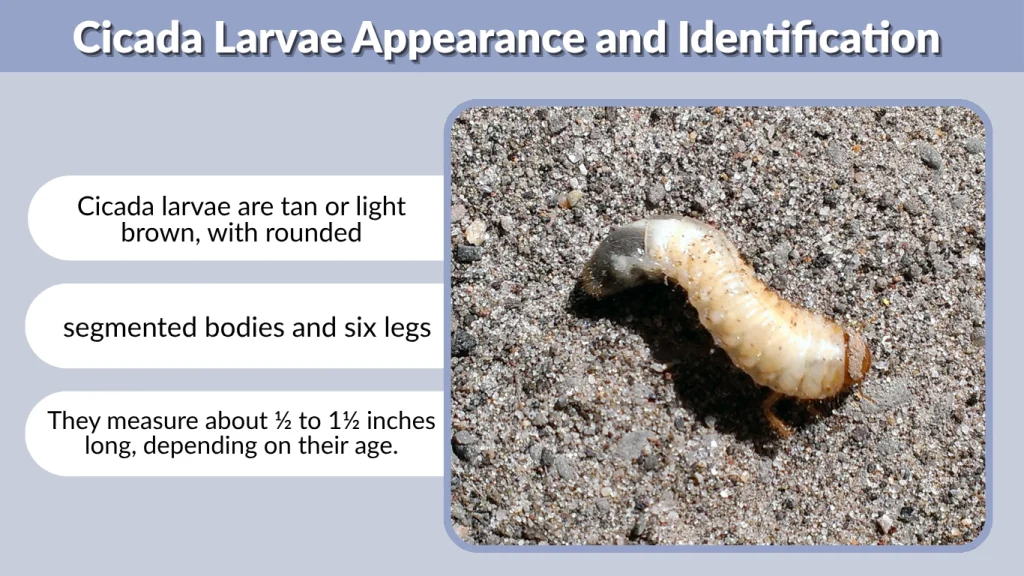
Cicada larvae are tan or light brown, with rounded, segmented bodies and six legs. They measure about ½ to 1½ inches long, depending on their age. Their front legs are thick and powerful, designed for digging through soil.
Their eyes are often red or black, and unlike worms or beetle grubs, they have a hard exoskeleton and visible claws. When fully grown, the larvae darken slightly before they emerge, signaling their readiness to transform into adult cicadas.
Cicada Larvae vs Grubs
Cicada larvae are often mistaken for beetle grubs found in lawns and gardens. While both live underground, they differ in several ways:
| Feature | Cicada Larvae | Beetle Grubs |
| Shape | Straight, oval body | C-shaped, curled body |
| Color | Light brown or tan | White or cream-colored |
| Habitat | Deep soil near tree roots | Upper soil layers and turf |
| Food | Root sap (xylem) | Decaying roots and organic matter |
| Legs | Long, strong for digging | Short, stubby legs |
If you find a straight, tan-bodied insect with strong front claws while digging near trees, it’s likely a cicada larva, not a lawn grub.
Life Underground
Where Do Cicada Larvae Live?
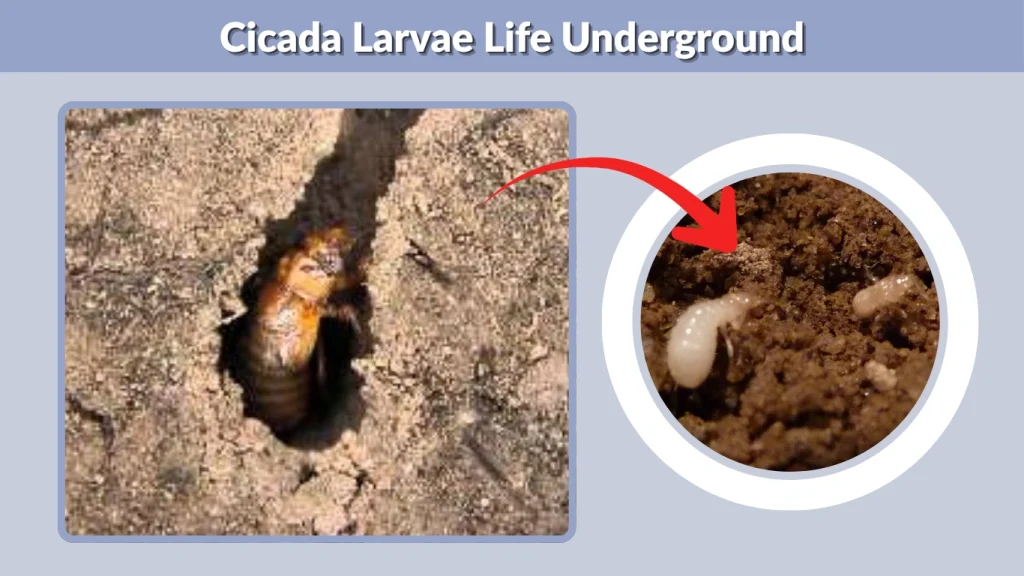
Cicada larvae spend almost their entire lives underground, burrowed 8 to 24 inches deep in soil rich with tree roots. They prefer moist, well-drained earth that provides both oxygen and nutrients.
Each larva digs its own tunnel, forming tiny nest chambers where it feeds and grows. Before emergence, these tunnels expand upward to the surface, leaving small, round holes or “chimneys” — a sure sign that cicadas are ready to appear.
In gardens or forests, finding these holes near trees or shrubs often indicates active cicada populations beneath the ground.
How Long Do They Stay Underground?
The lifespan of cicada larvae varies dramatically depending on the species:
- Annual cicadas remain underground for 2–5 years, though their overlapping generations make them appear every summer.
- Periodical cicadas spend an incredible 13 or 17 years underground, the longest development time of any known insect.
These odd numbers are evolutionary strategies — prime-number life cycles reduce overlap with predator populations, increasing the larvae’s survival chances.
Cicada Larvae in the Garden
Cicada larvae are completely harmless to gardens. They feed gently on sap without killing roots or damaging plants. In fact, their burrowing naturally aerates soil, allowing air and water to circulate better.
Gardeners may see signs of cicada activity during emergence years, such as small mounds near trees or leftover shells clinging to bark. Far from being pests, cicadas play a vital role in keeping the soil healthy and balanced.
Growth and Development
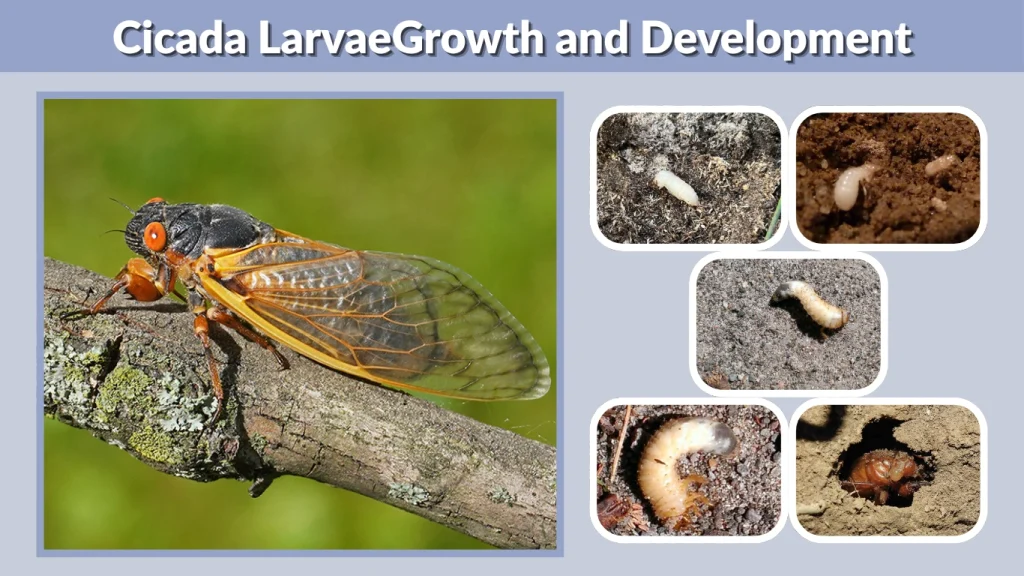
Cicada Larvae Stages
Cicada larvae grow through five stages, known as instars. After each stage, they molt — shedding their exoskeleton as they increase in size.
- First Instar: Tiny larvae immediately burrow after hatching.
- Second & Third Instars: Feed steadily on roots, growing larger.
- Fourth Instar: Develop stronger digging legs and thicker shells.
- Fifth Instar: Fully mature, ready to emerge from the soil.
This gradual process allows them to store enough energy to fuel their dramatic transformation once they reach the surface.
Molting and Shell Formation
Each time cicada larvae molt, they leave behind a thin, papery skin underground. Their outer shells harden between molts for protection. The final molt, however, takes place above ground.
When the time comes, the mature larvae crawl from their tunnels, climb nearby trees, and split open their shells. The winged adult cicada emerges, leaving the empty brown husk behind — a familiar sight on tree trunks each summer.
Feeding Behavior
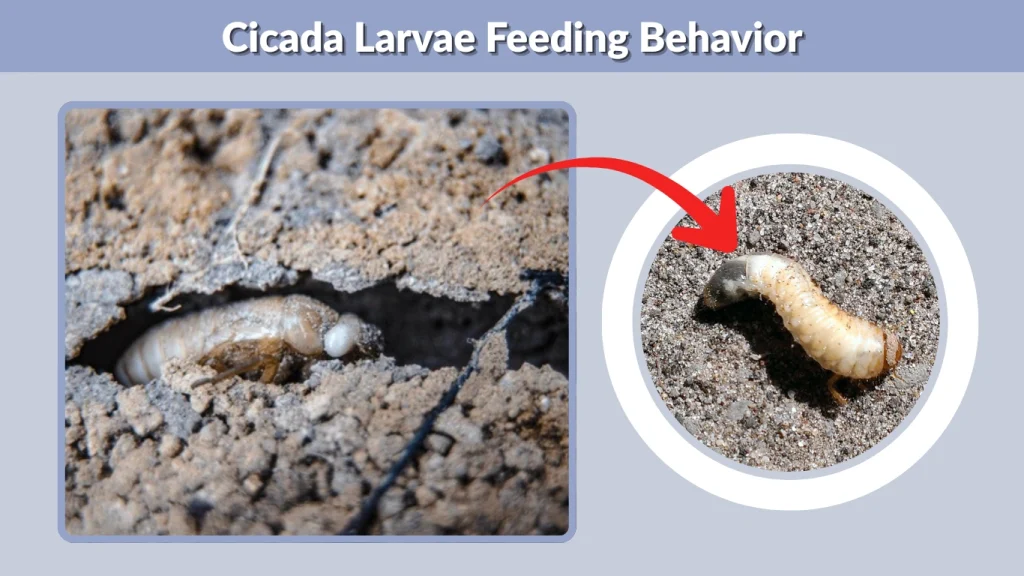
What Do Cicada Larvae Eat?
Cicada larvae feed exclusively on xylem sap, a watery liquid that flows through the roots of trees and perennial plants. Using their slender, straw-like mouthpart called a proboscis, they pierce root tissue and draw up nutrients. Unlike other insects, cicada larvae do not chew or damage roots — their feeding process is gentle and causes no harm to vegetation.
Because xylem sap is low in nutrients, cicada larvae have slow metabolisms, which helps them survive underground for years. This feeding strategy allows them to maintain steady growth without depleting their environment.
Predators of Cicada Larvae
While underground, cicada larvae face many natural threats. Moles, ants, and ground beetles dig into the soil to feed on them. Above ground, animals such as birds, squirrels, and even snakes eat newly emerged adults.
Some parasitic mites and fungi also attack larvae underground, interfering with their growth and reducing survival rates. Despite this, the sheer number of larvae ensures the survival of the species — when billions emerge together, predators simply can’t consume them all.
Cicada Killer Wasp and Its Larvae
The Predator Relationship
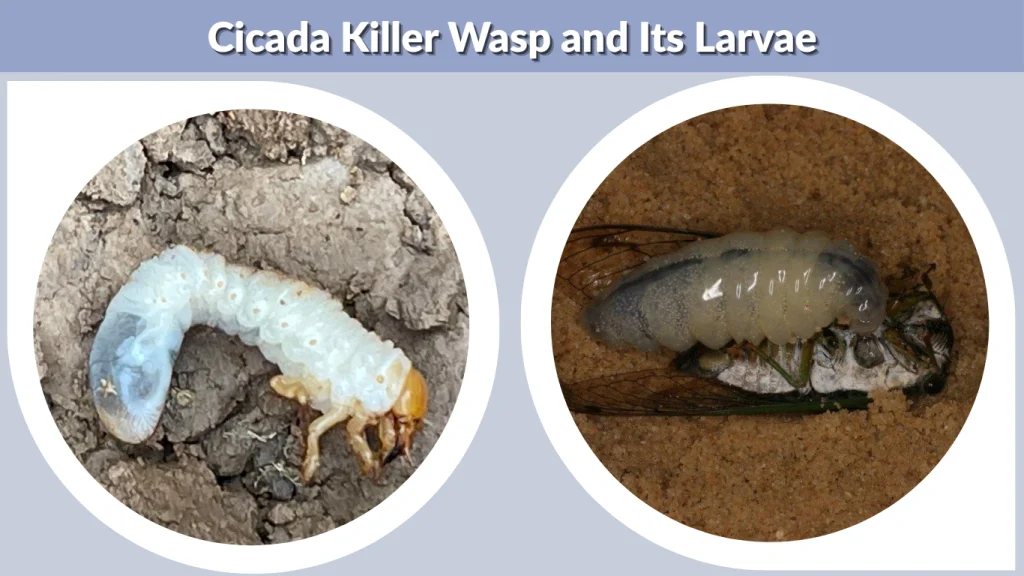
One of the most fascinating interactions involving cicadas is with the Cicada Killer Wasp (Sphecius speciosus). This large, solitary wasp preys on cicadas to provide food for its own larvae. Female cicada killers paralyze cicadas with a sting, then carry them to an underground burrow. There, she lays an egg on the immobilized cicada, sealing it inside.
When the egg hatches, the wasp larva feeds on the paralyzed cicada, consuming it slowly until it is fully grown. This natural cycle may sound grim, but it helps regulate cicada populations and maintain ecological balance.
Cicada Killer Larvae vs Cicada Larvae
| Aspect | Cicada Larvae | Cicada Killer Wasp Larvae |
| Type | Insect nymph | Wasp larva |
| Habitat | Underground near tree roots | Burrows made by wasp females |
| Diet | Tree root sap | Paralyzed cicadas |
| Development Time | 2–17 years underground | 1 year in burrow |
| Interaction with Humans | Harmless | Harmless unless handled |
Despite their intimidating size, cicada killer wasps are not aggressive toward humans. Males cannot sting, and females only sting when provoked.
Controlling Cicada Killer Larvae
If cicada killers appear in your yard, they are usually temporary visitors. Natural methods such as:
- Filling old burrows with soil.
- Keeping lawns aerated and healthy.
- Avoiding excessive watering (wasps prefer dry soil).
These practices discourage nesting.
Chemical pesticides should be avoided since cicada killers are beneficial pollinators and rarely cause harm.
Cicada Larvae and the Ecosystem
Ecological Importance
Cicada larvae contribute greatly to the health of ecosystems. Their burrowing loosens and aerates the soil, improving water absorption and root growth for plants. When they die, their bodies decompose, releasing nitrogen and organic matter that fertilize the ground naturally.
During mass emergencies, billions of cicadas provide a massive food source for birds, reptiles, and mammals. This temporary feast boosts wildlife populations, while the nutrients from decaying cicadas rejuvenate forests and gardens.
Environmental Threats
Despite their resilience, cicada larvae face increasing threats from human activity.
- Pesticides and chemical fertilizers poison soil ecosystems, killing larvae and disrupting root networks.
- Soil compaction from construction or heavy machinery destroys burrows and suffocates underground life.
- Climate change alters soil temperatures and rainfall patterns, potentially desynchronizing emergence cycles.
Protecting soil health and reducing pesticide use helps sustain these hidden insects that quietly enrich the environment.
Common Myths and Misconceptions
- Myth 1: Cicada larvae are worms or grubs.
False. They are insect nymphs with six legs and hard exoskeletons — not soft-bodied worms or beetle grubs. - Myth 2: Cicada larvae are dangerous or poisonous.
Completely false. They neither bite nor sting and are safe to handle. - Myth 3: Cicadas damage trees and gardens.
Incorrect. Larvae feed gently on root sap and rarely harm plants. Adults may cause minor twig damage during egg-laying, but it’s temporary. - Myth 4: Cicadas appear every year in the same place.
Only annual cicadas do. Periodical cicadas emerge in cycles of 13 or 17 years, depending on the brood.
Interesting Facts About Cicada Larvae
- Cicada larvae can remain underground for up to 17 years — longer than most insects live in total.
- Their tunnels and exit holes act as natural drainage systems, improving soil structure.
- After emergence, cicada shells (exuviae) are often collected by children or used for classroom biology studies.
- In some cultures, cicadas — including larvae — are symbols of rebirth and immortality.
- Fried or roasted cicada larvae are considered a protein-rich delicacy in parts of Asia.
FAQs
What Are Cicada Larvae Called?
Cicada larvae are also known as nymphs — the juvenile stage of the cicada that lives underground feeding on root sap for years before maturing.
What Do Cicada Larvae Eat?
They feed on xylem sap from plant and tree roots. Their straw-like mouthpart draws up fluids without damaging the host plant.
How Long Do Cicada Larvae Stay Underground?
Depending on species, anywhere from 2 to 17 years. Annual cicadas have overlapping generations, while periodical species have synchronized cycles.
Are Cicada Larvae Dangerous to People or Pets?
No. They don’t bite, sting, or carry diseases. Pets may eat them occasionally without harm, though large quantities could upset digestion.
How Do Cicada Killer Wasps Use Cicadas?
Female cicada killers paralyze cicadas and bury them underground as food for their own larvae — a natural and harmless cycle.
