

Before cicadas fill summer air with their famous buzzing songs, they spend most of their lives hidden beneath the soil as nymphs. This underground stage is the longest and most mysterious part of a cicada’s life cycle. While adults live only a few short weeks, cicada nymphs can remain underground for years — even decades — quietly feeding and growing. In this article, we’ll uncover how cicada nymphs live, what they eat, and how they emerge to transform into one of nature’s most fascinating insects.
Understanding the Cicada Nymph Stage

What Is a Cicada Nymph?
A cicada nymph is the juvenile form of a cicada — an insect that undergoes incomplete metamorphosis, meaning it doesn’t go through a pupal stage like butterflies or beetles. Instead, cicadas grow through several immature stages underground before becoming adults.
After hatching from eggs laid in tree branches, tiny nymphs drop to the ground and burrow into the soil. Once underground, they begin feeding on sap from plant and tree roots using a straw-like mouthpart called a proboscis. The nymphs will live below the surface for several years, molting multiple times as they grow.
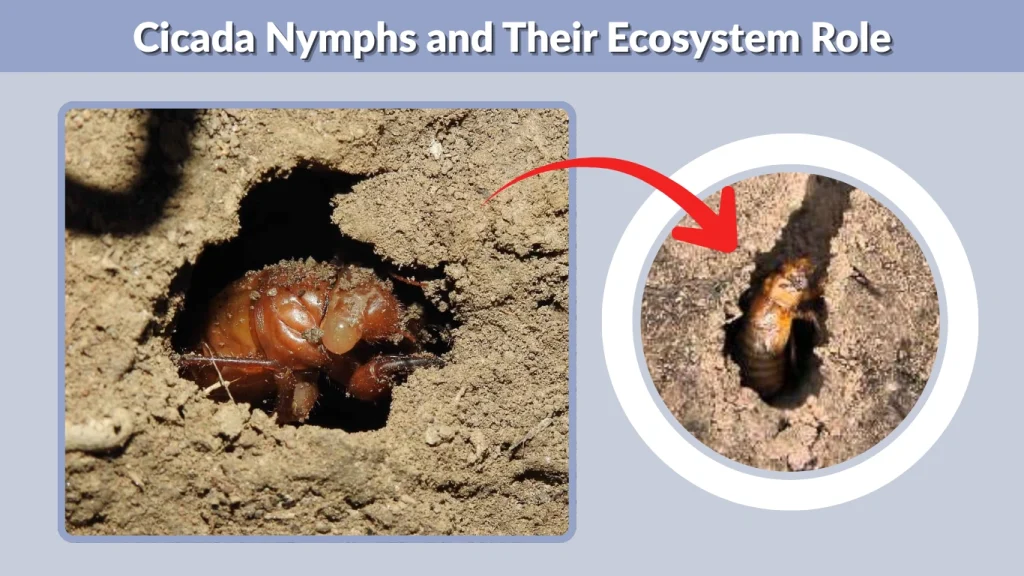
Cicada nymphs are brown or tan, wingless, and have strong, clawed front legs designed for digging. Their bodies are round, sturdy, and perfectly adapted for life beneath the earth.
Scientific Classification
Cicadas belong to the order Hemiptera, also known as “true bugs.”
- Family: Cicadidae
- Genera: Magicicada (periodical cicadas) and Neotibicen (annual cicadas)
- Related to: leafhoppers and aphids
While there are over 3,000 cicada species worldwide, they all share a similar nymph stage, characterized by years of hidden growth before emerging into the open air.
The Hidden Years Underground
Where Do Cicada Nymphs Live?
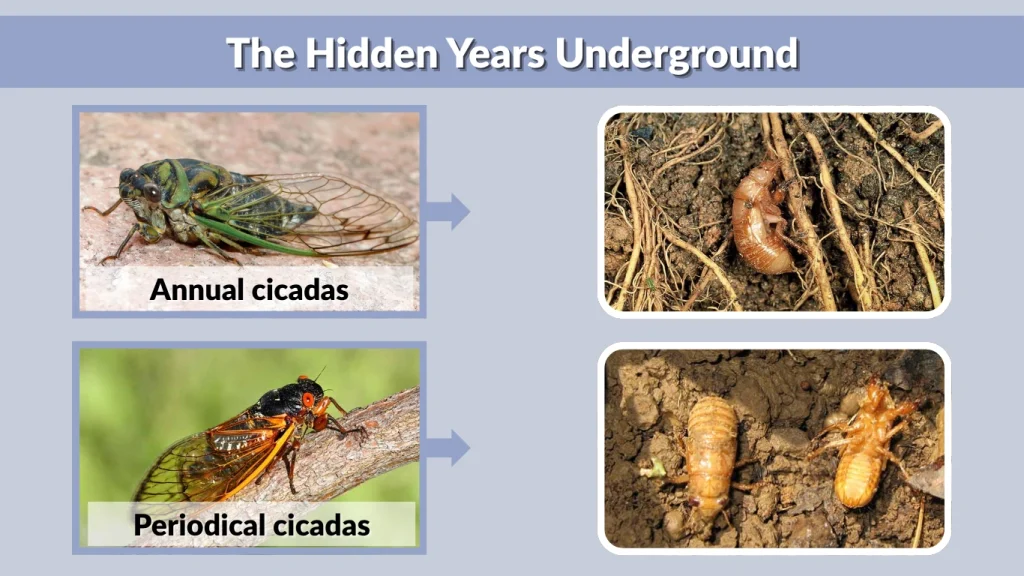
Cicada nymphs spend almost their entire lives underground, burrowing between 8 and 24 inches deep in moist, well-drained soil. They prefer areas rich in tree roots, especially deciduous forests and suburban neighborhoods with mature trees.
You can sometimes spot cicada exit holes — small round tunnels in the ground near tree bases or lawns — indicating that nymphs are ready to emerge. During particularly large broods, these holes can appear by the thousands, signaling the start of a new generation’s rise from the earth.
How Long Do They Stay Underground?
The length of a cicada nymph’s underground life depends on its species:
- Annual cicadas remain underground for 2 to 5 years, though overlapping generations make them appear every summer.
- Periodical cicadas — famous for their synchronized cycles — stay hidden for 13 or 17 years before emerging together in incredible numbers.
These long lifespans are evolutionary strategies. Periodical cicadas emerge in prime-numbered intervals (13 and 17), which prevents predators from synchronizing their reproductive cycles with them. When billions surface at once, the sheer number ensures survival — even if many are eaten.
What Do Cicada Nymphs Eat?
Cicada nymphs feed exclusively on xylem sap, a nutrient-poor fluid found in plant roots. They use their proboscis to pierce the roots and slowly draw out the liquid. Despite feeding for years, they cause little to no harm to the trees they live beneath.
Their slow metabolism allows them to survive on this low-energy diet for over a decade. This adaptation helps them remain underground for so long without exhausting food sources.
Physical Appearance and Identification

What Do Cicada Nymphs Look Like?
Cicada nymphs are light brown or tan, oval-bodied, and covered in a smooth, hard shell. Their most distinctive feature is a pair of strong, spade-like front legs used for digging. Fully grown nymphs measure between ½ inch to 1½ inches, depending on species and age.
Their eyes are usually red or black, positioned on the sides of the head. Wing buds develop gradually as they approach adulthood. When they are ready to emerge, their bodies darken, and their shell becomes more rigid, signaling that the final molt is near.
Cicada Nymph vs. Adult
It’s easy to tell the difference between a cicada nymph and an adult:
| Feature | Cicada Nymph | Adult Cicada |
| Color | Light brown or tan | Green, black, or red |
| Habitat | Underground | Trees and plants |
| Wings | None | Fully developed |
| Eyes | Small, dark | Large, red or black |
| Purpose | Feeding and growth | Mating and reproduction |
While adults live only a few weeks above ground, nymphs spend most of their existence below it, developing strength and energy for their final transformation.
Development and Growth Process

The Five Instar Stages
Cicada nymphs grow through five stages, called instars. After each molt, the nymph sheds its exoskeleton and emerges slightly larger. Each instar may last months or even years, depending on the species.
The final or fifth instar is the mature nymph, capable of digging upward to the surface when the time is right. During this period, the nymph’s body fills with stored energy from root sap, fueling the demanding process of metamorphosis.
Nymph Molting Cycle
Molting is essential for growth. Underground, cicada nymphs molt four times as they grow. Their outer shell hardens after each molt, protecting them from soil pressure and predators.
When ready for adulthood, the nymph crawls out of its burrow, climbs a tree trunk or wall, and begins its final molt. The old exoskeleton splits open along the back, revealing the soft, pale adult cicada beneath — a remarkable transformation that completes one of nature’s longest insect life cycles.
Emergence and Transformation
When and How Cicada Nymphs Emerge
After years of living underground, the cicada nymph’s long wait ends when the soil temperature reaches about 64°F (18°C). This signals that summer has arrived and the time to emerge has come. The mature nymph digs upward, creating a small circular hole that serves as its exit path.
Most cicada nymphs emerge at night, when it’s cooler and safer from predators. They crawl up tree trunks, shrubs, fences, or even house walls to find a solid surface. Once they settle, they begin their final molt — a process that lasts about an hour.
When the exoskeleton splits open along the back, the adult cicada slowly pulls itself free. At first, the new adult is soft and pale, often white or light green, earning the nickname “ghost cicada.” Within hours, its body hardens, its wings expand, and its true colors develop. The empty brown shell, or exuvia, remains behind — a common sight clinging to trees after emergence.
Risks During Emergence
Cicada nymphs are vulnerable during this stage. Birds, small mammals, ants, and spiders eagerly feed on the slow-moving insects. Heavy rain or flooding can drown them before they reach the surface, and urban construction may destroy their burrows. Despite these threats, their survival strategy — emerging in massive numbers — ensures that enough live to reproduce and continue the species.
Special Types of Cicada Nymphs

Annual Cicada Nymphs
Annual cicadas, such as Neotibicen canicularis (dog-day cicada), appear every summer but actually spend several years underground. Their overlapping generations make it seem as though they emerge annually.
These nymphs are usually larger and darker than periodical species and are found across most of North America. They dig deeper burrows, sometimes reaching two feet below ground, and emerge in late summer when temperatures are highest.
Periodical Cicada Nymphs
Periodical cicadas, from the genus Magicicada, are among the most fascinating insects on Earth. Their nymphs spend 13 or 17 years underground, making them some of the longest-lived insects known.
Broods like Brood X or Brood XIX emerge in astonishing numbers that can reach billions across multiple states. Scientists believe their prime-number life cycles evolved to avoid syncing with predator populations. When they finally surface, their synchronized emergence transforms forests into buzzing spectacles that occur only once in a generation.
Rare and Unique Nymphs
Some rare nymphs display color variations such as pale or white forms, usually seen just after molting. In rare cases, fungi infect nymphs underground, altering their behavior and lifespan. Despite these anomalies, the cicada’s natural cycle continues with remarkable consistency year after year.
Cicada Nymphs and Their Ecosystem Role
Ecological Benefits
Cicada nymphs play a critical role in maintaining healthy ecosystems. As they burrow and feed underground, they naturally aerate the soil, improving water and nutrient movement. When they emerge, their abandoned tunnels provide channels for air and roots to grow.
After dying, cicadas decompose quickly, enriching the soil with nitrogen — a natural fertilizer that boosts plant health. Their mass emergence also provides abundant food for birds, reptiles, and small mammals, temporarily reducing predation pressure on other species.
Environmental Threats
Despite their resilience, cicada nymphs face growing challenges.
- Urbanization and soil compaction destroy their burrows and feeding roots.
- Pesticides used on lawns and trees can kill young nymphs before they mature.
- Climate change may disrupt emergence timing, causing premature or delayed surface appearances.
Protecting trees and minimizing chemical use helps maintain the natural balance that cicadas depend on.
Interesting Facts About Cicada Nymphs
- Cicada nymphs can survive underground for over 17 years, longer than nearly any other insect.
- Their tunneling creates tiny “chimneys” or mounds of soil near trees before emergence.
- They do not bite or sting — they only feed on plant sap.
- Cicada shells found on trees are the shed skins of nymphs, not dead insects.
- Scientists often track future emergencies by studying nymph holes and soil temperature.
- A single square yard of soil can contain dozens of cicada nymphs preparing to emerge.
- After molting, adult cicadas harden in about one to two hours before they can fly.
Cicadas and Human Encounters
Although they appear in large numbers, cicada nymphs are completely harmless to people and pets. Children often collect their empty shells as keepsakes, and educators use them to teach about insect development.
Cicadas’ sudden mass appearances might look alarming, but they don’t damage crops or buildings. At most, their burrows and shells mark the ground as evidence of nature’s incredible patience and timing.
Gardeners benefit from cicadas, too — the aeration and nutrient recycling they provide can enhance soil fertility for years after an emergence event.
Cicada Nymphs in Science and Culture
Cicada nymphs have fascinated scientists for centuries. Their unusual longevity and precise timing continue to puzzle researchers studying insect evolution. Fossil evidence shows that cicadas have existed for more than 200 million years, with the nymph stage remaining relatively unchanged.
In many cultures, cicadas symbolize rebirth, transformation, and immortality, largely because of their dramatic emergence from the earth. In Asian art and poetry, the cicada nymph’s climb to adulthood represents perseverance and renewal — a tiny creature that spends years in darkness before finally reaching the light.
FAQs
What Is a Cicada Nymph?
A cicada nymph is the immature stage of a cicada that lives underground, feeding on tree roots for years before becoming an adult.
Do Cicada Nymphs Bite or Sting?
No. Cicada nymphs don’t bite or sting. They use a straw-like mouthpart to draw sap from roots, causing no harm to humans or pets.
How Long Do Cicada Nymphs Live Underground?
Depending on the species, they live 2 to 17 years underground before emerging to molt and reproduce.
What Do Cicada Nymphs Eat?
They feed on xylem sap from tree roots — a watery, nutrient-poor fluid that sustains them throughout their underground life.
What Happens After Cicada Nymphs Emerge?
They climb to a surface, shed their exoskeleton, and transform into adult cicadas. Within a few weeks, they mate, lay eggs, and die — completing the cycle.
