

Cimex lectularius, commonly known as the bed bug, is a parasitic insect that thrives in human living spaces. These tiny pests are notorious for feeding on blood and causing irritating bites. Although they don’t transmit diseases, infestations can create major discomfort, stress, and health concerns. Learning about their biology, names, life cycle, and behavior is essential for early detection and control. This article explains the key characteristics of Cimex lectularius and practical insights for treatment and prevention.
General Identification & Definition

Cimex lectularius can be identified by the following key points:
- Scientific Classification: Belongs to the genus Cimex and family Cimicidae.
- Common Identity: Widely recognized as the common bed bug.
- Appearance: Flat, oval-shaped, reddish-brown insect with six legs and short antennae.
- Size: Adults measure around 5–7 mm; nymphs are smaller and lighter.
- Wings: Wingless but with tiny vestigial wing pads.
- Feeding Habit: Exclusively feeds on blood, primarily from humans.
- Movement: Cannot fly or jump but crawls quickly across surfaces.
- History: First classified scientifically by Carl Linnaeus in 1758.
- Habitat Preference: Thrives in human environments, especially in bedding and furniture
Common Names & Synonyms
While “Cimex lectularius” is the scientific name, it is widely referred to by several other names. The most common is simply “bed bug”, used across English-speaking regions. In Spanish, it is called “chinche de la cama” or “chinche Cimex lectularius”, while in French, terms like “punaise de lit” are used.
In educational contexts, students often encounter it in biology lessons as “Cimex lectularius is also known as the bed bug.” On quiz-based platforms like Quizlet, this distinction is emphasized to connect the Latin name with its everyday reference.
Understanding these synonyms is important because pest control resources and scientific references may use different terminology. Whether you see “bed bug” or “Cimex lectularius,” both terms point to the same blood-feeding insect.
Images & Visual References
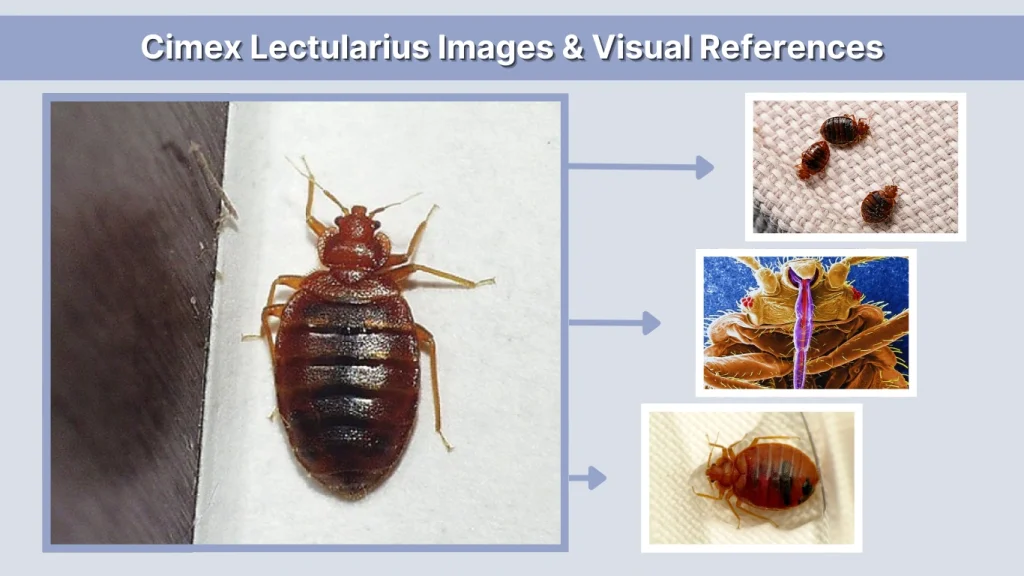
Recognizing Cimex lectularius visually is crucial for identification. Online resources and entomology guides often provide bed bug images, labelled diagrams, and microscopic views. These references show how the insect appears at different life stages.
- Standard images: Adult Cimex lectularius looks like a flat, oval insect with a reddish-brown body about the size of an apple seed.
- Microscope views: Under magnification, fine details like the segmented body, short antennae, and piercing mouthparts are visible.
- Labelled diagrams: These are often used in scientific studies to highlight anatomy such as the proboscis (used for feeding), thorax, and abdomen.
- Videos: Footage of bed bugs crawling on surfaces or feeding on skin helps illustrate their real-life behavior.
Because bed bugs are excellent at hiding, many people rely on pictures to confirm whether the insects they’ve found are truly Cimex lectularius or another species. High-quality visual references are especially useful for comparing bed bugs with look-alike pests such as carpet beetles or small cockroach nymphs.
Life Cycle & Reproduction
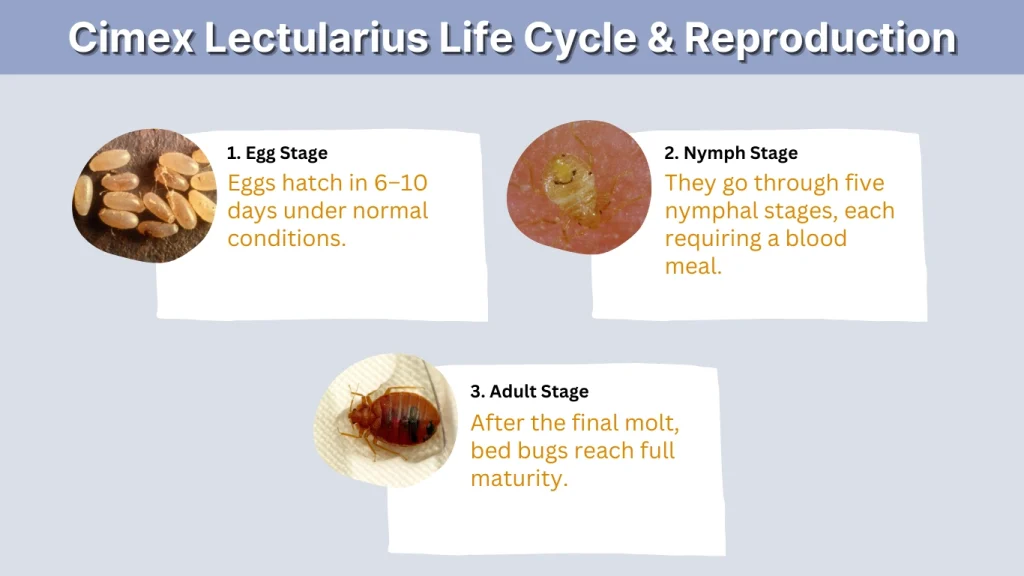
The life cycle of Cimex lectularius is a key reason why infestations grow so rapidly. Like many insects, bed bugs undergo gradual development:
- Egg stage – Tiny, white, and about 1 millimeter long. Eggs hatch in 6–10 days under normal conditions.
- Nymph stage – Newly hatched bed bugs, also called instars, must feed on blood before molting to the next stage. They go through five nymphal stages, each requiring a blood meal.
- Adult stage – After the final molt, bed bugs reach full maturity, ready to reproduce and continue the cycle.
A female Cimex lectularius can lay 200–500 eggs during her lifetime, usually in clusters hidden in cracks, seams, or furniture joints. This high reproductive rate explains how infestations can expand quickly if left untreated.
Differences between male and female bed bugs are subtle but important. Females typically have a rounder abdomen, while males appear more pointed. This distinction is crucial for entomologists studying breeding behaviors, but for homeowners, the key concern is that both sexes feed on blood and contribute to infestation growth.
From egg to adult, the cycle can take five to six weeks, depending on temperature and food availability. In cooler conditions or without access to hosts, development may slow down, but bed bugs can still survive for months without feeding. This resilience makes Cimex lectularius particularly challenging to eliminate.
5. Size & Characteristics
Adult Cimex lectularius typically measures 5–7 millimeters in length and about 2–3 millimeters in width. Their size is often compared to an apple seed. However, nymphs, or baby bed bugs, are much smaller, starting at just 1–2 millimeters. Despite their tiny scale, they share the same flat, oval body shape.
The insects are wingless but have vestigial wing pads, which do not allow flight. Their flattened bodies enable them to slip into narrow cracks and seams, making them hard to detect. After feeding, their bodies expand and turn a darker reddish color. This swollen appearance is one of the easiest ways to identify a recently fed bed bug.
Other notable characteristics include their piercing mouthparts designed to suck blood, short antennae, and six legs that allow them to crawl quickly across surfaces. Their adaptability to human environments is a defining trait, and they can thrive in almost any location where people sleep or rest.
Habitat & Diet
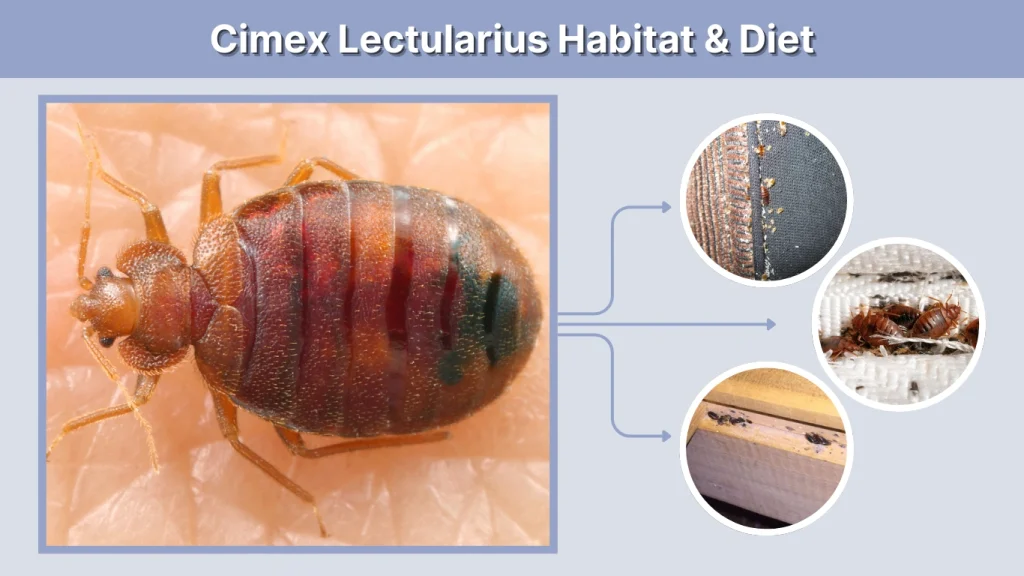
Cimex lectularius prefers to live in places where humans sleep, as this guarantees easy access to blood meals. Common hiding spots include mattress seams, bed frames, headboards, baseboards, furniture joints, and even behind wallpaper or electrical outlets.
Their diet consists exclusively of blood, with humans being the primary source. They feed mostly at night, drawn to the warmth and carbon dioxide emitted during sleep. However, they are opportunistic and will also bite during the day if necessary.
Interestingly, bed bugs have a few natural predators, such as spiders, ants, and certain beetles. However, these predators rarely provide effective control in human environments. Bed bugs are incredibly resilient and can survive months without feeding, making eradication difficult without human intervention.
Bites, Symptoms & Health Effects
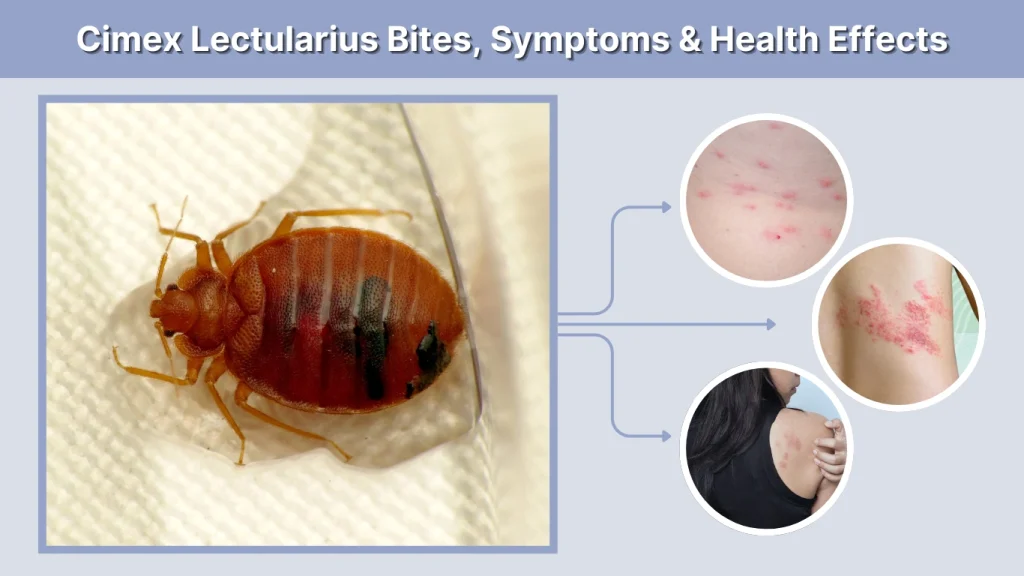
One of the most noticeable signs of Cimex lectularius is their bite pattern. Bed bug bites usually appear as small, red, itchy welts. They are often found in clusters or linear arrangements on exposed skin, particularly on the arms, legs, face, and neck.
Common Symptoms:
- Itching and redness at the site of bites
- Rashes that may develop in sensitive individuals
- Swelling or raised bumps similar to mosquito bites
- In some cases, allergic reactions or secondary skin infections from scratching
While bed bugs are unpleasant, studies show they are not known to transmit diseases. However, their bites can cause significant discomfort, loss of sleep, and anxiety. In severe infestations, the psychological impact can be just as damaging as the physical symptoms.
Medical descriptions of bites may use terms like picadura (Spanish) or piqure (French), emphasizing that the problem is globally recognized. The associated condition is sometimes referred to as enfermedad (disease), though technically, bed bug bites do not spread pathogens.
Treatment & Control

Dealing with Cimex lectularius requires a multi-step approach that combines medical care for bites and effective pest control for infestations.
Bite Treatment
- Topical creams: Hydrocortisone or antihistamine creams reduce itching and swelling.
- Oral medications: Antihistamines can help manage allergic reactions.
- Medical attention: Severe allergic responses or secondary infections may require professional treatment.
Pest Control Methods
- Chemical sprays: Insecticides labeled for bed bug control can be effective but must be used carefully.
- Heat treatment: Professional services use high temperatures to kill all life stages, including eggs.
- Integrated Pest Management (IPM): Combines cleaning, vacuuming, sealing cracks, and using encasements for mattresses.
Prevention Tips
- Regularly inspect mattresses and furniture.
- Wash bedding at high temperatures.
- Use protective covers on mattresses and box springs.
- Minimize clutter, which creates hiding spaces.
While home remedies like essential oils or powders are sometimes suggested, they rarely provide long-term results. Professional pest control is usually necessary to eliminate a full infestation.
Conclusion
Cimex lectularius, the common bed bug, is a resilient parasite that has adapted closely to human environments. With a rapid life cycle, secretive habits, and an exclusive blood-based diet, these insects can quickly turn into a serious infestation. Although their bites do not spread disease, they cause itching, rashes, and considerable stress.
Early recognition of their size, behavior, and hiding spots, combined with effective treatment and prevention, is the key to keeping them under control. By understanding the biology and habits of Cimex lectularius, homeowners can act quickly to protect their living spaces.
FAQs
What is Cimex lectularius?
Cimex lectularius is the scientific name for the common bed bug, a blood-feeding insect that often lives in human sleeping areas.
How big is Cimex lectularius?
Adults are 5–7 millimeters long, while nymphs range from 1–4 millimeters, depending on their stage of development.
Do Cimex lectularius bites spread disease?
No, bed bug bites do not transmit disease. However, they can cause itching, rashes, allergic reactions, and stress.
How long does the Cimex lectularius life cycle last?
The complete cycle from egg to adult typically takes 5–6 weeks, but survival can extend for months depending on conditions.
How can you get rid of Cimex lectularius?
Effective elimination requires a mix of methods: heat treatments, insecticides, vacuuming, sealing cracks, and professional pest control. Preventive steps like encasing mattresses also help.
