
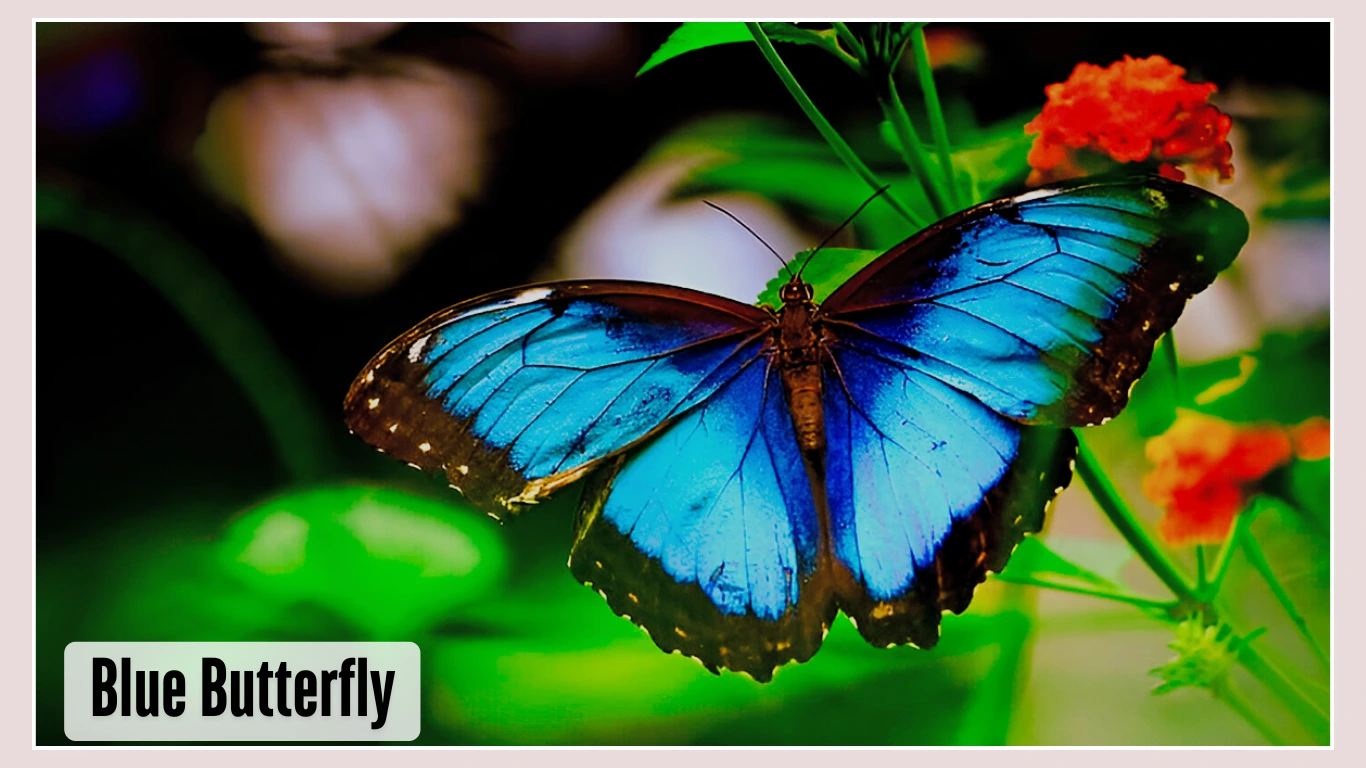
The common blue butterfly is a small yet strikingly beautiful species that adds a splash of color to meadows, gardens, and grasslands. Known scientifically as Polyommatus icarus, this butterfly is one of the most widespread and easily recognized in Europe and parts of Asia. With its shimmering blue wings and delicate flight, it has become a favorite among nature lovers, artists, and photographers.
This butterfly may appear fragile, but it’s highly adaptable. Whether you’re spotting one fluttering through a garden or studying its life cycle in a nature book, the common blue butterfly is fascinating from every angle. In this article, we’ll explore its habitat, life stages, caterpillar behavior, diet, and even some fun facts that make this butterfly so unique.
Habitat and Life Cycle
Common blue butterfly habitat

The common blue butterfly prefers sunny, open spaces where wildflowers grow. Its natural habitats include meadows, grasslands, heathlands, and roadside verges. You can also find them in well-managed gardens and urban parks that support native wild plants.
These butterflies rely heavily on areas with short vegetation and an abundance of host plants, especially bird’s-foot trefoil and clover. These plants not only provide food for the caterpillars but also act as egg-laying sites for the females.
They are adaptable and can survive in various environments, but they thrive best in undisturbed areas where wild plants are allowed to grow naturally.
Common blue butterfly life cycle
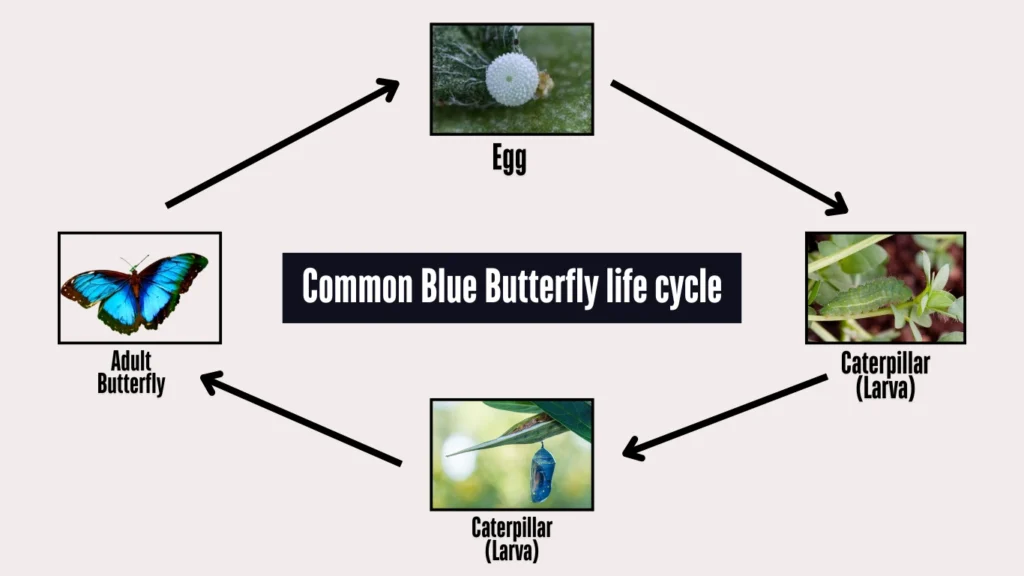
The life cycle of the common blue butterfly includes four key stages. Like all butterflies, it goes through complete metamorphosis:
- Egg – Tiny, round eggs are laid singly on the underside of host plant leaves.
- Caterpillar (Larva) – The caterpillar hatches and begins feeding on the host plant. It’s small, green, and well-camouflaged.
- Pupa (Chrysalis) – After feeding and growing, the caterpillar forms a chrysalis and undergoes transformation.
- Adult Butterfly – The adult butterfly emerges with fully formed wings. Males display bright blue wings, while females are typically brown with touches of blue.
Depending on the region and climate, this cycle may repeat once, twice, or even three times a year.
Common blue butterfly eggs
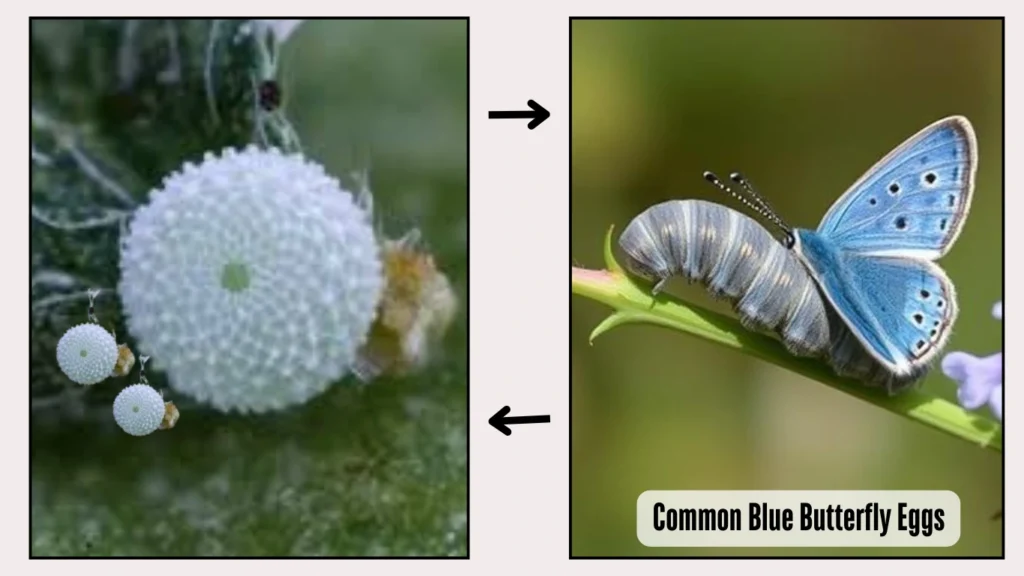
The eggs of the common blue butterfly are extremely small—about the size of a pinhead—and typically pale green or white. Females lay their eggs one at a time on the underside of leaves from plants like bird’s-foot trefoil or clover.
These eggs are flat and round, often difficult to spot without a close look. They usually hatch within 7 to 14 days, depending on temperature and weather conditions.
Because the eggs are laid directly on the food plant, the caterpillar can begin feeding immediately after hatching. This early stage is crucial—if the plant is disturbed or removed, the caterpillar may not survive. For this reason, preserving natural wildflower habitats is important for protecting common blue populations in both rural and urban areas.
Caterpillar Stage and Diet
Common blue butterfly caterpillar
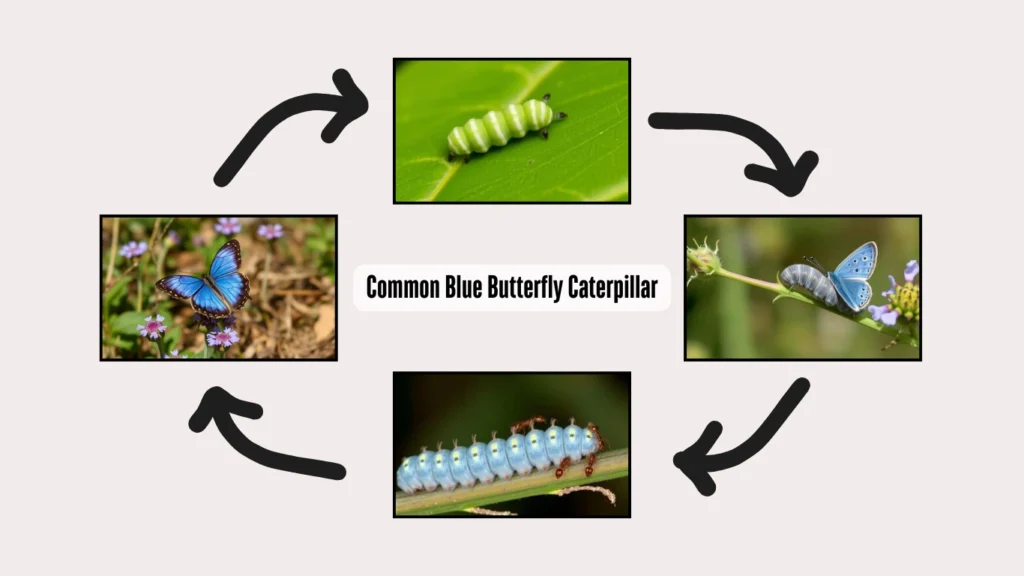
Once the egg hatches, a small green caterpillar emerges. The common blue butterfly caterpillar is usually bright green with pale stripes, which helps it blend in with its surroundings. This camouflage is important for survival, as it protects the caterpillar from predators like birds and ants.
The caterpillar stage typically lasts around two to three weeks. During this time, the caterpillar focuses solely on feeding and growing. It sheds its skin multiple times as it increases in size, preparing for the next stage of its transformation—the pupa.
Interestingly, these caterpillars often form a mutual relationship with ants. In exchange for protection from predators, the caterpillars secrete a sugary substance that the ants feed on. This natural partnership is just one of the many fascinating behaviors of the common blue.
What does the common blue butterfly eat?
To clarify, the adult butterfly feeds on nectar, while the caterpillar feeds on the leaves of specific host plants. The most common host plants include:
- Bird’s-foot trefoil
- White and red clover
- Restharrow
- Common vetch
These plants are essential for the survival of the species. Without them, the butterfly cannot complete its life cycle. Gardeners and conservationists often plant these flowers in wildflower areas to support butterfly populations.
Male vs. Female Identification
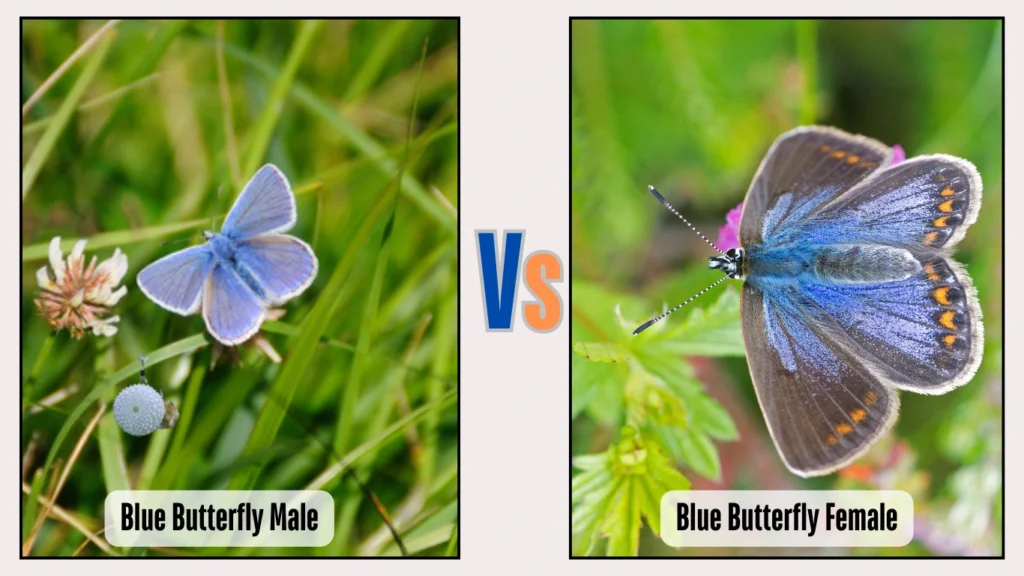
Common blue butterfly male and female
At first glance, the male and female common blue butterflies may appear similar, but there are clear differences in their appearance. These differences make it easier to identify their sex in the wild.
Male common blue butterfly
The male common blue butterfly is easily recognized by its vibrant, iridescent blue wings. The upper side of the wings is a clear, bright blue with a thin black border and white fringes. Males are often seen flying low over grassy areas, actively searching for females.
The underside of the male’s wings is pale brownish-grey, covered with small black spots and a few orange markings along the edges.
Female common blue butterfly
The female common blue butterfly has a more varied appearance. While some females may also display patches of blue, their wings are generally brown with orange spots along the edges. In some cases, females show a bluish tint near the base of their wings, but they are usually darker and more subdued in color compared to males.
The underside of the female’s wings is similar to the male’s, with black spots and orange markings, but it may appear slightly darker.
Female common blue butterfly vs. male
While both sexes belong to the same species, there are noticeable differences in color, markings, and behavior. The table below highlights the key distinctions:
| Feature | Male Common Blue Butterfly | Female Common Blue Butterfly |
| Wing Color (Topside) | Bright, iridescent blue | Brown with orange spots; some may have blue near base |
| Wing Color (Underside) | Pale brown-grey with black spots and orange edge markings | Similar to male but slightly darker |
| Size | Small, delicate | Slightly broader body and wings |
| Flight Behavior | Active, fast, searching for females | Slower, often resting or feeding |
| Common Sightings | Frequently seen flying low over grasses | Often found near nectar sources or host plants |
These differences are most noticeable during the summer months when both males and females are active. With a little observation, anyone can learn to tell them apart in the wild.
Common blue butterfly size
The common blue butterfly is a small-sized butterfly, but its vivid colors make it easy to spot. The average wingspan ranges from 28 to 36 millimeters. Males tend to appear slightly slimmer due to their narrow body and bright wings, while females may look a bit broader.
