

Carpet bugs are tiny insects that can cause serious damage to carpets, clothes, furniture, and stored items. These pests often go unnoticed because of their small size and hidden activity. Most of the damage is done by the larval stage, which feeds on natural fibers like wool, silk, leather, and fur.
In this article, you’ll learn about 9 common types of carpet bugs, how to identify them, where they live, and how to recognize early signs of an infestation. Each section is designed to be simple and informative so you can take action to protect your home.
1.Varied Carpet Beetle

The Varied Carpet Beetle is a tiny indoor pest that can damage carpets, clothes, and stored fabrics. It often hides in dark places and goes unnoticed until it causes serious damage.
Overview and Identification
The Varied Carpet Beetle is small and round with colorful patterns. It blends well with fabrics and carpets.
Key Identification Features:

- Size: 2 to 3 millimeters long
- Shape: Oval or round body
- Color: Mix of white, yellow, brown, and black scales
- Texture: Fuzzy look due to fine scales
- Movement: Slow when disturbed
- Special Note: Older beetles may lose scales and look solid brown
Life Cycle and Development Stages
This beetle goes through four stages: egg, larva, pupa, and adult. Eggs are laid in hidden spots like closets and carpet edges. Larvae hatch and feed for months on natural materials. They then form pupae and later turn into adult beetles. Adults usually live a few weeks and often go outside to feed on pollen.
Damage They Cause
Larvae eat wool, silk, feathers, leather, and cotton. They leave small holes in carpets, clothes, blankets, and soft furniture. In large numbers, they can damage museum fabrics or collections.
Habitat and Where They Are Found
Indoors they hide in dark, quiet places like under carpets, inside furniture, and behind baseboards. Adults are often found outdoors on flowers and can fly inside through windows or doors.
Signs of Infestation
You may see holes in fabrics or carpets. Shed larval skins often appear as brown shell-like pieces. Adult beetles are sometimes seen near windows or light sources.
2. Black Carpet Beetle

The Black Carpet Beetle is one of the most destructive carpet pests. It is common in homes and can cause serious damage to fabrics, stored items, and furniture.
Overview and Identification
This beetle is larger than other carpet beetles and has a plain, dark body.
Key Identification Features:

- Size: 3 to 5 millimeters long
- Shape: Elongated oval body
- Color: Solid dark brown or black
- Texture: Smooth, shiny body surface
- Movement: Quick and active when disturbed
- Larvae: Golden to reddish-brown, carrot-shaped with a long bristled tail
Life Cycle and Development Stages
It has four stages: egg, larva, pupa, and adult. Females lay eggs near food sources like wool, hair, or stored products. Larvae hatch and feed for several months. Pupation happens in dark corners. Adults do not cause damage but lay eggs and continue the cycle.
Damage They Cause
Larvae eat natural fibers like wool, leather, and feathers. They damage carpets, blankets, clothes, and furniture stuffing. They can also infest dry food like grains or pet food.
Habitat and Where They Are Found
Black Carpet Beetles prefer warm, dry places indoors. They hide in air vents, behind baseboards, under rugs, and in stored items. Adults can fly in from outside and are attracted to lights.
Signs of Infestation
Signs include fabric holes, shed larval skins, and damage to stored dry food. Adult beetles may be seen near lights or windows. Larvae may be found crawling in dark corners or under furniture.
3. Furniture Carpet Beetle

The Furniture Carpet Beetle is often found in upholstered furniture and is known for its spotted, colorful body. It feeds on many materials inside the home.
Overview and Identification
This beetle is small and looks similar to the varied carpet beetle but with different markings.
Key Identification Features:

- Size: 2 to 3.5 millimeters long
- Shape: Round to oval body
- Color: Mottled pattern of white, yellow, black, and orange scales
- Texture: Fuzzy appearance due to scales
- Larvae: Oval, brown, and covered in bristly hairs
Life Cycle and Development Stages
Females lay eggs inside furniture, under cushions, or near carpets. Larvae hatch and feed on materials like wool or animal-based fabrics. They molt several times before turning into pupae, then become adults. Adults feed on pollen and are mostly active near windows.
Damage They Cause
They damage furniture upholstery, carpets, clothing, and taxidermy. The larvae chew holes in wool, feathers, silk, and other soft items. Damage often occurs underneath or inside items where larvae are hidden.
Habitat and Where They Are Found
They hide in upholstered furniture, under rugs, and inside closets or storage boxes. Adults are often found near windows or flowers during spring. Infestations usually start in unused or quiet rooms.
Signs of Infestation
Look for loose fibers, holes in upholstery or fabric, and shed skins from larvae. Adult beetles may be seen crawling on walls or flying near windows, especially in spring and summer.
4. Common Carpet Beetle

The Common Carpet Beetle is a widespread indoor pest that damages various natural materials. It looks similar to the Varied Carpet Beetle but has darker and more muted colors.
Overview and Identification
This beetle is tiny, oval, and covered in scales. It is easy to confuse with other carpet beetles.
Key Identification Features:
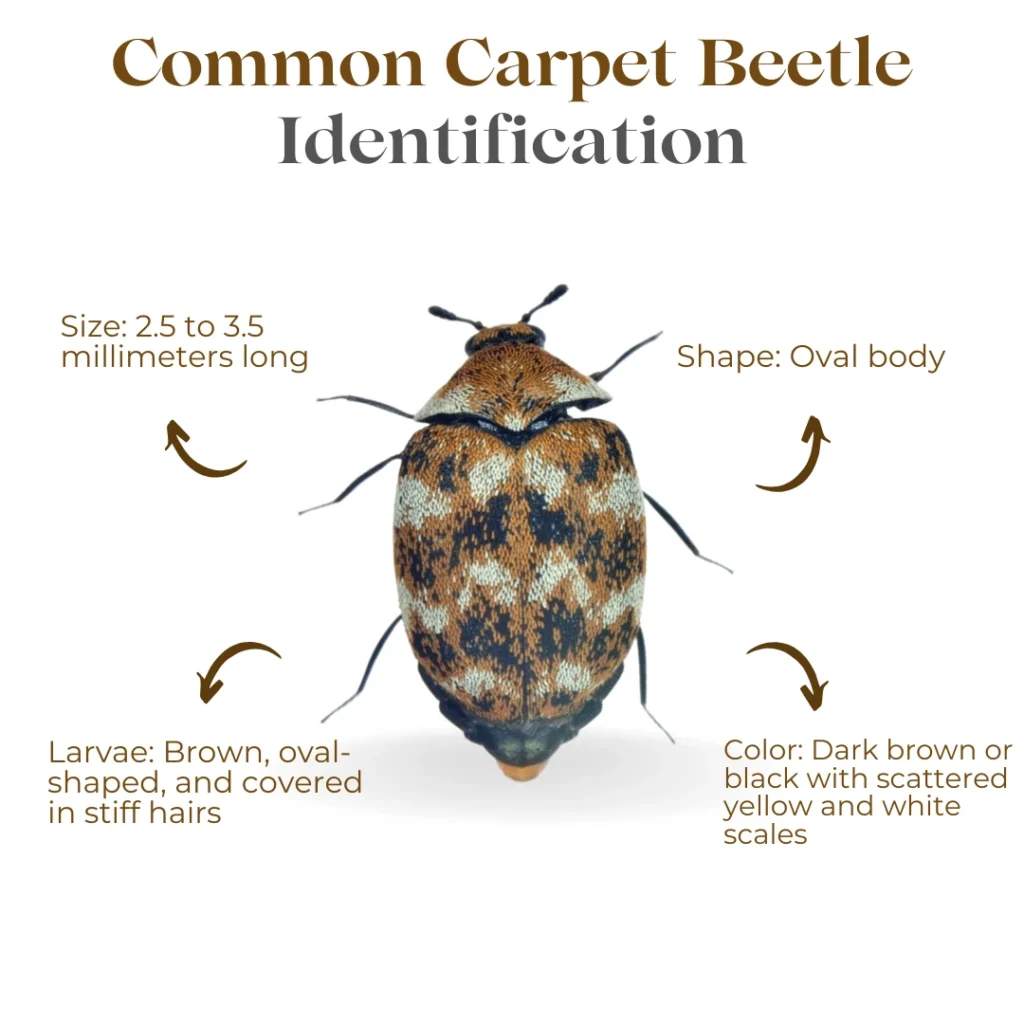
- Size: 2.5 to 3.5 millimeters long
- Shape: Oval body
- Color: Dark brown or black with scattered yellow and white scales
- Texture: Slightly fuzzy appearance
- Larvae: Brown, oval-shaped, and covered in stiff hairs
Life Cycle and Development Stages
Eggs are laid in quiet areas like closets or under furniture. After hatching, larvae feed on natural materials and grow over several weeks or months. They then become pupae and turn into adults. Adults often leave the home and feed on outdoor pollen.
Damage They Cause
The larvae eat wool, fur, feathers, and leather. They leave small holes in carpets, blankets, and fabric-covered furniture. They also damage animal specimens and stored items in museums.
Habitat and Where They Are Found
They are found in dark places such as under baseboards, inside storage boxes, or beneath rugs. Adults may fly in from flowers or plants and are attracted to lights.
Signs of Infestation
You may find damage to carpets and soft items, along with brown, bristled larval skins. Adult beetles often gather near windows or doors trying to exit the home.
5. White-Spotted Carpet Beetle

The White-Spotted Carpet Beetle is a less common but still damaging pest. It is mostly found in places with taxidermy, old fabrics, and collections.
Overview and Identification
This beetle is small and round with a spotted appearance.
Key Identification Features:

- Size: 3 to 4 millimeters long
- Shape: Round or dome-shaped body
- Color: Dark background with white or yellowish spots
- Texture: Slightly rough with fine hairs or scales
- Larvae: Long, narrow, and covered in golden or brown bristles
Life Cycle and Development Stages
Eggs are laid in quiet indoor spaces. Larvae hatch and feed on dry animal-based items such as wool, hair, and feathers. After growing for weeks or months, they pupate and turn into adult beetles. Adults may move outdoors to feed on pollen.
Damage They Cause
They feed on wool, feathers, skins, and similar items. Infestations often start in attics, basements, or storage rooms containing animal fabrics or dead insects.
Habitat and Where They Are Found
They prefer hidden areas like attic corners, wall voids, and near animal nests. They are more common in older buildings, taxidermy displays, or museums.
Signs of Infestation
Look for holes in stored fabrics, larval skin casts, and the presence of adult beetles in lighted areas. The beetles may also be found in unused boxes or forgotten storage.
6. Guernsey Carpet Beetle

The Guernsey Carpet Beetle is a close relative of the Varied Carpet Beetle. It causes similar damage and is mostly found in homes across Europe and some other regions.
Overview and Identification
It has a small, round body with a mottled pattern of scales.
Key Identification Features:

- Size: 2 to 3 millimeters long
- Shape: Oval body
- Color: Patchy mix of white, yellow, and dark brown scales
- Texture: Slightly fuzzy, scaly body
- Larvae: Brownish, bristled, and shaped like short worms
Life Cycle and Development Stages
Like other carpet beetles, it has four stages: egg, larva, pupa, and adult. Eggs are laid in undisturbed places such as behind furniture or inside closets. The larvae feed for a long time before becoming adults. Adults feed on pollen and may leave the house.
Damage They Cause
Larvae eat wool, feathers, silk, and similar materials. They can damage rugs, clothes, upholstered furniture, and decorative fabric items.
Habitat and Where They Are Found
They are found indoors in corners, under floorboards, and inside storage containers. Outdoors, adults are seen on flowers. They may enter homes through windows or doors.
Signs of Infestation
Signs include holes in fabrics, shed larval skins, and sightings of beetles near light sources. A buildup of fine fabric dust may also appear where they are feeding.
7. Brown Carpet Beetle

The Brown Carpet Beetle is a destructive pest known for damaging carpets, clothing, and upholstery. It is closely related to the black carpet beetle but has a slightly different appearance.
Overview and Identification
This beetle is small, with a uniform brown body and fast movement.
Key Identification Features:
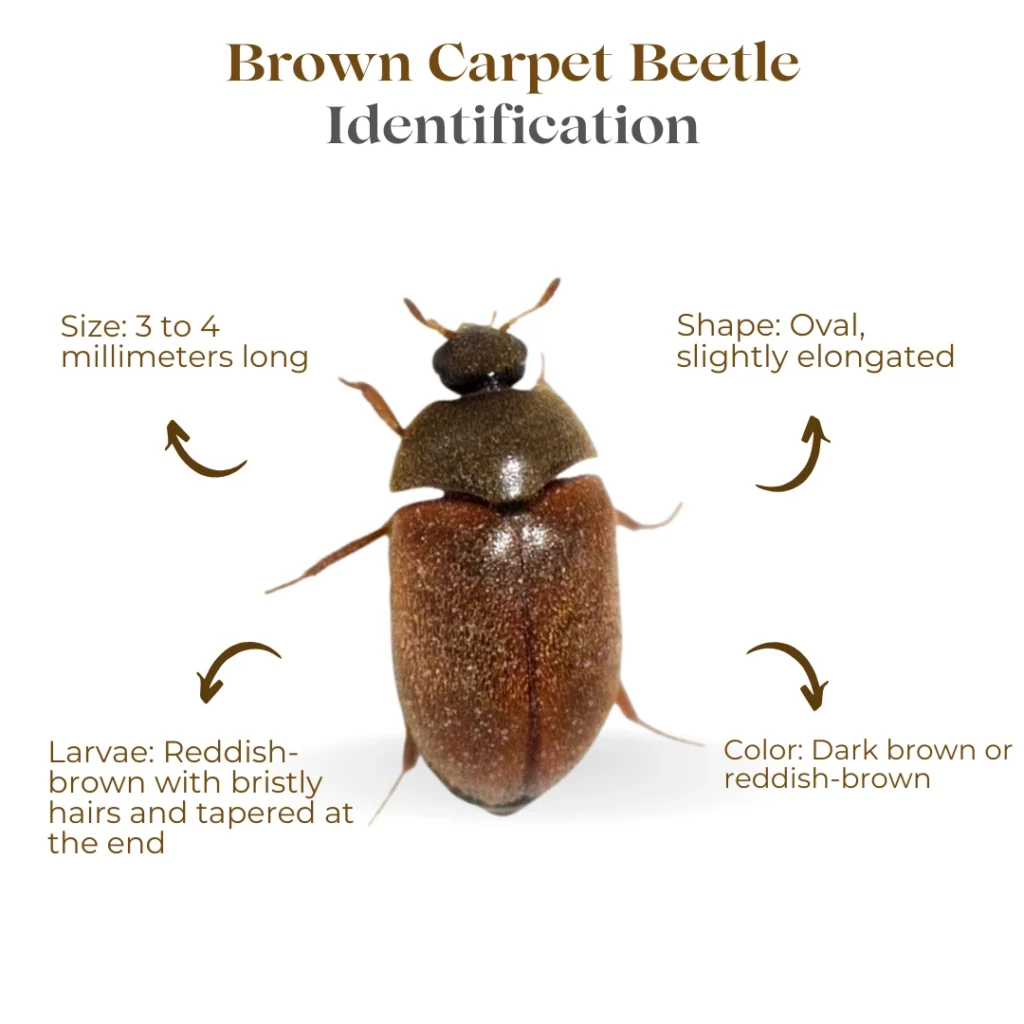
- Size: 3 to 4 millimeters long
- Shape: Oval, slightly elongated
- Color: Dark brown or reddish-brown
- Texture: Smooth and shiny
- Larvae: Reddish-brown with bristly hairs and tapered at the end
Life Cycle and Development Stages
Females lay eggs in areas with natural fibers or stored materials. Larvae hatch and feed on fabrics and animal products. They grow slowly and may remain in the larval stage for several months. Adults do not feed on fabric but continue the life cycle by laying eggs.
Damage They Cause
Larvae chew through wool, fur, feathers, and leather. They leave visible holes and thinning in carpets, clothes, and other stored fabrics. Their feeding can ruin furniture and stored collections.
Habitat and Where They Are Found
They hide in closets, drawers, under carpets, and behind baseboards. Infestations are more common in warm, dry indoor conditions. Adults may be found flying near lights or entering through windows.
Signs of Infestation
Look for shed larval skins, fabric holes, and fine dust from damaged materials. Adult beetles may be seen crawling on floors or flying near windows.
8. Larger Black Carpet Beetle

The Larger Black Carpet Beetle is one of the biggest among carpet beetle types. It can cause severe damage over time if not controlled.
Overview and Identification
This beetle is similar to the regular black carpet beetle but slightly bigger and darker.
Key Identification Features:
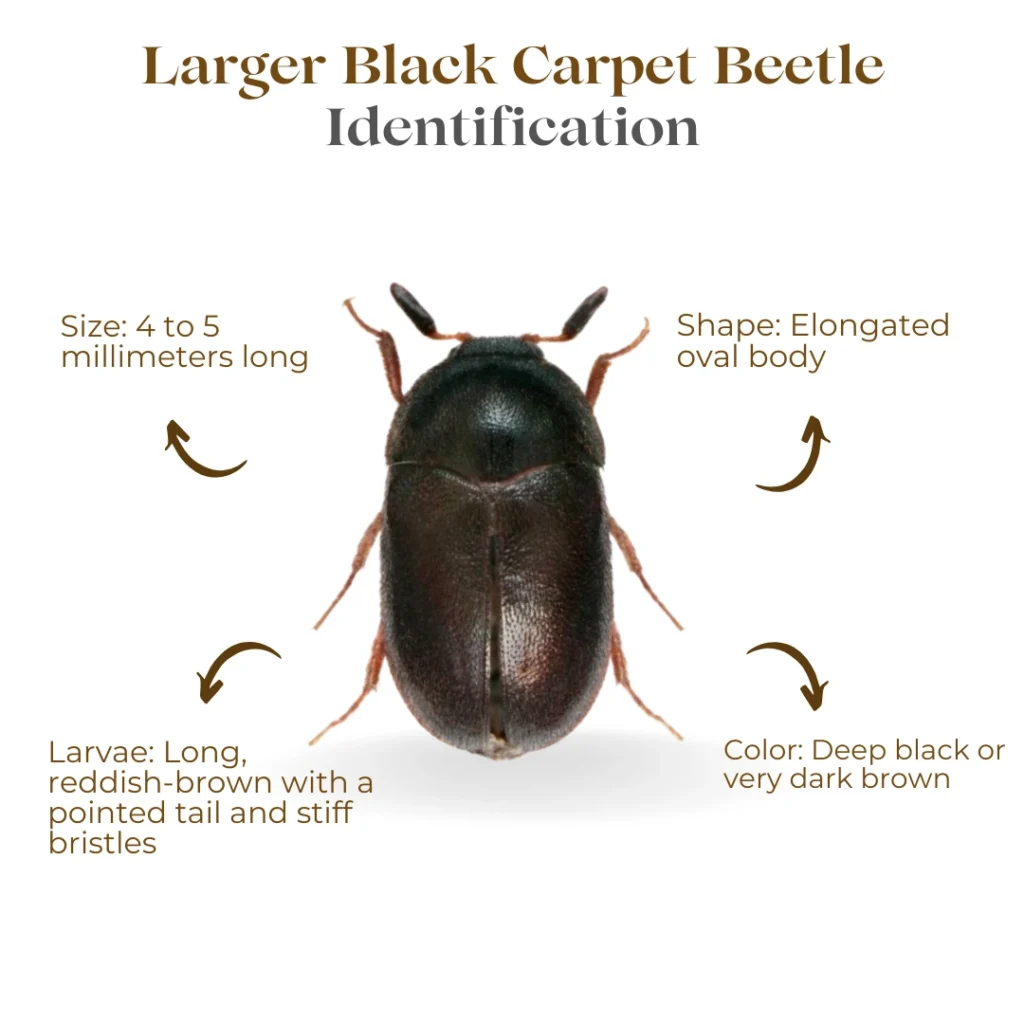
- Size: 4 to 5 millimeters long
- Shape: Elongated oval body
- Color: Deep black or very dark brown
- Texture: Smooth and hard shell
- Larvae: Long, reddish-brown with a pointed tail and stiff bristles
Life Cycle and Development Stages
Eggs are laid in hidden indoor spaces. The larvae hatch and feed on fabrics and stored items for several months. They then pupate and transform into adults. Adults do not eat fabric but lay eggs to restart the cycle.
Damage They Cause
Larvae feed on wool, hair, leather, and similar materials. They leave holes in carpets, clothing, and soft furnishings. Infestations can also spread to stored food or animal feed.
Habitat and Where They Are Found
They hide under rugs, inside storage containers, or behind furniture. Adults are strong fliers and can enter through open doors or windows, especially in spring and summer.
Signs of Infestation
Signs include torn or thinning fabric, molted larval skins, and beetles crawling near light sources. You may also notice movement under furniture or along baseboards.
9. Odd Beetle

The Odd Beetle is not a true carpet beetle but is often mistaken for one due to its similar habits and appearance. It is still considered a carpet pest.
Overview and Identification
This beetle has a unique look and behavior that makes it different from other types.
Key Identification Features:

- Size: 2.5 to 4 millimeters long
- Shape: Hump-backed with a narrow waist
- Color: Yellowish-white to brown body
- Texture: Soft body with fine hairs
- Larvae: Long, hairy, and very active
Life Cycle and Development Stages
It follows the same stages as carpet beetles: egg, larva, pupa, and adult. Females lay eggs in dark areas, and larvae cause the most damage. After feeding for weeks, they pupate and turn into adults.
Damage They Cause
Odd beetle larvae feed on wool, silk, and fur. They are known to damage clothing, carpets, and paper-based materials like books and documents.
Habitat and Where They Are Found
They prefer quiet and undisturbed places like under furniture, in closets, and storage rooms. They may also be found in homes with bird or insect nests nearby.
Signs of Infestation
You may see holes in clothing and carpets, as well as shed larval skins. Adults are drawn to lights and may be seen near windows or doors.
