

Bumble bees are among nature’s most important pollinators, yet many people have questions about their behavior, lifestyle, and role in our environment. From whether they make honey to how long they live, these gentle insects spark curiosity and concern alike. In this guide, we answer the most common questions about bumble bees in clear, concise detail.
1. Do bumble bees make honey?
Yes, bumble bees do make honey, but in much smaller amounts than honey bees. Their honey is produced mainly to feed the colony and is stored in small wax pots instead of large honeycombs. Because they produce just enough for their short lifecycle, bumble bee honey isn’t harvested for human consumption.
2. How to get rid of bumble bees?
To remove bumble bees safely, locate their nest and avoid harming them if possible, as they are valuable pollinators. You can encourage them to leave by using gentle deterrents like vinegar spray near the nest entrance or by relocating them through a professional beekeeper. Avoid sealing nests abruptly, as trapped bees can become aggressive.
3. How long do bumble bees live?
Bumble bee lifespans vary by role. Worker bees typically live 2–6 weeks, while male drones live just a few weeks after maturity. Queens live the longest—up to one year—since they hibernate during winter and start new colonies in spring. Environmental conditions and predation can also shorten their lifespan.
4. Where do bumble bees nest?

Bumble bees usually nest in abandoned rodent burrows, under thick grass, or in sheltered spaces like compost heaps or sheds. Some species prefer above-ground nests in bird boxes or wall cavities. They choose sites with protection from wind and rain, ensuring warmth and security for developing brood.
5. Do bumble bees have stingers?
Yes, female bumble bees, including queens and workers, have smooth stingers capable of stinging multiple times. Unlike honey bees, their stingers do not have barbs, so they can sting repeatedly without dying. Males, or drones, do not have stingers at all and cannot sting.
6. Do bumble bees have hives?
Bumble bees don’t have hives like honey bees. Instead, they build small colonies in natural cavities or burrows, often housing 50–400 bees. Their nests are made of wax pots and are less organized than honeycomb structures. These colonies are seasonal and die out in winter, except for the new queens.
7. What do bumble bees eat?
Bumble bees primarily eat nectar for energy and collect pollen as a protein source for larvae. Nectar is stored in their honey pots, while pollen is gathered on their hind legs in “pollen baskets.” Both nectar and pollen are essential for the colony’s growth and reproduction throughout the season.
8. Are bumble bees aggressive?
Bumble bees are generally non-aggressive and will not attack unless they feel threatened or their nest is disturbed. They prefer to focus on foraging rather than defending territory. However, if provoked, they can sting multiple times, so it’s best to observe them calmly from a distance.
9. Are bumble bees dangerous?
For most people, bumble bees aren’t dangerous, as their sting causes only mild pain, swelling, and redness. However, for individuals allergic to bee venom, stings can trigger severe reactions like anaphylaxis, which requires immediate medical attention. Their calm nature means they rarely pose a real threat.
10. Are bumble bees native to North America?
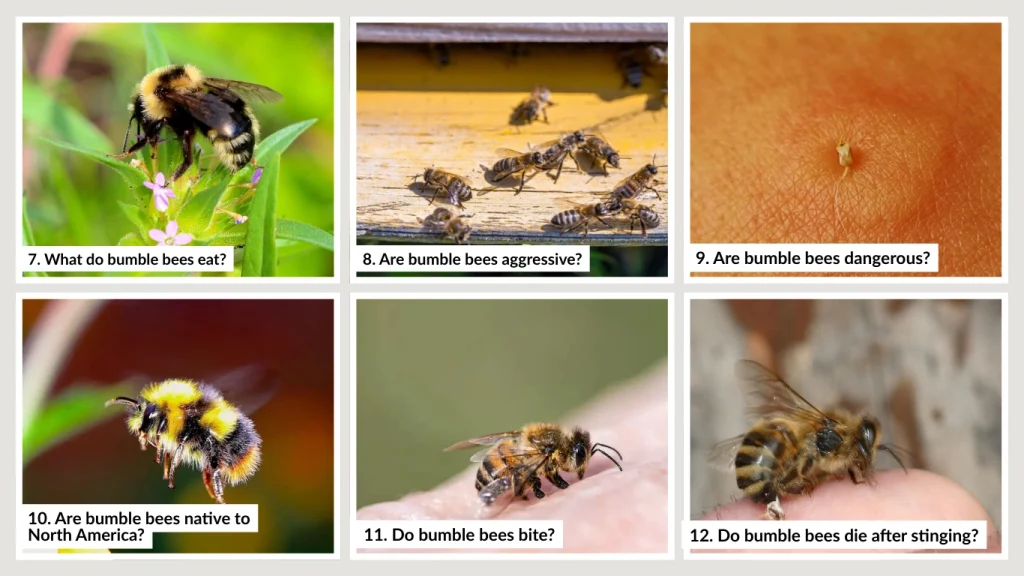
Yes, many bumble bee species are native to North America, with over 40 species found across the continent. They play a crucial role in pollinating native plants and crops. However, some species are declining due to habitat loss, pesticides, and climate change, raising conservation concerns.
11. Do bumble bees bite?
Bumble bees can bite, but it’s rare. They use their mandibles to bite only when defending their nest or handling plant parts while foraging. The bite is usually harmless to humans, causing little to no pain, unlike their sting, which delivers venom and can be more uncomfortable.
12. Do bumble bees die after stinging?
No, bumble bees do not die after stinging. Their stingers are smooth and lack barbs, allowing them to sting multiple times without injury. This is different from honey bees, which have barbed stingers that get stuck in the skin, causing them to die after stinging.
13. Do bumble bees sting or bite?
Bumble bees can both sting and bite, but stinging is far more common when they feel threatened. Stings inject venom, causing pain and swelling, while bites are typically harmless and used for defense or manipulating objects. Most human encounters involve stings rather than bites.
14. Are bumble bees endangered?
Several bumble bee species are considered endangered due to habitat loss, pesticide exposure, climate change, and disease. The Rusty-patched bumble bee, for example, is federally listed as endangered in the United States. Conservation efforts focus on restoring habitats and reducing harmful chemical use.
15. Are bumble bees friendly?
Bumble bees are often considered friendly because they are calm, non-aggressive, and focused on pollination. They rarely sting unless directly provoked or their nest is threatened. Observing them from a respectful distance can show how gentle and beneficial they are to gardens and ecosystems.
16. Are bumble bees pollinators?

Yes, bumble bees are excellent pollinators, helping fertilize flowers so plants can produce seeds and fruit. They use a technique called “buzz pollination,” vibrating their flight muscles to release pollen from flowers. This makes them especially important for crops like tomatoes, peppers, and blueberries.
17. Are bumble bees solitary?
No, bumble bees are social insects that live in colonies with a queen, workers, and males. While some queens may start alone in spring, they quickly build a small community. These colonies are seasonal, lasting only through summer and early autumn before dying off in winter.
18. Can bumble bees sting multiple times?
Yes, female bumble bees can sting multiple times because their stingers are smooth and do not get stuck in skin. This allows them to defend their nest more effectively. However, they generally sting only when threatened, so unprovoked stings are uncommon.
19. Do bumble bees hibernate?
Only new queens hibernate through winter. After mating in late summer or early autumn, they find a sheltered spot underground or in leaf litter to rest until spring. The rest of the colony, including workers and males, dies off before winter arrives.
20. Do bumble bees live in the ground?
Yes, many bumble bee species build their nests underground, often in abandoned rodent burrows or natural soil cavities. These underground nests provide warmth, protection from predators, and shelter from bad weather, helping the colony thrive during its active season.
21. Do bumble bees nest in the ground?
Yes, most bumble bee species prefer nesting in the ground, especially in abandoned animal burrows or soil cavities. This location offers warmth, safety from predators, and protection from harsh weather. Some species, however, may nest above ground in birdhouses or dense vegetation.
22. Do bumble bees pollinate?

Absolutely. Bumble bees are highly effective pollinators for both wild plants and crops. Their large, fuzzy bodies collect and transfer pollen efficiently, and their ability to forage in cooler temperatures and lower light makes them essential for pollination in early spring and late fall.
23. Do bumble bees sting humans?
Yes, female bumble bees can sting humans if they feel threatened or if their nest is disturbed. Their sting is usually painful but short-lived for most people. Unlike honey bees, they can sting multiple times without dying, so caution is advised when near a nest.
24. Can bumble bees fly?
Yes, bumble bees can fly, and they do so using rapid wingbeats that create lift despite their large bodies. Their wings beat around 200 times per second, allowing them to hover, fly backward, and even carry loads of nectar and pollen that are close to their own body weight.
25. Why are bumble bees endangered?
Bumble bee populations are declining due to habitat loss, pesticide use, climate change, and the spread of diseases from commercial bees. These threats reduce their food sources, nesting sites, and overall survival rates, pushing some species toward endangered status. Conservation efforts are crucial to protect them.
26. Why are bumble bees important?
Bumble bees are vital for maintaining healthy ecosystems and supporting agriculture. They pollinate wild plants and food crops, ensuring the production of fruits, vegetables, and seeds. Without them, many plants would struggle to reproduce, leading to reduced biodiversity and lower crop yields.
27. Why are bumble bees important to humans?
Humans rely on bumble bees for pollinating key crops like berries, tomatoes, and peppers. Their unique ability to perform buzz pollination makes them indispensable for certain plants. By maintaining plant diversity and food supply, bumble bees contribute directly to global food security.
28. Why are bumble bees so big?
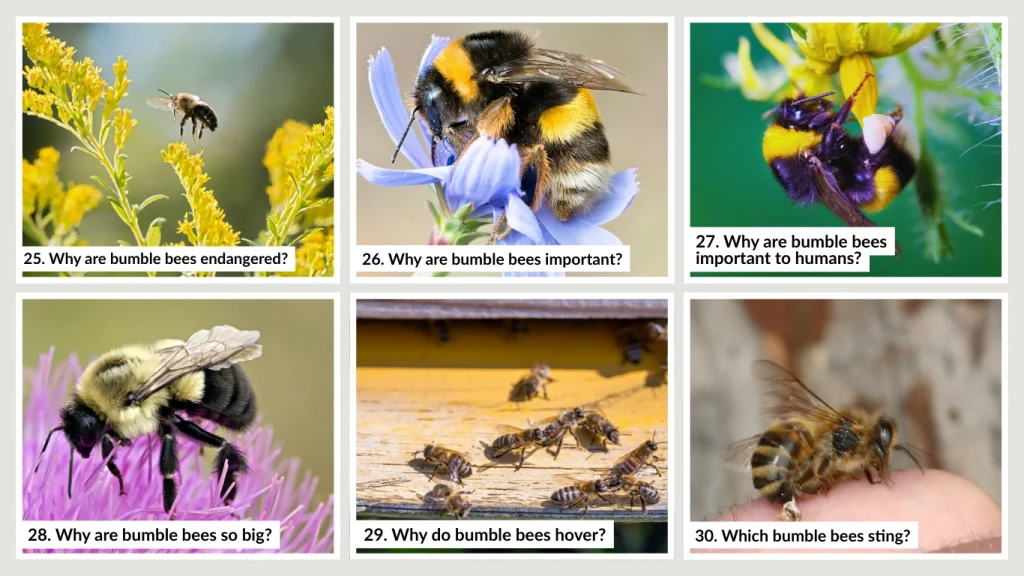
Bumble bees are large because their size helps them retain heat, allowing them to forage in cooler weather. Their fuzzy bodies also help with insulation and pollen collection. This size advantage means they can start working earlier in the day and in colder seasons than many other bees.
29. Why do bumble bees hover?
Bumble bees hover to inspect flowers, locate the best spot for nectar collection, or check potential nest sites. Hovering also allows them to quickly escape predators. Their strong flight muscles and rapid wingbeats make this maneuver possible, aiding their foraging efficiency.
30. Which bumble bees sting?
Only female bumble bees—queens and workers—can sting. They use their smooth stingers for defense and can sting multiple times. Male bumble bees, called drones, lack stingers and cannot sting at all. Identifying males can help reduce unnecessary fear during close encounters.
