
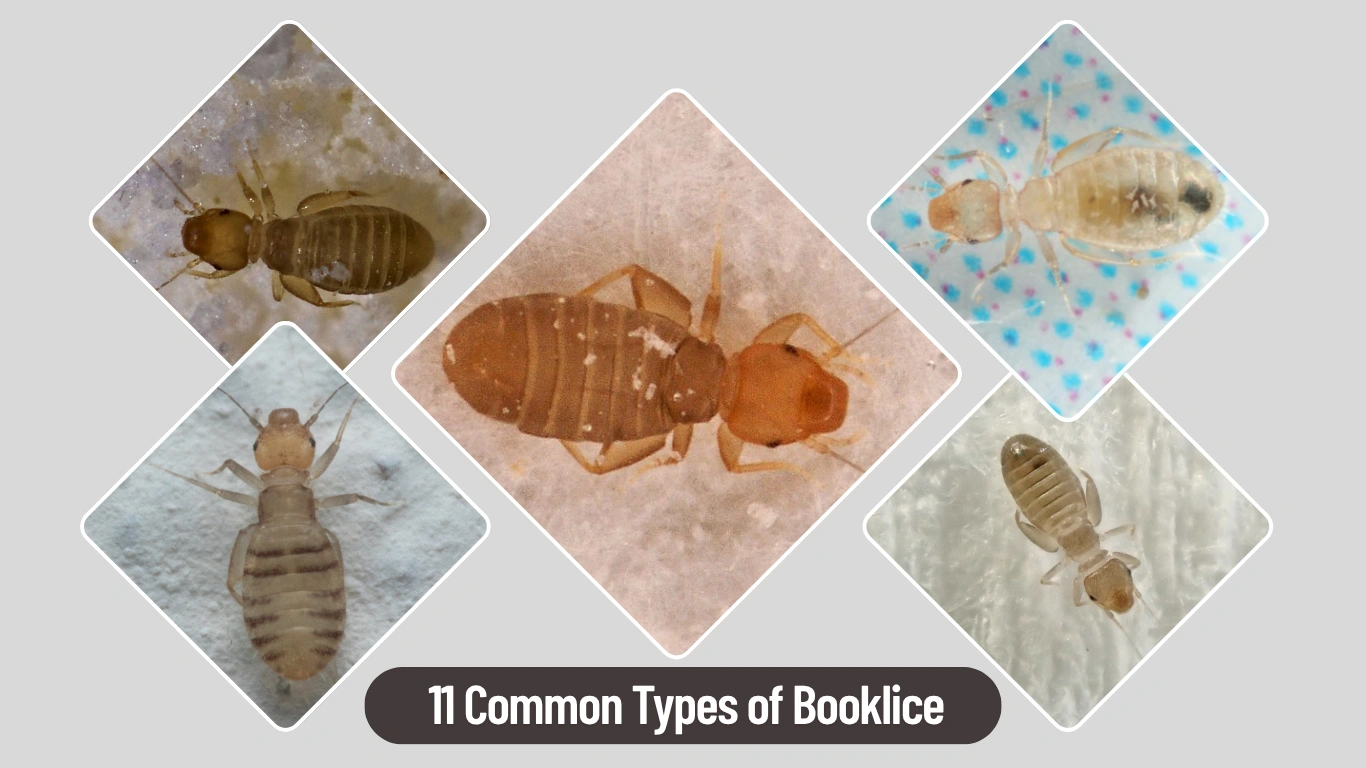
Booklice, also known as psocids, are tiny, soft-bodied insects that thrive in warm, humid environments. Despite their name, booklice are not true lice and do not bite or harm humans. However, they can become a nuisance in homes, libraries, food storage areas, and warehouses due to their habit of feeding on mold, fungi, and starchy materials like book bindings and wallpaper paste.
In this guide, we cover 11 common types of booklice, focusing on their appearance, habitat, behavior, and diet. Understanding these species can help you identify them correctly and manage moisture or hygiene issues that attract them.
1. Liposcelis bostrychophila

Liposcelis bostrychophila is one of the most widespread and resilient species of booklice, commonly found indoors in warm, humid environments. Though harmless to humans, they can become a nuisance in libraries, kitchens, and food storage areas.
Identification
- Size: 1 to 1.5 mm
- Color: Pale brown to yellowish
- Body: Soft-bodied, flattened, and wingless
- Head: Prominent with long antennae
- Visibility: Often seen in clusters near food or paper materials
Habitat
L. bostrychophila thrives in moist, dark indoor spaces. It is often found in areas like stored food packages, wall cracks, cupboards, paper stacks, and libraries. Bathrooms and kitchens with high humidity also attract this species.
Behavior
This booklouse reproduces through parthenogenesis, meaning all individuals are female and capable of producing offspring without mating. This leads to rapid infestations under suitable conditions. They are shy, avoid light, and scatter quickly when disturbed.
Diet
Their diet consists of mold, fungi, and starchy organic matter such as flour, bookbinding glue, wallpaper paste, and dry cereals. While they don’t bite or cause structural damage, their presence signals excess moisture and potential mold growth.
2. Liposcelis brunnea
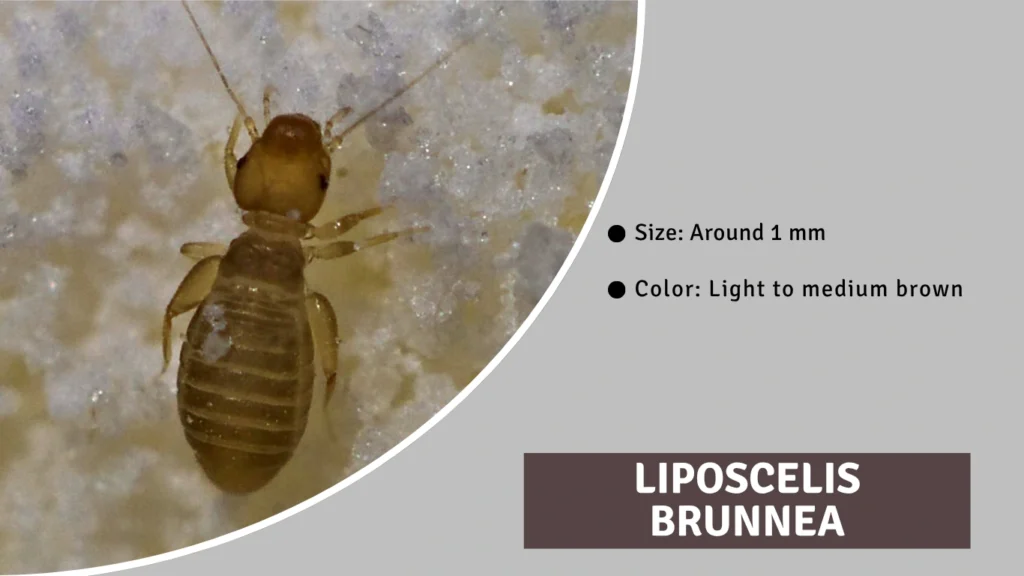
Liposcelis brunnea is another common species of booklice found in warm, humid environments. It is especially frequent in food storage facilities and grain processing plants. Though smaller than some other insects, its rapid reproduction can make infestations troublesome.
Identification
- Size: Around 1 mm
- Color: Light to medium brown
- Body: Flattened, soft-bodied, wingless
- Antennae: Long and slender
- Eyes: Small and dark, located on the sides of the head
Habitat
Liposcelis brunnea prefers stored food environments like pantries, warehouses, or grain silos. It’s also found in cracks, under floor tiles, or hidden inside packaging materials—anywhere warmth and moisture are present.
Behavior
This species tends to stay hidden and is active mainly at night. It can tolerate a range of temperatures but thrives best in damp, warm areas. Like others in its genus, it reproduces rapidly under ideal conditions.
Diet
Feeds primarily on molds and fungi growing on damp surfaces. It may also consume organic residues, powdered food, or grains contaminated with moisture.
3. Liposcelis entomophila
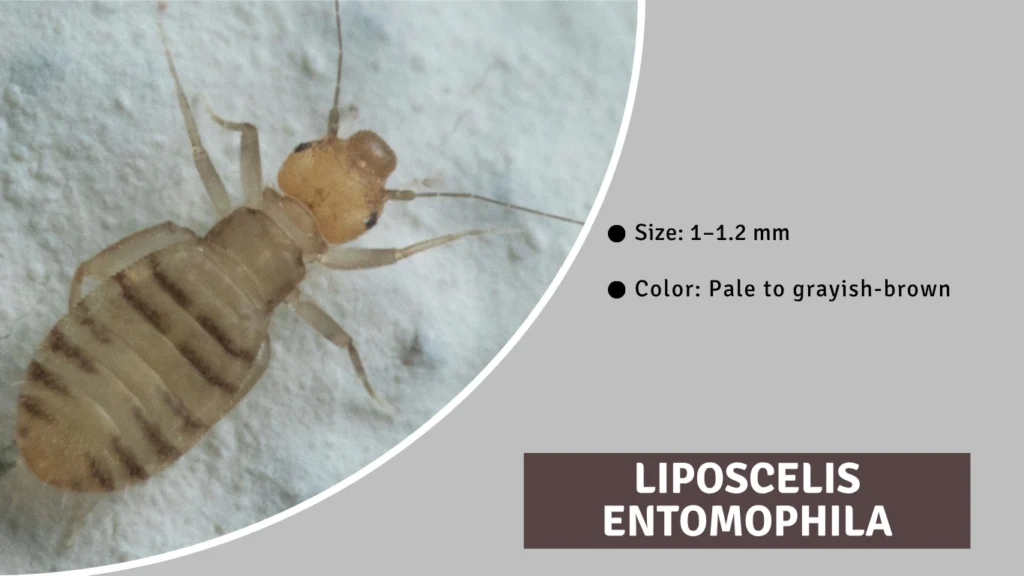
Liposcelis entomophila is frequently found in homes, food factories, and warehouses. It’s considered a global pest in stored product environments, especially where grains, flour, and dried goods are kept.
Identification
- Size: 1–1.2 mm
- Color: Pale to grayish-brown
- Shape: Oval, with short legs and long antennae
- Wings: Absent
- Movement: Quick and hard to detect due to small size
Habitat
This species favors humid storage rooms, grain bins, and cardboard packaging. It thrives in dusty areas where organic
4. Liposcelis decolor

Liposcelis decolor is a common household and storage pest known for its tolerance to heat and dryness compared to other booklice. It often infests dried food products and grain storage areas.
Identification
- Size: About 1 mm
- Color: Yellowish to light brown
- Body: Smooth, flattened, and wingless
- Antennae: Long and thin
- Visibility: Very small and often overlooked until large populations form
Habitat
L. decolor is typically found in food storage rooms, behind baseboards, in food packaging, or inside cracks and crevices. It is also frequently reported in flour mills and pet food warehouses.
Behavior
This species is highly mobile and can spread quickly in commercial food storage or kitchen environments. It reproduces rapidly in high-humidity areas but can also survive in drier conditions compared to others in its genus.
Diet
It feeds on molds, fungi, and fine organic dust. It can also infest flour, pet food, and dried grains, making it a concern for both home and industrial food safety.
5. Trogium pulsatorium

Trogium pulsatorium, also known as the “deathwatch booklouse,” is a slightly different type of booklouse and belongs to the family Trogiidae. It is larger and more robust than most Liposcelis species and is often found in damp, decaying organic matter.
Identification
- Size: 1.5–2 mm
- Color: Pale, yellowish-white
- Body: Long and cylindrical with visible segmentation
- Wings: Absent
- Distinctive Trait: Sometimes makes a faint clicking or tapping sound
Habitat
This species prefers damp, moldy areas such as old wooden beams, books stored in basements, or decaying wallpaper. It is commonly associated with historic buildings, unused libraries, or cellars.
Behavior
Trogium pulsatorium is slow-moving and less likely to infest food but can still indicate moisture problems and fungal growth in homes. It often hides in crevices and under floorboards.
Diet
Feeds primarily on molds, fungi, mildew, and decaying plant material. Though not a food pest, it can damage paper, books, and museum artifacts by grazing on moldy surfaces.
6. Lachesilla pedicularia

Lachesilla pedicularia is a widespread species of booklouse found both indoors and outdoors. Unlike some other species that prefer only humid interiors, this one can thrive in natural habitats as well, making it a common sight across multiple environments.
Identification
- Size: 1.5 to 2 mm
- Color: Light brown to grayish
- Body: Slender with long antennae
- Wings: Present and held roof-like over the body
- Eyes: Prominent and dark
Habitat
Lachesilla pedicularia is found in leaf litter, bark crevices, window sills, old books, and behind wallpaper. It’s well-adapted to both natural outdoor locations and man-made indoor settings.
Behavior
This species can fly short distances and is more mobile than many wingless booklice. It’s often seen on window panes and light-exposed walls. Unlike some species that are strictly indoor pests, L. pedicularia may be found seasonally indoors after flying in from outside.
Diet
It feeds on microscopic fungi, algae, mold, and organic residues. Indoors, it may graze on mold spores found in damp paper, wallpaper paste, or cardboard.
7. Psococerastis gibbosa

Psococerastis gibbosa is a larger and more robust species of booklouse commonly found in homes, especially near windows and damp walls. It’s often mistaken for tiny flying gnats due to its size and winged form.
Identification
- Size: 2 to 3 mm
- Color: Yellowish-brown to gray
- Body: Stocky with broad head and long antennae
- Wings: Present with visible veins and held flat
- Eyes: Very noticeable and round
Habitat
Typically seen indoors on window sills, behind damp wallpaper, around sink edges, or in attics and lofts. Outdoors, it may live under bark or in shaded, moist spots.
Behavior
P. gibbosa is moderately active during the day and may fly or crawl around window panes. It prefers quiet, undisturbed places and is a strong indicator of high humidity and moisture issues in homes.
Diet
Feeds on fungal spores, molds, and organic debris. It can survive on the mildew that grows on paper products, drywall, or fabric stored in humid conditions.
8. Liposcelis paeta

Liposcelis paeta is a lesser-known but globally distributed species of booklice. It often inhabits warm, humid places such as grain storage units and warehouses, and can be a serious pest when conditions allow for rapid reproduction.
Identification
- Size: About 1–1.3 mm
- Color: Light brown to tan
- Body: Wingless, flattened, with long antennae
- Legs: Thin and well-adapted for crawling
- Eyes: Small, dark, and side-positioned
Habitat
Liposcelis paeta is commonly found in food production facilities, pantries, and within packaging of cereals and grains. It thrives in environments with poor ventilation and sustained humidity, such as storage rooms and kitchens.
Behavior
It is a quick-moving insect that hides in cracks, food debris, or under labels on packaging. Though not harmful to humans, large populations can cause contamination and spoilage of food goods.
Diet
Feeds on molds, mildews, organic food dust, and damaged or moist stored grains. Like other booklice, it relies on fungal growth for sustenance, making it a secondary pest often linked with moisture control problems.
9. Liposcelis rufa

Liposcelis rufa is another type of stored-product booklouse that may be encountered in both domestic and industrial settings. Though small and inconspicuous, its presence can signal improper food storage or high humidity levels.
Identification
- Size: 1 mm or less
- Color: Reddish-brown
- Body: Oval, wingless, and soft-bodied
- Antennae: Thin and medium in length
- Appearance: Less translucent than other species
Habitat
Commonly found in warehouses, food packaging areas, and kitchen cabinets—especially where old or damp products are stored. It also inhabits cardboard boxes, paper wrappings, and bag seams.
Behavior
L. rufa is not usually found in large numbers but can spread quickly under warm, damp conditions. It hides in tight spaces and avoids open lighted areas. Its reddish tint often helps distinguish it from similar species.
Diet
Feeds on molds, fine food particles, and residue from stored goods. It thrives on materials with organic coatings or fungal growth, particularly where humidity encourages microbial activity.
10. Liposcelis corrodens

Liposcelis corrodens is a widespread species of booklouse often found in household settings, especially in humid storage areas or food-handling facilities. It is known for its ability to infest packaged food and paper-based items.
Identification
- Size: Approximately 1 mm
- Color: Pale brown to tan
- Body: Flattened and soft with no wings
- Antennae: Long and beaded
- Distinction: Often confused with L. bostrychophila, but slightly more robust
Habitat
This species prefers warm and humid environments such as food pantries, libraries, storage rooms, and even inside product packaging. It thrives where moisture encourages mold and mildew growth.
Behavior
L. corrodens is active in hidden areas such as behind shelves, inside packages, or along the edges of wallpaper. It reproduces rapidly in environments where fungi and organic residues are present, contributing to infestations.
Diet
Primarily feeds on fungal spores, starches, adhesives, and dried organic particles. It is particularly attracted to food containers with mold contamination or cardboard boxes stored in humid spaces.
11. Liposcelis bostrychophiloides
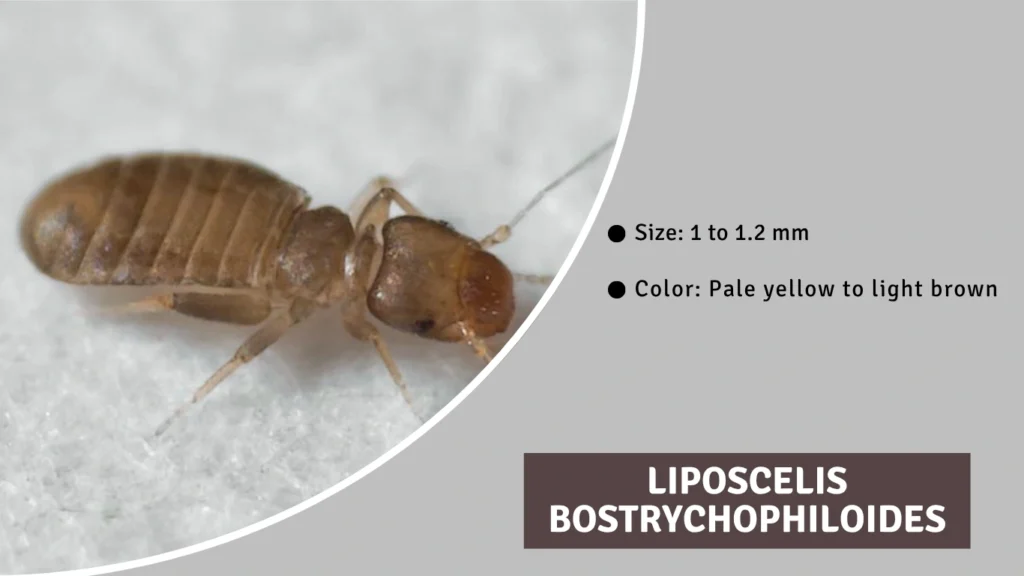
Liposcelis bostrychophiloides closely resembles L. bostrychophila but can be distinguished under microscopic examination. This species is less frequently reported but still found in stored food facilities and damp domestic settings.
Identification
- Size: 1 to 1.2 mm
- Color: Pale yellow to light brown
- Body: Soft, oval, and wingless
- Head: Slightly broader compared to body
- Features: Nearly translucent, requiring magnification for proper ID
Habitat
Typically inhabits food warehouses, kitchens, and areas with poorly ventilated storage. It hides in grain bins, under labels, and in crevices of furniture or bookshelves.
Behavior
This species tends to remain hidden and avoids disturbance. It reproduces efficiently under optimal humidity, contributing to contamination of dried foods, especially in sealed or improperly stored containers.
Diet
Feeds on molds, fine flour dust, fungal growth on cardboard, and starch-rich substances like book glue and wallpaper paste. It can become problematic in bulk food storage and retail packaging environments.
