
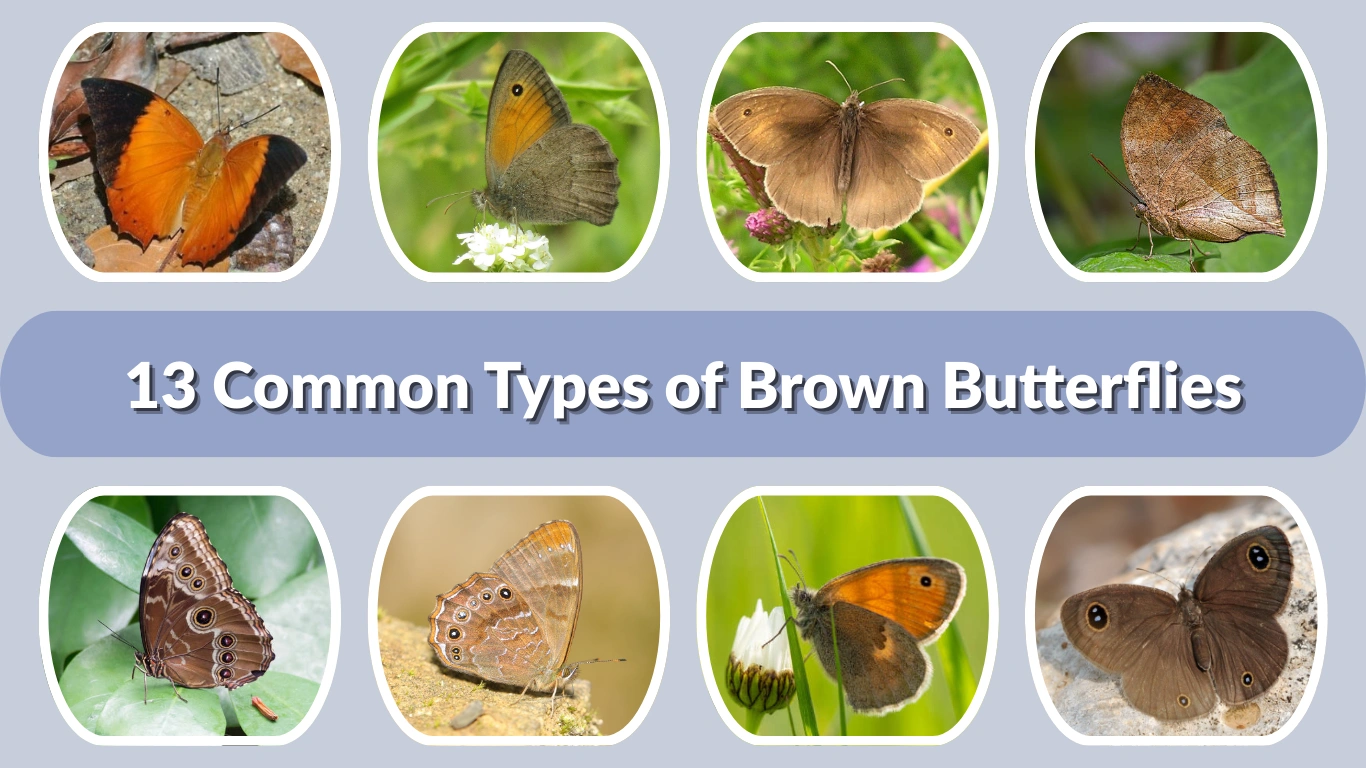
Brown butterflies are masters of camouflage, blending perfectly with tree bark, dry leaves, and forest floors. Found in grasslands, woodlands, forests, and meadows, these butterflies often display subtle patterns, eye spots, and earthy tones that help protect them from predators. Although less flashy than brightly colored species, brown butterflies are diverse, widespread, and fascinating, showing unique behaviors such as dusk flying, slow gliding, and close-to-ground movement.
1. Common Evening Brown
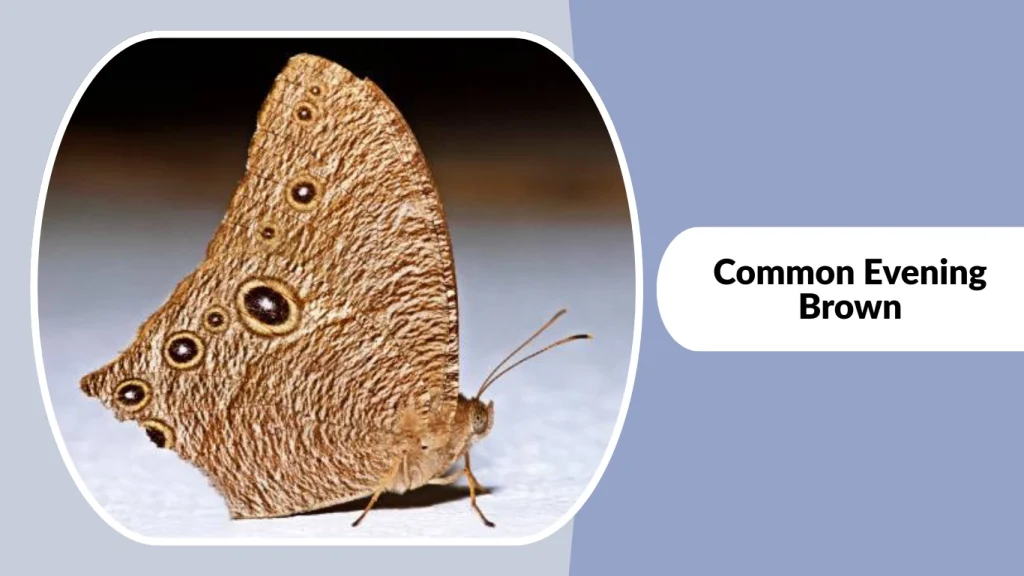
The Common Evening Brown is a large, earthy-toned butterfly best known for its preference for low light conditions. It is often seen flying at dusk, early morning, or in shaded forest paths, making it different from most day-active butterflies.
Identification
- Large-sized brown butterfly
- Dark chocolate to reddish-brown wings
- Prominent eye spots on forewings and hindwings
- Rounded wing shape
- Thick-bodied appearance
Color Pattern
The wings are rich brown with subtle variations from dark to reddish tones. Distinct eye spots with pale rings stand out clearly, especially on the underside, helping deter predators.
Habitat
Common Evening Browns are found in forests, grasslands, plantations, and shaded gardens. They prefer moist areas with tall grasses, which serve as larval host plants.
Behaviors
This species is most active during dawn and dusk. It flies slowly and close to the ground, often settling on tree trunks or leaf litter. Adults feed on tree sap, rotting fruit, and occasionally nectar.
2. Common Bushbrown

The Common Bushbrown is a medium-sized brown butterfly frequently seen fluttering close to the ground in shaded and grassy areas. Its subtle coloring allows it to blend easily with dry leaves and undergrowth.
Identification
- Medium-sized brown butterfly
- Dull brown wings with faint eye spots
- Rounded wing edges
- Slender body structure
- Eye spots more visible on underside
Color Pattern
The wings are light to dark brown with soft, muted tones. Small eye spots appear on the underside, helping the butterfly remain inconspicuous when at rest.
Habitat
Common Bushbrowns inhabit grasslands, forest edges, scrublands, and open woodland. They are especially common in areas with tall grasses.
Behaviors
This butterfly is a weak flier and usually stays low to the ground. It is active during daylight and often settles on grass blades or dry leaves for camouflage.
3. Large Oakbrown

The Large Oakbrown is a robust and forest-dwelling butterfly recognized for its deep brown coloration and strong presence in shaded woodland habitats. It is usually seen gliding slowly through forest paths.
Identification
- Large-sized brown butterfly
- Dark brown wings with pale bands
- Prominent eye spots on forewings
- Broad, rounded wing shape
- Thick and sturdy body
Color Pattern
The wings are dark chocolate brown with lighter brown or creamy bands across the forewings. Eye spots are bold and clearly visible, especially on the underside.
Habitat
Large Oakbrowns are commonly found in dense forests, wooded hills, and shaded valleys. They favor moist woodland environments with abundant leaf litter.
Behaviors
This species is a slow but steady flier. It often glides close to the ground and rests on tree trunks or forest floors, feeding mainly on sap and fallen fruit.
4. Dark Evening Brown
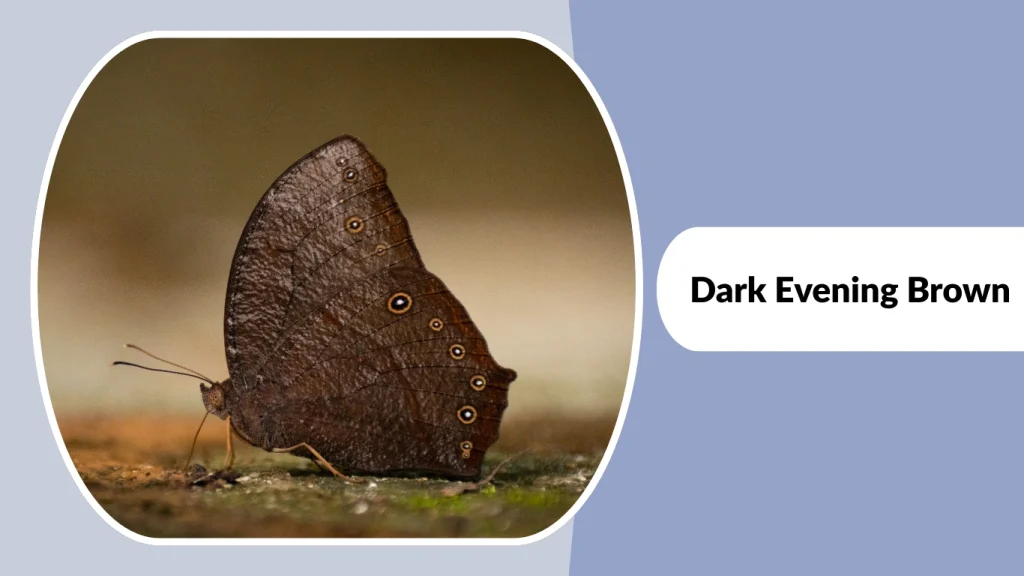
The Dark Evening Brown is a large and dusky butterfly closely related to the Common Evening Brown. It is well adapted to low-light conditions and is most noticeable during twilight hours.
Identification
- Large-sized brown butterfly
- Very dark brown to almost black wings
- Distinct eye spots on forewings and hindwings
- Rounded wing margins
- Heavy-bodied appearance
Color Pattern
The wings are deep brown with darker shading toward the edges. Well-defined eye spots with pale rings are more prominent on the underside, helping confuse predators.
Habitat
Dark Evening Browns inhabit dense forests, plantations, shaded grasslands, and woodland edges. They prefer humid areas with thick ground vegetation.
Behaviors
This butterfly is mainly active at dawn and dusk. It flies slowly and close to the ground, often resting on tree trunks, rocks, or leaf litter. Adults feed on tree sap, fermenting fruit, and decaying organic matter.
5. Common Five-ring
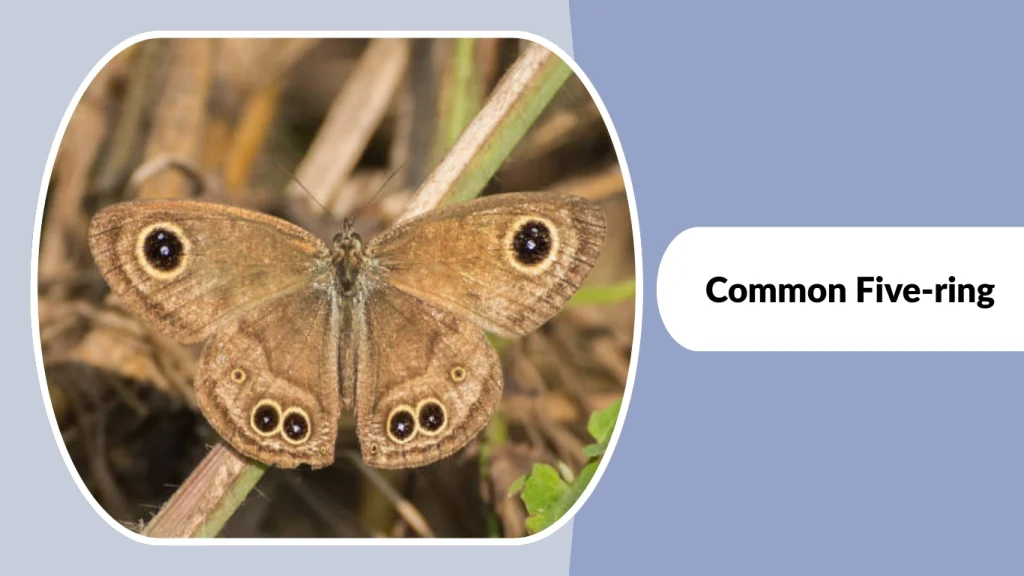
The Common Five-ring is a medium-sized brown butterfly named for the series of eye spots on its wings. It is a familiar species in grassy and lightly wooded areas.
Identification
- Medium-sized brown butterfly
- Five distinct eye spots on the underside
- Light to dark brown wing coloration
- Rounded wings with smooth edges
- Slim to average body build
Color Pattern
The wings are pale brown on the upper side, while the underside is lighter with clearly visible eye spots surrounded by pale rings. These markings help deter predators.
Habitat
Common Five-rings are found in grasslands, open forests, forest edges, and scrubby areas. They prefer places with tall grasses and moderate shade.
Behaviors
This butterfly flies weakly and stays close to the ground. It is most active during sunny periods and often rests on grass blades or dry leaves when not feeding.
6. Common Three-ring
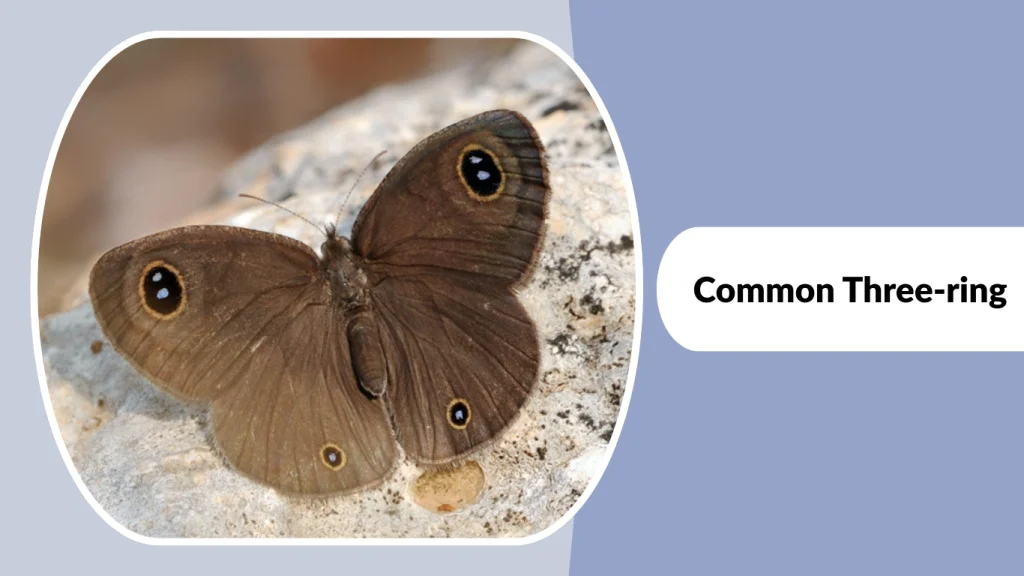
The Common Three-ring is a small to medium-sized brown butterfly easily identified by the trio of eye spots on its wings. It is widespread and often seen in open grassy habitats.
Identification
- Small to medium-sized brown butterfly
- Three prominent eye spots on the underside
- Light brown upper wings
- Rounded wing shape
- Slender body
Color Pattern
The upper wings are pale brown and mostly plain, while the underside is lighter with three clearly defined eye spots bordered by yellowish rings, offering effective predator deterrence.
Habitat
Common Three-rings inhabit grasslands, open woodlands, forest edges, and meadows. They prefer sunny areas with plenty of grasses.
Behaviors
This species is a weak, low flier and usually moves close to the ground. It frequently rests with wings closed and feeds on nectar, sap, and moisture from damp soil.
7. Bamboo Treebrown
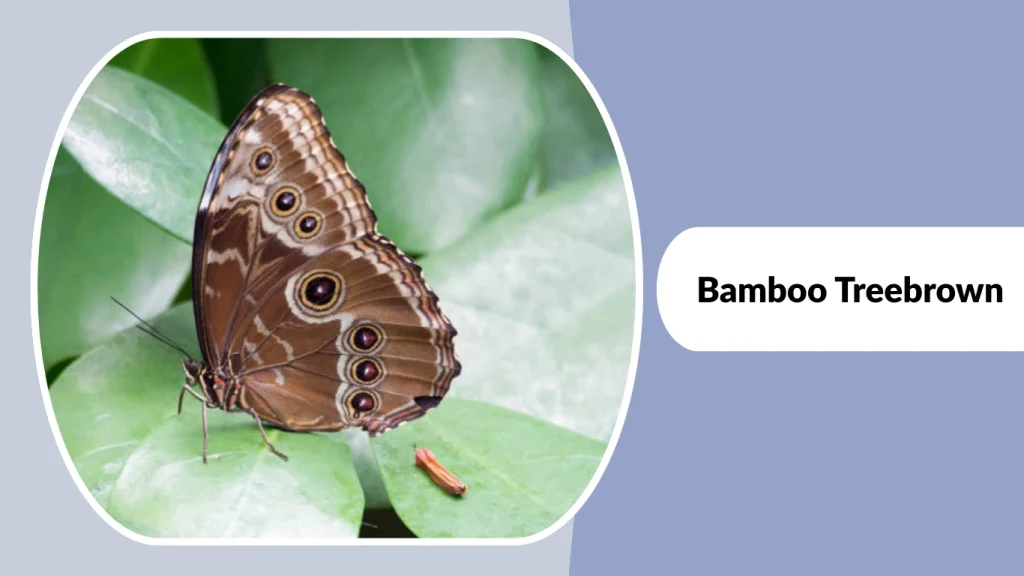
The Bamboo Treebrown is a forest-dwelling butterfly closely associated with bamboo habitats. Its earthy brown tones help it blend seamlessly into shaded woodland environments.
Identification
- Medium-sized brown butterfly
- Dark brown wings with subtle markings
- Faint eye spots on the underside
- Rounded wing margins
- Sturdy body structure
Color Pattern
The wings are deep brown with lighter brown shading and faint eye spots, more visible on the underside. The muted colors provide excellent camouflage against tree bark and dry leaves.
Habitat
This species is commonly found in bamboo forests, wooded hills, and shaded valleys. It prefers dense vegetation where bamboo is abundant.
Behaviors
Bamboo Treebrowns are slow and steady fliers. They often glide through shaded forest paths and rest on tree trunks or leaf litter, feeding mainly on sap and rotting fruit.
8. Chestnut Brown
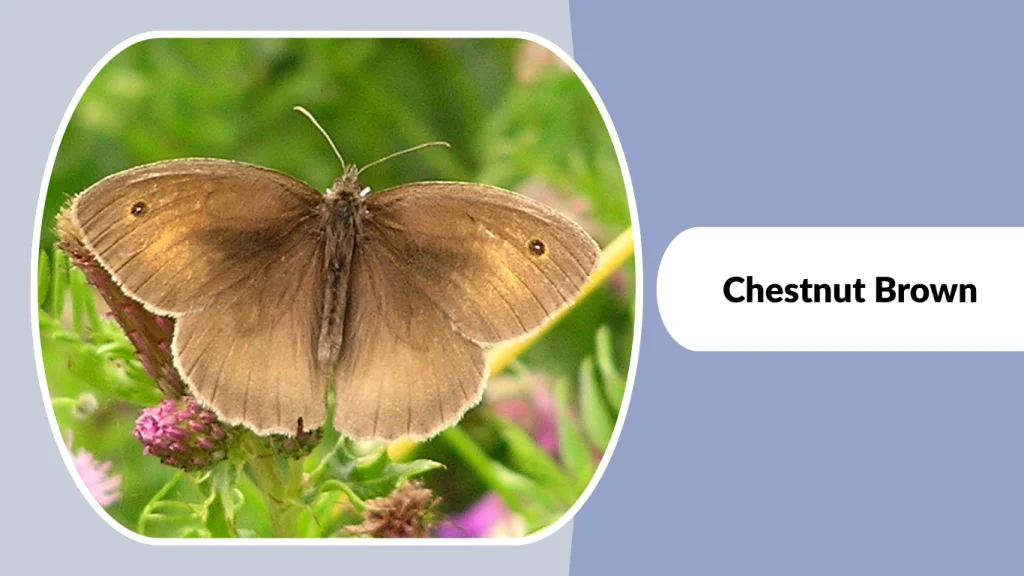
The Chestnut Brown is a graceful butterfly named for its rich, reddish-brown wing color. It is commonly seen in forested landscapes and wooded hills.
Identification
- Medium to large-sized brown butterfly
- Chestnut to reddish-brown wings
- Pale bands or patches on forewings
- Rounded wing edges
- Moderately thick body
Color Pattern
The wings show warm chestnut-brown tones with lighter bands or patches across the forewings. The underside is paler, often with soft eye spots and subtle markings.
Habitat
Chestnut Browns inhabit forests, forest edges, and hilly woodlands. They prefer shaded environments with moderate humidity.
Behaviors
This butterfly flies smoothly and calmly through forest paths. It often rests on tree trunks or foliage and feeds on tree sap, fallen fruit, and occasionally nectar.
9. Common Woodbrown
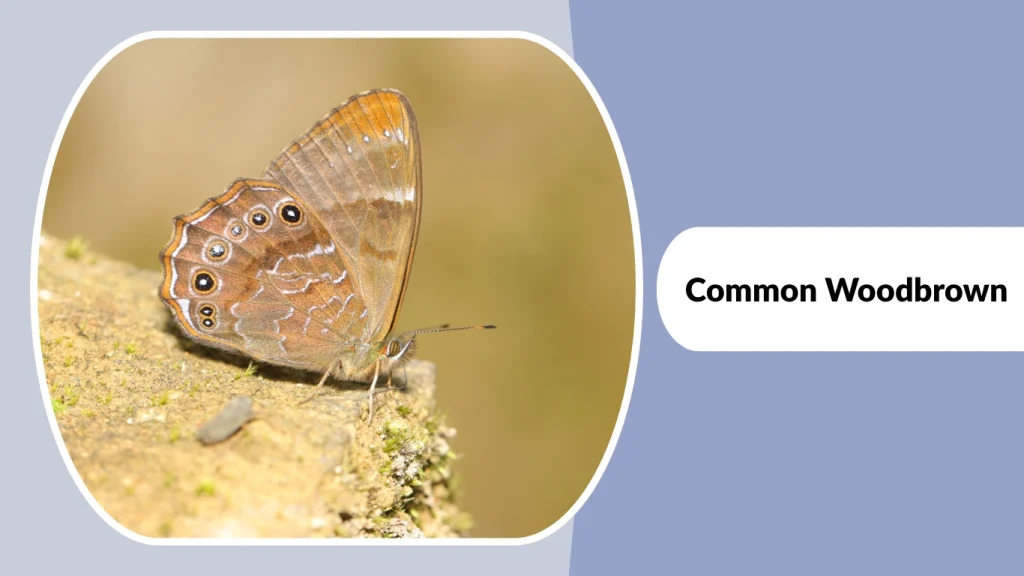
The Common Woodbrown is a medium-sized butterfly well adapted to shaded woodland habitats. Its muted brown coloration helps it blend easily into forest surroundings.
Identification
- Medium-sized brown butterfly
- Dark brown wings with pale bands
- Distinct eye spots on forewings
- Rounded wing shape
- Solid, compact body
Color Pattern
The wings are dark brown with lighter brown or cream-colored bands across the forewings. Eye spots are more noticeable on the underside and serve as a defensive feature.
Habitat
Common Woodbrowns are found in forests, woodland edges, and shaded trails. They favor areas with thick undergrowth and leaf litter.
Behaviors
This species is a slow and steady flier. It often glides near the forest floor and rests on tree trunks or leaves, feeding mainly on sap and rotting fruit.
10. Dusky Meadow Brown
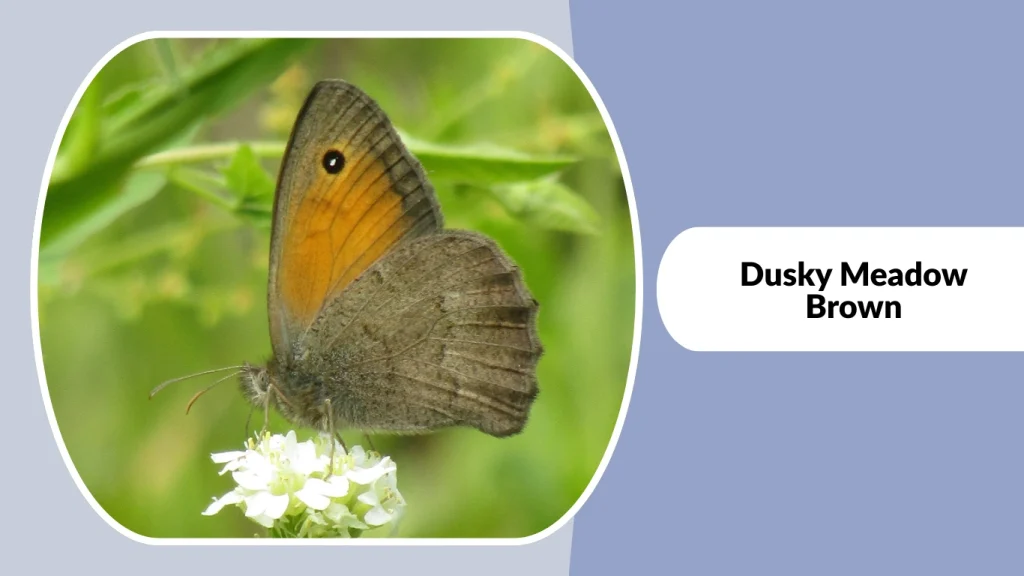
The Dusky Meadow Brown is a small, subtle butterfly commonly found in open grassy areas. Its muted coloration allows it to blend easily with dry grass and soil.
Identification
- Small to medium-sized brown butterfly
- Dull brown wings with faint eye spots
- Rounded wing margins
- Slim body structure
- Eye spots clearer on underside
Color Pattern
The wings are soft brown with minimal markings on the upper side. The underside shows slightly paler tones with faint eye spots that provide basic predator deterrence.
Habitat
Dusky Meadow Browns inhabit meadows, grasslands, open fields, and grassy woodland edges. They prefer sunny areas with abundant grasses.
Behaviors
This butterfly flies weakly and stays close to the ground. It is active during daylight and often rests on grass blades or dry leaves between short flights.
11. Small Heath
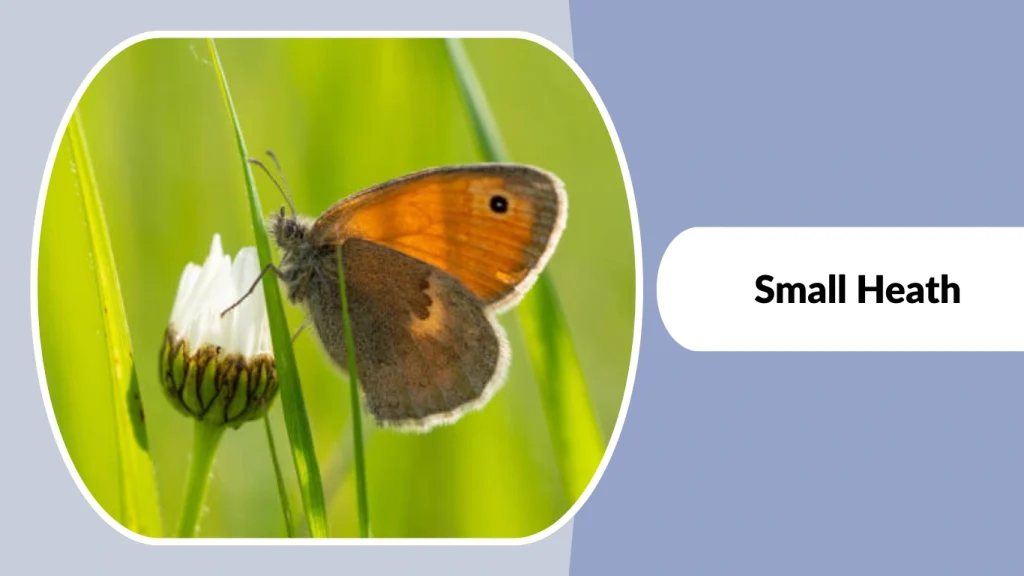
The Small Heath is a small and delicate brown butterfly known for its subtle markings and preference for open grassy landscapes. It is often seen fluttering low over grass.
Identification
- Small-sized brown butterfly
- Pale brown wings with small eye spots
- Rounded wing shape
- Slender body
- Eye spots more visible on underside
Color Pattern
The wings are light brown with a single dark eye spot surrounded by a pale ring on each forewing. The underside is slightly duller, helping the butterfly blend into dry grass.
Habitat
Small Heaths are commonly found in grasslands, meadows, dunes, and open fields. They favor dry, open areas with short grasses.
Behaviors
This butterfly flies weakly and close to the ground. It is most active in warm, sunny weather and often rests with wings closed on grass stems or bare ground.
12. Common Crow
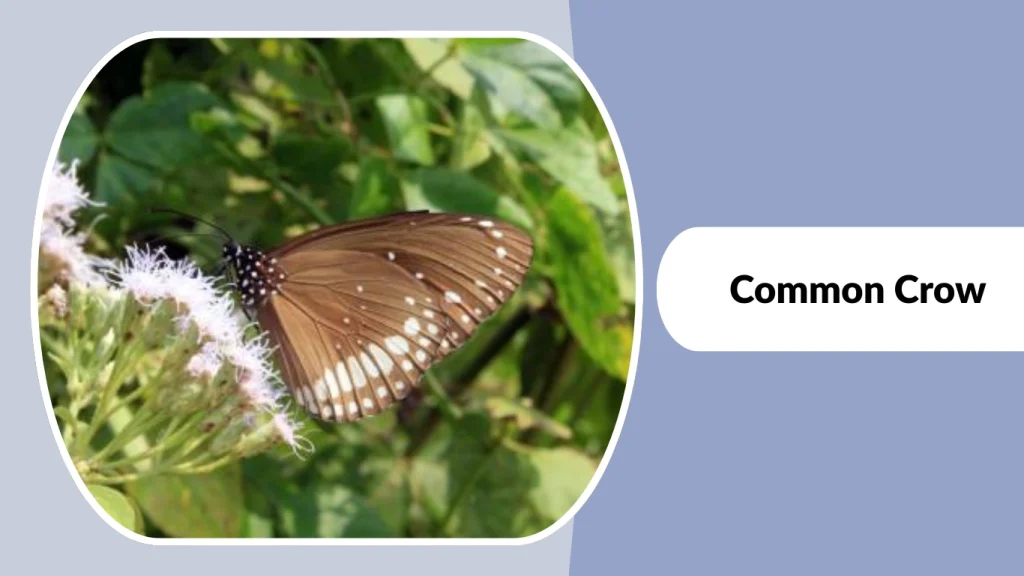
The Common Crow is a large, slow-flying butterfly often mistaken for a moth due to its dark, plain appearance. Despite its name, it is widespread and easy to recognize in open and forested areas.
Identification
- Large-sized butterfly
- Dark brown to black wings
- No tail extensions
- Broad, rounded wings
- Thick, heavy body
Color Pattern
The wings are uniformly dark brown to black with a dull, smoky appearance. Faint pale spots may be visible along the wing margins, especially on the underside.
Habitat
Common Crows are found in forests, forest edges, gardens, coastal areas, and open countryside. They adapt well to human-modified environments.
Behaviors
This species is a slow and steady flier, often gliding for long periods. It feeds on nectar and is known to be unpalatable to predators, flying openly without much concealment.
13. Tawny Rajah
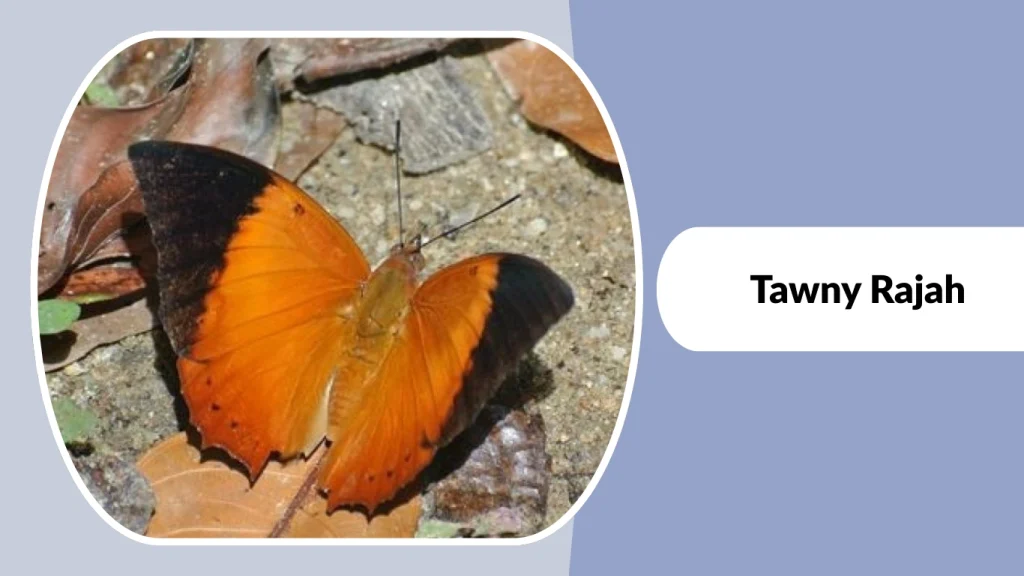
The Tawny Rajah is a striking brown butterfly admired for its warm orange-brown tones and elegant wing patterns. It is often seen resting quietly in shaded forest areas.
Identification
- Medium to large-sized butterfly
- Tawny to orange-brown wings
- Dark brown borders on wings
- Rounded wing shape
- Moderately robust body
Color Pattern
The wings display rich tawny-brown coloration with darker margins that frame the wings. The underside is paler with soft brown and beige patterns that provide camouflage.
Habitat
Tawny Rajahs inhabit tropical forests, wooded hills, and shaded valleys. They prefer undisturbed habitats with dense vegetation.
Behaviors
This butterfly is calm and slow-flying. It often perches on leaves or tree trunks and feeds on nectar, sap, and occasionally fallen fruit.
