
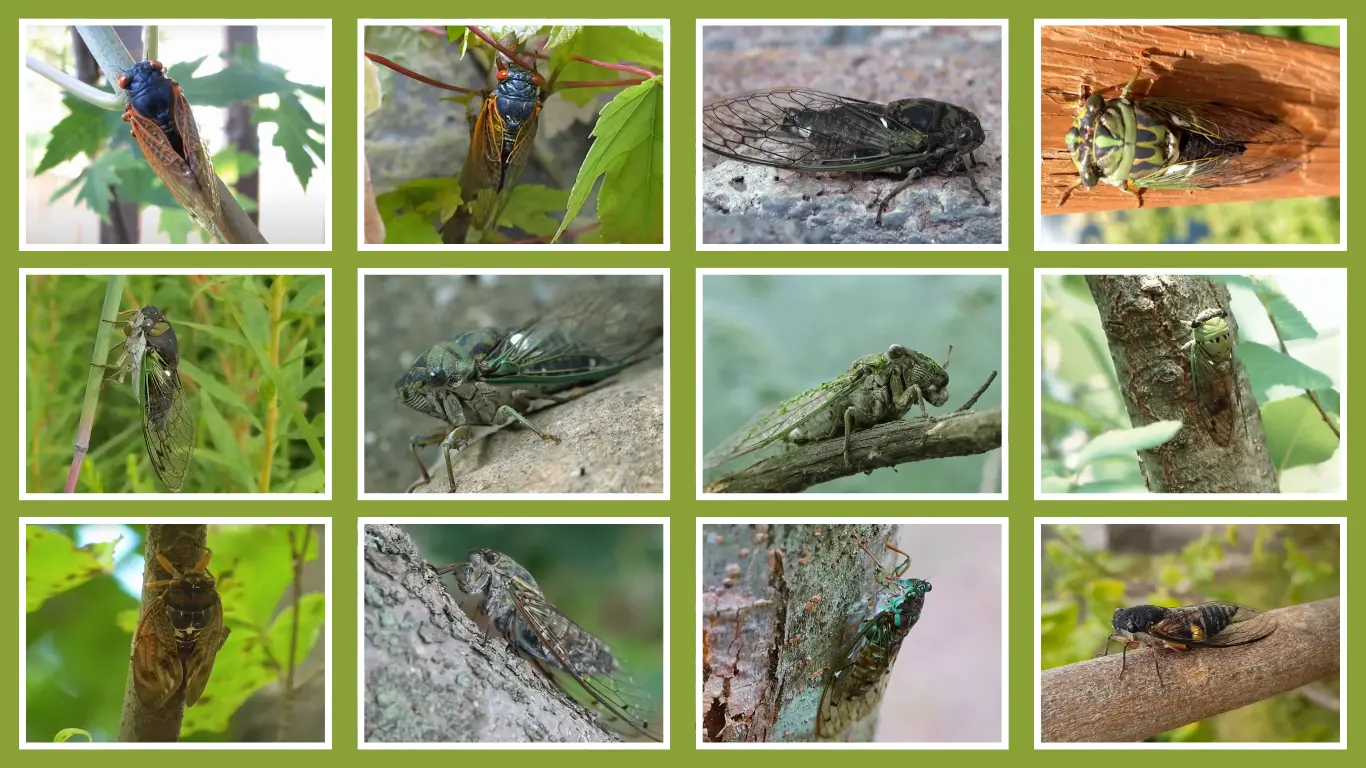
Cicadas are loud, fascinating insects found all over the world. Some appear every summer, while others emerge after 13 or 17 years. Each type has its own look, sound, and behavior.
In this article, you’ll discover 25 common cicada species, how to identify them, and where they’re found—from North America to Asia and Australia.
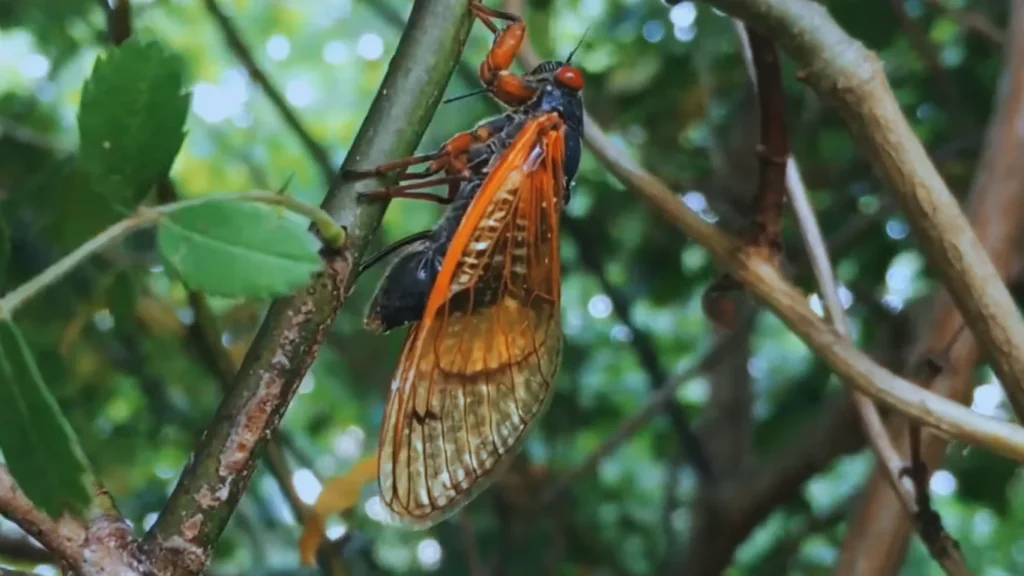
1. Magicicada septendecim

Magicicada septendecim is one of the most well-known periodical cicadas in North America. It is famous for its synchronized 17-year emergence in massive numbers, creating a loud and buzzing environment during its short adult phase.
Appearance & Size
This cicada has a black body, bright red eyes, and orange-veined transparent wings. The size ranges from 1 to 1.5 inches in length. Males and females look similar, but males have a larger tymbal for producing sound.
Identification
- Red eyes
- Orange wing veins
- Black body with slight orange markings
- 17-year life cycle
- Loud buzzing song in late spring to early summer
Habitat & Distribution
They are mainly found in the eastern and midwestern United States, especially in forested areas with mature trees.
Life Cycle & Behavior
Magicicada septendecim spends 17 years underground as a nymph, feeding on tree roots. When ready, they emerge in huge numbers, shed their nymph skins, and live for 4–6 weeks as adults to mate and lay eggs. Their emergence protects them by overwhelming predators through sheer volume.
Notable Facts
- Part of Brood X, one of the largest cicada broods
- Only appears every 17 years
- Their chorus can reach over 100 decibels
2. Magicicada cassini
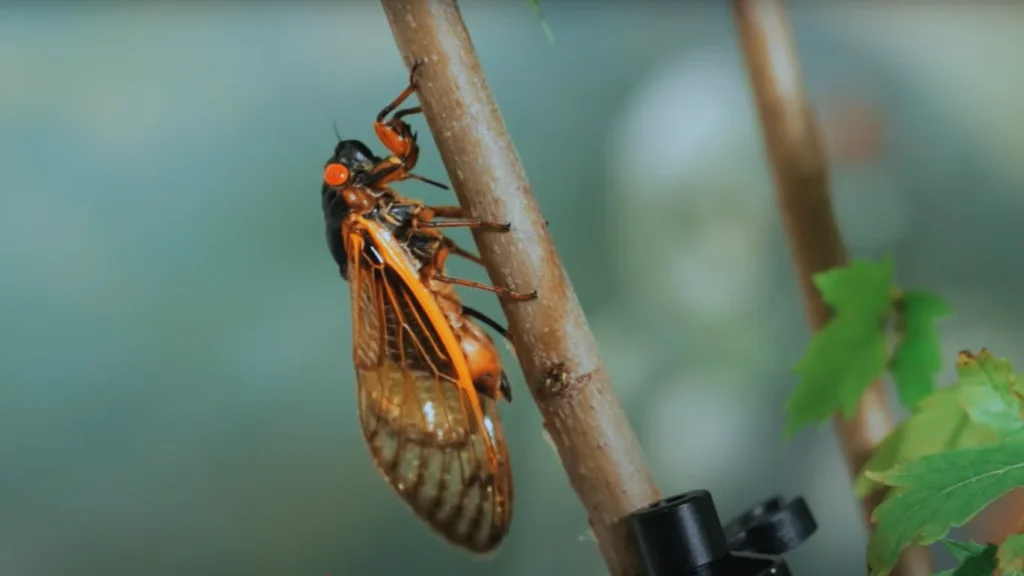
Magicicada cassini is another 17-year periodical cicada known for emerging in large groups. It’s slightly smaller than M. septendecim and produces a rapid ticking sound in chorus with others.
Appearance & Size
It has a black body, red eyes, and clear wings with orange veins. The abdomen is usually all black, which helps differentiate it from other species. Adult size is about 1 inch.
Identification
- Solid black abdomen
- Red eyes and orange wing veins
- Smaller than M. septendecim
- 17-year cycle
- Ticking or buzzing call in chorus
Habitat & Distribution
Common in the central and eastern U.S., especially in oak and hardwood forests.
Life Cycle & Behavior
Spends 17 years underground. Emerges in massive numbers to reproduce. Males form large synchronized choruses to attract females. After mating, females lay eggs in tree branches.
Notable Facts
- Known for synchronized group calling
- Often emerges with other 17-year species
- Sometimes called the “ticking cicada”
3. Magicicada septendecula
This 17-year cicada species is quieter and less common than others in the Magicicada group. It usually appears in the same areas as M. cassini and M. septendecim but is harder to spot.
Appearance & Size
Has red eyes, a black body, and orange-tinted wings. Slightly smaller and slimmer than other periodical cicadas. The abdominal pattern is a mix of black and orange.
Identification
- Mix of black and orange on the abdomen
- Smaller and thinner body
- Red eyes and orange-veined wings
- Emerges every 17 years
- Less vocal than other species
Habitat & Distribution
Found in overlapping regions with other 17-year cicadas in the eastern U.S., often in mixed deciduous forests.
Life Cycle & Behavior
Lives underground for 17 years. Emerges to mate and lay eggs, though in fewer numbers. More solitary than M. cassini or M. septendecim.
Notable Facts
- Rarely seen or heard during emergences
- Difficult to distinguish without close inspection
- Less studied compared to other Magicicada
4. Magicicada tredecim

Magicicada tredecim is a 13-year periodical cicada, known for its deeper-pitched song and larger size compared to other species in its group.
Appearance & Size
It has a black thorax, bright red eyes, and orange-tinted wings. The underside of the abdomen is mostly orange, making it easy to tell apart. It grows up to 1.5 inches.
Identification
- Orange abdominal underside
- Red eyes and orange wing veins
- Larger than most Magicicada
- 13-year life cycle
- Deep-pitched buzzing call
Habitat & Distribution
Found mostly in the southern U.S., especially in areas with warm climates and mature forests.
Life Cycle & Behavior
Emerges every 13 years in large broods. Nymphs feed underground on tree roots. After emerging, adults mate and die in a few weeks.
Notable Facts
- Part of Brood XIX and XXIII
- Easy to identify by call pitch and orange belly
- Less widespread than 17-year species
5. Magicicada tredecassini

A 13-year cicada species similar to M. cassini, known for its synchronized chorus and mass emergence in southern regions of the U.S.
Appearance & Size
It’s small with a black body, red eyes, and orange-wing veins. The abdomen is solid black. It typically grows just under 1 inch in length.
Identification
- Solid black abdomen
- Small and slender
- 13-year emergence cycle
- Loud ticking group call
- Red eyes, orange wing veins
Habitat & Distribution
Found in southern and midwestern U.S., commonly in lowland hardwood forests.
Life Cycle & Behavior
Lives underground for 13 years. Emerges in large numbers, sings in chorus, and mates quickly. Females lay eggs in trees before dying.
Notable Facts
- Sings in synchronized rhythm
- Similar behavior to M. cassini
- Appears with other 13-year cicadas
6. Magicicada tredecula

This 13-year species is quiet and rare, typically emerging alongside other Magicicada types but in much smaller numbers.
Appearance & Size
Small and slender with a black body, red eyes, and slightly orange-tinged wings. Its abdomen has some orange markings, but they vary between individuals.
Identification
- Mixed black and orange abdomen
- Small body with red eyes
- Orange-veined wings
- 13-year cycle
- Subtle and less vocal
Habitat & Distribution
Native to the southern and southeastern U.S., often in areas with warm climate and old forests.
Life Cycle & Behavior
Stays underground for 13 years. Emerges quietly compared to others. Mating and egg-laying occur quickly, and their lower numbers help avoid predators.
Notable Facts
- Often missed during emergences
- Low population density
- Very similar to M. septendecula
7. Neotibicen canicularis (Dog-day cicada)
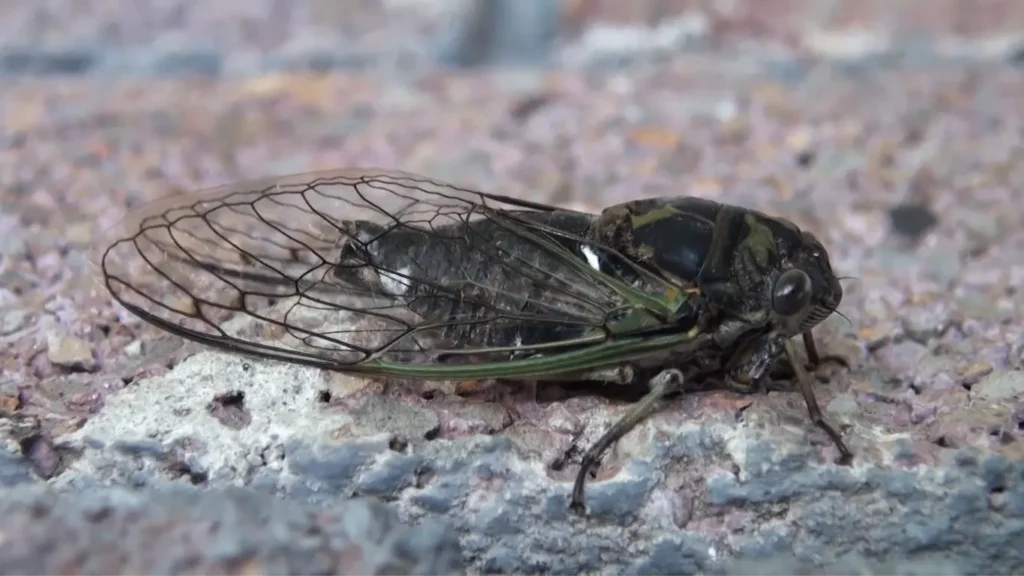
This annual cicada is common across North America and is named for its late-summer emergence, often during the hottest “dog days” of summer.
Appearance & Size
It has a dark green and black body with pale green wing veins. Adults grow about 1 to 1.25 inches long, with a sturdy build.
Identification
- Dark green body with black markings
- Greenish clear wings
- White underside
- Large and stout
- Loud buzzing call in late summer
Habitat & Distribution
Widespread across the eastern and central U.S., in wooded areas, parks, and neighborhoods with mature trees.
Life Cycle & Behavior
Unlike periodical cicadas, dog-day cicadas emerge every year. Their life cycle ranges from 2 to 5 years, but some individuals mature annually. Males sing from treetops to attract mates.
Notable Facts
- Among the loudest cicadas
- Frequently heard but not easily seen
- Not part of large broods
8. Neotibicen tibicen (Swamp cicada)

Often found in moist or swampy areas, this large annual cicada has a distinctive green and black body.
Appearance & Size
It has a shiny black body with green stripes and clear wings. It can reach up to 1.5 inches long. Its coloring helps it blend into tree bark and foliage.
Identification
- Black body with green markings
- Long, transparent wings
- Greenish underside
- Found in wetland areas
- Loud, pulsating song
Habitat & Distribution
Prefers wet, wooded environments in the southeastern and eastern U.S.
Life Cycle & Behavior
Spends a few years underground before emerging in summer. Adults call during the day. Males sing from high branches, and females lay eggs in twigs.
Notable Facts
- Also called morning cicada due to its early calling
- Often emerges after summer rain
- One of the first cicadas to call each day
9. Neotibicen linnei (Linne’s cicada)

A widespread and recognizable cicada named after Carl Linnaeus. It’s known for its long, rhythmic song and urban presence.
Appearance & Size
It has a black body with green and tan markings, clear wings with green veins, and grows around 1.25 inches long. The head is broad, and the face often appears dark.
Identification
- Green and black body
- Large eyes and wide head
- Tan coloring on wing edges
- Rhythmic buzzing call
- Seen in cities and suburbs
Habitat & Distribution
Found throughout much of the eastern U.S., including urban parks, forests, and backyards.
Life Cycle & Behavior
Emerges annually in late summer. Males sing from trees in a consistent pattern. Females are drawn to the song and lay eggs in tree branches.
Notable Facts
- Common in residential areas
- Calls start slow and build to a steady buzz
- One of the easiest cicadas to hear in summer
10. Neotibicen pruinosus (Scissor grinder cicada)

Known for its distinct buzzing call that sounds like a pair of scissors being sharpened, this cicada is active in the heat of summer.
Appearance & Size
It has a dark green body with black markings and a frosty, white dust-like coating (pruinose areas) on the abdomen. Grows around 1.25 to 1.5 inches in length.
Identification
- Green and black body
- White powdery coating on the sides
- Clear wings with greenish veins
- Song sounds like a grinding tool
- Found in late summer
Habitat & Distribution
Common in central and eastern U.S., especially in open woods and urban areas with tall trees.
Life Cycle & Behavior
Emerges annually. Males call during hot afternoons and evenings. They are active from July through September.
Notable Facts
- Named for its unique sound
- Very well camouflaged on tree bark
- Heard more often than seen
11. Neotibicen winnemanna
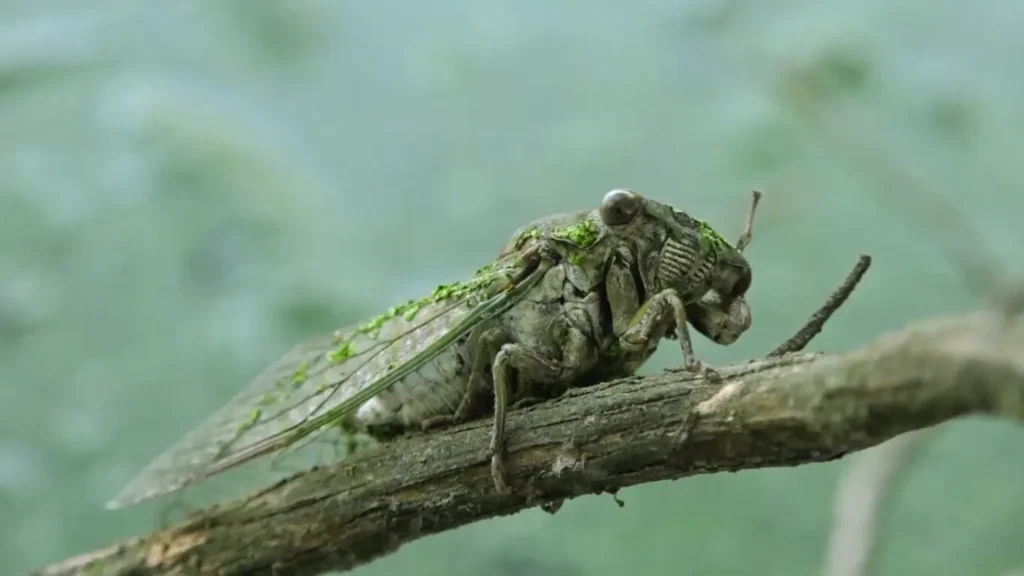
This cicada is found mostly in the southeastern United States and is often mistaken for other species due to its similar appearance and call.
Appearance & Size
Has a black body with olive green markings and clear wings. Medium to large in size, around 1.25 inches long. It also has some pruinose areas on its sides.
Identification
- Olive green and black body
- Pruinose sides
- Clear wings with dark veins
- Call resembles a rising and falling buzz
- Urban and rural environments
Habitat & Distribution
Found in southeastern states like Georgia, South Carolina, and Alabama. Prefers tall trees in both cities and rural areas.
Life Cycle & Behavior
Emerges yearly in summer. Males produce a fluctuating buzzing sound to attract mates.
Notable Facts
- Often confused with Linne’s cicada
- Part of a complex group of closely related cicadas
- May hybridize with nearby species
12. Neotibicen lyricen (Lyric cicada)

Named for its musical, warbling call, this cicada is heard across eastern forests and woodlands.
Appearance & Size
It has a dark brown to black body with green and white markings, and a robust build. Grows up to 1.5 inches long.
Identification
- Dark body with bold green patterns
- Broad head and clear wings
- Pruinose patches on sides and underside
- Musical, wavering song
- Found in wooded areas
Habitat & Distribution
Widespread in eastern U.S., especially in hardwood forests and shaded suburban areas.
Life Cycle & Behavior
An annual cicada that emerges in summer. Males sing from high branches. Adults are active mostly in the afternoons.
Notable Facts
- Song has a “bubbling” or “warbling” tone
- One of the more musical-sounding species
- Often overlaps range with other Neotibicen species
13. Neotibicen dorsatus (Bush cicada)

Neotibicen dorsatus is a striking cicada found in grasslands and prairies, known for its bold markings and loud call.
Appearance & Size
It has a bright yellow and black body with clear wings and an overall robust structure. Adults grow up to 1.5 inches long. The contrast in color makes it easy to spot.
Identification
- Bright yellow and black coloration
- Large and sturdy body
- Clear wings with dark veins
- Found in open grassy habitats
- Loud, rattling call
Habitat & Distribution
Primarily found in central U.S., especially in prairies, fields, and grassland edges.
Life Cycle & Behavior
Emerges in late summer. Males perch on low vegetation to sing. This species is less common in wooded areas.
Notable Facts
- Prefers grasslands over forests
- Call resembles a quick mechanical rattle
- Among the most colorful cicadas in the U.S.
14. Neotibicen superbus (Superb cicada)
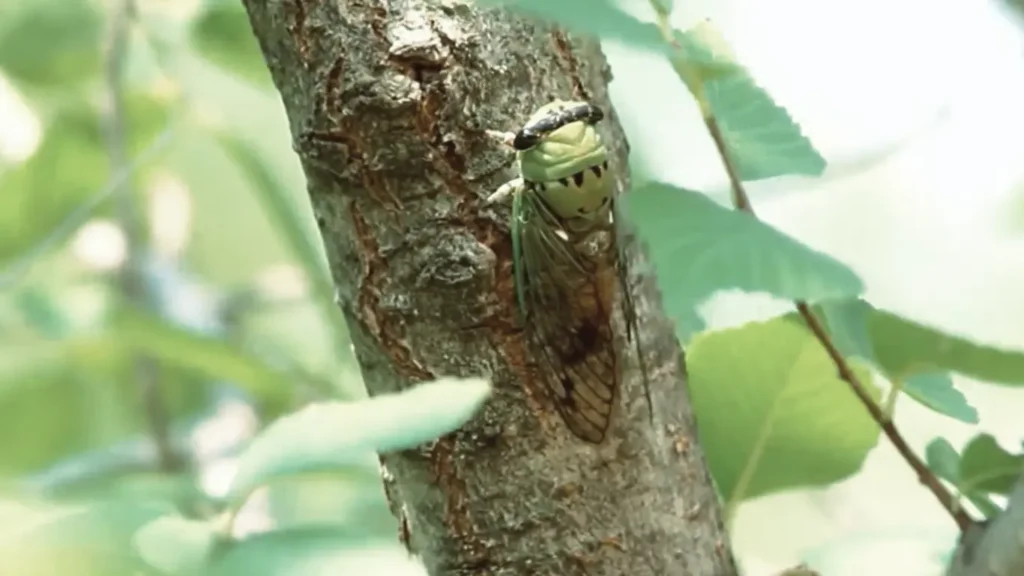
As its name suggests, this cicada is beautifully patterned and one of the more eye-catching Neotibicen species.
Appearance & Size
It features a green and brown body with bold patterns, orange highlights, and a frosty look from pruinose patches. Adults reach around 1.25 to 1.5 inches in size.
Identification
- Olive green, brown, and orange markings
- Pruinose patches on abdomen
- Thick, strong body
- Clear wings with orange-brown veins
- Call has a rising and falling tone
Habitat & Distribution
Found in the southwestern and central U.S., especially in dry woodlands and scrubby areas.
Life Cycle & Behavior
Annual emergence in late summer. Males sing loudly from trees during the hottest parts of the day.
Notable Facts
- Often admired for its bright colors
- Strong flyer and difficult to catch
- Call often mistaken for other species
15. Neotibicen robinsonianus (Robinson’s cicada)

A lesser-known but visually similar species, it lives in overlapping regions with other Neotibicen cicadas and is often overlooked.
Appearance & Size
Dark green and black body with pale pruinose patches on the sides and a whitish underside. Around 1.25 inches long.
Identification
- Green and black upper body
- Pale sides with white powder
- Strong, clear wings
- Subtle buzzing song
- Prefers wooded environments
Habitat & Distribution
Found in the southeastern U.S., especially in oak and pine woodlands.
Life Cycle & Behavior
Emerges annually. Males sing in the afternoons, often mixed in with other cicada species.
Notable Facts
- Often confused with N. lyricen or N. linnei
- Harder to hear due to softer call
- Usually found high in trees
16. Cryptotympana atrata (Large black cicada)

A famous cicada across East Asia, especially in China, Korea, and Japan, known for its loud, continuous buzzing.
Appearance & Size
It has a glossy black body with dark transparent wings. Large in size, it can grow up to 2 inches long. The wings are often slightly tinted.
Identification
- Shiny black body
- Dark transparent wings
- Red or dark-brown eyes
- Very large size
- Constant, droning call
Habitat & Distribution
Common in East Asia: China, Korea, Japan, and Taiwan. Found in cities, parks, forests, and gardens.
Life Cycle & Behavior
Emerges in summer, especially after the rainy season. Males produce an intense, long-lasting buzzing sound to attract females.
Notable Facts
- Among the loudest cicadas in Asia
- Often seen in Japanese summer festivals
- Symbol of summer in East Asian culture
17. Graptopsaltria nigrofuscata (Brown cicada)

Another widespread East Asian cicada, famous in Japan for its sharp, rhythmic call during summer.
Appearance & Size
Brown body with dark patterns, dark green or brownish wings, and a slightly smaller size—around 1.25 inches long.
Identification
- Brown body with black markings
- Short, clear wings
- Red or brown eyes
- Rhythmic, repetitive chirping
- Active in July and August
Habitat & Distribution
Native to Japan, Korea, and China. Found in forests, shrines, and residential areas.
Life Cycle & Behavior
Annual cicada that emerges in early summer. Males perch on trees and produce a “min-min” call.
Notable Facts
- Very common in Japanese cities
- Known for a start-stop buzzing call
- Frequently featured in anime and local culture
18. Meimuna opalifera
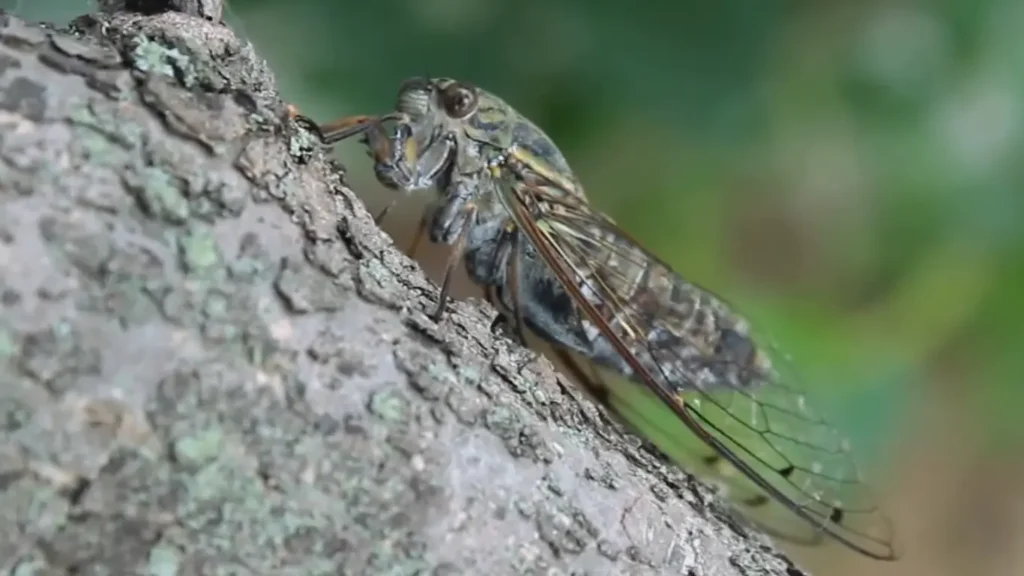
This small and musical cicada is often heard before it’s seen and is widespread in East Asia, especially Japan and Taiwan.
Appearance & Size
It has a slender greenish-brown body, with clear wings that reflect a bluish tint. Grows up to about 1 inch in size.
Identification
- Greenish body with shiny wings
- Blue or iridescent reflection in wings
- Small and slender
- Fast, high-pitched buzzing
- Appears mid to late summer
Habitat & Distribution
Found in Japan, Taiwan, and eastern China. Prefers forests, parks, and mountainous regions.
Life Cycle & Behavior
Emerges annually in mid to late summer. Males produce a rising and falling trill. Often heard in early morning and evening.
Notable Facts
- Known for crystal-like wing shine
- Call is high-pitched and fast
- Common but often hidden in trees
19. Platypleura kaempferi

A beautifully patterned cicada found in parts of East Asia, especially recognized for its colorful wings and strong call.
Appearance & Size
It has a reddish-brown body with intricate markings and dark-tinted wings with orange and black patterns. It grows around 1.2 to 1.4 inches in length.
Identification
- Reddish-brown body
- Tinted wings with orange-black designs
- Medium size
- Bold wing patterns
- Loud, vibrating call
Habitat & Distribution
Found in China, Japan, and Korea, especially in hilly or mountainous forests.
Life Cycle & Behavior
Emerges annually during warm months. Males sing from branches during the afternoon heat, producing a long, mechanical-like buzz.
Notable Facts
- Eye-catching wing patterns
- One of the more colorful Asian cicadas
- Easily recognized by both sound and look
20. Tanna japonensis

A lesser-known but striking cicada found in Japan and East Asia, often active in late summer.
Appearance & Size
It has a greenish-brown body, wide head, and rounded clear wings. Slightly smaller than other cicadas, measuring about 1 inch.
Identification
- Green-brown compact body
- Rounded, clear wings
- Short and loud bursts of sound
- Small and agile
- Seen in late summer
Habitat & Distribution
Native to Japan, especially in forests, suburban gardens, and hilly areas.
Life Cycle & Behavior
Emerges in mid to late summer. Males emit short, repetitive buzzes. Often heard in forests and near bamboo groves.
Notable Facts
- Fast-moving and hard to spot
- One of the latest summer callers
- Often found with other cicada species
21. Kikihia scutellaris (New Zealand green cicada)

A native of New Zealand, this bright green cicada is famous for its vibrant color and sharp, piercing call.
Appearance & Size
Bright green body with pale yellow or white markings and clear wings. Medium-sized, about 1 inch long.
Identification
- Vivid green coloring
- Yellow-white wing veins
- Distinct buzzing call
- Active during warm sunny days
- Native to New Zealand
Habitat & Distribution
Found throughout New Zealand, in forests, meadows, and gardens.
Life Cycle & Behavior
Emerges in the Southern Hemisphere’s summer months. Males sing during the day from shrubs and tree branches.
Notable Facts
- Bright green helps camouflage in leaves
- Commonly heard across rural NZ
- One of the most familiar cicadas in the country
22. Maoricicada hamiltoni

A mountain cicada native to New Zealand, known for its high-altitude habitat and short, high-pitched calls.
Appearance & Size
Small and dark, with black or brown body and slightly patterned wings. Typically around 0.8 to 1 inch long. Wings may have a faint tint.
Identification
- Dark brown or black body
- Subtle wing markings
- Small in size
- High-pitched, brief calls
- Found in alpine regions
Habitat & Distribution
Native to New Zealand’s South Island, especially in mountain and subalpine areas.
Life Cycle & Behavior
Emerges during warm summer days. Males sing rapidly, usually from rocks or low shrubs in open areas.
Notable Facts
- One of the highest-living cicadas in NZ
- Adapts well to cold and windy conditions
- Often silent in colder parts of the day
23. Psaltoda moerens (Red-eye cicada)
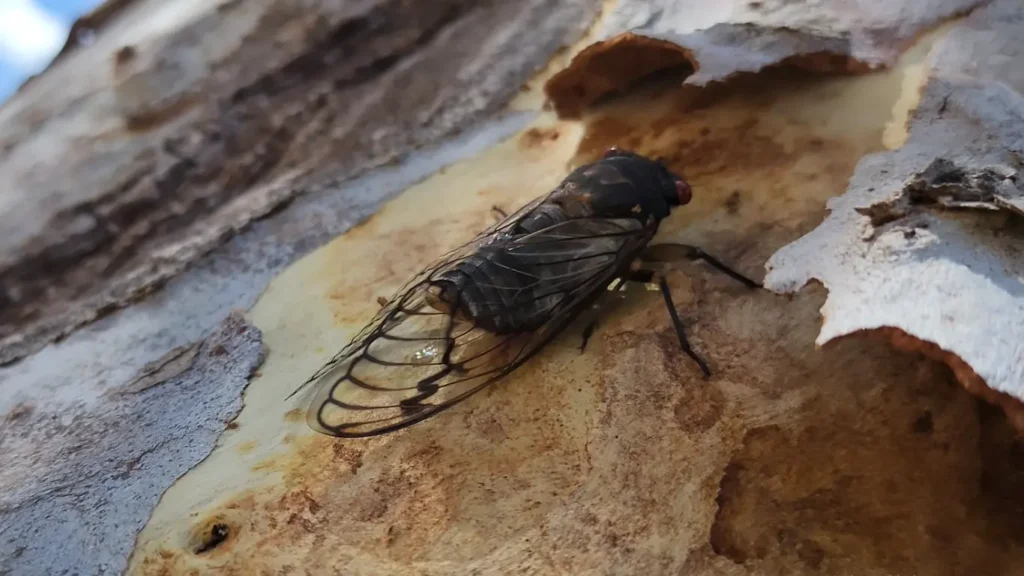
A well-known cicada in Australia, notable for its bright red eyes and loud, rattling song.
Appearance & Size
Black body with greenish markings and striking red eyes. Clear wings with green veins. Size ranges from 1.2 to 1.5 inches.
Identification
- Bright red eyes
- Green-veined clear wings
- Loud, rattling call
- Common in summer
- Urban and forest presence
Habitat & Distribution
Widespread in eastern Australia, especially in suburban gardens and forests.
Life Cycle & Behavior
Emerges during hot summer days. Males are highly vocal, often calling from trees at midday.
Notable Facts
- One of the noisiest Australian cicadas
- Active during Christmas season
- Easily spotted due to eye color
24. Psaltoda claripennis

A close relative of the red-eye cicada, this species is slightly quieter and less widely known but still common in parts of Australia.
Appearance & Size
Dark green and brown body with clear wings. Slightly smaller than Psaltoda moerens, around 1.2 inches.
Identification
- Dark, olive-toned body
- Clear wings without strong color
- Softer, continuous buzzing
- Smaller than red-eye cicada
- More common in quiet wooded areas
Habitat & Distribution
Found in eastern and southeastern Australia, especially in quiet bushlands and natural reserves.
Life Cycle & Behavior
Annual emergence during the Australian summer. Males call during calm, sunny days.
Notable Facts
- Name means “clear-winged”
- Less aggressive caller than its relatives
- Often overlooked due to quietness
25. Thopha saccata (Double drummer)

Australia’s largest cicada, known for its deep, drumming call that echoes through eucalyptus forests.
Appearance & Size
Large and bulky with brown and white body and large, transparent wings. Can grow over 2 inches long.
Identification
- Very large size
- Brown and white body patterns
- Powerful, drum-like call
- Transparent wings with strong veins
- Found in eucalyptus areas
Habitat & Distribution
Native to eastern Australia, especially in eucalyptus forests and woodlands.
Life Cycle & Behavior
Emerges during summer. Males perch high in trees and produce one of the deepest, loudest cicada calls.
Notable Facts
- Loudest insect in Australia
- Named for the drumming sound
- Impressive in both size and sound
