

Damselflies are slender, delicate insects belonging to the suborder Zygoptera, closely related to dragonflies. They are known for their narrow bodies, paired wings, and graceful flight. With over 2,800 species worldwide, damselflies can be found near almost every freshwater habitat—from ponds and lakes to forested streams and marshes.
In this guide, you’ll discover 14 common types of damselflies, including their identifying features, preferred habitats, unique behaviors, and feeding habits. Whether you’re a nature enthusiast, student, or insect photographer, this list will help you recognize and appreciate these fascinating creatures in the wild.
1. Blue-tailed Damselfly (Ischnura elegans)

The Blue-tailed Damselfly is one of the most widespread and easily recognized damselfly species across Europe and parts of Asia. Belonging to the family Coenagrionidae, it thrives in a variety of freshwater habitats and is often spotted resting on vegetation near ponds, lakes, or slow-moving rivers.
Identification
- Size: Around 30–35 mm in length
- Color: Mostly black with a distinctive bright blue segment (usually segment 8 of the abdomen)
- Wings: Clear and held together over the back at rest
- Eyes: Dark with pale blue or green patches
- Females: Come in multiple color forms, including violet, pinkish, or greenish variants
Habitat
Blue-tailed damselflies prefer still or slow-flowing freshwater bodies such as ponds, ditches, canals, and marshes. They can also tolerate mildly polluted waters, making them one of the most adaptable species in their range.
Behavior
They are active flyers during warm, sunny weather and are typically seen perched low in vegetation. Males are territorial and often patrol small sections of the water’s edge, engaging in brief aerial chases with rivals.
Diet
Both adults and larvae (nymphs) are carnivorous. Adults feed on small flying insects such as mosquitoes and midges, while nymphs prey on aquatic invertebrates. Their predatory nature helps in controlling pest populations near water sources.
2. Ebony Jewelwing (Calopteryx maculata)
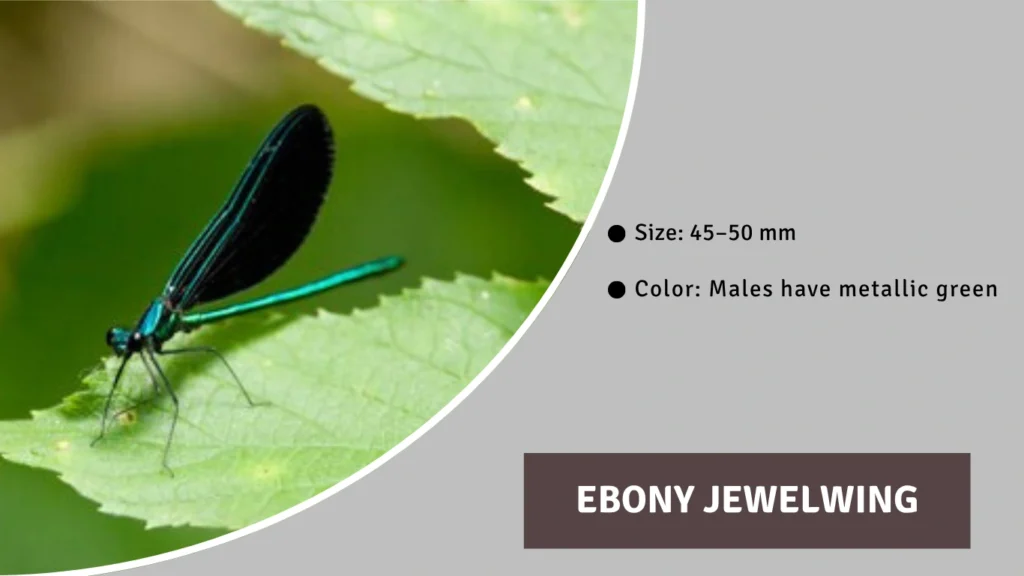
The Ebony Jewelwing is a striking damselfly known for its iridescent green or blue body and jet-black wings. Belonging to the family Calopterygidae, it is native to North America and commonly seen near wooded streams and shaded creeks.
Identification
- Size: 45–50 mm
- Color: Males have metallic green or blue bodies with completely black wings; females are duller with smoky wings and a white spot (pseudostigma)
- Wings: Broad and opaque in both sexes
- Flight: Slow, fluttery, and butterfly-like
Habitat
Ebony Jewelwings are typically found in shaded, slow-moving streams, small rivers, and woodland creeks. They prefer habitats with clean, oxygen-rich water and plenty of vegetation along the banks.
Behavior
This species is diurnal and quite visible during summer months. Males perch on leaves near the water to guard territory and court females with a flutter display. Females lay eggs on submerged vegetation.
Diet
Adults feed on small flying insects like gnats and mosquitoes. Nymphs are aquatic predators, hunting tiny organisms such as insect larvae and micro-crustaceans.
3. Common Blue Damselfly (Enallagma cyathigerum)

The Common Blue Damselfly is one of the most familiar damselflies in Europe and parts of Asia. It is often confused with other blue damselflies but is distinguishable by the solid blue segments on its abdomen and black markings.
Identification
- Size: Around 32 mm
- Color: Males are sky blue with black bands along the abdomen; females are usually greenish-blue or dull brown
- Wings: Clear with a small dark spot (pterostigma)
- Body Shape: Slender and delicate
Habitat
Found near still or slow-moving waters like lakes, ponds, canals, and marshes. This species tolerates a wide range of environments, from pristine nature reserves to urban parks.
Behavior
Common Blue Damselflies are very active in the summer, often seen in large numbers. Males are territorial and will chase rivals away from their preferred breeding sites. Mating pairs are commonly seen in a wheel or heart shape.
Diet
Adults catch and eat small insects mid-air, especially flies and mosquitoes. Larvae, which live underwater, hunt tiny aquatic creatures like worms and larvae of other insects.
4. Azure Damselfly (Coenagrion puella)

The Azure Damselfly is a delicate, bright blue damselfly commonly seen across Europe during late spring and summer. It belongs to the family Coenagrionidae and is often confused with the Common Blue Damselfly, though subtle differences in body markings help distinguish the two.
Identification
- Size: 30–33 mm
- Color: Males are vivid blue with fine black markings; females are blue or green with more black on the abdomen
- Wings: Clear, narrow, and held closed over the body at rest
- Key Trait: Males have a “U”-shaped mark on the second abdominal segment
Habitat
Azure Damselflies prefer well-vegetated still waters like ponds, lakes, canals, and garden pools. They can also be seen resting on reeds or flying among grasses near water bodies.
Behavior
Males often gather in numbers around water sources, competing for mates and defending territories. Courtship and mating take place close to vegetation where eggs are laid on submerged plants.
Diet
They feed on flying insects such as mosquitoes and midges. Larvae are aquatic predators that prey on insect larvae and other small aquatic organisms.
5. Southern Spreadwing (Lestes australis)

The Southern Spreadwing is a species of damselfly in the family Lestidae, notable for resting with its wings partially open—unlike most damselflies that hold them closed. It is found mainly in the southeastern United States and parts of Central America.
Identification
- Size: 40–45 mm
- Color: Metallic bronze or green body with pale blue eyes
- Wings: Clear and held partly open at rest
- Legs: Pale with dark stripes
Habitat
This damselfly prefers marshes, swamps, ponds, and temporary wetlands with abundant emergent vegetation. It can be found perching on reeds or tall grasses near water edges.
Behavior
Southern Spreadwings are calm and often seen basking on tall plants. Males patrol territories and mate near floating or emergent vegetation, where females lay eggs.
Diet
Both nymphs and adults are carnivorous. Adults feed on small insects in flight, while nymphs consume aquatic invertebrates in shallow waters.
6. Eastern Forktail (Ischnura verticalis)

The Eastern Forktail is a small and widespread damselfly native to eastern North America. Known for its vibrant coloration and adaptability, it is often found near ponds, marshes, and slow-moving streams.
Identification
- Size: 25–35 mm
- Color: Males have a bright green thorax and blue-tipped abdomen; females vary from orange to blue with age
- Wings: Clear and narrow with small black pterostigma
- Notable Feature: Tiny size and green-and-black body pattern
Habitat
Common in a wide range of habitats such as garden ponds, drainage ditches, lakesides, and wetlands. It often perches low in grasses or water plants.
Behavior
Males are territorial but tolerant of other damselflies. Mating and egg-laying occur on floating vegetation. They fly low and are often one of the earliest damselfly species to appear in spring.
Diet
Feeds on tiny insects such as gnats, midges, and mosquitoes. The aquatic nymphs prey on smaller aquatic invertebrates and larvae.
7. Tule Bluet (Enallagma carunculatum)
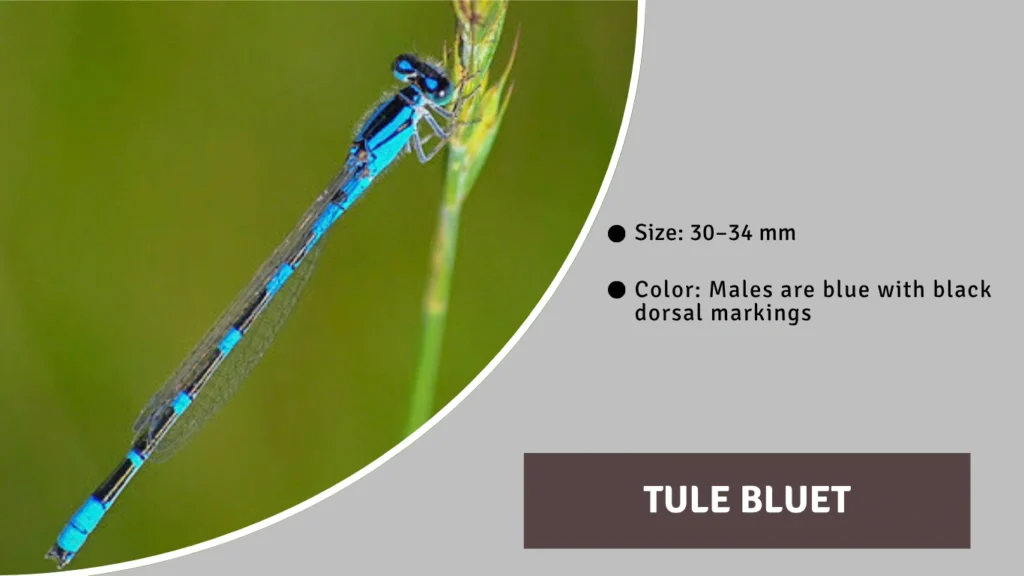
The Tule Bluet is a slender and bright blue damselfly commonly found in western North America. It gets its name from its preference for tule (bulrush) vegetation near lakes and ponds.
Identification
- Size: 30–34 mm
- Color: Males are blue with black dorsal markings; females are pale blue, tan, or grayish
- Wings: Clear with dark pterostigma
- Special Trait: T-shaped black mark on second abdominal segment
Habitat
Typically found near ponds, marshes, and lakes with abundant emergent vegetation like cattails and tules. It avoids fast-moving water and prefers calm, quiet areas.
Behavior
Often seen perching on reeds or flying close to the water surface. Mating pairs are frequently spotted, and females insert eggs into submerged stems.
Diet
Like other damselflies, adults catch small flying insects mid-air. The aquatic nymphs feed on mosquito larvae and other soft-bodied organisms found in vegetation-filled waters.
8. American Rubyspot (Hetaerina americana)

The American Rubyspot is a striking and easily recognized damselfly from the family Calopterygidae. Found throughout North and Central America, it is especially known for the male’s vivid red patch at the base of the wings.
Identification
- Size: 40–50 mm
- Color: Males have a metallic green or bronze body with a bright red wing base; females are duller with smoky wings
- Wings: Broad and slightly tinted, held flat when at rest
- Distinguishing Mark: Iridescent body and ruby wing patch on males
Habitat
Typically found along rivers, creeks, and streams with clean, flowing water and shaded banks. Prefers environments with plenty of rocks and emergent vegetation.
Behavior
Males defend territories over stretches of stream, perching on sunlit rocks or twigs. They often engage in aerial displays to attract females or ward off rivals.
Diet
Adults prey on small flying insects like gnats and midges. Aquatic nymphs feed on insect larvae and other invertebrates found in stream beds.
9. Great Spreadwing (Archilestes grandis)

The Great Spreadwing is the largest damselfly in North America, belonging to the Lestidae family. Its name comes from its habit of perching with wings partly open—unlike many other damselflies.
Identification
- Size: 50–65 mm (very large for a damselfly)
- Color: Metallic bronze to green with pale yellow stripes on the thorax
- Wings: Long, narrow, and held spread apart at rest
- Eyes: Large and bright blue in mature individuals
Habitat
Found near ponds, marshes, slow-moving streams, and temporary wetlands—often with shrubs or tall grasses nearby. It prefers vegetated areas where it can perch and hunt.
Behavior
Great Spreadwings perch at an angle with wings open. Males are aggressive and often chase away rivals from breeding spots. Females oviposit eggs into submerged plant stems.
Diet
Feeds on mosquitoes, flies, and other small flying insects. Nymphs, which live in shallow waters, hunt aquatic larvae and invertebrates.
10. Red-eyed Damselfly (Erythromma najas)

The Red-eyed Damselfly is a vibrant species from the family Coenagrionidae, found widely across Europe and parts of Asia. It is especially striking due to the male’s bright red eyes and metallic blue body.
Identification
- Size: 33–36 mm
- Color: Males are metallic blue with deep red eyes; females are duller, usually greenish-brown
- Wings: Clear and narrow with black-tipped pterostigma
- Key Trait: Bulky body and intense red eyes in males
Habitat
Prefers still or slow-flowing waters with abundant floating vegetation, such as lakes, gravel pits, ponds, and canals. Often seen resting on lily pads or reeds.
Behavior
Males are frequently seen basking on floating leaves or patrolling the water’s surface. They are strong flyers and often stay close to water. Females lay eggs on submerged vegetation while guarded by males.
Diet
Feeds on small flying insects such as mosquitoes and gnats. Nymphs prey on aquatic microinvertebrates in pond margins and among submerged plants.
11. White-legged Damselfly (Platycnemis pennipes)

The White-legged Damselfly, also known as the Blue Featherleg, is a pale-colored species belonging to the family Platycnemididae. It is native to Europe and parts of Western Asia and is most often seen near slow-moving rivers and canals.
Identification
- Size: 32–35 mm
- Color: Males have powdery blue bodies with white, flattened legs; females are light tan or pale green
- Wings: Transparent and narrow
- Key Feature: Distinctively widened, feather-like tibiae (leg parts) in males
Habitat
Prefers slow rivers, ditches, and canals with tall bankside vegetation. Often seen perched on grasses or stems close to water.
Behavior
Males display their white legs during mating rituals by fluttering or waving. Pairs are seen flying in tandem over vegetation as females deposit eggs on aquatic stems.
Diet
Consumes small insects captured mid-flight. Nymphs are aquatic hunters feeding on larvae, mosquito wrigglers, and tiny aquatic insects near riverbanks.
12. Desert Forktail (Ischnura barberi)

The Desert Forktail is a tiny and adaptable damselfly found across the southwestern United States and northern Mexico. As a member of the Coenagrionidae family, it thrives in arid regions near temporary or permanent water sources.
Identification
- Size: 25–30 mm
- Color: Males are pale green and black with a blue-tipped abdomen; females vary from orange to blue or tan
- Wings: Clear and narrow with dark pterostigma
- Special Trait: Small size and subtle coloration help it blend into desert vegetation
Habitat
Often found near ponds, springs, ditches, and streams—even in desert environments. It adapts well to manmade water sources like cattle tanks and irrigation ditches.
Behavior
This species tends to perch low among grasses and sedges. Males are territorial but not aggressive. Females are often seen laying eggs on submerged stems in still water.
Diet
Feeds on minute flying insects such as midges and gnats. Nymphs consume aquatic larvae and microorganisms found in shallow water.
13. Aurora Damselfly (Chromagrion conditum)

The Aurora Damselfly is a beautiful, rare species native to eastern North America. Named for its bright yellow and black thorax, it is typically found in undisturbed wetlands and shaded streams.
Identification
- Size: 30–35 mm
- Color: Yellow thorax with black stripes and a slender dark abdomen with pale blue tip
- Wings: Clear and narrow with black pterostigma
- Key Feature: High contrast between yellow thorax and dark abdomen
Habitat
Aurora Damselflies prefer forested wetlands, bogs, and spring-fed streams. They require clean, cool water and are considered sensitive to habitat disturbance.
Behavior
These damselflies are often elusive, staying near shaded streambanks and tall vegetation. Males perch in sunny gaps to attract females, who oviposit in floating vegetation.
Diet
They feed on tiny flying insects and help control mosquito populations. Aquatic nymphs prey on smaller organisms in cool, clean freshwater systems.
14. Variable Damselfly (Coenagrion pulchellum)

The Variable Damselfly is a small and visually similar species to the Azure and Common Blue Damselflies. It is named for the variability in its male markings and is found throughout Europe and parts of western Asia.
Identification
- Size: 30–33 mm
- Color: Males are blue with variable black patterns on the abdomen; females can be green, blue, or brown
- Wings: Clear with dark pterostigma
- Key Trait: Males have a distinctive “wine glass” shaped mark on the second abdominal segment
Habitat
Commonly found around ponds, lakes, canals, and sometimes slow-flowing rivers with good vegetation. It prefers unpolluted, calm waters with plenty of aquatic plants.
Behavior
Active from spring to mid-summer. Males patrol low vegetation and water edges in search of mates. Pairs are frequently seen in tandem flight or resting on floating leaves.
Diet
Feeds on flying insects such as aphids and mosquitoes. The aquatic nymphs feed on larvae and other small aquatic invertebrates, often hiding among submerged vegetation.
