

Fireflies, also known as lightning bugs, are a magical part of warm evenings around the world. With over 2,000 known species, these glowing beetles display a dazzling variety of shapes, flash patterns, and behaviors. Some flash in rhythmic pulses, others glow steadily, and a few don’t glow at all—but each species has its own charm.
In this guide, you’ll discover 23 common firefly types found across North America, Asia, and Europe. From the famous Eastern firefly to the mysterious Blue Ghost, each name represents a species that lights up the night in its own unique way.
1. Margined Firefly

The Margined Firefly (Photinus marginellus) is a lesser-known yet widespread firefly species found in parts of North America. It shares many similarities with the Common Eastern Firefly but can be distinguished by subtle differences in its body shape and flash pattern. Though not as flashy, it still contributes to the glowing night displays during summer.
Identification
- Size: Around ½ inch
- Color: Dark brown to black body with pale yellow margins
- Pronotum: Covers part of the head, with a reddish tint and central black spot
- Light: Yellow-green flash, shorter in duration
- Flight: Low and slow in open areas
Why It Looks Familiar
The Margined Firefly resembles many other Photinus species in appearance and behavior, making it easy to confuse. Its gentle, pulsing light and nighttime flights in grassy or lightly wooded areas are typical of common fireflies.
Behavior and Activity
Males flash in brief bursts while flying low over grass, while females remain stationary and respond from vegetation. Their activity peaks around dusk in early to mid-summer.
Habitat and Diet
They thrive in open fields, gardens, and near woodland edges. The larvae are predators that consume snails, slugs, and soft-bodied insects. Adults may feed on nectar or nothing at all.
2. Consimilis Firefly

The Consimilis Firefly (Photinus consimilis) is another species in the Photinus genus, known for its yellow-green light and midsummer presence. While not as abundant as Photinus pyralis, it is still seen in various parts of eastern and central North America.
Identification
- Size: Slightly smaller than P. pyralis, around ⅜ inch
- Color: Dark body with yellow margins and a reddish pronotum
- Flash pattern: Rapid, short pulses
- Wings: Dark with smooth texture
Why It’s Often Misidentified
Due to its similar size and flashing behavior, it is often mistaken for other Photinus fireflies. However, its faster and more frequent flashes can help distinguish it if observed closely.
Behavior and Activity
This species is most active at dusk and early evening. Males fly just above grass level flashing rapidly, while females respond with timed flashes from the ground. The flash pattern is key for mate identification among species.
Habitat and Diet
They are commonly found in fields, meadows, and low vegetation near forests. Like many firefly larvae, P. consimilis young are beneficial predators of garden pests. Adults are short-lived and may feed sparingly or not at all.
3. Green Firefly

The Green Firefly (Photinus greeni) is named for its distinct greenish bioluminescent glow, which sets it apart from many other firefly species. Although not as widespread as the Common Eastern Firefly, it is still fairly common in parts of the eastern United States and is active during summer evenings.
Identification
- Size: Approximately ½ inch
- Color: Black body with pale yellow edges
- Pronotum: Reddish with a dark central spot
- Light: Greenish-yellow flash
- Flash pattern: Short, repeated pulses close to the ground
Why It Stands Out
Its green-colored flash is more vibrant and visible compared to other Photinus species. People often notice its glow in low grassy areas or field edges after sunset.
Behavior and Activity
Males fly low and emit a quick series of flashes. Females remain stationary and flash in response. Their mating communication relies heavily on precise flash timing and color.
Habitat and Diet
Green Fireflies prefer moist environments such as marshes, gardens, and forest borders. The larvae are carnivorous and feed on snails and other soft-bodied invertebrates. Adults may drink nectar but primarily exist to mate and reproduce.
4. MacDermott’s Firefly

MacDermott’s Firefly (Photinus macdermotti) is a lesser-known member of the Photinus genus, named in honor of firefly researcher Frank A. MacDermott. Though less abundant, it plays a quiet role in the light displays of summer nights.
Identification
- Size: Small to medium, about ⅜ to ½ inch
- Color: Black or dark brown with narrow yellowish margins
- Pronotum: Orange-red with a dark center
- Flash: Yellow light with a slow, rising pulse
- Antennae: Threadlike and straight
Why It Resembles Others
Its body structure and flashing habits make it easy to confuse with other Photinus species. However, careful observation of its unique flash duration and rhythm helps distinguish it.
Behavior and Activity
Males emit longer flashes while flying and wait for a delayed female response. These beetles often appear slightly later in the season than P. pyralis.
Habitat and Diet
This species favors wooded areas, stream banks, and meadows. Like most fireflies, its larvae are predators of snails and worms. Adults live only for a few weeks and focus primarily on reproduction.
5. Cook’s Firefly

Cook’s Firefly (Photinus cookii) is a lesser-known but distinctive firefly species, primarily found in the southeastern United States. Though small and easily overlooked, its flashing signals and warm-season activity add to the natural beauty of firefly gatherings in humid environments.
Identification
- Size: Small, around ⅜ inch
- Color: Dark brown to black with pale yellow side margins
- Pronotum: Reddish with a dark center spot
- Light: Yellow flash, moderate in brightness
- Flash pattern: Double-pulsed or paired flashes
Why It’s Hard to Notice
Due to its small size and quick, subtle flashes, Photinus cookii is often missed or mistaken for juvenile fireflies or other small species. Its brief light signals resemble a flicker rather than a glow, which makes it harder to detect in bright conditions.
Behavior and Activity
Males fly low to the ground in humid or swampy areas and emit soft paired flashes. Females respond from nearby plants. Flash interactions are very brief and highly timed, helping to avoid cross-signaling with other species.
Habitat and Diet
This species prefers moist woodland edges, swamps, and creek sides. Larvae feed on soft invertebrates like snails and worms, while adults are not known to feed much. Their glowing displays are brief but valuable for mating communication.
6. Pennsylvania Firefly

The Pennsylvania Firefly (Photuris pennsylvanica) is among the most familiar Photuris species and is often referred to as a “femme fatale” firefly due to the females’ deceptive flashing behavior. It is widely distributed across the eastern United States and is recognized for its strong, high-flying flash patterns.
Identification
- Size: Around ½ to ¾ inch
- Color: Dark brown body with pale markings
- Pronotum: Pinkish with a large dark spot in the center
- Light: Bright yellow-green
- Flash pattern: Single, slow flash while flying high
Why It’s Unique
Unlike Photinus species, Photuris fireflies often fly higher and emit brighter flashes. Females of this species are known to mimic the flash responses of other fireflies—luring males in and then preying on them. This rare predatory behavior adds to their mystery.
Behavior and Activity
Males fly high, emitting bright flashes in open areas. Females, often hidden in vegetation, respond selectively—either for mating or as a predatory trap. This dual purpose flash pattern is a trademark of the species.
Habitat and Diet
They are common in meadows, wetlands, and near wooded trails. Larvae are predators, and adult females occasionally consume other fireflies. Their bright, slow flashes make them easy to spot on warm summer evenings.
7. Versicolor Firefly

The Versicolor Firefly (Photuris versicolor) is another member of the Photuris genus, known for its variable flash patterns and nocturnal displays. This species is widespread in eastern North America and often seen during midsummer evenings, adding variety to the firefly light shows.
Identification
- Size: About ½ to ¾ inch
- Color: Dark brown to black body with pale edges
- Pronotum: Reddish with a dark center
- Light: Yellow-green flash
- Flash pattern: Variable—sometimes single, sometimes pulsed
Why It Stands Out
Its name “versicolor” reflects its variability—not in body color, but in light signaling patterns. These differences often make it difficult to classify in the field without flash analysis. Its brightness and behavior resemble other Photuris species but with subtle variation.
Behavior and Activity
Males fly high and emit flashes in various patterns. Females stay low and may imitate other firefly species’ flashes to attract prey. This mimicry helps them hunt while still performing normal mating rituals.
Habitat and Diet
Found in open grassy fields, marsh edges, and forest clearings. Like other Photuris fireflies, their larvae feed on soft-bodied insects. Adult females can be predatory, feeding on smaller fireflies. They are important contributors to summer light displays.
8. Lucicrescens Firefly

The Lucicrescens Firefly (Photuris lucicrescens) is a slightly smaller Photuris species, recognized by its steady, growing flash pattern. It’s commonly seen in parts of the Midwest and eastern U.S., particularly in damp, low-lying environments.
Identification
- Size: Around ½ inch
- Color: Black body with light-colored edges
- Pronotum: Red with a central dark area
- Light: Bright greenish-yellow
- Flash pattern: Gradually increasing intensity (“crescendo”)
Why It’s Noticeable
Its unique flash—slowly growing brighter before fading—helps distinguish it from others in its genus. The glowing effect gives it a smoother, glowing look compared to the sharp pulses of most fireflies.
Behavior and Activity
This species is most active just after sunset. Males patrol damp meadows and wetlands, using their crescendo-like flash to attract females. Unlike many predatory Photuris, females of P. lucicrescens are less aggressive and more focused on reproduction.
Habitat and Diet
Often found in wetlands, swamps, and grassy streambanks. Larvae are carnivorous, feeding on snails and worms. Adults typically don’t feed or may consume nectar. Their glowing signals bring a magical element to marshy summer landscapes.
9. Fairchild’s Firefly

Fairchild’s Firefly (Photuris fairchildi) is a relatively uncommon firefly species within the Photuris genus. It’s known for its tall flight patterns and rhythmic flashes that make it stand out during warm summer nights in wooded and open field areas.
Identification
- Size: Approximately ½ to ¾ inch
- Color: Dark brown or black with pale edging
- Pronotum: Reddish with a solid dark spot
- Light: Bright yellow-green
- Flash pattern: High, rhythmic pulses
Why It’s Unique
Fairchild’s Firefly is often seen flying higher than most other fireflies, with a steady rhythm to its flashes. Its flash behavior can resemble that of other Photuris species, but it tends to flash in smoother, more uniform intervals.
Behavior and Activity
Males fly in elevated arcs, often 5–10 feet above the ground, while females stay low in vegetation. Like many Photuris, females may mimic other firefly species to lure males—sometimes as mates, other times as prey.
Habitat and Diet
This firefly is typically found near woodland edges, meadows, and damp grassy areas. Larvae are predatory and feed on soft-bodied insects. Adults may not feed at all, focusing mainly on mating and signaling.
10. Angled Firefly

The Angled Firefly (Pyractomena angulata) is one of the most common species in the Pyractomena genus. It is recognized for its early-season activity and warm amber-colored flashes, which differ in color and pattern from most other fireflies.
Identification
- Size: Around ⅜ to ½ inch
- Color: Dark brown to reddish-black with orange-yellow edges
- Pronotum: Reddish with a small dark mark in the center
- Light: Amber or orange glow
- Flash pattern: Quick pulses in early evening
Why It Looks Different
Unlike the greenish-yellow lights of Photinus or Photuris species, P. angulata emits a rich amber flash that appears earlier in the evening. Its body is also more compact, and it’s often active earlier in the season—sometimes as early as April or May.
Behavior and Activity
Males are active at dusk, flashing while flying near vegetation. Females wait among low plants to respond. They are among the first fireflies to appear each season, signaling the start of firefly activity in many regions.
Habitat and Diet
Common in forest edges, swamps, and suburban gardens. Larvae live in damp soil and feed on snails, worms, and small insects. Adults are short-lived and mainly focused on reproduction. Their unique glow color helps them stand out in early firefly displays.
11. Northern Pyractomena Firefly

The Northern Pyractomena Firefly (Pyractomena borealis) is a widespread firefly found in the northeastern and midwestern United States. It’s known for its bright amber flashes and early-season activity, often appearing in the spring before many other species.
Identification
- Size: Around ⅜ to ½ inch
- Color: Reddish-brown body with pale margins
- Pronotum: Reddish with a central dark spot
- Light: Amber or orange glow
- Flash pattern: Slow, rhythmic flashes just after sunset
Why It’s Easy to Spot
The warm, amber light and early appearance make this species easy to distinguish. While other fireflies are active in summer, P. borealis starts glowing during cooler spring evenings.
Behavior and Activity
Males fly slowly near the tops of grasses and shrubs, flashing regularly in a gentle rhythm. Females respond with slower flashes from stationary positions. Their early evening displays often occur before full darkness sets in.
Habitat and Diet
They prefer moist meadows, grassy wetlands, and forest clearings. Larvae are carnivorous and feed on small invertebrates. Adults are rarely seen eating and live mainly to reproduce during their short life span.
12. Dispersed Firefly

The Dispersed Firefly (Pyractomena dispersa) is a small, lesser-known species within the Pyractomena genus. It is recognized by its scattered or irregular flash pattern, which differs from the rhythmic signals of other fireflies.
Identification
- Size: Small, about ⅜ inch
- Color: Brown to dark reddish body with light margins
- Pronotum: Red with a central dark marking
- Light: Amber to orange flash
- Flash pattern: Irregular or scattered bursts
Why It’s Harder to Identify
Because of its erratic flash behavior, this species can be harder to spot or identify correctly. It may appear later in the season and flash at inconsistent intervals compared to more predictable fireflies.
Behavior and Activity
Males fly in wandering patterns, flashing in quick, scattered pulses. Females stay near the ground and respond with short signals. Their behavior is less synchronized, giving their light display a more chaotic appearance.
Habitat and Diet
Found in moist fields, near rivers, and swampy woodlands. Larvae are predatory, feeding on small soil-dwelling creatures like worms and snails. Adults don’t feed much and live primarily to attract mates and complete their life cycle.
13. Linear Firefly

The Linear Firefly (Pyractomena linearis) is a slender, narrow-bodied species found in the eastern and southeastern United States. It’s known for its long body shape, early-season appearance, and distinctive amber flashes that differ from most green- or yellow-flashing fireflies.
Identification
- Size: About ½ inch long
- Color: Reddish-brown with pale yellow or orange margins
- Pronotum: Reddish with a narrow central dark line
- Light: Amber or orange glow
- Flash pattern: Steady, pulsing flashes at dusk
Why It’s Unique
Its long, narrow body shape helps distinguish it from other Pyractomena species, and its warm-colored glow adds variety to the usual summer light show. It’s typically seen earlier in the season, adding to its distinctiveness.
Behavior and Activity
Males flash just above low vegetation during twilight. Females often hide among grasses and leaves, flashing back in a slower rhythm. Their subtle glow often blends with surrounding vegetation, making them more difficult to spot.
Habitat and Diet
Linear fireflies are found in marshes, forest edges, and along waterways. Larvae are predatory and feed on snails and small insects in damp soil. Adults focus on mating and rarely feed.
14. Winter Firefly

The Winter Firefly (Ellychnia corrusca) is one of the only fireflies commonly seen during the day and in winter or early spring, making it very different from other firefly species. Unlike most fireflies, it doesn’t glow as an adult but still belongs to the Lampyridae family.
Identification
- Size: About ⅜ to ½ inch
- Color: Black or dark brown with pale lateral borders
- Pronotum: Orange-red with a dark central spot
- Light: Adults do not produce light
- Body: Flat and beetle-like with a matte finish
Why It’s Confused with Non-Fireflies
Because adults don’t glow and are active in cold seasons, many people don’t recognize them as fireflies. They resemble soldier beetles or rove beetles and may be found on tree bark or windows on sunny winter days.
Behavior and Activity
These beetles overwinter as adults and become active during warm spells in late winter and early spring. They often gather in sunlit patches on tree trunks. Since they don’t flash, mating relies on chemical cues rather than light.
Habitat and Diet
Common in wooded areas and near dead trees. Larvae live in bark crevices and feed on small invertebrates. Adults may feed on sap or nectar and are a fascinating exception to the glowing firefly norm.
15. Black Firefly

The Black Firefly (Lucidota atra) is a day-active species that, like the Winter Firefly, does not glow as an adult. It is often mistaken for a ground beetle or soldier beetle due to its matte black body and reddish markings. Despite its lack of bioluminescence, it is a true member of the Lampyridae family.
Identification
- Size: About ⅜ to ½ inch
- Color: Matte black body with reddish-orange pronotum
- Pronotum: Orange-red with a central dark mark
- Light: No light as adults
- Wings: Short and black, covering the back completely
Why It’s Overlooked
Because it’s active during the day and doesn’t flash, many people don’t recognize it as a firefly. It often goes unnoticed or gets confused with other beetles found on leaves, flowers, or tree trunks.
Behavior and Activity
Adults are active during the daytime, especially on sunny, warm days in spring and early summer. They are often found on low vegetation, flowers, or the edges of wooded areas. Mating is based on pheromones rather than light signals.
Habitat and Diet
Black fireflies are commonly found in open woodlands, gardens, and meadows. Larvae live in soil or under bark, feeding on soft-bodied insects. Adults may consume nectar or pollen, though they mainly exist to mate.
16. Japanese Firefly

The Japanese Firefly (Luciola cruciata) is one of the most famous firefly species in East Asia, especially in Japan. It’s celebrated in festivals and poetry for its brilliant glowing displays along riverbanks and rice paddies during early summer evenings.
Identification
- Size: About ½ inch
- Color: Black body with pale yellow edges and a reddish pronotum
- Light: Bright greenish-yellow light
- Flash pattern: Synchronized, rhythmic flashes
- Flight: Smooth and slow
Why It’s So Famous
Luciola cruciata is known for its synchronized flashing, where dozens or even hundreds of males flash in unison across riverbanks. This creates a magical, wave-like light show that has inspired generations in Japanese culture.
Behavior and Activity
Males flash in unison while flying over rivers and streams, and females respond with timed flashes. This unique synchronized display happens at twilight and requires specific environmental conditions to occur.
Habitat and Diet
Found near slow-moving streams and rice fields. Larvae are aquatic and feed on small snails and other freshwater invertebrates. Adults are active only for a few weeks each year, during peak mating season in early summer. Their beauty has made them a cultural icon in Japan.
17. Lateralis Firefly
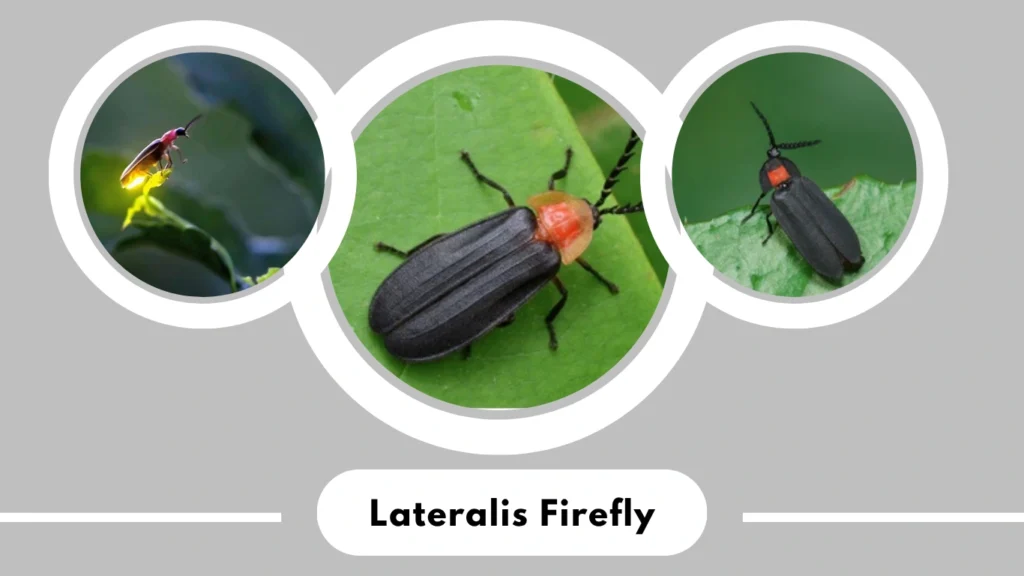
The Lateralis Firefly (Luciola lateralis) is another well-known firefly species native to East Asia, particularly Japan, China, and Korea. It is commonly seen in summer and is admired for its floating, glowing flights near water bodies. Though smaller than Luciola cruciata, it’s just as captivating.
Identification
- Size: Around ⅜ to ½ inch
- Color: Black body with yellow edges and a reddish pronotum
- Light: Yellow-green glow
- Flash pattern: Alternating flashes—less synchronized than L. cruciata
- Flight: Low and graceful over water
Why It’s Popular
Luciola lateralis is featured in many Japanese firefly festivals and is commonly seen around rice paddies and canals. It’s slightly more active than its cousin L. cruciata, often flying closer to the ground or water surface.
Behavior and Activity
Males emit short, intermittent flashes while gliding over still water. Females, usually stationary on vegetation near water, flash back in a rhythm unique to the species. The result is a slower, drifting light show that’s distinct from synchronized species.
Habitat and Diet
Prefers wet environments like ditches, streams, and flooded fields. Larvae are aquatic and feed on tiny snails. Adults are short-lived and primarily focused on reproduction. Their gentle lights are a summer evening highlight in rural Japan.
18. Parvula Firefly
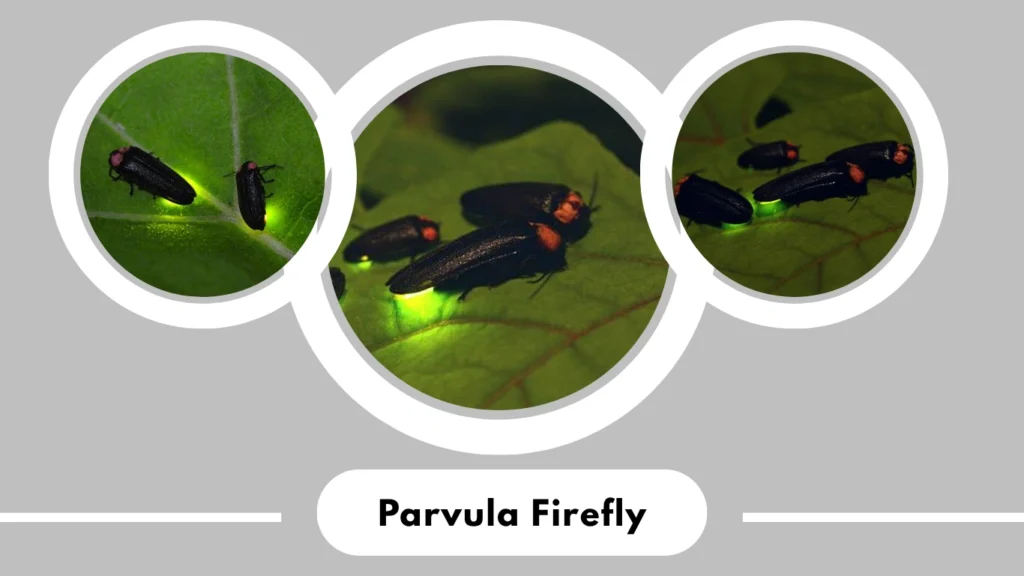
The Parvula Firefly (Luciola parvula) is a small and less commonly observed species found in Southeast Asia. It’s part of the Luciola genus and is known for its soft flashes and quiet presence in humid, tropical regions.
Identification
- Size: Small, about ¼ to ⅜ inch
- Color: Brown to black with light-yellow side edges
- Pronotum: Orange-red with faint dark markings
- Light: Pale yellow flashes
- Flash pattern: Soft, pulsing glows in low vegetation
Why It’s Less Noticed
Due to its small size and faint light, Luciola parvula often goes unnoticed during firefly watching. Its flashes are slower and dimmer than other fireflies, blending into the background unless viewed in complete darkness.
Behavior and Activity
Males flash slowly near the ground or within low shrubs. Females respond with dim, timed flashes from hidden spots. Their activity is mostly limited to late evening or after dark when humidity is high.
Habitat and Diet
Found in wet tropical habitats—such as rice fields, forest edges, and grassy ditches. Larvae are believed to be terrestrial and predatory, though little is known in detail. Adults appear during the rainy season and live only briefly to reproduce.
19. Aspisoma Firefly

The Aspisoma Firefly (Aspisoma ignitum) is a tropical firefly species commonly found in Central and South America. It’s known for its bright bioluminescence and slender body. Unlike many other fireflies, it glows continuously rather than flashing, making it one of the most noticeable glowing insects in its native range.
Identification
- Size: About ⅜ to ½ inch
- Color: Pale greenish to yellow body with translucent wings
- Light: Continuous green or yellow glow
- Flight: Slow, hovering motion
Why It Stands Out
Aspisoma ignitum is easily distinguished by its continuous glowing light, which differs from the flashing patterns of most other species. Its soft, steady glow gives off a fairy-like appearance in humid tropical forests.
Behavior and Activity
Unlike most fireflies that flash, Aspisoma species glow constantly as they fly. Males hover near vegetation, illuminating the dark forest understory, while females respond by glowing faintly from the ground.
Habitat and Diet
These fireflies are found in rainforests, humid grasslands, and near riverbanks. Larvae feed on small invertebrates in damp soil. Adults live for only a short period and spend their time mating while lighting up tropical evenings.
20. Cuban Firefly

The Cuban Firefly (Alecton discoidalis) is an endemic species to Cuba and one of the brightest fireflies in the world. It produces an intense green glow visible from a long distance, especially in rural or forested areas during the summer rainy season.
Identification
- Size: Approximately ¾ inch
- Color: Dark body with pale margins and reddish pronotum
- Light: Bright, sustained green bioluminescence
- Flight: Medium speed, often high above the ground
Why It’s Famous
This firefly is known for having one of the brightest glows among all firefly species. Its powerful light, often mistaken for a flickering LED, can be seen from over 100 meters away in the dark.
Behavior and Activity
Males fly at dusk and early night in a zigzag pattern, glowing steadily. Females typically remain lower or stationary, emitting a softer glow. Their brightness and behavior make them a celebrated part of Cuban summer nights.
Habitat and Diet
Primarily found in forested or brushy areas of Cuba. The larvae are believed to feed on snails and other soft invertebrates. Adults use their strong glow to attract mates in the warm, moist air of Caribbean evenings.
21. Glow-Worm Firefly

The Glow-Worm Firefly (Lamprohiza splendidula) is a fascinating species found across parts of Europe, including Germany, France, and the UK. Despite the name, it is a true firefly, and only the females and larvae glow, while adult males typically do not emit light. This species is well-known for the female’s bright green light, visible from grass and leaf litter during summer evenings.
Identification
- Size: Males around ½ inch; females larger and wingless
- Color: Dark brown to black body
- Light: Bright green bioluminescence (female and larva only)
- Flight: Males can fly, females are wingless
Why It’s Unique
Lamprohiza splendidula is striking because of the wingless glowing females that look more like larvae than beetles. Their strong glow attracts flying males and adds a magical feel to summer forest floors.
Behavior and Activity
Females remain stationary in grass or shrubs, glowing steadily to attract males. Males fly above the ground scanning for the light. The glowing continues for several nights until mating is successful.
Habitat and Diet
Found in meadows, forest edges, and hedgerows, often in moist environments. Larvae are predatory and feed on small snails and worms. Adults live for a short time, focused mainly on mating.
22. Blue Ghost Firefly

The Blue Ghost Firefly (Phausis reticulata) is one of the most mysterious and enchanting firefly species in North America, especially in the Appalachian Mountains. Unlike most fireflies that flash, the males emit a steady, bluish-green glow that hovers eerily through the forest.
Identification
- Size: Small, around ¼ to ⅜ inch
- Color: Dark brown or black with faint markings
- Light: Steady blue-green glow
- Flight: Slow and hovering near the forest floor
Why It’s So Magical
Unlike the rhythmic flashes of other species, P. reticulata males glow constantly as they float through dense woodlands. The eerie, ghost-like light has made them a favorite for firefly enthusiasts and nature photographers.
Behavior and Activity
Males fly low through forest understories, glowing steadily for extended periods. Wingless females glow from the ground, using their light to signal their position. Their glow can last for minutes, creating a haunting, ethereal light show.
Habitat and Diet
Prefers mature, moist hardwood forests with dense leaf litter. Active from late spring through early summer. Larvae are predatory and live in the soil. Adults live only long enough to find mates and are rarely seen outside their glowing season.
