
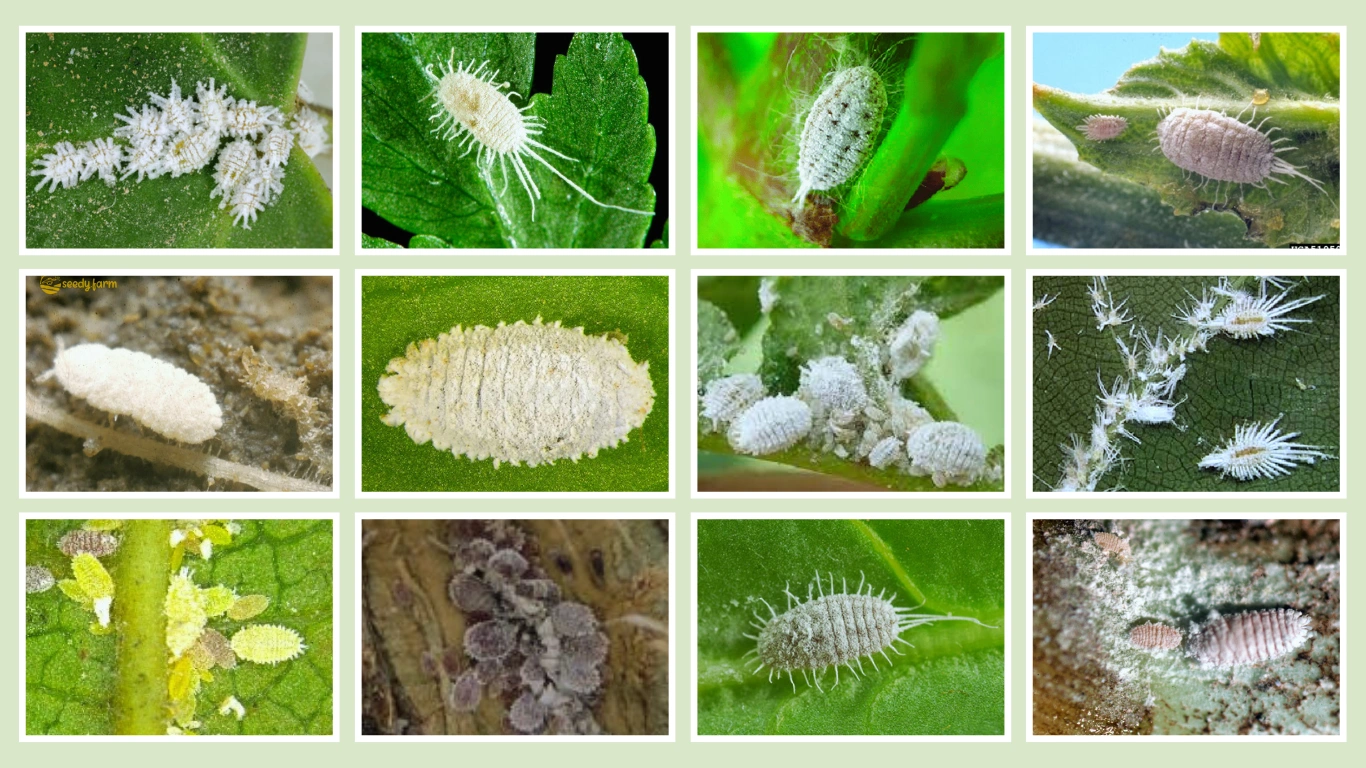
Mealybugs are small, sap-sucking pests that can wreak havoc on a wide range of plants—from indoor ornamentals to major fruit and crop species. While they all share similar white, cottony appearances, there are many different types, each with unique hosts and behaviors. In this guide, you’ll discover 12 common mealybug species, how to identify them, where they live, and the key signs of infestation to watch for.
1. Citrus Mealybug (Planococcus citri)
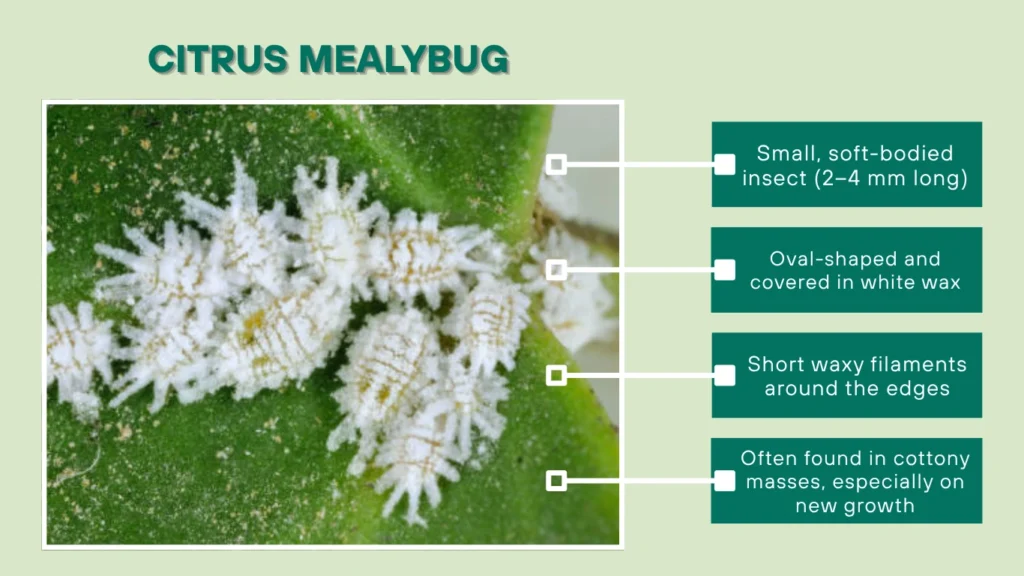
The Citrus Mealybug is a common and destructive pest that affects a wide variety of ornamental and fruit-bearing plants. It’s known for its cotton-like appearance and tendency to gather in dense clusters on plant parts. These pests thrive in warm, humid environments and can cause serious damage if left untreated.
Identification
- Small, soft-bodied insect (2–4 mm long)
- Oval-shaped and covered in white wax
- Short waxy filaments around the edges
- Often found in cottony masses, especially on new growth
When It’s Found
Citrus mealybugs are found year-round indoors and become especially active in outdoor and greenhouse environments during late spring to early fall.
Affected Areas
This species commonly attacks citrus trees, tropical houseplants, hibiscus, coleus, grapes, and orchids. It often spreads in greenhouses and indoor gardens where conditions support rapid reproduction.
Habitat
Citrus mealybugs prefer sheltered, humid areas of plants—especially where leaves meet stems. They also cluster around flower bases, buds, and even roots when infestations are severe.
Warning Signs
- Sticky honeydew on leaves or nearby surfaces
- Black sooty mold growing on the honeydew
- Yellowing or curling leaves
- Stunted plant growth or flower drop
- Visible cottony clusters on stems, leaf joints, or fruit
2. Longtailed Mealybug (Pseudococcus longispinus)
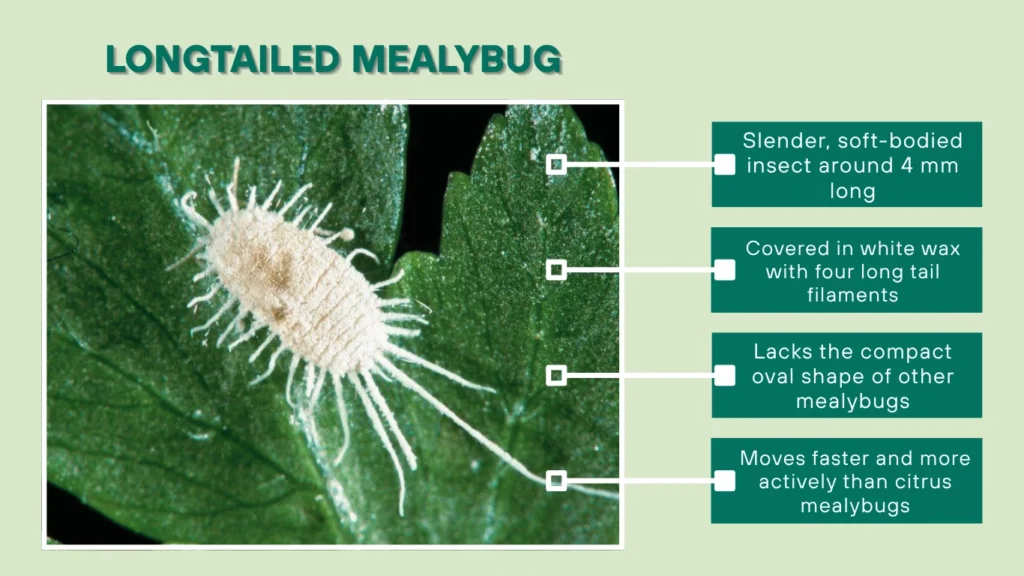
The Longtailed Mealybug is easy to recognize by its distinctive long tail filaments that extend well beyond its body. It is highly mobile compared to other mealybugs and is commonly found on indoor and tropical plants. This pest can reproduce without mating, making it especially difficult to control once established.
Identification
- Slender, soft-bodied insect around 4 mm long
- Covered in white wax with four long tail filaments
- Lacks the compact oval shape of other mealybugs
- Moves faster and more actively than citrus mealybugs
When It’s Found
Longtailed mealybugs are active year-round indoors. Outdoors or in greenhouses, they tend to thrive in late spring and summer when temperatures rise.
Affected Areas
They affect a wide range of tropical and ornamental plants including ferns, palms, crotons, African violets, and philodendrons. They are especially problematic in greenhouses and nurseries.
Habitat
This species prefers the undersides of leaves, leaf axils, stems, and tender shoots. It is drawn to densely packed foliage where air circulation is poor and humidity is high.
Warning Signs
- White waxy insects with long tails visible on leaves and stems
- Sticky honeydew and sooty mold
- Distorted or curled new growth
- Premature leaf or bud drop
- Slowed plant growth
3. Grape Mealybug (Pseudococcus maritimus)

The Grape Mealybug is a major pest in vineyards, but it also affects other fruiting and ornamental plants. While less common in houseplants, it’s known for its reddish or purple internal fluid and the production of sticky honeydew that attracts ants.
Identification
- Small, oval, white wax-covered body
- Two tail filaments and darker lines running down the back
- When crushed, it releases red or purple fluid
- Often coated in light waxy powder
When It’s Found
This pest is typically found from spring through late summer, aligning with the active growing and fruiting seasons of grapevines and related plants.
Affected Areas
Primarily affects grapevines, but also infests apples, pears, plums, and ornamental shrubs. It is a common vineyard pest and can severely affect fruit quality and yield.
Habitat
Grape mealybugs prefer the crevices of bark, leaf axils, and bases of grape clusters. As the population grows, they may spread to leaves and stems.
Warning Signs
- Sticky honeydew on grape clusters and leaves
- Sooty mold growth on affected areas
- Presence of ants tending to the mealybugs
- Discoloration or shriveling of grapes
- White waxy coating along plant surfaces
4. Pink Hibiscus Mealybug (Maconellicoccus hirsutus)
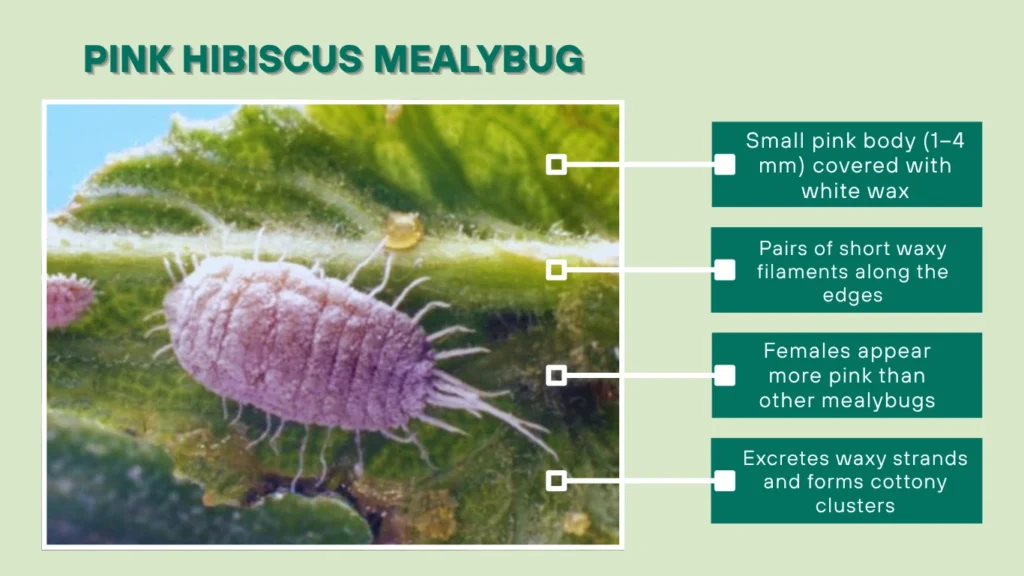
The Pink Hibiscus Mealybug is an aggressive, highly invasive pest that affects over 300 plant species. It injects toxic saliva into plant tissue, causing severe deformation, dieback, and stunted growth. This pest is especially damaging in tropical and subtropical climates.
Identification
- Small pink body (1–4 mm) covered with white wax
- Pairs of short waxy filaments along the edges
- Females appear more pink than other mealybugs
- Excretes waxy strands and forms cottony clusters
When It’s Found
Pink hibiscus mealybugs are typically found in tropical or subtropical regions and are active year-round in those environments. Outbreaks often occur during the warmer months.
Affected Areas
It attacks a wide variety of plants including hibiscus, cotton, citrus, avocados, okra, and other ornamentals or crops. It’s a serious pest in many parts of Asia, Africa, the Caribbean, and southern U.S.
Habitat
These mealybugs prefer new shoots, leaf joints, buds, and flower stems. In heavy infestations, they can cover entire plant surfaces, reducing photosynthesis and weakening the plant.
Warning Signs
- Leaf curling, galls, and twisted stems
- Black sooty mold growing on honeydew
- Cottony white clusters with pink centers
- Wilting and dieback on young shoots
- Sticky leaves attracting ants
5. Root Mealybug (Rhizoecus spp.)
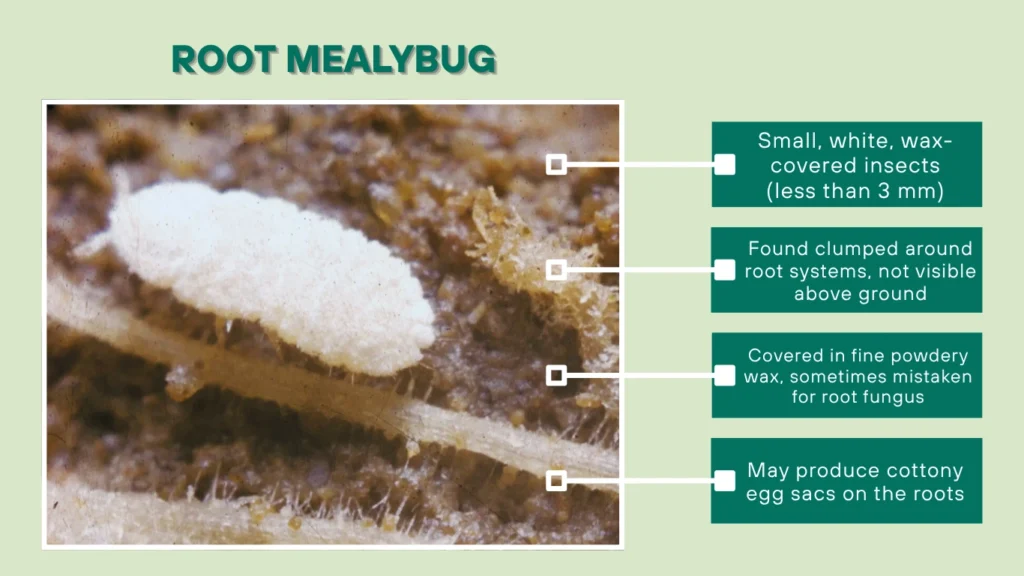
Root Mealybugs are one of the most difficult types to detect because they live entirely underground. They infest plant roots and are often discovered only when plants show signs of stress despite proper care. They’re common in potted plants and greenhouses.
Identification
- Small, white, wax-covered insects (less than 3 mm)
- Found clumped around root systems, not visible above ground
- Covered in fine powdery wax, sometimes mistaken for root fungus
- May produce cottony egg sacs on the roots
When It’s Found
Root mealybugs can be active year-round, especially in greenhouse and indoor environments where the soil remains warm and moist.
Affected Areas
They infest potted plants, especially succulents, African violets, orchids, and indoor tropicals. Infestations are more likely in reused potting soil or poorly drained containers.
Habitat
These pests live entirely in the soil and attach to plant roots. They prefer moist, warm soil conditions and often go unnoticed until the plant becomes visibly unhealthy.
Warning Signs
- Yellowing or drooping leaves despite proper watering
- Poor growth or stunted development
- Root rot or mushy roots upon inspection
- White, cottony patches when removing plant from pot
- Ants sometimes present in soil due to honeydew below surface
6. Solanum Mealybug (Phenacoccus solani)

The Solanum Mealybug primarily affects plants in the nightshade family, including tomatoes, potatoes, and eggplants. It is a known agricultural pest that can cause significant crop losses if not controlled, especially in warm climates.
Identification
- Oval-shaped, soft-bodied insect (3–4 mm)
- Light gray or white in color, covered with waxy coating
- Short filaments along the body edge
- Often found in clusters near stems and fruits
When It’s Found
Solanum mealybugs are usually active from spring through fall, especially during warm and dry weather when plants are most vulnerable.
Affected Areas
Commonly affects tomatoes, eggplants, potatoes, peppers, and ornamental solanaceous plants. It is a frequent problem in vegetable gardens and greenhouses.
Habitat
They prefer leaf axils, flower bases, stems, and developing fruits. These pests thrive in dense foliage where ventilation is poor and humidity is moderate to high.
Warning Signs
- Curling and distortion of leaves
- Sticky residue on leaves and fruits
- Black sooty mold growing on honeydew
- Stunted fruit development or fruit drop
- Cottony white masses near stems or fruits
7. Cactus Mealybug (Hypogeococcus pungens)

The Cactus Mealybug is a serious pest of cacti and other succulents. Originally from South America, it has spread to several regions, damaging native cactus populations and ornamental collections.
Identification
- Small (2–3 mm), white mealybug with waxy coating
- May have pinkish body under wax
- Forms dense cottony masses along spines and joints
- Can be mistaken for woolly patches or fungus
When It’s Found
This mealybug is active throughout the year in warm climates, especially in dry indoor environments and desert regions. It spreads quickly among container-grown cacti.
Affected Areas
Primarily attacks cacti, including prickly pear, barrel cactus, and ornamental succulents like Echinopsis or Mammillaria. Also affects euphorbia and agave in some cases.
Habitat
These pests hide in crevices between cactus pads, around the base of spines, and at root collars. In heavy infestations, they cover entire plant sections and root zones.
Warning Signs
- White cotton-like growths on cactus surfaces
- Yellowing or shriveling of pads or stems
- Plant tips turning brown or drying out
- Poor flowering or growth response
- Soft, rotting areas where bugs cluster
8. Mango Mealybug (Drosicha mangiferae)

The Mango Mealybug is a major pest of mango trees and other fruit crops, especially in tropical and subtropical regions. It feeds on plant sap, weakens trees, and often causes leaf drop and fruit damage. This species is known for mass outbreaks that severely impact orchard productivity.
Identification
- Large mealybug species (up to 5 mm long)
- Soft, grayish-pink body with a light wax coating
- Females are wingless and covered with white, powdery wax
- Nymphs appear reddish or pink and gather in large groups
When It’s Found
Typically active from late winter to early summer, especially during the flowering and fruiting stage of mango trees. Activity increases during warm, dry seasons.
Affected Areas
Primarily attacks mango trees but can also infest guava, custard apple, tamarind, and various ornamental plants. It’s most common in India, Pakistan, and Southeast Asia.
Habitat
Prefers branches, twigs, leaf bases, and flower clusters. Often seen forming dense colonies on the trunk or lower branches, especially in neglected or over-fertilized orchards.
Warning Signs
- White waxy insects clustered on twigs and stems
- Leaf curling, premature fruit drop
- Heavy honeydew secretion and black sooty mold
- Deformed new shoots and flowers
- Ants commonly seen farming them for honeydew
9. Papaya Mealybug (Paracoccus marginatus)

The Papaya Mealybug is a serious invasive pest affecting fruit trees and vegetables. Native to Central America, it has spread rapidly through the Caribbean, Asia, and Africa. It causes significant damage to papaya crops and other tropical fruit plants.
Identification
- Small (2–3 mm), yellowish insect covered with white wax
- Waxy filaments along body edges
- Often appears in cottony clusters
- When crushed, may release yellow fluid
When It’s Found
Active year-round in tropical climates, particularly during warm, dry conditions. Populations spike during papaya growing seasons in spring and summer.
Affected Areas
Affects papaya primarily, but also attacks cassava, hibiscus, eggplant, plumeria, and over 60 other plant species. It’s a widespread agricultural pest in warm regions.
Habitat
Found on stems, leaf undersides, leaf axils, and fruit surfaces. Prefers soft plant tissues and is often hidden under curled leaves or flower parts.
Warning Signs
- Sticky honeydew and black sooty mold
- Yellowing or wilting leaves
- Deformed fruit or flower structures
- Cotton-like masses on stems and leaf joints
- Poor fruit set and plant weakening
10. Coffee Mealybug (Planococcus kenyae)

The Coffee Mealybug is a sap-sucking insect that primarily affects coffee plantations, especially in Africa and tropical regions. It weakens the plant, reduces bean quality, and contributes to mold development by excreting sticky honeydew.
Identification
- Oval-shaped, soft-bodied insect (3–4 mm)
- Covered in white wax, giving a cottony appearance
- Short waxy filaments on the sides
- Often found in clusters along stems and leaf bases
When It’s Found
It is present throughout the year in coffee-growing regions, with activity increasing during the dry season when natural predators are less active.
Affected Areas
This pest mainly targets coffee plants, but it can also affect cocoa, citrus, and ornamental shrubs. It’s especially common in African highland plantations and shaded growing environments.
Habitat
Coffee mealybugs prefer stems, branches, and the base of leaves. In dense foliage or shaded plantations, they hide in crevices and under leaf canopies.
Warning Signs
- Cottony white masses along plant stems
- Yellowing leaves and weak branches
- Black sooty mold forming on honeydew
- Ants seen farming the mealybugs
- Reduced flowering and poor fruit development
11. Bamboo Mealybug (Antonina graminis)

The Bamboo Mealybug is a pest of grasses and cereals, but it’s best known for damaging bamboo. It thrives in warm climates and can stunt plant growth through heavy feeding at the base of stems and underground parts.
Identification
- Elongated, white to grayish-white body (3–5 mm)
- Covered with fine wax, giving a smooth appearance
- Females are wingless and immobile once mature
- May produce white cottony sacs around roots or bases
When It’s Found
Typically found during warm months in spring and summer. In tropical regions, it can be active nearly all year, especially where bamboo grows.
Affected Areas
Affects bamboo primarily, but also invades sugarcane, rice, corn, and various grasses. It’s a threat in both wild bamboo groves and commercial plantations.
Habitat
Lives at the base of bamboo culms, around nodes, and near root collars. It can also infest rhizomes and underground stems, making detection difficult early on.
Warning Signs
- Yellowing or browning bamboo shoots
- Weakening or dying stems from the base
- Sticky excretion and black mold near infestation sites
- Clusters of waxy white insects near nodes or soil line
- Stunted or deformed new shoots
12. Sugarcane Mealybug (Saccharicoccus sacchari)

The Sugarcane Mealybug is a specialized pest that feeds primarily on sugarcane. It causes direct damage by feeding on plant sap and indirect damage by promoting the growth of sooty mold. In severe infestations, it can significantly reduce sugar content and crop yields.
Identification
- Small, round to oval insect (2–3 mm)
- Reddish-pink body covered with white, powdery wax
- Nymphs are pink and cluster tightly together
- Cottony secretions often visible at the base of cane stalks
When It’s Found
Most active during the dry season, especially in late spring and summer. Its population tends to spike when natural predators are suppressed or during drought conditions.
Affected Areas
Primarily targets sugarcane, especially in tropical and subtropical regions such as India, Southeast Asia, and Central America. Occasionally found on related grass crops.
Habitat
Usually found under leaf sheaths, around nodes, and at the base of cane stalks. It hides in tight crevices and between overlapping plant parts, making it hard to spot in early stages.
Warning Signs
- Leaf yellowing and early leaf drying
- Sticky honeydew and sooty mold on stalks
- Reduced cane juice content and sugar recovery
- Cottony masses near stalk joints or base
- Ants present, often protecting the mealybugs
FAQs
What causes mealybug infestations on indoor plants?
Mealybugs often infest indoor plants due to warm temperatures, high humidity, lack of air circulation, or over-fertilization. They can also be introduced through newly purchased or gifted plants that carry hidden pests.
How do I know if my plant has mealybugs?
Look for white, cotton-like clusters on stems, leaf joints, or undersides of leaves. Other signs include sticky honeydew, black sooty mold, yellowing leaves, stunted growth, and increased ant activity around the plant.
Are mealybugs harmful to humans or pets?
No, mealybugs are not directly harmful to humans or pets. However, they damage plants by sucking sap, weakening the plant, and promoting mold growth. Heavy infestations can kill plants if left untreated.
What is the best way to get rid of mealybugs naturally?
You can use a cotton swab dipped in rubbing alcohol to wipe them off. Insecticidal soap, neem oil, and spraying with diluted alcohol or soapy water are also effective. Repeating the treatment weekly helps eliminate eggs and larvae.
Can mealybugs spread from one plant to another?
Yes, mealybugs can crawl between nearby plants or be transported via contaminated pots, tools, or hands. Keeping new or infected plants isolated and regularly inspecting your collection helps prevent spreading.
