

The damselfly nymph is the fascinating aquatic stage of one of nature’s most graceful insects. Before transforming into the shimmering adult damselfly, this underwater predator spends months—sometimes years—prowling the depths of ponds and lakes. Hidden among vegetation, it plays a crucial role in freshwater ecosystems, feeding on mosquito larvae and small invertebrates. For biologists, anglers, and nature enthusiasts, the damselfly nymph represents both the mystery and beauty of metamorphosis beneath the water’s surface.
Understanding the Damselfly Nymph
What Is a Damselfly Nymph
A damselfly nymph is the immature aquatic form of the adult damselfly. Unlike many insects that undergo a pupal stage, damselflies experience incomplete metamorphosis—progressing from egg to nymph to adult. This stage can last from several months to two years, depending on temperature and habitat conditions. During this time, the nymph lives entirely underwater, breathing through external gills and hunting prey with remarkable skill.
Scientific Classification
Belonging to the order Odonata and suborder Zygoptera, damselfly nymphs are closely related to dragonfly nymphs (Anisoptera). They share similar ecological niches but differ in shape, size, and movement. Damselfly nymphs are slender and delicate, reflecting their adult form, while dragonfly nymphs are bulkier. Both are vital indicators of healthy aquatic ecosystems.
Physical Description and Anatomy

Body Structure
- Long, slender body measuring 10–30 mm in length
- Six jointed legs designed for gripping plants and prey
- Three leaf-shaped gills at the tail tip for breathing and swimming
- Soft exoskeleton that hardens after each molt
- Wing pads visible on the thorax as the nymph nears adulthood
Mouth and Feeding Mechanism
- Extendable lower jaw (labium) used to grab prey instantly
- Hinged “mask” structure that folds under the head when not in use
- Hooked tips on the jaw secure insects and larvae
- Powerful bite for consuming mosquito larvae, worms, and tadpoles
Adaptations for Survival
- Brown, green, or olive coloration for underwater camouflage
- Large compound eyes offering near-360° vision
- Ability to jet-propel through water by expelling it from gills
- Excellent reflexes for ambush hunting and evading predators
- Streamlined shape reduces drag for smooth, silent swimming
Habitat and Distribution

Preferred Habitat
Damselfly nymphs inhabit a wide range of freshwater environments, including ponds, lakes, marshes, and slow-moving streams. They prefer clear, oxygen-rich waters filled with plants that offer both shelter and hunting grounds. Vegetation such as reeds, algae, and submerged stems provide ideal cover for ambush and egg deposition. Nymphs avoid strong currents, thriving best in calm or gently flowing waters.
Geographic Distribution
These aquatic predators are widespread across Europe, North America, Asia, and parts of Australia. In the UK, species like the Common Blue Damselfly Nymph (Enallagma cyathigerum) and Azure Damselfly Nymph (Coenagrion puella) dominate ponds and garden lakes. In warmer climates, they can be found year-round, while in temperate regions, they enter a dormant state during winter before resuming growth in spring.
Life Cycle of a Damselfly
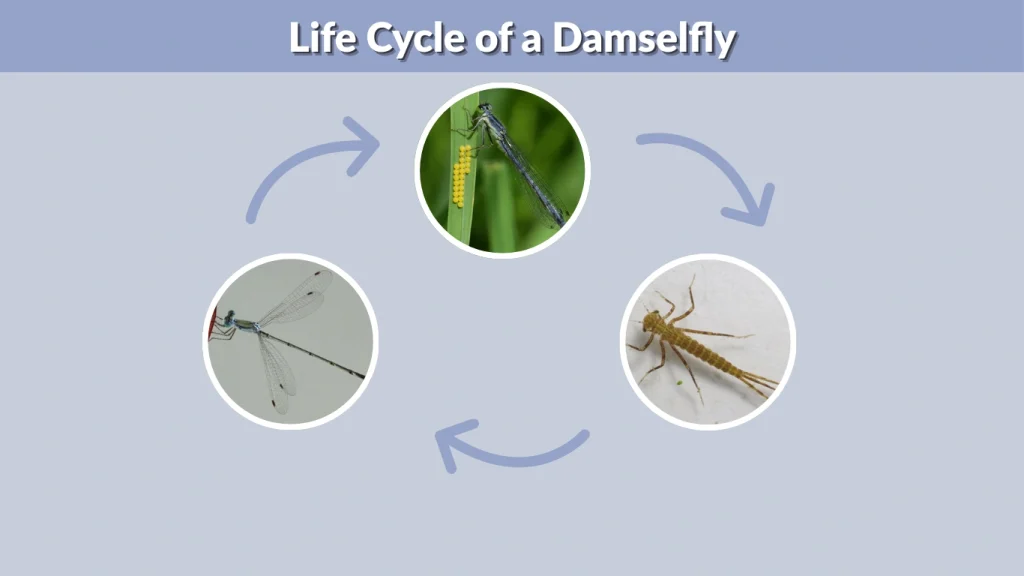
Egg Stage
The life of a damselfly begins when the female lays eggs underwater or within aquatic plant tissue. Some species submerge entirely during egg-laying. The eggs hatch within a few days to weeks, releasing tiny, translucent nymphs that immediately begin feeding.
Nymph Stage
This is the longest phase of their life cycle, lasting between six months and two years depending on water temperature. As the nymph grows, it molts its exoskeleton several times—each stage called an instar. With every molt, it becomes larger, stronger, and more skillful at hunting. Throughout this period, it remains a top-level invertebrate predator of its microhabitat.
Emergence and Transformation
When fully grown, the nymph climbs a plant stem or rock at the water’s edge. The outer skin splits, and the adult damselfly emerges, unfolding its soft wings and slender body. This transformation, known as eclosion, marks its shift from an aquatic predator to an airborne beauty. Within hours, its wings harden, and the vibrant adult damselfly takes its first flight, leaving behind the empty shell known as an exuvia.
Behavior and Diet

Feeding Habits
Damselfly nymphs are entirely carnivorous. They prey on mosquito larvae, mayfly nymphs, worms, and even smaller damselfly nymphs. Using stealth, they approach their target slowly, then strike rapidly with their labium. This ambush technique allows them to consume prey efficiently, helping to control insect populations in ponds and lakes.
Predators
While fearsome to smaller creatures, nymphs themselves are vulnerable to fish, frogs, newts, and aquatic birds. Their survival strategy relies on camouflage, quick reflexes, and staying still when danger approaches. Some even shed parts of their gills to escape if caught by a predator.
Movement and Hunting
Unlike dragonfly nymphs, which crawl along the substrate, damselfly nymphs are graceful swimmers. They move through water using gentle tail undulations or brief jets from their gills. Their movements are deliberate and energy-efficient, helping them remain hidden from both prey and predators.
Damselfly Nymph vs. Dragonfly Nymph
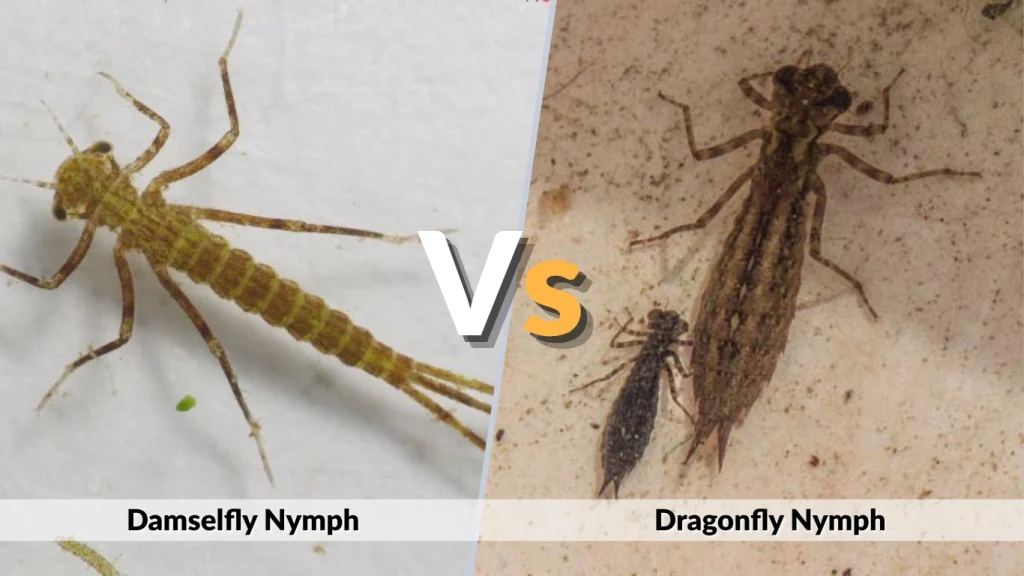
Structural Differences
While both belong to the order Odonata, damselfly and dragonfly nymphs differ in body shape and breathing mechanisms. Damselfly nymphs are slender with three external tail gills, while dragonfly nymphs are bulkier and breathe through internal rectal gills. The damselfly’s long, leaf-like gills make them more elegant swimmers, whereas dragonflies rely on powerful jet propulsion for movement. These differences also influence where each thrives—damselflies in calm waters, dragonflies in faster currents.
Behavioral Differences
Damselfly nymphs rely on stealth and slow movement, stalking prey with precision. Dragonfly nymphs, on the other hand, are more aggressive hunters that ambush prey using speed and strength. Both are important predators in their aquatic environments, but the damselfly’s lighter body allows it to navigate among reeds and vegetation more gracefully, minimizing disturbance in the water.
Aquarium and Captivity Care
Keeping Damselfly Nymphs in Tanks
Damselfly nymphs can be fascinating creatures to observe in aquariums. They require clean, oxygenated freshwater and plenty of aquatic plants for hiding and hunting. Since they’re sensitive to pollution and chlorine, only natural, dechlorinated water should be used. The tank should mimic their native environment with gentle filtration and a stable temperature of 18–25°C.
Feeding in Captivity
In captivity, damselfly nymphs thrive on live food such as mosquito larvae, daphnia, and small worms. Feeding them live prey helps preserve their natural hunting instincts. They should be fed sparingly every day or two, ensuring prey remains manageable in size. Overfeeding can foul the water and harm both the nymph and tank conditions.
Challenges and Observations
Damselfly nymphs are territorial and may exhibit cannibalistic behavior if housed together. For educational displays, it’s best to keep one nymph per tank. Observing their molting process and emergence is rewarding — when ready to transform, they’ll climb onto plants and shed their exoskeletons, revealing fragile, winged adults. This natural metamorphosis is a stunning reminder of insect evolution and adaptability.
Fly Fishing and Imitation Patterns
Importance in Fly Fishing
To anglers, damselfly nymphs are a favorite inspiration for stillwater fly fishing. Trout and bass eagerly feed on real damselfly nymphs, especially during summer months when they’re most active. Artificial fly patterns that mimic their shape and movement are essential tools in a fly fisher’s collection.
Popular Nymph Fly Patterns
Common imitations include the Olive Damselfly Nymph, Blue Damselfly Wiggle Nymph, and Articulated Damselfly Fly. These patterns use soft materials to imitate the natural wiggle and fluid swimming motion of real nymphs. For realism, tiers use green, brown, or olive tones with slender profiles and thin tails to mimic gills.
Tying and Fishing Techniques
When tying damselfly nymph patterns, use flexible materials like marabou or rabbit fur for lifelike movement. Fish them slowly near weed beds and shallow lake edges. A slow hand-twist retrieve or gentle pauses create a natural swimming action. Combining surface flies with nymph imitations, such as in a topwater and damselfly nymph combination, can attract larger trout feeding near the surface.
Species Examples

Common Blue Damselfly Nymph
This widespread species in the UK and Europe has a pale olive-brown body with light striping along the thorax. It prefers calm ponds and is commonly imitated in fly fishing patterns. The nymph’s streamlined shape and slow swimming motion make it a realistic model for anglers.
Azure and Emerald Damselfly Nymphs
The Azure Damselfly Nymph has lighter blue-green tones, while the Emerald Damselfly Nymph displays a rich metallic green. Both species inhabit clean stillwaters and rely heavily on aquatic vegetation for cover. Their presence is often a strong indicator of good water quality.
Green-Eyed and Bluet Nymphs
In North America, species like the Bluet Damselfly Nymph and Green-Eyed Nymph are abundant. They’re smaller and faster than European species but share the same predatory habits. Anglers often use green-tinted fly imitations to represent these local species in their fishing patterns.
Ecological Importance
Role in Freshwater Ecosystems
Damselfly nymphs occupy a key position in the aquatic food web. As predators, they regulate populations of mosquito larvae and small invertebrates, preventing pest overgrowth. Simultaneously, they serve as prey for fish, amphibians, and water birds. This dual role makes them critical for maintaining ecological stability in ponds and streams.
Indicators of Water Quality
Because damselfly nymphs are highly sensitive to pollutants, their presence signifies clean, oxygenated water. Scientists use them as bioindicators in freshwater monitoring programs. Polluted or eutrophic waters can cause deformities or population decline. Thus, conserving wetlands and reducing runoff is essential for sustaining healthy nymph populations.
Observation and Identification Tips
How to Identify Damselfly Nymphs
To identify a damselfly nymph, look for a slender, elongated body and three external gills at the tail tip. Their wing pads are visible on the back as they near maturity. Unlike dragonfly nymphs, damselflies swim gracefully using side-to-side tail motions. Magnification reveals intricate details such as the labial mask and body segmentation.
Photography and Study
For nature photographers or educators, damselfly nymphs are excellent study subjects. Use a macro lens or magnifying glass to capture fine details like the veins on their developing wing pads. Observe them in shallow ponds or containers with natural light. Documenting their emergence process offers insights into metamorphosis and freshwater biodiversity.
FAQs
What do damselfly nymphs eat?
Damselfly nymphs feed on mosquito larvae, small crustaceans, and aquatic insects. They’re ambush predators that strike prey using a lightning-fast extendable jaw.
How long do damselfly nymphs live?
Their nymph stage lasts from six months to two years, depending on the species and water temperature. Colder climates extend development, while warmer waters speed it up.
How can I identify a damselfly nymph?
They have three tail-like gills, a slim body, and visible wing pads. Their smooth, side-to-side swimming distinguishes them from bulkier dragonfly nymphs.
Are damselfly nymphs used in fly fishing?
Yes, they inspire numerous fly fishing patterns. Anglers imitate their swimming style and coloration to catch trout and bass in stillwaters.
Do damselfly nymphs indicate clean water?
Absolutely. Their presence reflects high oxygen levels and minimal pollution. A thriving nymph population signals a healthy aquatic environment.
