
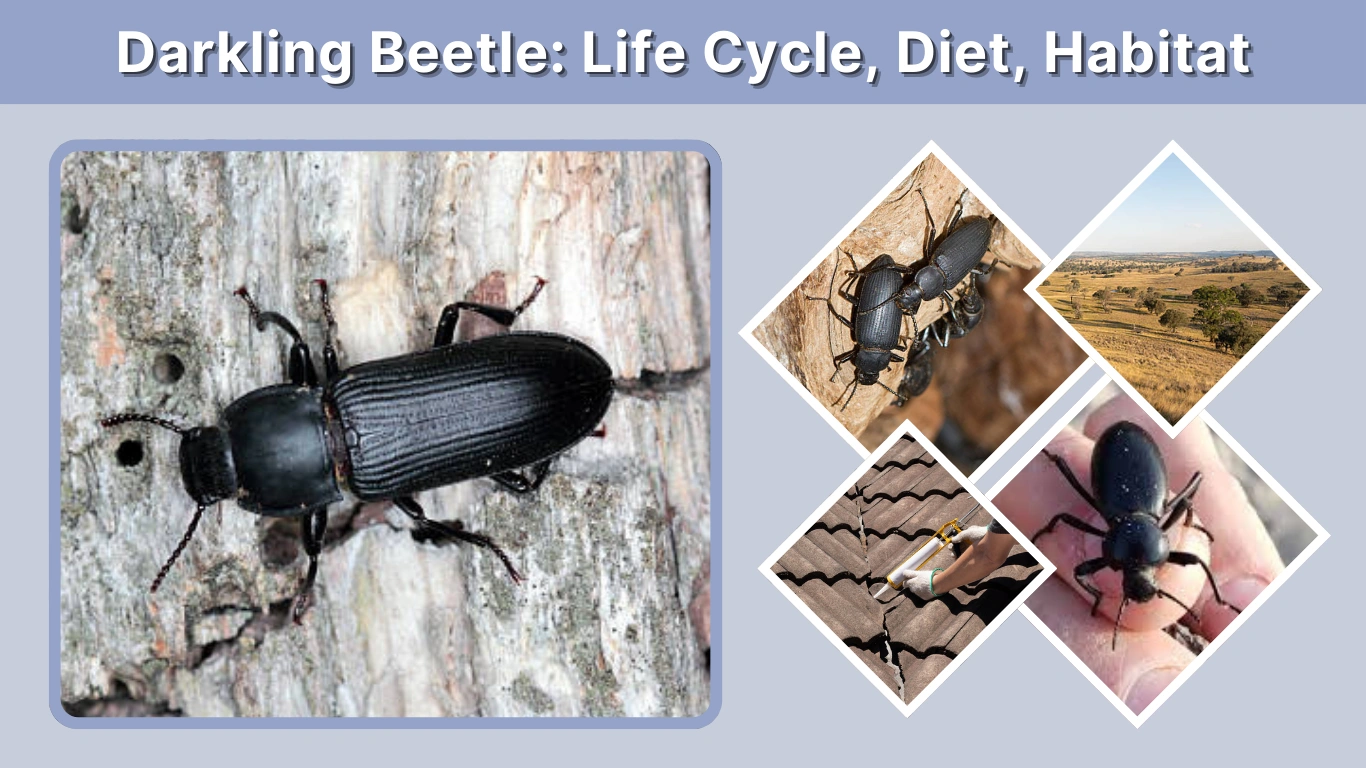
Darkling beetles are common insects found in many parts of the world, especially in dry environments, farms, and grain storage areas. They belong to the large beetle family Tenebrionidae, which includes thousands of species. These insects play an important role in nature by helping break down organic matter. However, they can also become pests in poultry houses and agricultural settings. Understanding the darkling beetle life cycle, diet, habitat, and potential risks can help people manage and control them effectively.
What Is a Darkling Beetle?
A darkling beetle is a type of beetle that belongs to the Tenebrionidae family, which includes more than 20,000 known species worldwide. These beetles are widely distributed and are commonly found in deserts, grasslands, farms, and areas where grains are stored.
Darkling beetles are known for their dark-colored bodies and ability to survive in dry conditions. Some species are harmless decomposers, while others can become pests in agricultural environments, particularly in poultry houses.
Scientific Classification
Darkling beetles are classified as follows:
- Kingdom: Animalia
- Phylum: Arthropoda
- Class: Insecta
- Order: Coleoptera
- Family: Tenebrionidae
Because there are thousands of species within this family, their appearance and behavior can vary slightly. However, they share many common features that make them easy to recognize.
Physical Characteristics
Darkling beetles typically have several distinct physical traits.
- Most species are black or dark brown in color
- Their bodies are oval-shaped and slightly elongated
- They usually measure 1–2 centimeters in length
- They have a hard outer shell (exoskeleton) that protects them from predators and environmental conditions
These beetles move relatively slowly compared to other insects. Many species are active at night and prefer hiding during the day under rocks, logs, or debris.
Darkling Beetle Life Cycle
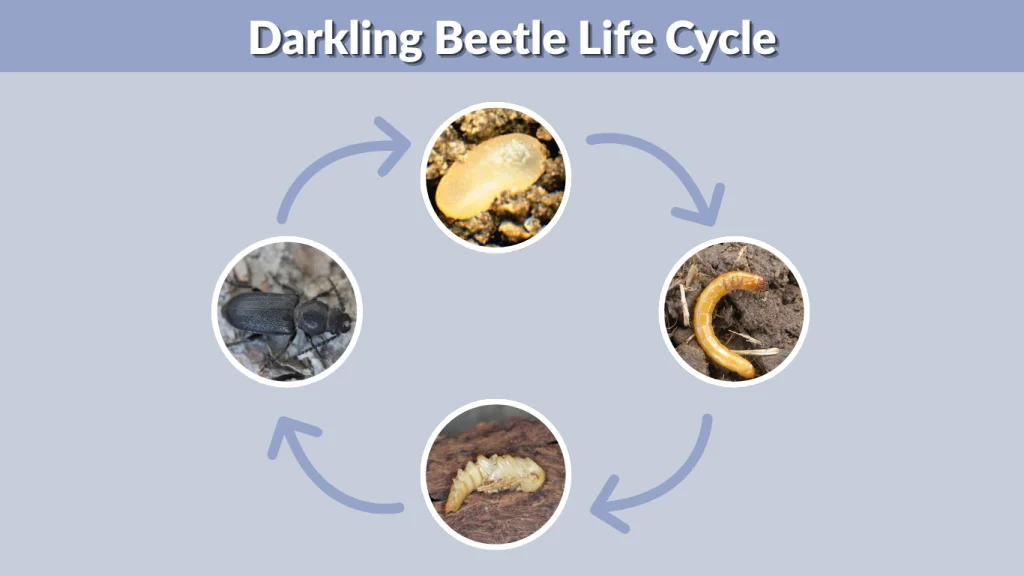
Like many insects, darkling beetles go through a complete metamorphosis, meaning they develop through four distinct life stages: egg, larva, pupa, and adult.
Understanding the darkling beetle life cycle is important because each stage plays a different role in their growth and reproduction.
Egg Stage
The life cycle begins when a female darkling beetle lays eggs. Females usually lay their eggs in soil, organic debris, or areas with food sources such as grain or decaying material.
A single female can lay dozens or even hundreds of eggs during her lifetime. The eggs are very small and difficult to see with the naked eye.
Under favorable conditions, the eggs usually hatch within 4–10 days. Temperature and humidity can influence how quickly the eggs develop.
Larva Stage (Mealworms)
After the eggs hatch, the larvae emerge. These larvae are commonly known as mealworms, which many people recognize because they are often used as food for reptiles, birds, and fish.
Mealworms have several characteristics:
- Long, worm-like bodies
- Yellowish or golden-brown color
- Segmented bodies with small legs
This stage is the longest stage of the life cycle, often lasting several weeks or even months depending on environmental conditions. During this time, the larvae feed continuously to grow and develop.
As they grow, the larvae shed their outer skin multiple times, a process known as molting.
Pupa Stage
Once the larva has reached full size, it enters the pupa stage, which is the transformation stage between larva and adult.
During this stage:
- The insect stops feeding
- The body begins to reorganize internally
- Adult body structures develop
The pupa is usually pale or whitish in color and remains relatively inactive. This stage typically lasts 1–3 weeks, depending on temperature and environmental conditions.
Adult Stage
After the pupal stage is complete, an adult darkling beetle emerges.
At first, the newly emerged beetle may appear lighter in color, but it gradually darkens as its outer shell hardens. Once fully developed, the adult beetle begins searching for food and mates.
Adult darkling beetles can live for several months, during which they reproduce and continue the life cycle.
Darkling Beetle Lifespan
The lifespan of a darkling beetle can vary depending on the species and environmental conditions. In general, most darkling beetles live between three months and one year.
Several factors influence their lifespan, including:
- Temperature
- Food availability
- Habitat conditions
- Predators
In controlled environments such as laboratories or insect farms, darkling beetles may live longer because they have consistent food sources and fewer threats.
In the wild, however, their lifespan is often shorter due to predators and environmental challenges.
What Do Darkling Beetles Eat?
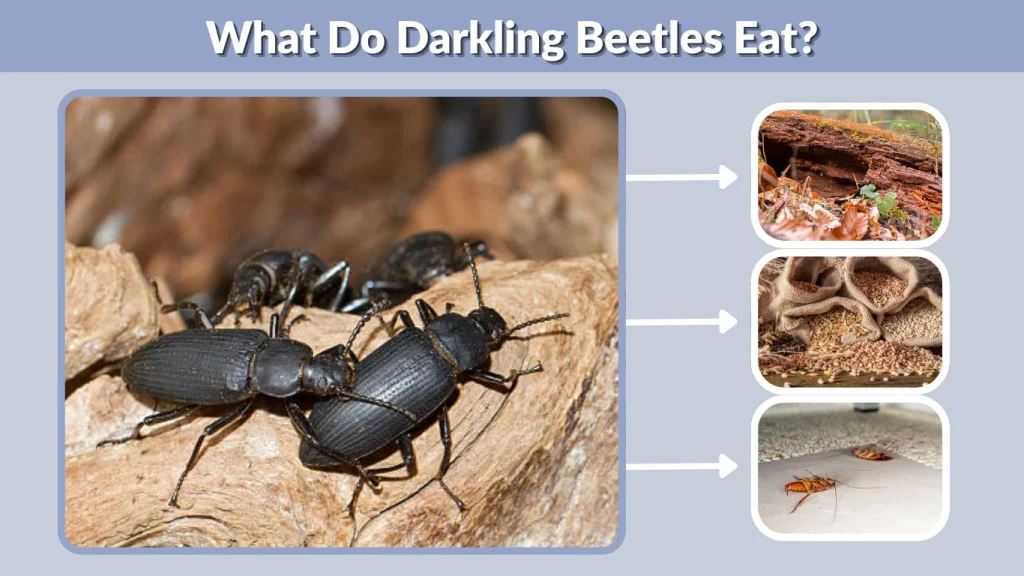
Darkling beetles are omnivorous scavengers, meaning they feed on a wide variety of organic materials. Their diet mainly consists of decaying plant matter, grains, and other organic debris.
Because they are scavengers, darkling beetles play an important role in ecosystems by helping break down organic material and recycling nutrients back into the soil.
Natural Diet
In natural environments, darkling beetles commonly feed on:
- Decaying plants
- Seeds and grains
- Dead insects
- Organic debris
They often live in areas where food sources are abundant, such as forest floors, deserts, or grassy fields.
Diet in Farms and Poultry Houses
In agricultural settings, darkling beetles can become pests because they are attracted to food sources commonly found in farms.
They may feed on:
- Poultry feed
- Grain products
- Animal waste
- Spilled feed on farm floors
Because of this behavior, large populations of darkling beetles sometimes develop in poultry houses, where they can contaminate feed and spread bacteria.
Darkling Beetle Habitat
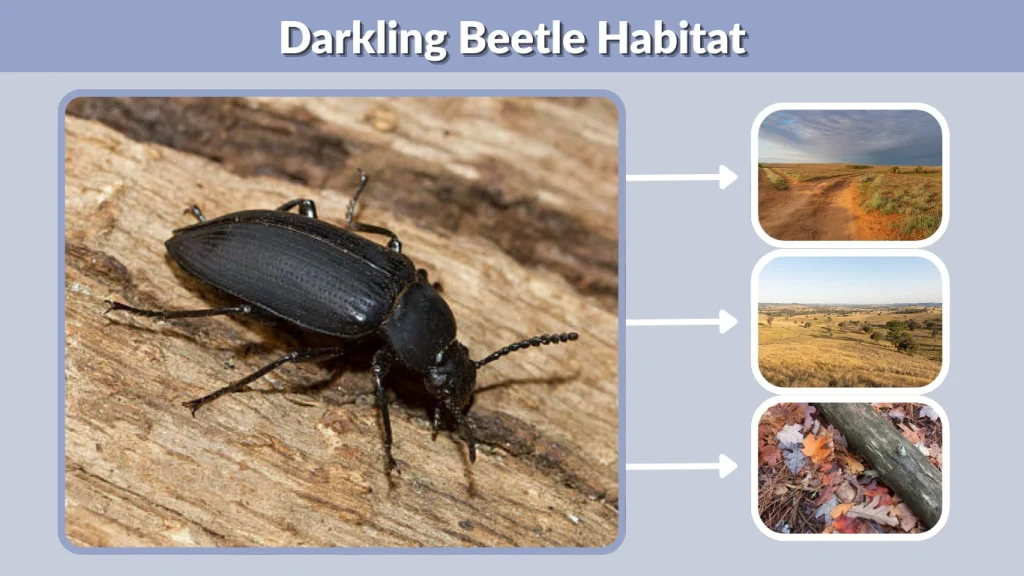
Darkling beetles are highly adaptable insects that can survive in a wide range of environments. However, they are most commonly found in dry, warm habitats where food sources such as plant material or grains are available. Their ability to survive in harsh conditions allows them to thrive in both natural ecosystems and human environments.
Natural Habitat
In nature, darkling beetles are often found in areas that provide shelter and food. These habitats help protect them from predators and extreme weather conditions.
Common natural habitats include:
- Deserts and semi-arid regions
- Dry grasslands
- Under rocks, logs, and leaf litter
- Soil and sandy environments
Some species of darkling beetles are particularly well adapted to desert environments. They have developed behaviors that help them conserve moisture and survive in extremely dry conditions.
Human Environments
Darkling beetles can also live in places where humans store food or raise animals. These environments provide warmth, shelter, and a steady supply of food.
They are commonly found in:
- Poultry farms
- Grain storage facilities
- Agricultural fields
- Animal bedding and feed storage areas
Because these locations provide ideal living conditions, darkling beetle populations can grow quickly if they are not properly managed.
Are Darkling Beetles Dangerous?
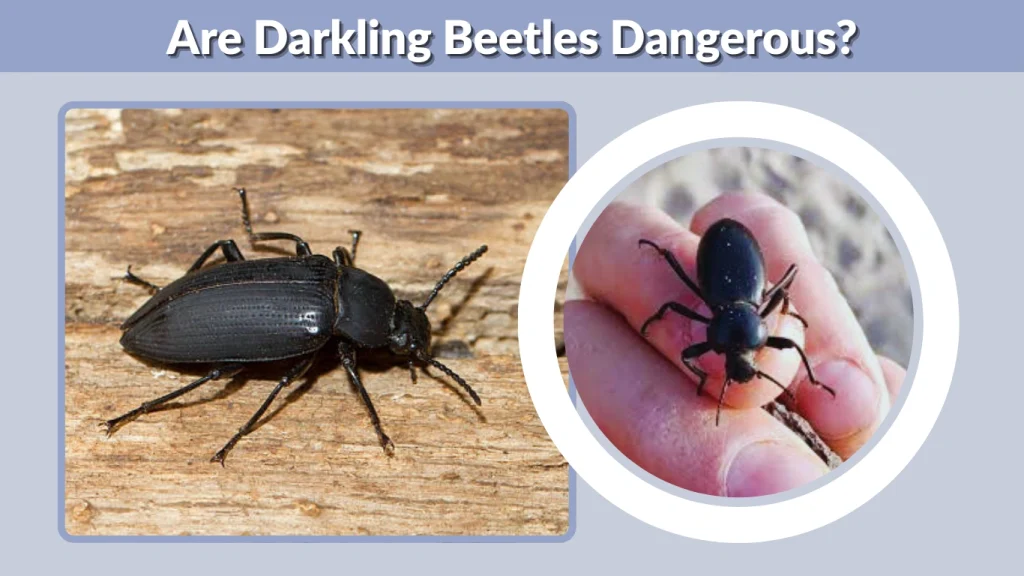
Many people wonder whether darkling beetles are harmful. In most cases, darkling beetles are not dangerous to humans. They do not contain venom and are generally considered harmless insects.
However, they can still cause problems in certain environments, especially in agricultural settings.
Do Darkling Beetles Bite?
Darkling beetles rarely bite humans. Their mouthparts are designed primarily for feeding on plant material and organic debris rather than biting people.
If a bite does occur, it is usually mild and does not cause serious injury. Most encounters with these beetles are harmless, and they tend to avoid human contact.
Impact on Humans
For most households, darkling beetles are simply nuisance pests. They do not spread major diseases to humans and are not considered a serious health risk.
However, large infestations may become unpleasant because the beetles can:
- Gather in large numbers
- Contaminate stored food products
- Produce an unpleasant odor when disturbed
Impact on Farms
Darkling beetles can be more problematic in poultry farms and livestock facilities. Large populations may cause several issues, such as:
- Contaminating poultry feed
- Damaging insulation in poultry houses
- Carrying bacteria that affect animals
Because of these risks, farmers often monitor and control darkling beetle populations carefully.
Darkling Beetle Control Methods
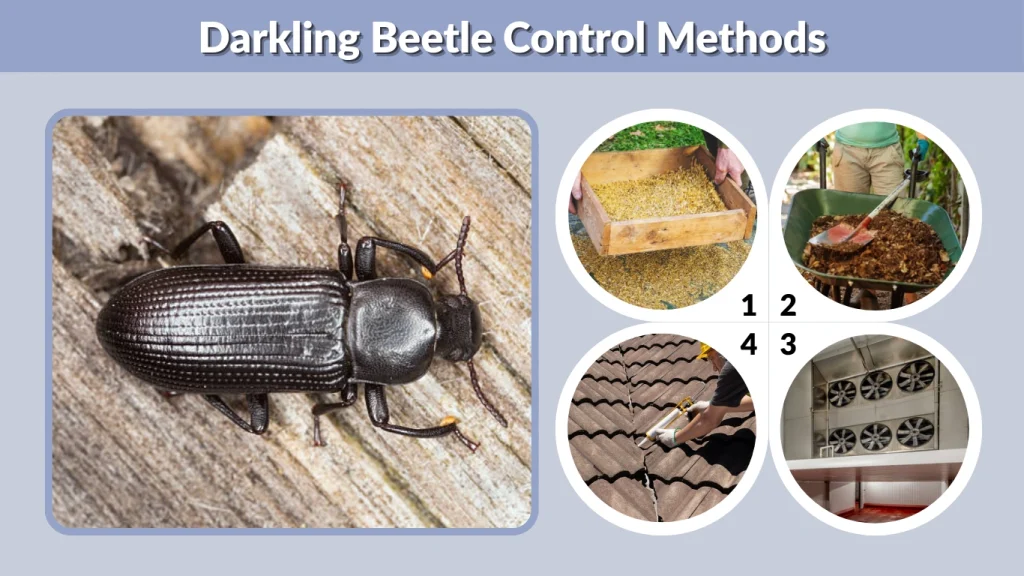
If darkling beetles become a problem, several control strategies can help reduce their population. Effective control usually involves a combination of prevention, environmental management, and chemical treatment when necessary.
Prevention
Prevention is one of the most effective ways to manage darkling beetles. Keeping environments clean and removing potential food sources can prevent infestations from developing.
Helpful prevention steps include:
- Cleaning up spilled feed and grain
- Removing organic waste and debris
- Keeping storage areas dry and well ventilated
- Sealing cracks and entry points in buildings
These practices reduce the conditions that darkling beetles need to survive and reproduce.
Natural Control
Natural methods can also help control darkling beetle populations without using chemicals.
Some natural control strategies include:
- Encouraging natural predators such as birds and small animals
- Improving ventilation in poultry houses
- Regularly replacing bedding materials in animal facilities
Maintaining proper hygiene and environmental conditions can significantly reduce beetle populations over time.
Chemical Control
In severe infestations, chemical treatments may be necessary. Pest control professionals may apply insecticides that are specifically designed to target beetles.
Chemical control methods may include:
- Residual insecticides
- Surface treatments in poultry houses
- Professional pest management services
These methods should be used carefully and according to safety guidelines to protect animals and the environment.
Interesting Darkling Beetle Facts
Darkling beetles have several fascinating characteristics that make them unique among insects.
Some interesting facts include:
- There are more than 20,000 species of darkling beetles worldwide.
- Their larvae, known as mealworms, are widely used as food for reptiles, birds, and fish.
- Some desert species collect moisture from the air to survive in extremely dry environments.
- Darkling beetles play an important ecological role by breaking down organic matter.
- Certain species can release a defensive chemical that produces a strong odor to deter predators.
These adaptations help darkling beetles survive in challenging environments and contribute to ecosystem balance.
FAQs
What do darkling beetles eat?
Darkling beetles mainly eat decaying plants, grains, seeds, and organic debris. In farms and poultry houses, they may also feed on poultry feed, spilled grain, and animal waste.
Are darkling beetles dangerous to humans?
Darkling beetles are generally not dangerous to humans. They rarely bite and do not carry venom. However, large populations can become nuisance pests in homes or farms.
How long do darkling beetles live?
Most darkling beetles live between three months and one year, depending on the species and environmental conditions.
Where are darkling beetles commonly found?
Darkling beetles are commonly found in deserts, grasslands, farms, grain storage facilities, and poultry houses, where food and shelter are available.
