

The deer botfly (Cephenemyia spp.) is one of nature’s most specialized parasites, known for its remarkable speed and unique relationship with deer. Unlike ordinary flies, it doesn’t feed on blood or plants; instead, its larvae develop inside a deer’s nasal passages and throat. This process, while unsettling, plays an intriguing role in wildlife parasitology and ecosystem dynamics.
What Is a Deer Botfly?
The deer botfly, belonging to the genus Cephenemyia, is a parasitic fly that specifically targets deer species such as white-tailed deer, mule deer, and roe deer. Adult botflies resemble bumblebees in appearance, with fuzzy bodies and quick, darting movements.
They are often called nasal botflies because their larvae develop inside a deer’s nasal cavity and sinuses. These flies are found across North America, Europe, and parts of Asia, making them one of the most widespread parasites affecting deer populations.
Life Cycle of the Deer Botfly

Like all botflies, the deer botfly’s life cycle has four distinct stages: egg, larva, pupa, and adult. However, this species has a unique method of infection. Instead of laying eggs on the skin, the adult female injects live larvae directly into the deer’s nostrils while in flight.
Once inside, the larvae migrate to the nasal passages and throat, where they attach to the tissue and feed on mucus and fluids. After several weeks or months, the mature larvae exit the host through the nostrils and pupate in the soil, eventually emerging as adult flies. This cycle continues each summer when adult botflies become active again.
How Deer Botflies Infect Deer
The infection process is both quick and efficient. A female botfly can hover near a deer’s face and release larvae in just a fraction of a second. The larvae are tiny, sticky, and perfectly adapted to enter the nasal passages before the deer can react.
Once inside, they travel through the nasal cavity to the pharyngeal region (the area behind the nose and mouth). There, they attach to soft tissue, grow, and feed in clusters. This condition is known as nasal myiasis — a parasitic infestation common among deer during warm seasons.
What Do Botflies Do to Deer?

Botfly larvae can cause irritation, inflammation, and nasal congestion in deer. Affected animals may shake their heads, sneeze frequently, or appear restless. In severe infestations, deer may experience difficulty breathing or feeding due to blockage in the nasal passages.
However, in most cases, the infestation is temporary. Once the larvae mature and leave the host, the tissue heals naturally. The presence of botflies can make deer uncomfortable, but it rarely leads to long-term harm or death.
Do Botflies Harm or Benefit Deer?
The relationship between botflies and deer is strictly parasitic — meaning only the botfly benefits. The fly gains nourishment and shelter for its larvae, while the deer suffers from irritation and potential health stress. There is no mutual advantage or neutral balance between them.
Although botflies rely on deer for survival, they typically don’t kill their host. This parasitic balance ensures that both species can continue their life cycles without destroying each other’s population.
Botflies and Deer: A Parasitic Relationship

In biological terms, the deer botfly’s connection with its host is a classic example of parasitism. The deer acts as a host, providing warmth, nutrients, and protection for the developing larvae. The botfly, in turn, causes harm through tissue irritation and mild respiratory issues.
This relationship differs from mutualism (where both organisms benefit) or commensalism (where one benefits without harming the other). Instead, it’s a one-sided relationship where the parasite thrives at the expense of its host — a hallmark of nature’s parasitic interactions.
Deer Botfly Speed – The World’s Fastest Fly
The deer botfly has gained fame as possibly the fastest flying insect on Earth. Reports claim it can reach speeds of up to 40 to 50 miles per hour (64–80 km/h), faster than many birds. This incredible speed allows the fly to escape predators and quickly approach deer for larval injection.
However, some scientists debate these figures, arguing that such speeds are difficult to verify accurately. Even so, its unmatched agility makes the deer botfly one of nature’s most impressive and efficient parasites.
Deer Botfly Habitat and Range
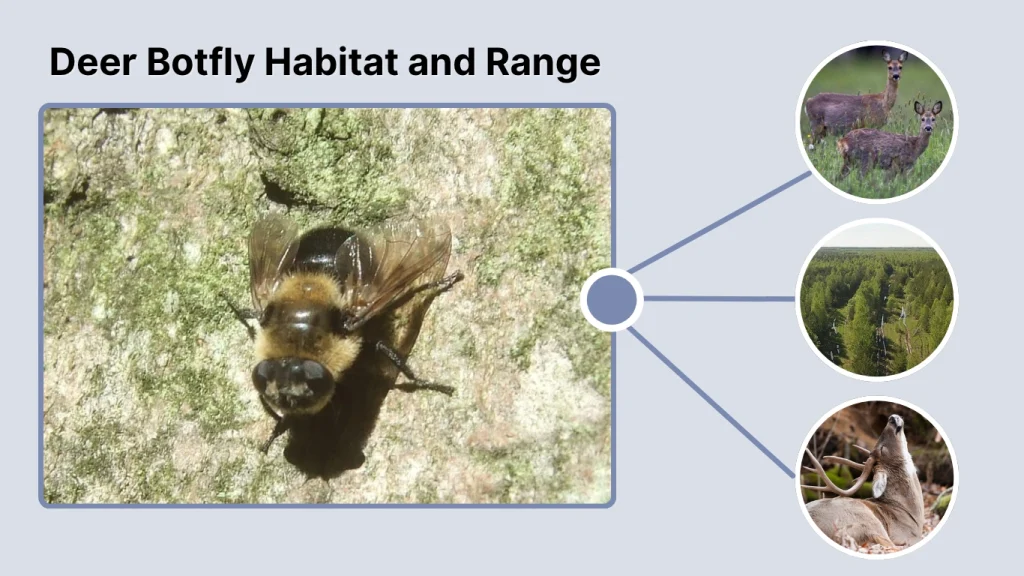
Deer botflies are widely distributed across North America, Europe, and parts of Asia, wherever deer populations thrive. They prefer forested, grassy, or mountainous areas where deer frequently feed and rest.
These flies are most active during warm summer months, especially in June through August. Since adult botflies live for only a few days, their brief lifespan is focused entirely on locating a suitable host and depositing larvae. This adaptation ensures their continued survival across generations.
Deer Botfly Diet and Behavior
Adult deer botflies are unusual because they do not feed at all. They rely entirely on the stored energy reserves accumulated during their larval stage. Their sole purpose as adults is to reproduce and infect new hosts.
Inside the deer, botfly larvae feed on mucus, tissue fluids, and cellular debris in the nasal passages. While this feeding can irritate the deer, it rarely causes lasting harm. Once larvae mature, they exit through the nostrils and drop to the ground to pupate, completing their life cycle.
Can Botflies Kill a Deer?
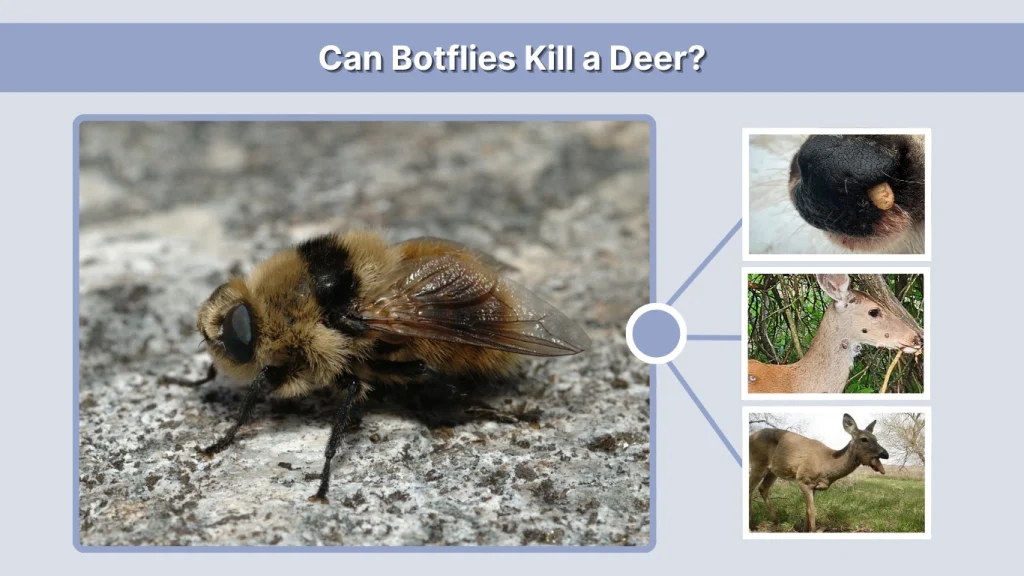
Although botflies are parasites, they are not lethal to their hosts in most cases. A healthy deer can tolerate small to moderate infestations without severe effects. However, in cases of heavy infestations, particularly in young or weak animals, breathing difficulties may lead to starvation or exhaustion.
Botfly larvae can sometimes cause secondary bacterial infections, but these cases are rare. Overall, deer and botflies have evolved together in a delicate balance where the parasite depends on the host’s survival.
Interesting Deer Botfly Facts
- The deer botfly is believed to be one of the fastest insects in the world.
- A female can inject up to 30 larvae in a second directly into a deer’s nostrils.
- Larvae can grow up to 3 cm (1.2 inches) before exiting the deer’s nasal passages.
- Adult botflies live for only three to five days and never feed during this time.
- Despite their parasitic nature, they play a role in natural population control, keeping deer numbers balanced in ecosystems.
Human Interest: Deer Botfly and Humans
Deer botflies are species-specific parasites, meaning they only target deer and related animals. Humans are not their natural hosts, but in extremely rare cases, a larva could mistakenly try to invade human tissue, usually without success.
Hunters or wildlife workers who handle deer during warm seasons should wear gloves and avoid close contact with the animal’s nasal area. While the risk is minimal, awareness is key to preventing accidental exposure to larvae.
FAQs
1. What is the relationship between botflies and deer — parasitic, mutualistic, or commensal?
The relationship between botflies and deer is parasitic. Botflies benefit by using deer as hosts for their larvae, while deer experience discomfort and tissue irritation. Unlike mutualism or commensalism, parasitism harms the host but helps the parasite complete its life cycle successfully.
2. How fast can the deer botfly fly?
The deer botfly is believed to fly at speeds of up to 40–50 miles per hour (64–80 km/h), making it one of the fastest insects on record. Though some researchers debate the accuracy of this claim, there’s no doubt the species is incredibly swift and agile in flight.
3. Do botflies help deer in any way?
No, botflies offer no benefit to deer. The relationship is entirely one-sided. While the larvae gain shelter and nutrition, the deer experiences irritation and possible breathing difficulties. The fly’s success depends on keeping the host alive but uncomfortable.
4. Can a botfly infestation kill a deer?
Severe infestations can weaken a deer by obstructing its breathing passages and making feeding difficult. However, death is rare. Most deer survive mild to moderate infestations, as the larvae eventually leave the body, allowing the animal to recover naturally.
5. Where are deer botflies most commonly found?
Deer botflies are found in regions with large deer populations, particularly across North America and northern Europe. They prefer warm, humid climates and are most active in summer when deer are plentiful and outdoor temperatures favor larval development.
