
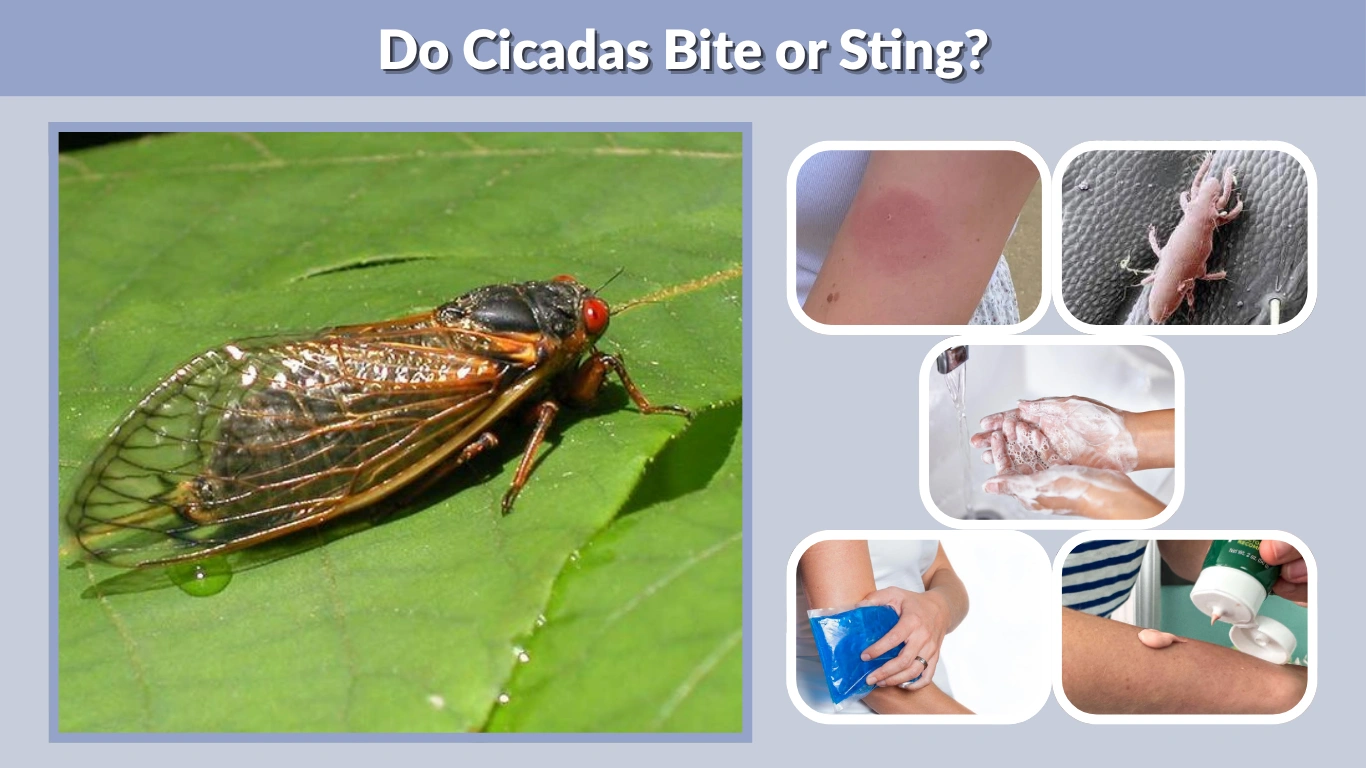
Every summer, the air fills with the loud buzzing of cicadas — a sound that signals warmth, sunshine, and the arrival of one of nature’s most fascinating insects. Yet for many people, these red-eyed creatures inspire curiosity and fear. Their large size, erratic flight, and deafening song often raise the same question: Do cicadas bite or sting?
Despite their intimidating appearance, cicadas are completely harmless to humans and pets. They don’t bite, sting, or carry diseases. Still, their look-alikes — such as cicada killer wasps and tiny cicada mites — sometimes cause confusion or concern. This article clears up those myths and explains everything you need to know about cicadas, their habits, and what to do if you encounter them.
Understanding Cicadas
What Are Cicadas?
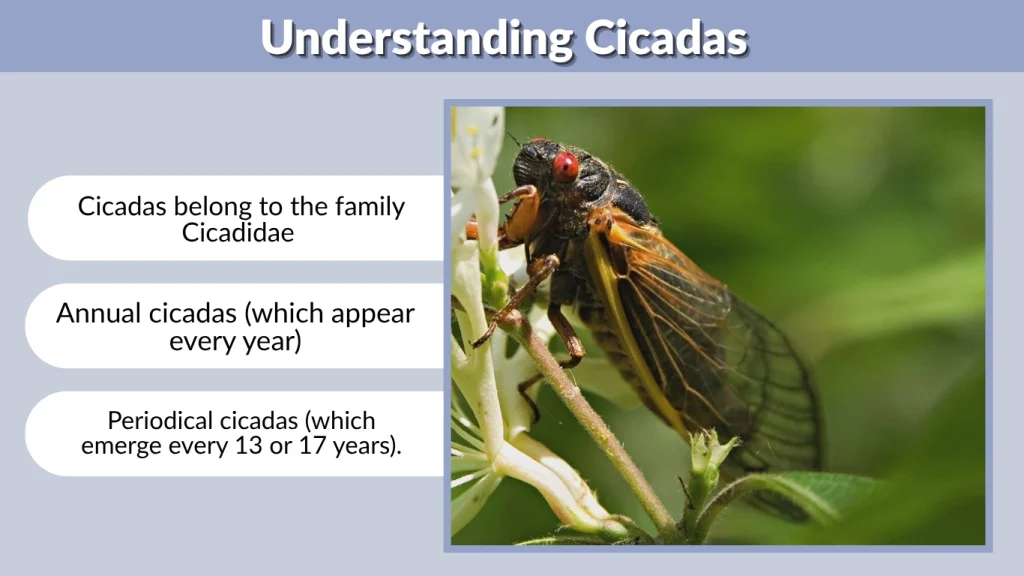
Cicadas belong to the family Cicadidae and are found on every continent except Antarctica. There are more than 3,000 known species, divided into two main types: annual cicadas (which appear every year) and periodical cicadas (which emerge every 13 or 17 years). The periodical varieties — like the famous Brood X — can appear by the billions, covering trees, lawns, and even cars.
Cicadas are known for their large bodies, bulging eyes, transparent wings, and unique sound-producing organs called tymbals, found on the males. Their loud buzzing is a mating call used to attract females, and at peak times, their chorus can exceed 100 decibels, roughly as loud as a motorcycle engine.
Why People Think Cicadas Bite or Sting
Their alien-like appearance often makes people assume cicadas are dangerous. They have a long, thin beak-like mouthpart called a proboscis, which they use to pierce tree branches and drink sap. Because this mouthpart looks sharp, it’s easy to believe it could be used for biting or stinging. However, cicadas lack jaws, teeth, or venom — so they are physically incapable of harming humans.
Sometimes, a cicada might land on someone out of curiosity or mistake a finger for a tree branch. When this happens, it may gently probe the skin, resulting in a harmless poke that surprises more than it hurts.
Do Cicadas Bite or Sting Humans?
The Truth About Cicada “Bites”
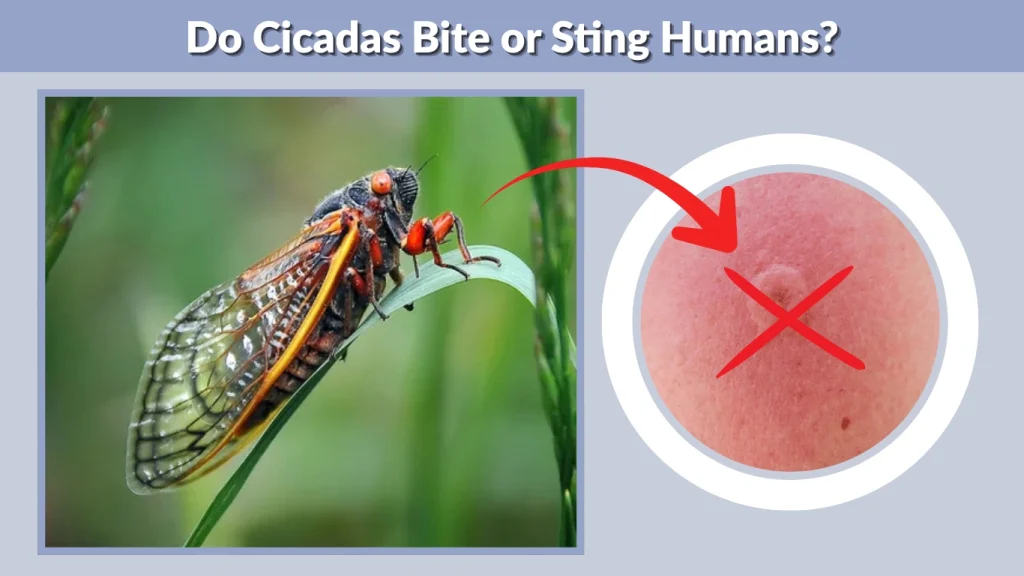
Cicadas do not bite or sting humans, animals, or plants beyond feeding on sap. Their mouthparts are designed only for sucking liquid, not for chewing or tearing. Even if a cicada tries to feed on human skin by mistake, it cannot break the surface.
What people sometimes call a “bite” is actually a brief probing motion when the insect confuses a warm finger with a tree stem. It may feel like a light pinch but leaves no mark or swelling. In short, cicadas can’t and won’t bite you — they simply don’t have the anatomy to do it.
What a Cicada Bite Feels Like
If a cicada does poke you, the sensation is very mild — a soft prick similar to a mosquito resting on your skin. There’s no venom, no irritation, and no infection risk. Most people don’t even notice it unless they’re watching closely. Cicadas are far more interested in trees and shrubs than humans.
Do Cicadas Attack or Defend Themselves?
Unlike bees or wasps, cicadas do not defend themselves by stinging or biting. When threatened, their primary defense is flight. They might buzz loudly or flutter away but will not attack. In fact, cicadas lack the physical mechanisms to harm predators — they rely instead on their sheer numbers to survive. Predators such as birds, frogs, and even squirrels may eat them, but cicadas pose no danger in return.
Different Types of Cicadas and Biting Myths
Do Annual or Periodical Cicadas Bite?
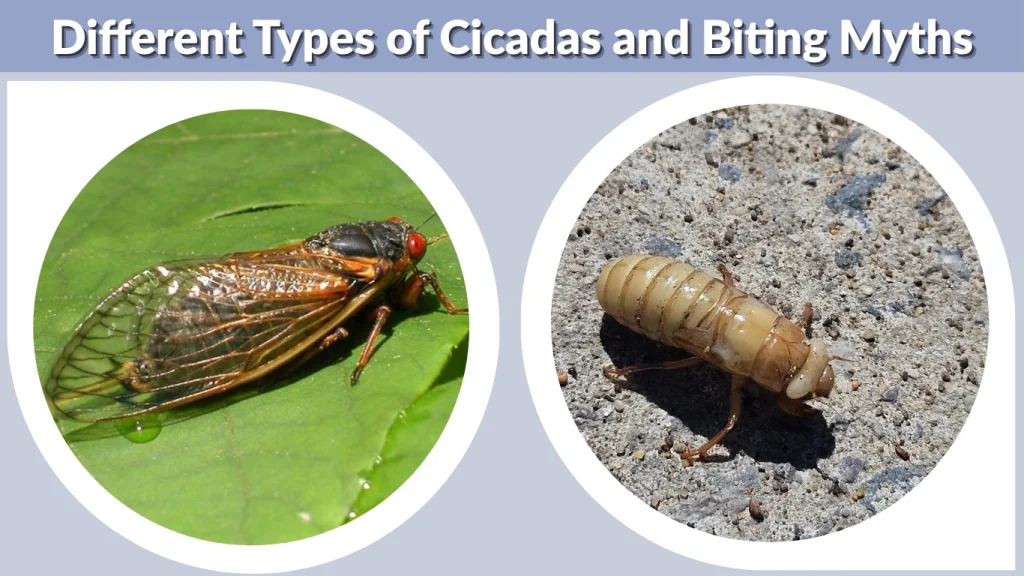
Neither type bites or stings. Annual cicadas, which appear every summer, are greenish and larger. Periodical cicadas, known for their 13- or 17-year cycles, are smaller with striking red eyes. Both use their proboscis to feed exclusively on plant sap.
Even when billions of Brood X cicadas emerged across the U.S., there were no reports of anyone being bitten or stung. They can be loud and numerous — but never dangerous.
Do Cicada Nymphs Bite?
Cicada nymphs, which live underground for most of their lives, feed only on the sap of tree roots. They spend years underground, slowly growing until they surface as adults. During this stage, they do not bite humans or pets. After emerging, they shed their brown exoskeletons (often seen clinging to tree trunks) and begin their short adult life.
Cicada Killers — The Real Sting Concern
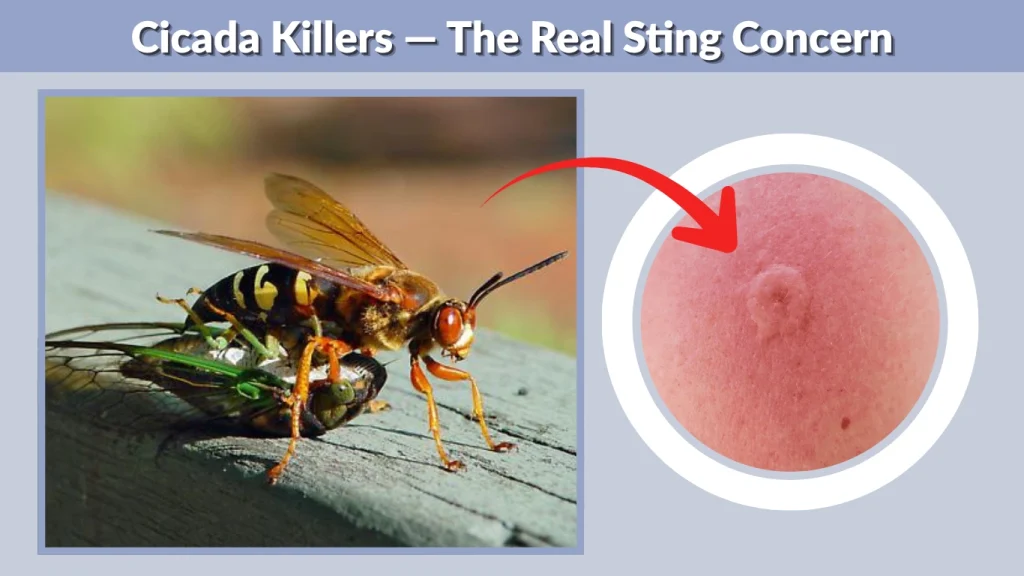
What Are Cicada Killer Wasps?
One reason people fear cicadas is confusion with the cicada killer wasp (Sphecius speciosus). These large, solitary wasps prey on cicadas but are not cicadas themselves. Female cicada killers paralyze cicadas with their sting and carry them into underground burrows as food for their larvae.
Despite their size — sometimes over 2 inches long — cicada killers are not aggressive toward humans. Males do not have stingers, and females sting only if handled roughly.
Do Cicada Killers Bite or Sting Humans?
While a cicada killer’s sting can be painful, it is extremely rare. These wasps prefer to avoid people and focus on hunting cicadas. Their sting is less severe than a bee’s and poses little risk unless the person is allergic. Understanding the difference between cicadas and cicada killers helps prevent unnecessary panic — cicadas themselves remain sting-free.
Cicada Mites and Cicada Mite Bites
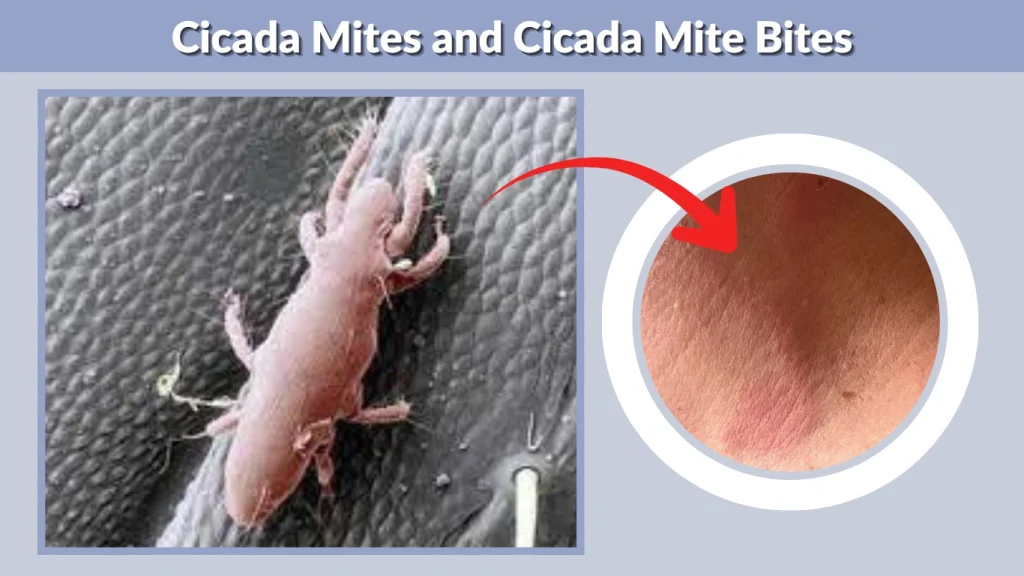
What Are Cicada Mites?
While cicadas themselves don’t bite, they sometimes host tiny parasitic mites on their bodies — often mistaken for “cicada bites.” These are known as cicada mites (closely related to chiggers or harvest mites). They’re usually bright red or orange and small enough to look like dust specks moving on the insect’s wings or abdomen.
Cicada mites attach to adult cicadas during emergence seasons to feed on bodily fluids or to hitchhike to new environments. They rarely affect humans directly, but in some cases, similar mites may irritate the skin of people or pets who come into contact with infested vegetation.
Can Cicada Mites Bite Humans or Pets?
Most cicada mites do not bite humans. However, their close relatives — chiggers — can cause itchy red bumps after outdoor exposure. These mites don’t burrow under the skin but feed on tissue fluid through microscopic punctures.
Pets such as dogs and cats can also pick up these mites while outdoors. Although they won’t live on pets permanently, they can cause temporary itching or redness. Bathing your pet and washing outdoor bedding usually eliminates them.
What Do Cicada Mite Bites Look Like?
If you do experience a mite bite, it usually appears as a cluster of small red welts. The bumps can be intensely itchy and may look similar to mosquito or flea bites. They tend to appear on areas of skin exposed to tall grass or weeds — such as ankles, calves, or wrists.
These bites are not dangerous but can be uncomfortable. They are caused by an allergic reaction to the mite’s saliva, not by venom or infection.
How Long Do Cicada Mite Bites Last?
Cicada mite or chigger bites generally last three to seven days, depending on the person’s skin sensitivity. In some cases, minor redness may linger for up to two weeks if the area is scratched excessively. Over-the-counter creams and cool compresses help reduce itching and swelling.
How to Treat and Prevent Cicada or Mite Bites
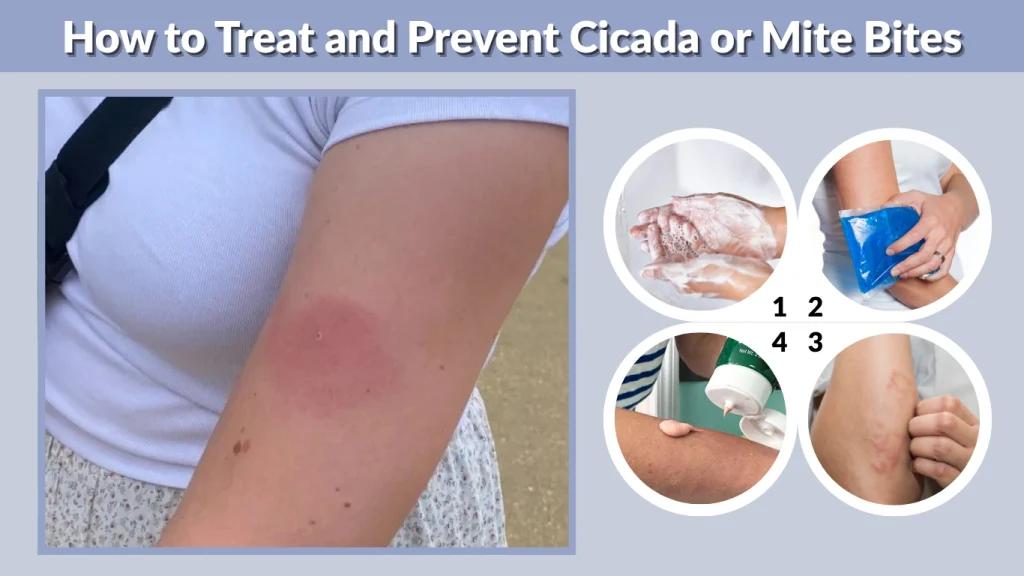
What to Do If Bitten
Even though cicadas themselves don’t bite, mite bites can still occur outdoors during active cicada seasons. Treatment is simple:
- Clean the area with mild soap and warm water.
- Apply a cold compress to reduce swelling.
- Use anti-itch creams or calamine lotion to relieve irritation.
- Avoid scratching, which can break the skin and cause infection.
- If swelling spreads or becomes painful, seek medical attention.
For pets, a gentle bath with pet-safe shampoo usually removes any mites. Persistent itching may require a veterinarian’s advice.
How to Prevent Mite Bites
- Wear protective clothing such as long sleeves and pants when hiking or working outdoors.
- Apply insect repellent containing DEET or permethrin to skin and clothing.
- Avoid sitting directly on grass or soil during peak mite activity.
- Shower promptly after outdoor activities and wash clothes in hot water.
These precautions reduce the risk of mite bites during heavy cicada years, especially when both insects and mites are abundant in the same habitat.
Cicadas and Pets
Do Cicadas Bite Dogs or Cats?
No, cicadas cannot bite or sting dogs, cats, rabbits, or any other pets. Their mouthparts are designed for sap-feeding only, so they pose no threat to animals. However, pets are often curious about these large, buzzing insects and may attempt to play with or eat them.
Can Dogs Eat Cicadas?
A few cicadas won’t harm your dog, but eating too many can cause stomach upset, vomiting, or constipation. The hard outer shells (exoskeletons) are difficult to digest. Pet owners should discourage their dogs from eating cicadas in large quantities, especially during mass emergencies.
Do Cicada Mites Affect Pets?
Occasionally, mites that cling to cicadas can transfer to pets. This can cause mild itching, though they typically fall off within a day or two. Regular grooming, flea combing, and bathing prevent these temporary irritations.
Fun and Fascinating Cicada Facts
Lifespan and Behavior
Cicadas are among the most unique insects in the world. They spend 2 to 17 years underground as nymphs, feeding on sap from tree roots. When the time is right — often triggered by soil temperature — they emerge in synchrony, shed their exoskeletons, and live for only 2 to 6 weeks as adults.
During that short time, males produce their famous buzzing calls to attract mates. The sound is made by vibrating membranes called tymbals, and some species can reach volumes up to 100 decibels — as loud as a lawnmower.
Why Cicadas Are Harmless and Helpful
Despite their noisy reputation, cicadas are ecologically important. They aerate soil, prune trees naturally, and serve as food for birds, reptiles, and mammals. After they die, their decomposing bodies enrich the soil with nutrients.
Their emergence years also remind scientists how resilient ecosystems can be — surviving cycles that span more than a decade. Far from being pests, cicadas are natural indicators of environmental health.
FAQs
Do cicadas bite humans or dogs?
No. Cicadas cannot bite, sting, or harm humans or animals in any way.
Do cicada bites hurt?
Cicadas don’t actually bite. At most, you might feel a gentle poke if one mistakes your skin for a plant stem.
Do cicada killer wasps sting people?
Yes, but rarely. Female cicada killers have stingers and use them to paralyze cicadas, not humans. Stings occur only in self-defense and are less painful than bee stings.
What do cicada mite bites look like?
They appear as small red bumps or clusters that may itch for several days.
How long do cicada mite bites last?
Most heal within a week, though persistent itching may last a few days longer if scratched.
What should I do if a cicada lands on me?
Stay calm. Cicadas are harmless and will fly away within seconds. They are more curious than aggressive.
