
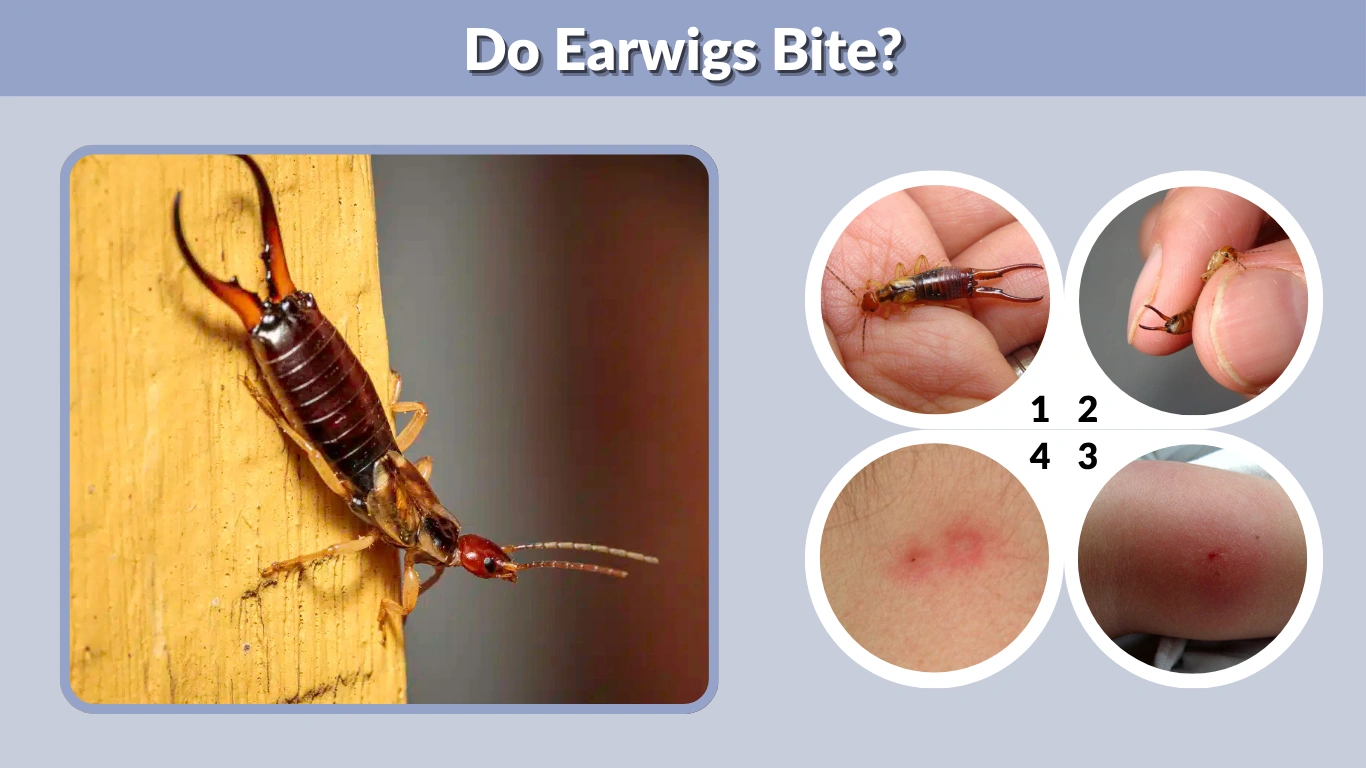
Earwigs are small, elongated insects best known for the distinctive pair of pincers at the end of their abdomen. These forceps-like appendages often make earwigs look more intimidating than they truly are, and as a result, many myths surround them—especially the persistent idea that they crawl into people’s ears to bite or burrow inside. In reality, earwigs are mostly harmless, shy creatures that prefer rotting vegetation, damp soil, and small insects. Despite this, people often wonder whether earwigs bite and what happens if one makes contact with a human.
Understanding how earwigs behave, what their pincers are really used for, and how to tell a pinch from a bite can help reduce fear and provide accurate expectations if you encounter these insects. This guide explores everything you need to know about earwig bites, pinches, symptoms, and safety.
What Are Earwigs?
Basic Earwig Biology
Earwigs belong to the order Dermaptera and are characterized by their long, flat bodies, antennae, and curved pincers called cerci. Despite their frightening appearance, earwigs are generally harmless and prefer staying outdoors in moist, dark environments. They are nocturnal scavengers, feeding on decaying plant matter, small insects, and organic debris. Their preference for humidity often brings them into homes during rainy weather or when outside conditions become too dry.
Types of Earwigs (Including the European Earwig)
Several species of earwigs exist, but the European earwig, which is one of the most common types found in households, is the species people typically encounter. Other species, such as the ring-legged earwig, may appear in gardens or wooded environments. While different species vary in appearance and habitat, their behavior toward humans is nearly identical—cautious, non-aggressive, and uninterested in biting.
Do Earwigs Bite Humans?

Can Earwigs Actually Bite?
One of the biggest misconceptions about earwigs is the belief that they bite people. In truth, earwigs have small mouthparts designed for chewing plant material and soft insects, not for biting humans. Their jaws simply aren’t strong enough to break human skin under normal circumstances. What most people interpret as a bite is almost always a defensive pinch delivered by the insect’s pincers.
Do Earwigs Bite in Your Sleep?
Many people worry that earwigs might crawl across them at night and bite while they sleep. Fortunately, this scenario is extremely unlikely. Earwigs avoid human contact and prefer hiding under mulch, stones, damp leaves, or cracks in soil. If an earwig happens to crawl into a bed, it is accidental—not intentional. Even then, earwigs rarely bite or pinch unless they are trapped, squeezed, or startled.
Do Baby Earwigs or European Earwigs Bite?
Neither baby earwigs (nymphs) nor European earwigs show biting behavior toward humans. Nymphs are even less capable of harming humans due to their small size and underdeveloped pincers. The European earwig, despite being the species most often found indoors, remains non-aggressive and does not bite people.
Pinching vs Biting: The Big Confusion
Earwig Pincers and Their Purpose
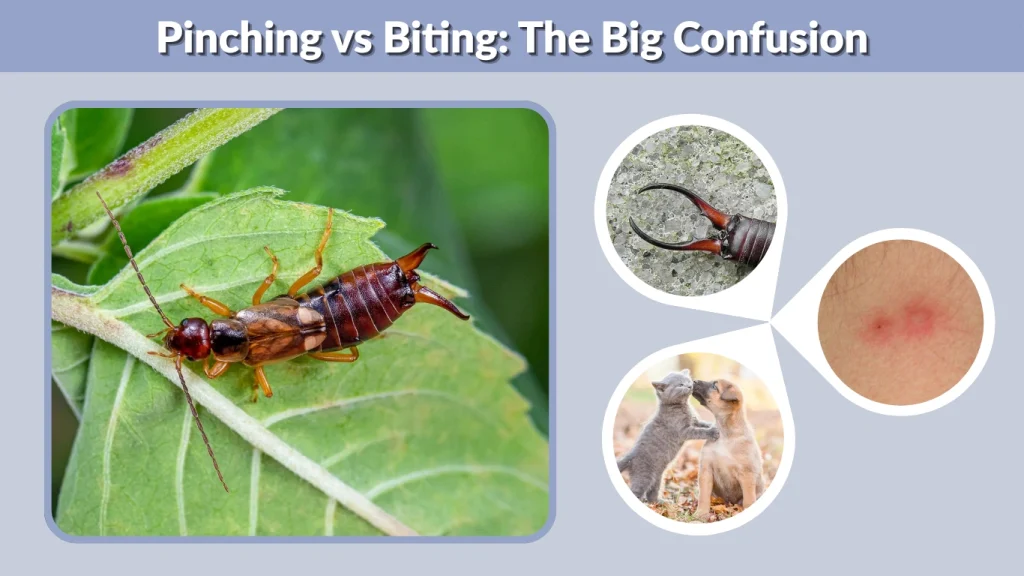
Earwigs use their pincers for several purposes: defense, capturing prey, and courtship displays. The pincers can look intimidating, especially on males, which have more curved and noticeable forceps. However, these pincers are not designed to inflict serious harm on humans. When threatened or handled roughly, an earwig may pinch, but the result is usually mild and brief discomfort.
Do Earwigs Bite, Pinch, or Sting?
Earwigs do not sting, and they almost never bite. Their primary form of defense is pinching. This can cause a slight pinch sensation, but it rarely breaks skin and generally leaves only minor irritation. Because people often confuse pinches with bites, earwigs have gained an undeserved reputation for biting humans, which is not supported by scientific evidence.
Do Earwigs Bite Animals or Pets?
Earwigs may occasionally pinch pets like cats, dogs, or rabbits, but they do so only in self-defense. They are not parasites and do not seek out animals to bite. Most pets are far too curious or forceful when encountering earwigs, which leads the insect to defend itself briefly. These pinches do not harm pets and are not dangerous.
What Do Earwig Bites or Pinches Look Like?
Typical Symptoms
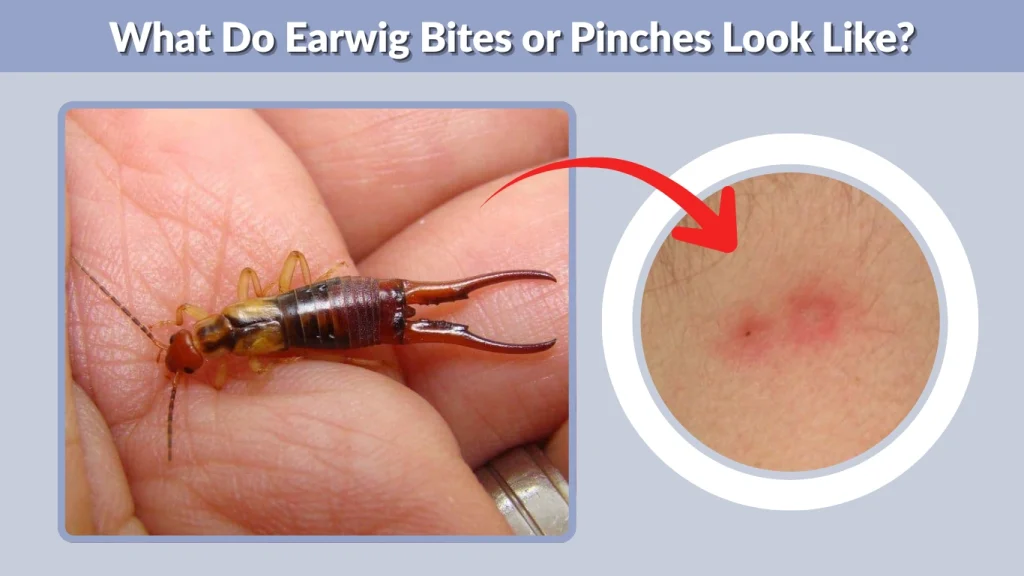
The mark left by an earwig pinch is usually minor. It may appear as a small red spot, slight swelling, or tiny scratch-like impression where the pincers made contact. Symptoms are typically mild, short-lived, and more annoying than painful.
Earwig Bite Marks vs Other Insect Bites
Earwig pinch marks differ from insect bites because they usually do not have a puncture wound or raised bump like mosquito or spider bites. A pinch may leave two tiny pressure marks or a light scratch, but it does not inject venom or fluids. For this reason, most people mistake other insect bites for “earwig bites” and incorrectly blame the earwig.
Do Earwig “Bites” Cause Rash or Infection?
Because earwig pinches do not inject venom or saliva, they generally do not cause rashes on their own. However, some people experience mild irritation due to sensitive skin or because dirt or bacteria on the insect’s body transfers to the skin. Scratching the area may increase redness or prolong healing, which can make the mark appear more like a bite than a pinch. In very rare cases, broken skin can become infected if not cleaned properly, but this is a result of bacteria—not the earwig itself.
Do Earwig Bites Hurt or Itch?
Pain Level of a Pinch
Most people describe earwig pinches as mildly uncomfortable rather than painful. The pressure from the pincers may feel like a quick squeeze, similar to catching your skin lightly between your fingernails. For those with sensitive skin or children, the pinch may feel sharper, but it is unlikely to cause real pain or lingering discomfort. Earwigs do not have the strength to inflict serious injury, and their pincers are not designed to harm large animals.
Itching and Duration of Symptoms
Any itching associated with earwig pinches is usually caused by skin irritation rather than venom or toxins. The sensation typically lasts only a few minutes to a few hours. In most cases, the “bite mark” fades within 24 hours. Some individuals may see slight redness linger for a day or two, especially if they scratch the area or have sensitive skin. Severe itching, swelling, or a persistent rash suggests an allergic reaction or another insect bite entirely.
Why Do Earwigs Bite or Pinch?
Defensive Behavior
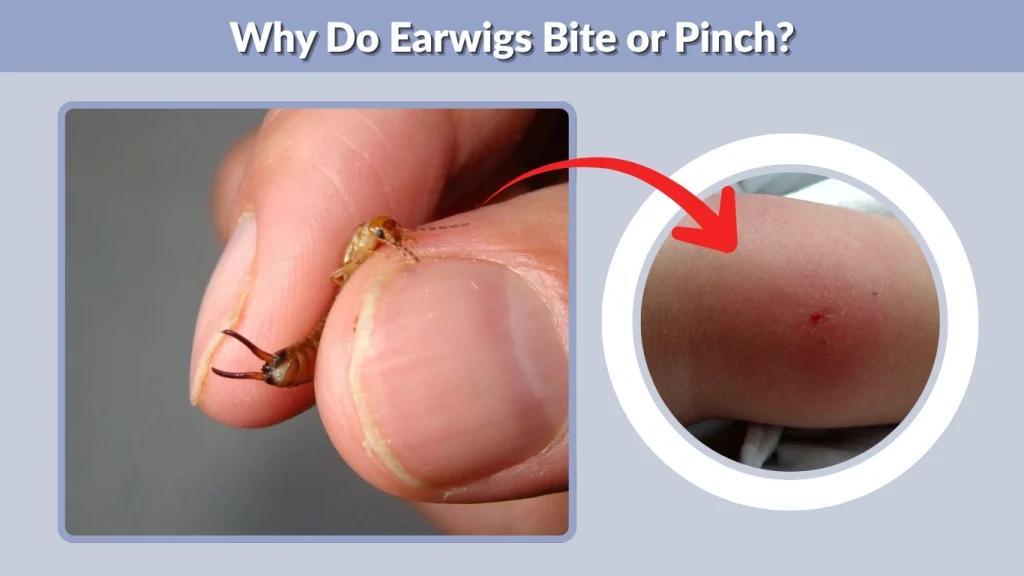
Earwigs almost always pinch out of self-defense. If they are trapped in clothing, squeezed in a hand, or startled suddenly, they may react by clamping their pincers. This behavior is instinctive and is their primary method of protecting themselves from predators. They do not approach humans aggressively, nor do they see humans as prey or food sources.
Territorial or Mating Behavior
In nature, male earwigs often use their pincers during mating rituals or while competing for territory. These behaviors are directed toward other earwigs, not humans. However, because males have noticeably larger and more curved pincers, they may give a slightly stronger defensive pinch if they feel threatened.
Do Earwigs Die After Biting or Pinching?
Unlike bees—which die after stinging—earwigs do not die after pinching. Their pincers remain functional throughout their life, and they use them as needed for defense or interaction with other earwigs. After pinching a human, an earwig will usually try to run away to avoid further danger.
What To Do If an Earwig Bites You

Immediate First Aid
If you believe you’ve been pinched by an earwig, treatment is simple and straightforward. Start by gently cleaning the area with soap and warm water to remove any dirt or bacteria that may cause irritation. Applying a cold compress can help reduce any swelling or redness. If the area itches, a mild, over-the-counter antihistamine cream or lotion can provide relief. Most people notice improvement within minutes.
When To Seek Medical Attention
Serious reactions to earwig pinches are very rare, but you should consult a doctor if you experience:
- Rapidly increasing swelling
- Severe or spreading redness
- Signs of infection such as pus or warmth
- Difficulty breathing or swallowing
- A rash that spreads beyond the bite area
These symptoms typically indicate an allergic reaction or another underlying issue unrelated to the earwig itself.
How Long Does Healing Take?
In most cases, any mark from an earwig pinch disappears within 24 to 48 hours. If the skin breaks, healing may take slightly longer, depending on your skin sensitivity and how well the area is kept clean. Keeping the area dry, avoiding scratching, and applying a mild antiseptic can speed the healing process.
Do Earwigs Crawl Into Ears? Myth vs Reality
Origin of the Myth
The myth that earwigs crawl into people’s ears goes back centuries. The name “earwig” comes from Old English words meaning “ear insect,” likely due to the shape of their wings, which resemble human ears when unfolded—not because they seek out ears. Over time, folklore and fear magnified this misconception.
How Often Earwigs Actually Enter Ears
While it is theoretically possible for any small insect to wander into an ear, such incidents are extremely rare. Earwigs do not prefer warm, enclosed environments like ears, nor do they associate humans with food or shelter. Most supposed “earwig in the ear” stories often turn out to be other insects entirely.
What To Do If an Earwig Enters the Ear
If a small insect—earwig or otherwise—enters your ear, remain calm. Tilt your head to allow gravity to help guide it out. Sometimes adding a few drops of warm (not hot) mineral oil or olive oil can help float the insect to the surface. Avoid using tweezers or cotton swabs, as these can push the insect further inside or damage the ear canal. If the insect does not exit quickly, seek medical assistance.
Preventing Earwig Encounters
Home Prevention Tips
Earwigs are attracted to moisture and decaying organic material. To reduce the likelihood of encountering them indoors, keep areas around your home free of leaf litter, mulch buildup, and damp wood. Fix leaking pipes, seal cracks around windows, and use dehumidifiers in damp indoor spaces. Properly storing food and promptly cleaning spills also help reduce insect activity, which in turn reduces earwig presence.
Keeping Earwigs Out of Beds and Bedrooms
Earwigs rarely make their way into beds because they prefer dark, damp hiding spots close to the ground. To keep them out of sleeping areas, ensure that bedding does not touch the floor, avoid eating in bed, and keep clutter to a minimum. Regularly vacuuming floor corners and baseboards can also discourage insects from entering.
When Professional Pest Control Is Needed
In most cases, earwig encounters are isolated and do not indicate an infestation. However, if you notice large numbers of earwigs inside the home or around the foundation, it may be wise to contact a pest control professional. Persistent moisture issues or heavy vegetation against the house can create ideal conditions for earwigs to thrive.
FAQ
Do earwigs actually bite humans?
Earwigs almost never bite humans. Their mouthparts are too small and weak to puncture human skin. Most “bites” people report are actually defensive pinches from their rear pincers, not true bites.
Do earwig pinches hurt?
Earwig pinches may feel like a quick pressure or a mild pinch. The discomfort is usually brief and rarely breaks the skin. Only in rare cases—such as with large male earwigs—might the pinch feel slightly sharper.
What do earwig bite or pinch marks look like?
Most earwig pinch marks look like small red spots or light scratches. They usually do not resemble typical insect bites and don’t form raised welts. Any redness typically fades within a few hours.
Do earwigs crawl into people’s ears?
Despite the persistent myth, earwigs do not seek out human ears. They prefer moist outdoor environments, not warm, enclosed areas like ear canals. Cases of earwigs entering ears are extremely rare and accidental.
What should I do if an earwig bites or pinches me?
Clean the area gently with soap and water, apply a cold compress to reduce redness or swelling, and use a mild anti-itch cream if needed. Most symptoms disappear within 24 hours. Seek medical advice only if unusual swelling or an allergic reaction occurs.
