

Earwigs have long been surrounded by creepy myths—especially the belief that they crawl into people’s ears at night. Their sharp pincers and mysterious name have fueled fear for generations, even though most of what we hear isn’t true. This article breaks down the origins of the myth, what earwigs really do, and whether they pose any real danger, so you can finally separate fact from fiction.
Understanding the Earwig Myth

For centuries, earwigs have been the center of one of the most persistent insect myths: the belief that they crawl into human ears, burrow through the skull, and lay eggs in the brain. This unsettling idea has circulated for generations, blending folklore, fear, and imagination into a story that refuses to disappear. But where did this myth begin, and why do people still believe it today?
Where the Name “Earwig” Comes From
The name “earwig” itself plays a major role in the legend. The term comes from the Old English words ēare (ear) and wicga (insect). Early Europeans believed that these insects entered people’s ears while they slept. At a time when scientific understanding of insects was extremely limited, this assumption spread quickly. The creepy, unfamiliar shape of the earwig—with its pincers and swift movements—only fueled these fears further.
How the Myth Spread Across Cultures
Over time, the story took on a life of its own. Folktales passed through villages, bedtime warnings kept children close to the hearth, and early naturalists repeated rumors without evidence. Even today, social media posts, viral videos, and sensationalized stories keep the myth alive. What began as a misunderstanding became a worldwide superstition.
What Earwigs Actually Are

To understand why earwigs are unlikely to enter ears, it helps to know what they are and how they behave.
Basic Biology and Behavior
Earwigs are small, elongated insects with smooth bodies and distinctive rear pincers called cerci. They are nocturnal, preferring cool, dark, moist environments. Throughout the day, they hide under stones, mulch, logs, and debris. At night, they search for food such as decaying plants, small insects, and organic material.
Despite their intimidating appearance, earwigs are not aggressive. They are weak fliers, avoid confrontation, and rely on their pincers mostly for defense against other insects, not humans.
Why Earwigs Avoid Humans
Earwigs do not seek out humans or human homes unless accidentally drawn inside by moisture or shelter. Their natural instincts guide them toward leaves, soil, mulch, and rotting vegetation—not ears or other body parts. Even when indoors, they prefer bathrooms, basements, laundry rooms, and damp corners rather than bedding or pillows.
The idea that they deliberately crawl into ears has no foundation in their biology or behavior.
Do Earwigs Go in Your Ear? Myth vs. Reality

So, do earwigs actually crawl into human ears? The short answer is: almost never. While it is technically possible for any small insect to enter an ear canal by accident, earwigs are no more likely to do it than ants, spiders, or fruit flies.
Scientific Evidence and Expert Opinion
Entomologists—the scientists who study insects—consistently emphasize that earwigs have no reason to go inside a human ear. The ear canal is warm, dry, and lacking the organic material earwigs feed on. Simply put, it is not a suitable habitat.
Most experts agree that the legend persists because of its name, not because of actual behavior. In fact, there is no scientific research indicating that earwigs show any preference for ears.
Are There Documented Cases?
While extremely rare, there have been occasional reports of insects entering human ears. However, these incidents are overwhelmingly accidental and often involve moths, cockroaches, or small flying bugs—not earwigs.
If an earwig ever enters an ear, it is by coincidence, not intention. Such cases are isolated and no more common than with other household insects.
Do Earwigs Enter Ears at Night or While You Sleep?

The myth often includes the chilling idea that earwigs wait for nightfall to sneak into ears while people sleep. This can cause anxiety, especially for light sleepers or those living in areas where earwigs are common.
Understanding Nighttime Behavior
It’s true that earwigs are nocturnal. They move around more at night, searching for food and moisture. But this nighttime activity doesn’t include seeking out humans. The chance of an earwig entering a sleeping person’s ear is extremely low and purely accidental.
Misconceptions About “Crawling Into Ears”
Many people assume insects naturally gravitate toward ears because they are open cavities. In reality, the ear canal does not attract insects. There is no light, food, or moisture—nothing beneficial to an earwig. They are far more likely to crawl under rocks or into plant matter than into a human ear.
Can Earwigs Lay Eggs in Your Ear?
Another frightening myth is that earwigs enter ears intentionally to lay eggs. This idea has been exaggerated in movies, TV shows, and online posts.
Biological Facts About Earwig Reproduction
Earwig mothers lay their eggs in soil or decaying vegetation—not in mammals. They require dark, moist, sheltered environments with constant humidity. The inside of a human ear is far too dry and unstable for egg development.
Debunking Horror Myths
Stories about earwigs laying eggs in the brain or burrowing through the skull have no scientific basis. They cannot dig, chew through bone, or survive inside human tissue. These myths are purely fictional and have been debunked countless times.
Do Earwigs Eat Your Brain or Make You Deaf?

This myth is one of the most dramatic, and it often spreads through horror stories, memes, and exaggerated online claims. The idea that an earwig could eat brain tissue or crawl deep enough to cause permanent damage is entirely fictional.
The Truth Behind Brain-Eating Myths
Earwigs lack the anatomy, strength, and biological need to eat or attack humans. Their pincers are not strong enough to pierce skin, let alone bone or internal structures. They also do not possess mouthparts capable of chewing flesh or brain tissue. These insects primarily feed on plants, decaying matter, and small soft-bodied insects—none of which resemble anything inside the human ear.
The myth likely comes from their intimidating appearance and the fear of something crawling into an ear. However, from a biological standpoint, earwigs are physically incapable of causing such deep or severe harm.
Realistic Health Concerns
While earwigs cannot eat your brain or cause deafness, an insect—any insect—inside the ear can still be uncomfortable. If an earwig enters the ear, you might experience:
- Sudden pain
- Tickling sensations
- Mild scratching
- A feeling of pressure or movement
These symptoms come from the insect moving around, not from any harmful biting or burrowing behavior. Although rare, an earwig could potentially scratch the ear canal with its legs or pincers, causing minor irritation. If left untreated, this can lead to inflammation or infection, but such cases are extremely uncommon. A quick medical visit can safely resolve the issue.
How Long Could an Earwig Stay in Your Ear?
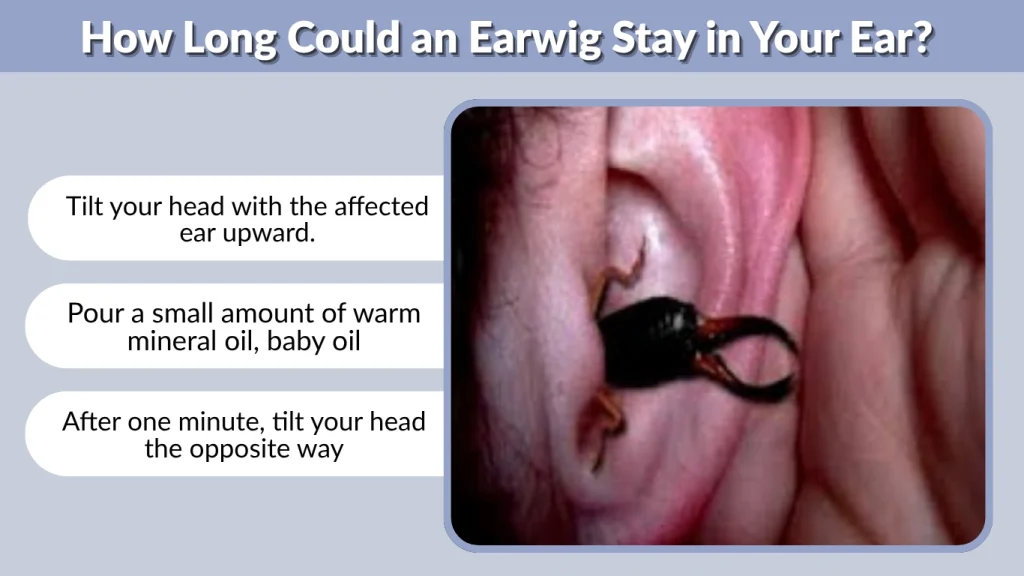
Many people worry about how long an insect might remain inside the ear if it enters. The good news is that insects rarely stay long, and they certainly do not survive or thrive inside the human ear.
What Would Happen If One Entered?
If an earwig—or any small insect—enters the ear, the reaction is immediate. The ear canal is narrow, warm, and noisy due to internal vibrations. Most insects panic in such a situation and either try to escape or become immobilized.
Symptoms may include:
- Sudden buzzing or scratching
- Discomfort or mild pain
- A muffled hearing sensation
Because of the tight space, the insect often remains near the outer canal rather than traveling deeper. This makes removal easier and minimizes the risk of damage.
Safe Ways to Remove an Insect From the Ear
If you ever experience an insect in your ear, avoid inserting cotton swabs, tweezers, or other tools, which can push it deeper. Instead:
- Tilt your head with the affected ear upward.
- Pour a small amount of warm mineral oil, baby oil, or olive oil into the ear.
- This suffocates the insect and stops its movements.
- This suffocates the insect and stops its movements.
- After one minute, tilt your head the opposite way to let the oil and insect drain out.
If symptoms persist or if the insect does not come out, visit a healthcare professional. Doctors can safely remove the insect without damaging the ear canal.
Why People Fear Earwigs So Much
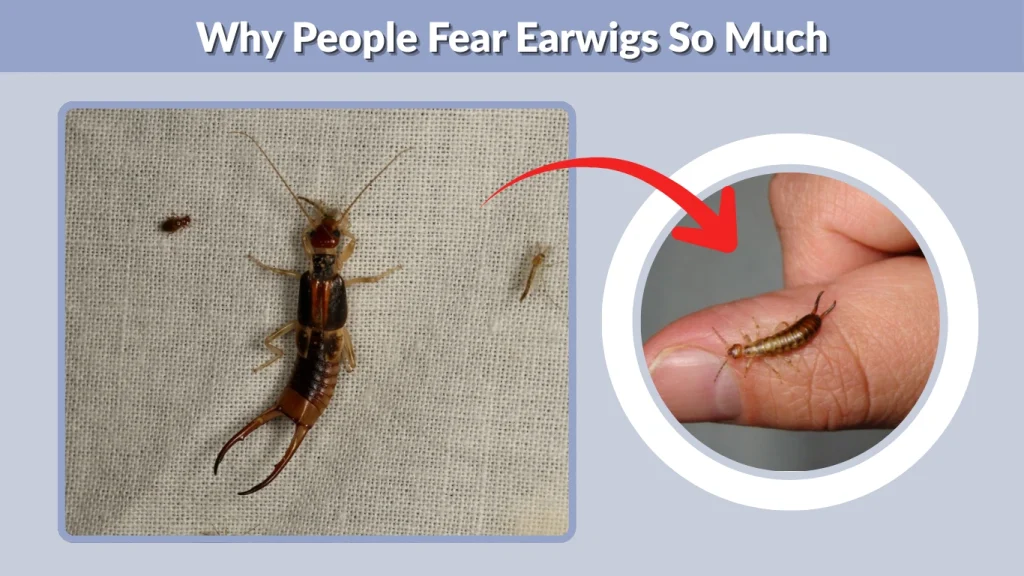
Even though the actual danger is minimal, earwigs remain among the most feared household insects. Understanding this fear can help separate myth from reality.
Evolutionary Fear Response
Humans have an instinctive fear of small, crawling creatures—especially those that move unpredictably or appear threatening. The earwig’s sharp pincers and fast movements trigger this response, despite the insect being mostly harmless.
In evolutionary terms, early humans avoided insects because some carried disease, venom, or unpleasant bites. Today, we retain the instinct, even toward insects like earwigs that pose no real threat.
How Social Media Amplifies Fear
Platforms like Reddit and Yahoo have contributed significantly to the spread of earwig myths. Viral stories, exaggerated accounts, and “did you know?” posts encourage fear rather than fact. Pictures of earwigs taken up close can make them look larger and more dangerous than they actually are.
The combination of cultural myth, online storytelling, and visual exaggeration keeps the fear alive—even though modern science paints a very different picture.
Preventing Earwigs From Getting Indoors
While earwigs rarely enter ears, many people still prefer to keep them out of their homes. Fortunately, earwig prevention is simple and effective.
Home Prevention Tips
Earwigs are attracted to moisture and dark hiding places. To reduce their presence:
- Fix leaky pipes, faucets, and drains
- Use a dehumidifier in damp rooms
- Clear mulch, leaves, and debris from around the house
- Seal cracks around doors, windows, and foundations
- Improve ventilation in basements and bathrooms
By reducing moisture and hiding spots, you make your home far less appealing to earwigs.
Natural & Chemical Control Options
If earwigs become a nuisance:
- Oil traps (soy sauce + vegetable oil) can catch them effectively
- Diatomaceous earth acts as a natural barrier
- Sticky traps can reduce indoor numbers
- Insecticides are rarely necessary but may be used outdoors in severe infestations
Calling a pest control professional is only recommended when the problem becomes persistent and overwhelming, which is uncommon with earwigs.
FAQs
Can earwigs crawl into ears while sleeping?
Yes, it is possible—just as it is with ants, fruit flies, or other small insects. However, it is extremely rare. Earwigs do not seek out ears intentionally and avoid humans whenever possible.
Are earwigs dangerous to humans?
No. Earwigs cannot bite through skin, spread disease, lay eggs in humans, or cause serious harm. They may pinch defensively, but the sensation is usually mild.
What should I do if an earwig gets in my ear?
Stay calm. Use warm oil to immobilize the insect, then drain your ear. If discomfort remains or the insect does not come out, seek medical assistance.
Do earwigs seek out human ears on purpose?
No. The myth persists because of the insect’s name and appearance, not its behavior. Scientifically, there is no evidence of intentional ear-seeking behavior.
Are certain homes more prone to earwig visits?
Yes. Homes with high moisture levels, dense mulch, or damp basements may attract more earwigs. Reducing humidity and removing debris significantly lowers their presence.
