

Flea bites on humans are more common than many expect, especially in homes with pets or wildlife visitors. Fleas are tiny parasites that survive by feeding on blood, and while they prefer animal hosts, they readily bite humans when necessary. Their bites can cause intense itching, irritation, and discomfort—sometimes lasting for days. Understanding what flea bites look like, why they happen, where they appear, and how to treat them quickly helps reduce both symptoms and future infestations.
What Do Flea Bites Look Like on Humans?
Key Visual Features
Flea bites typically appear as small, red, raised bumps surrounded by a light halo. They often show up in clusters of 2–4 bites, following the classic “breakfast-lunch-dinner” pattern. The bites may become more inflamed after scratching, and in sensitive individuals, they can blister or develop scabs. A single flea may bite multiple times while searching for the best feeding spot, causing grouped marks.
How to Tell Flea Bites From Other Insect Bites
Flea bites are commonly found on lower legs, ankles, feet, and other exposed areas. Compared to mosquito bites, flea bites are smaller and more clustered. Bed bug bites often appear in lines on the upper body, whereas flea bites stay closer to the ground because fleas jump from carpets or bedding. If the itching begins immediately and the bumps remain small yet intensely itchy, fleas are a likely cause.
Do Fleas Bite Humans?
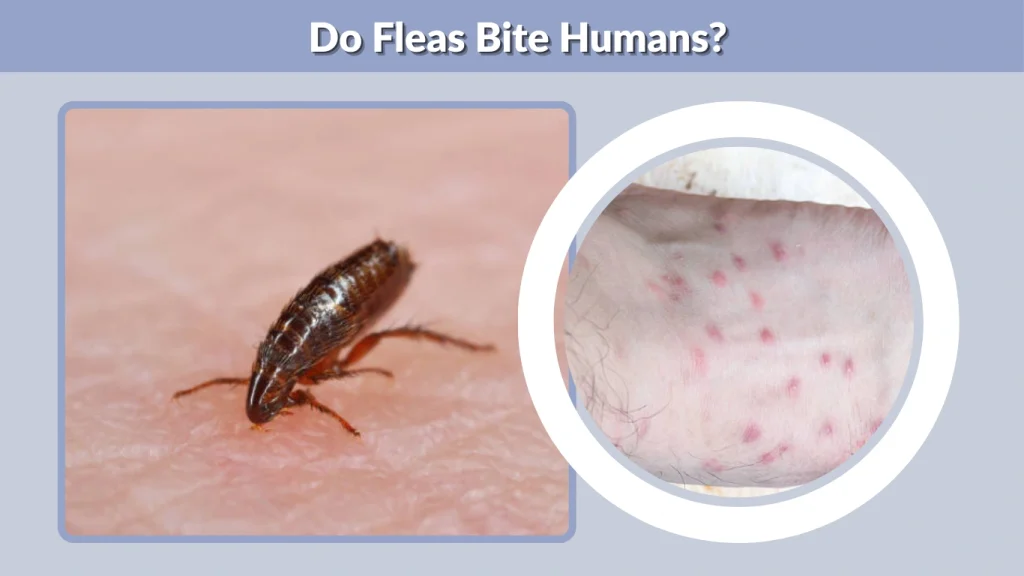
Fleas absolutely bite humans, especially when their primary animal hosts are unavailable or heavily infested. Cat fleas and dog fleas—the most common species found indoors—are particularly likely to feed on people. Fleas detect humans through heat, carbon dioxide, and motion, jumping quickly from the environment onto exposed skin. While not all flea species feed on humans, many domestic varieties will opportunistically bite.
Why Fleas Target People
Fleas bite humans to obtain a blood meal, which they require for nourishment and reproduction. However, fleas cannot complete their life cycle on human blood alone, which is why infestations persist mainly on pets and carpets. Humans become accidental hosts when fleas are hungry, displaced from pets, or present in large numbers. Movement, warmth, and sweating can make humans even more attractive targets.
Species of Fleas That Bite Humans
Several flea species are capable of biting humans:
- Cat fleas – the most common indoor culprit
- Dog fleas – similar to cat fleas but less prevalent
- Rat and mouse fleas – found in rodent-infested buildings
- Bird and chicken fleas – common near barns or coops
- Sand fleas – can bite or even burrow into skin
- Species that do NOT bite: snow fleas, water fleas, flea beetles
Snow fleas and water fleas are named after fleas due to jumping ability but do not feed on blood, making them harmless to humans.
Where Fleas Usually Bite Humans

Flea bites tend to appear on the lower body, especially legs, calves, ankles, and feet. These areas are easiest for fleas to reach because they jump from carpets, rugs, bedding, or upholstered furniture. Fleas also bite the waistline, armpits, stomach, arms, and hands, especially when someone is lying or sitting for long periods.
Fleas prefer thin, warm skin and areas with good blood flow. Because they move quickly and bite multiple times, the patterns are often scattered but localized.
Bites at Night and in Bed
Fleas can bite during sleep, especially if pets rest on the bed or if an infestation is present in carpeting. While fleas don’t live on bedding the way bed bugs do, they can jump onto humans at night and feed before returning to dark crevices or carpeting. Bites on the upper body, neck, or face during sleep may indicate a larger infestation.
What Flea Bites Feel Like on Humans
Immediate Sensation
Most people feel flea bites as sharp, fast pinpricks, followed by itching within minutes. Flea saliva triggers the body’s immune response, which causes redness and irritation. Some individuals feel the bite immediately; others only notice the itch afterward.
Delayed Reactions
People with sensitive skin may experience delayed swelling, welts, or even blister-like bumps. Children often react more strongly. While the initial bite is small, scratching can enlarge the area or lead to scabbing. These reactions may persist for days, especially with repeated exposure.
How Long Do Flea Bites Last on Humans?

Typical Duration
For most people, flea bites last 3–7 days, depending on skin sensitivity and scratching. The redness may fade within a day, while the itching can persist for several days. With proper care, most bites resolve without complications.
Longer-Lasting Reactions
Sensitive individuals may experience symptoms for 1–2 weeks, especially if the bites become irritated or infected. Sand flea bites typically last longer and may require medical attention if burrowing occurs. Persistent redness, oozing, or tenderness can signal secondary infection.
Do Flea Bites Itch? Why the Itching Happens
Flea bites almost always cause itching because of the proteins and enzymes in flea saliva. These substances trigger the body’s immune system to release histamine, creating redness and intense pruritus. The more a person is bitten, the stronger the reaction may become over time.
Do Flea Bites Always Itch?
Most flea bites itch, but individuals with reduced sensitivity or weakened immune responses may feel only mild irritation. In rare cases, dead or dying fleas may bite without injecting much saliva, leading to less itchiness.
Are Flea Bites Dangerous to Humans?

Flea bites are usually more irritating than dangerous, but certain risks exist depending on the species involved and a person’s sensitivity. For most people, the main problems are swelling, itching, and the possibility of infection from scratching. Continuous scratching can break the skin, allowing bacteria to enter the wound. This can lead to redness, pus, or tenderness around the bite.
Mild Reactions
Common mild reactions include:
- Redness
- Local swelling
- Small welts
- Scabs from scratching
- Mild blistering in sensitive individuals
These reactions typically resolve with home care and do not pose serious health threats.
Serious Risks (Rare)
A few flea species—particularly rat fleas—can transmit more serious illnesses such as murine typhus or plague. These cases are extremely rare in most regions but are historically linked to flea vectors. Cat and dog fleas generally do not transmit major diseases to humans, but they can cause allergic dermatitis or intense itching that disrupts sleep.
Treatment: How to Heal Flea Bites on Humans
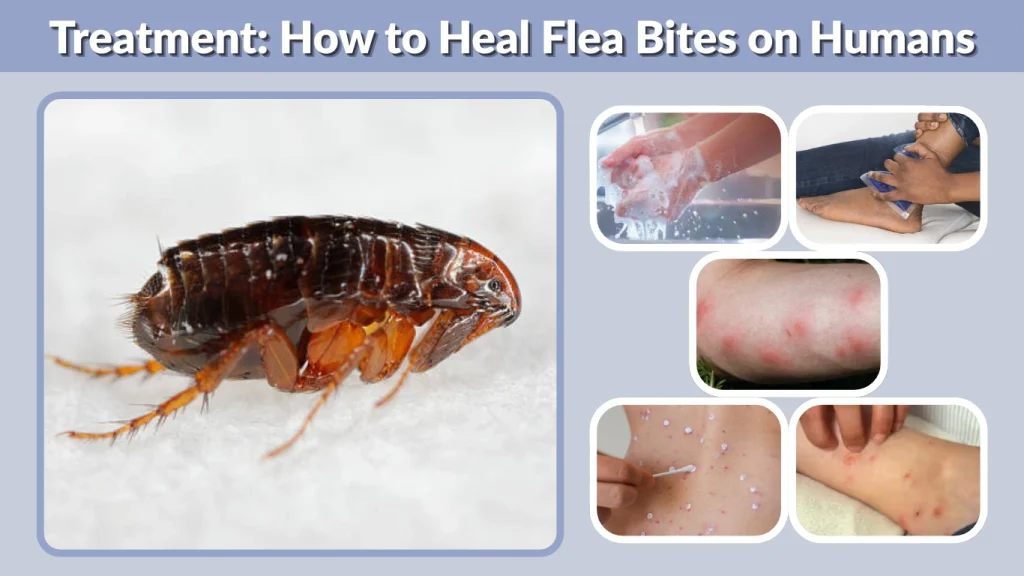
Flea bites can be treated effectively at home in most cases. Fast and consistent care helps reduce itching, swelling, and risk of infection. Begin by cleaning the bites as soon as they’re noticed, then apply soothing or anti-inflammatory treatments.
Immediate First Aid
- Wash the area with warm water and mild soap to remove bacteria.
- Apply a cold compress for 10–15 minutes to reduce swelling and itching.
- Use an anti-itch cream such as hydrocortisone, calamine lotion, or colloidal oatmeal.
- Take an oral antihistamine to minimize allergic reactions and itching.
- Avoid scratching, as broken skin heals slower and increases infection risk.
These early steps help prevent inflammation from worsening.
When to See a Doctor
Medical evaluation may be necessary if:
- Bites become infected (warmth, pus, spreading redness)
- Severe swelling or blistering occurs
- You develop fever, chills, or swollen lymph nodes
- Symptoms last longer than two weeks
- You suspect sand flea burrowing
A doctor may prescribe antibiotics, anti-inflammatory medications, or stronger antihistamines depending on symptoms.
How to Get Rid of Flea Bites Fast
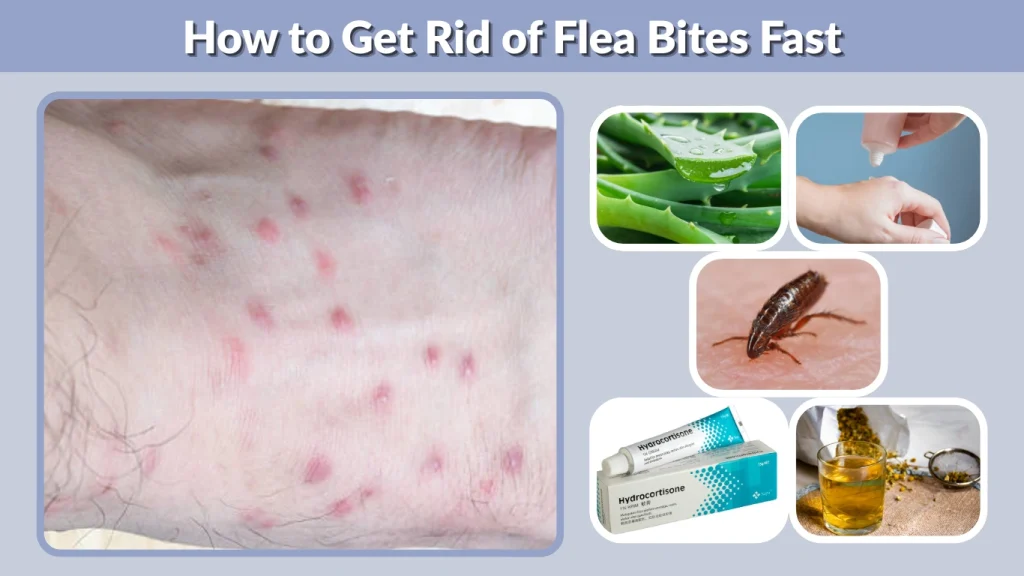
Relief depends on reducing inflammation and preventing irritation. Over-the-counter creams and antihistamines help manage itching, while natural remedies such as aloe vera, witch hazel, or oatmeal paste can provide soothing relief. Moisturizing the area helps prevent dryness and promotes healing.
Anti-Itch Remedies
Popular options include:
- Aloe vera gel
- Calamine lotion
- Hydrocortisone cream
- Witch hazel for reducing redness
- Cold chamomile tea compresses
These help calm the skin and reduce itching impulses.
Healing Without Scarring
To avoid permanent marks, avoid scratching and keep the skin moisturized. After the bite heals, gentle exfoliation or vitamin E oil can help reduce dark spots or hyperpigmentation.
Dog vs Cat Flea Bites on Humans (Comparison Table)
| Feature | Dog Flea Bites | Cat Flea Bites |
| Commonness | Less common | Most common indoors |
| Appearance | Small red itchy bumps | Small red itchy bumps |
| Aggressiveness | Moderate | Very aggressive feeders |
| Transmission Risk | Low | Low |
Cat fleas are responsible for the majority of flea bites on humans, even in homes with dogs, because cat fleas are more adaptable and widespread.
Sand Flea Bites on Humans

Sand fleas are known for more intense and longer-lasting reactions. Some species simply bite, while others—such as chigoe fleas—can burrow into the skin and cause significant pain, swelling, and possible infection.
How Sand Fleas Bite Differently
Sand flea bites may appear larger, more painful, and more inflamed than typical cat or dog flea bites. They often occur on feet or ankles, especially after visiting beaches or sandy areas.
How Long They Last
Sand flea bites can last 7–14 days, depending on the severity and whether burrowing occurred. Medical treatment may be required if swelling worsens or signs of infection develop.
Why Fleas Only Bite Certain Humans
Not everyone is equally attractive to fleas. Some people are more likely to be bitten due to biological factors.
Biological Attractants
Fleas respond to:
- Higher CO₂ output
- Body heat
- Sweat and skin chemicals
- Movement
These differences explain why two people in the same room may experience different levels of biting.
Allergic Sensitivity Differences
Some individuals react strongly to flea saliva, making their bites appear larger, redder, or itchier. Others may have mild responses that go unnoticed.
Prevention: How to Stop Flea Bites on Humans
Prevention requires treating pets, cleaning the home, and protecting yourself from exposure.
Protecting Your Home
- Vacuum carpets, rugs, and furniture frequently
- Wash bedding in hot water
- Apply flea sprays or foggers when needed
- Seal cracks and remove clutter where fleas hide
- Address rodent or bird infestations
Protecting Yourself
Wearing long pants or socks can reduce bites. Insect repellents containing DEET or natural repellents like lemon eucalyptus oil can also help.
Protecting Pets
- Use monthly flea-prevention treatments
- Bathe and comb pets regularly
- Treat outdoor areas and pet bedding
A pet-focused approach is essential because pets are the flea’s primary hosts indoors.
Do Flea Bites Leave Scars or Spread?
Scarring
Most flea bites heal without leaving scars. However, excessive scratching may lead to hyperpigmentation or small, flat scars that fade slowly.
Do Flea Bites Spread on Their Own?
Flea bites do not physically spread, but scratching can cause infections that enlarge the irritated area, giving the appearance of spreading.
FAQs
How long do fleas bite on humans?
Flea bites typically itch for three to five days, though sensitive individuals may experience itching for up to a week. Using anti-itch creams and antihistamines can help shorten the duration and reduce irritation.
Do fleas bite humans at night?
Yes. Fleas often bite at night because they’re attracted to body heat and movement during sleep. Pets in the bed can increase the likelihood of nighttime bites.
Do flea bites go away on their own?
Most flea bites heal within a few days without treatment, but soothing creams and proper hygiene help them fade faster.
Can fleas bite the face, scalp, or head?
Yes, particularly during sleep or in heavy infestations. Fleas may jump to higher areas when lying down.
How do I stop flea bites immediately?
Clean the bite, apply a cold compress, and use an anti-itch cream or antihistamine. Eliminating fleas from the home and treating pets will prevent more bites.
