
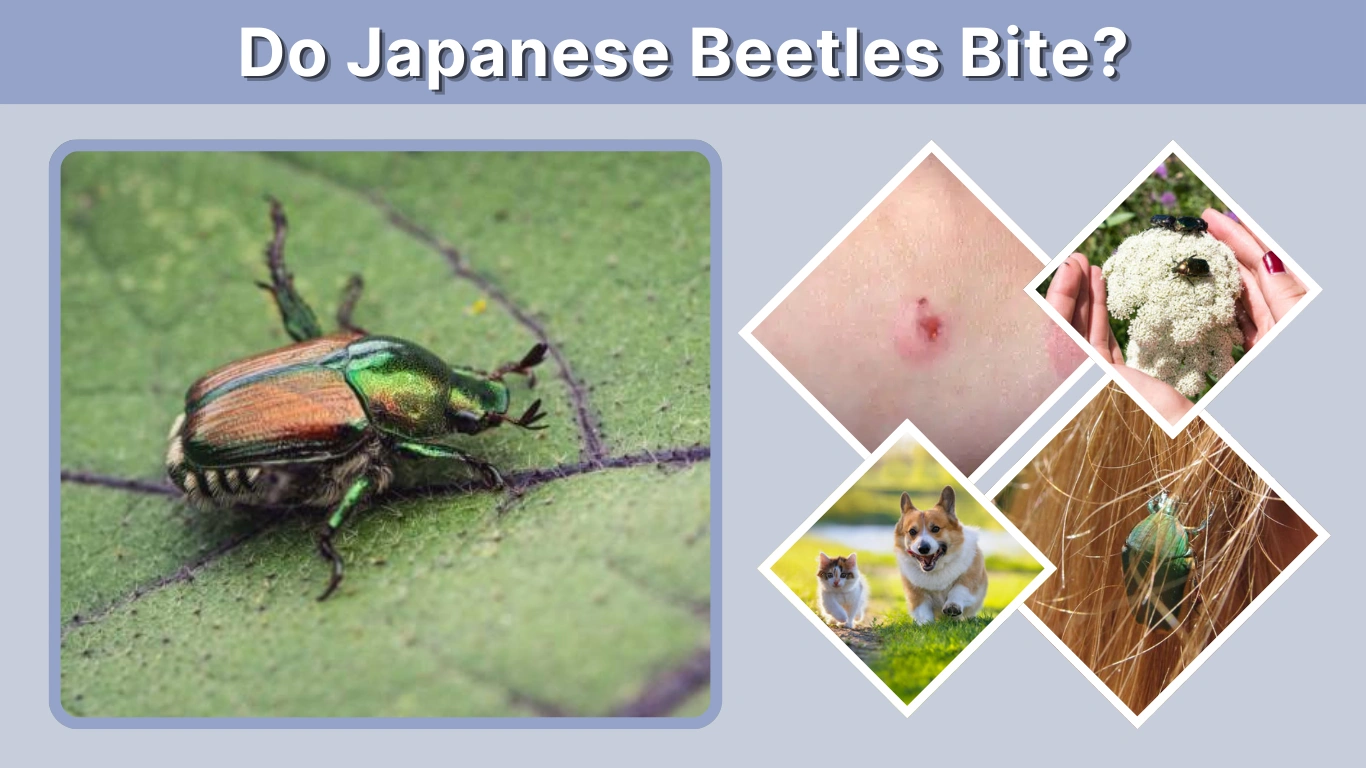
If you’ve ever had a shiny green beetle land on your arm or crawl across your clothes, you may have wondered: do Japanese beetles bite? This question is extremely common, especially during summer months when these insects are most active in gardens and yards.
Japanese beetles are best known as destructive plant pests, but because they frequently come into contact with people, many assume they might bite or sting. In this article, we’ll clearly explain whether Japanese beetles bite humans or pets, why they sometimes feel like they do, and how to tell the difference between a real bite and simple skin irritation.
What Are Japanese Beetles?

Japanese beetles (Popillia japonica) are invasive insects that primarily feed on plants, flowers, and tree leaves. While they are notorious for damaging lawns and gardens, their interaction with humans is usually accidental.
Identification and Physical Characteristics
Japanese beetles are easy to identify once you know what to look for:
- Metallic green head and thorax
- Coppery-brown wing covers
- Small white tufts of hair along the sides of the abdomen
- About ½ inch long
Their bright, shiny appearance often draws attention, which is one reason people notice them landing on skin.
Where Japanese Beetles Are Commonly Found
Japanese beetles are widespread across many parts of North America, especially in areas with warm summers. They are most commonly found:
- In gardens and flower beds
- On fruit trees and shrubs
- Near lawns with healthy turfgrass
They are active during daylight hours and are especially noticeable on sunny, warm days.
Do Japanese Beetles Bite Humans?

The short answer is: Japanese beetles do not typically bite humans.
Japanese beetles are not aggressive insects and have no interest in feeding on human skin. Their diet consists almost entirely of plant matter, including leaves, flowers, and fruit.
That said, in very rare cases, a Japanese beetle may pinch the skin slightly if it feels trapped or threatened. This is often mistaken for a bite.
Can Japanese Beetles Break Human Skin?
Japanese beetles have small mandibles (mouthparts) designed for chewing plant tissue—not flesh. Because of this:
- They cannot easily break human skin
- They do not inject venom
- They do not feed on blood
Any sensation felt on the skin is usually mild and brief, and most people experience no visible mark at all.
Why Japanese Beetles Sometimes Feel Like They Bite
People often report feeling a “bite” when one of the following happens:
- The beetle crawls across sensitive skin
- The beetle gets caught between clothing and skin
- The beetle is brushed away or squeezed accidentally
In these situations, the beetle may pinch defensively, but this is not a true bite in the way mosquitoes or ants bite.
Do Japanese Beetles Bite or Sting?
Another common concern is whether Japanese beetles sting. They do not.
Japanese beetles have no stinger and no venom-producing organs. They are completely incapable of stinging humans or animals.
Do Japanese Beetles Have Stingers?
No. Unlike bees or wasps, Japanese beetles:
- Lack a stinger
- Cannot inject venom
- Do not cause painful stings
Any sharp or uncomfortable sensation is usually caused by their legs gripping the skin or a defensive pinch with their mandibles.
Why Do Japanese Beetles Bite (or Appear To)?
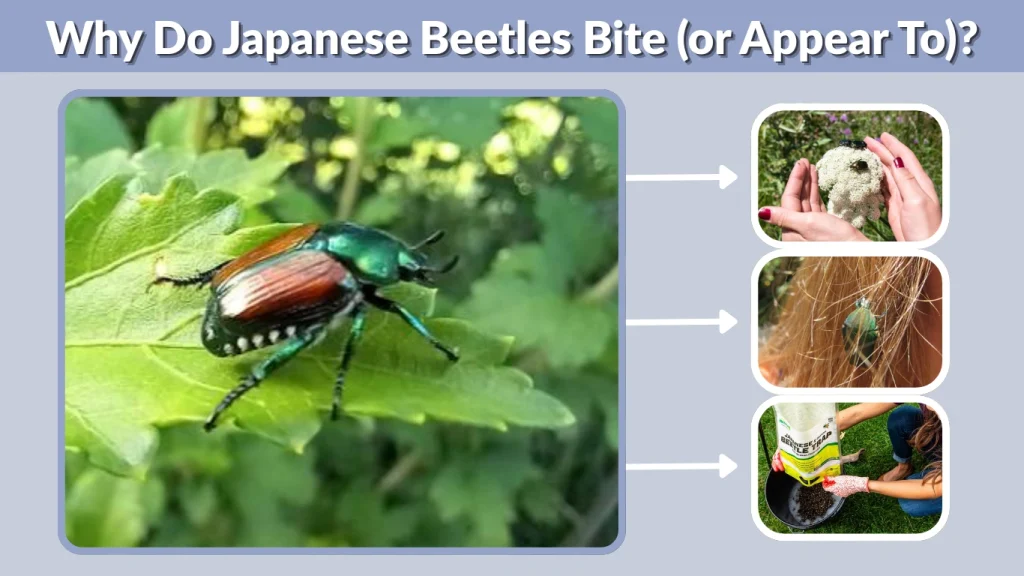
Japanese beetles may appear to bite due to defensive behavior, not aggression. When handled roughly or trapped against the skin, they instinctively try to escape.
Common situations where this happens include:
- Picking them off plants by hand
- Getting one caught in hair or clothing
- Handling beetles stuck in traps
Even then, the sensation is usually very mild and short-lived.
What Do Japanese Beetle Bites Look Like?
In most cases, there is no visible bite mark from a Japanese beetle. If a mark does appear, it is typically:
- A small red spot
- Mild irritation
- Temporary redness that fades quickly
Japanese Beetle Bite vs Other Insect Bites
Compared to common insect bites:
- Mosquito bites itch intensely and swell
- Ant bites sting and may form pustules
- Spider bites often cause localized pain
Japanese beetles, by contrast, rarely leave any lasting skin reaction.
Do Japanese Beetles Bite Dogs or Other Pets?
Many pet owners worry that Japanese beetles may bite dogs, cats, or other animals. Fortunately, Japanese beetles do not bite pets in the traditional sense, just as they do not bite humans.
Pets are more likely to encounter Japanese beetles while playing outdoors, sniffing plants, or chasing insects in the yard. In these situations, beetles may crawl on fur or be picked up with a paw or mouth, but intentional biting is extremely rare.
Are Japanese Beetles Harmful if Dogs Eat Them?
While Japanese beetles are not poisonous, eating them can cause stomach irritation in some dogs. This usually happens when a dog consumes several beetles at once.
Possible symptoms include:
- Drooling
- Vomiting
- Mild diarrhea
- Temporary discomfort
Most dogs recover quickly without treatment. However, if symptoms persist or worsen, contacting a veterinarian is recommended.
Japanese Beetles vs Japanese Lady Beetles

Japanese beetles are often confused with Japanese lady beetles, which leads to additional concern about biting.
Do Japanese Lady Beetles Bite?
Yes, Japanese lady beetles (also called Asian lady beetles) can bite humans. While their bites are not dangerous, they are more noticeable than anything a Japanese beetle would cause.
Lady beetle bites may:
- Feel like a small pinch
- Cause mild redness
- Occur more often in fall when they enter homes
This difference in behavior is one reason many people mistakenly believe Japanese beetles bite.
Japanese Beetles That Look Like Ladybugs
Japanese beetles and Japanese lady beetles differ in both appearance and behavior:
- Japanese beetles are metallic green with copper wings
- Lady beetles are rounder and often orange with black spots
- Lady beetles are more likely to bite when handled
Correct identification helps prevent unnecessary worry.
What To Do If a Japanese Beetle Lands on You
If a Japanese beetle lands on your skin, there’s no need to panic. These insects are harmless and can be removed easily.
Recommended steps:
- Gently brush the beetle away
- Shake it off rather than squeezing it
- Avoid trapping it against your skin
Squeezing or swatting may increase the chance of a defensive pinch.
How to Prevent Japanese Beetles Around Your Home
Although Japanese beetles are not a threat to people, they can be a major nuisance in gardens and lawns.
Garden and Lawn Prevention Tips
Effective prevention methods include:
- Hand-picking beetles early in the morning
- Removing heavily damaged plants
- Encouraging natural predators like birds
Consistent monitoring during peak season helps limit infestations.
Do Japanese Beetle Traps Work?
Japanese beetle traps can be effective in certain situations, but they also attract more beetles to the area.
Pros:
- Can reduce beetle numbers when placed far from plants
Cons:
- May increase beetle activity near your yard
- Not ideal for small gardens
Placement and timing are critical if traps are used.
FAQs
Do Japanese Beetles Bite People on Purpose?
No. Japanese beetles do not seek out humans to bite. Any pinching behavior is defensive and unintentional.
Are Japanese Beetles Dangerous to Humans?
Japanese beetles are not dangerous to humans. They do not spread disease, inject venom, or cause serious skin reactions.
Do Japanese Beetles Bite or Sting at Night?
Japanese beetles are inactive at night and do not bite or sting while sleeping.
