
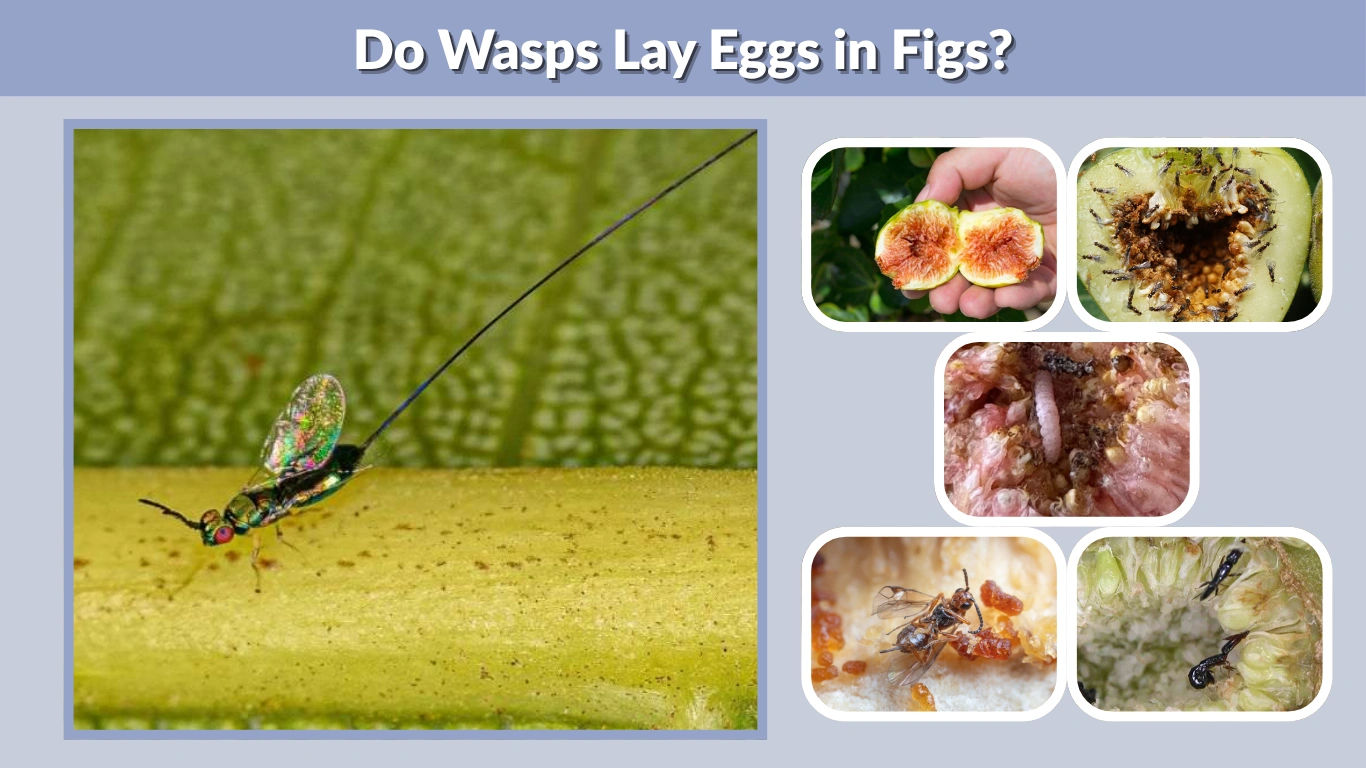
Figs have long intrigued both scientists and fruit lovers for their unusual structure and fascinating relationship with fig wasps. A common myth claims that the figs we eat are full of wasp eggs or even tiny insects. The truth, however, is far more complex — and much more remarkable. The fig and fig wasp share a delicate partnership built on evolution, not infestation.
Identification of the Fig Wasp

What Is a Fig Wasp?
A fig wasp is a minute insect, usually just 1–2 millimeters long, belonging to the family Agaonidae. Despite its small size, it plays an enormous ecological role as the sole pollinator of many fig species. Each species of fig tree has evolved alongside a specific type of wasp, creating a one-to-one relationship that ensures survival for both.
Physical Characteristics
- Females: Winged, slender-bodied, with strong jaws and flexible antennae that help them sense ripe figs. They are built to enter the fig through a small natural opening called the ostiole.
- Males: Smaller, wingless, and adapted for living entirely within the fig. Their short lives are dedicated to mating and helping females escape the fruit before dying inside.
This dimorphism ensures that each sex fulfills a distinct purpose — females pollinate and disperse, while males remain behind to complete the internal reproductive process.
Understanding the Fig Fruit

Figs Are Not Typical Fruits
A fig isn’t a single fruit but an inverted flower cluster, known scientifically as a syconium. Instead of opening outward, the fig’s flowers bloom inside a fleshy enclosure. This internal design creates the perfect nursery for fig wasps to lay their eggs.
The Role of the Ostiole
The tiny opening at the fig’s tip, called the ostiole, is the only entrance. Through this narrow passage, the female wasp squeezes her way inside, often losing her wings in the process. Once inside, she pollinates some flowers and lays her eggs in others — a dual act that ensures reproduction for both plant and insect.
Do Wasps Really Lay Eggs in Figs?

Yes, female fig wasps do lay eggs in figs, but not in the edible flesh that humans consume. Instead, they deposit their eggs inside specialized flowers located within the fig’s cavity. These flowers form protective growths, or galls, around the eggs, where larvae safely develop.
How the Process Happens
- A fertilized female fig wasp finds a receptive fig by following chemical scents released by the tree.
- She enters through the ostiole and navigates to the inner flowers.
- Using her ovipositor, she lays eggs in select flowers while transferring pollen from another fig.
- Exhausted, she often dies inside the fig — her life complete, her offspring secure.
This natural cycle may sound strange, but it’s one of the oldest and most successful examples of mutualistic evolution on the planet.
What Happens to Wasp Eggs Inside Figs
Development and Metamorphosis
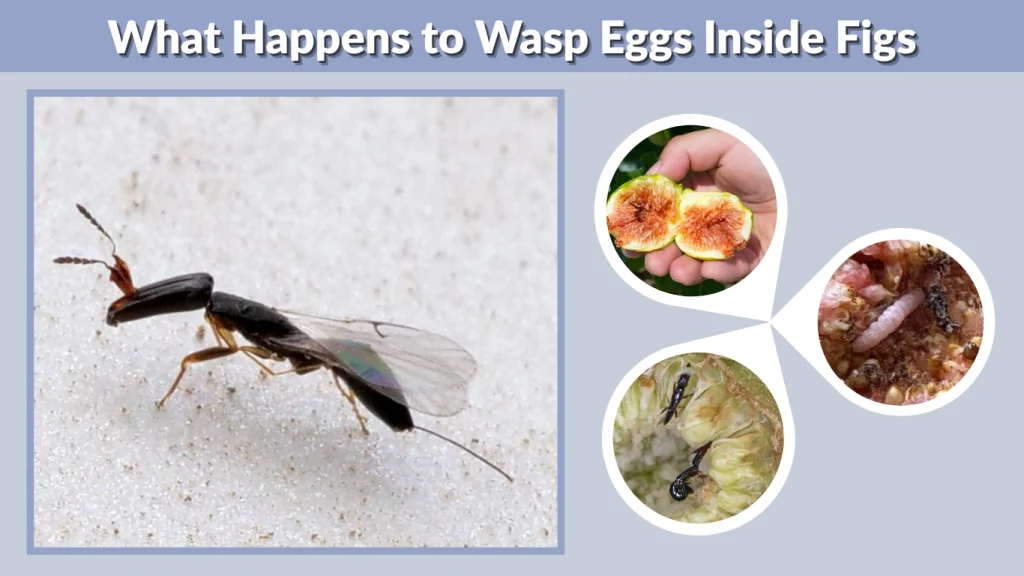
Once laid, the eggs hatch within a few days. The larvae feed on the gall tissue formed around them, completely enclosed within the fig’s inner wall. Over time, they grow and pupate, transforming into adult wasps.
Emergence of Adults
When development is complete:
- Males emerge first, mate with females still inside their galls, and dig exit holes.
- Females collect pollen from male flowers and leave the fig through the tunnels made by the males, ready to find a new fig to continue the cycle.
By the time the fig ripens for consumption, this internal drama has already ended — no living wasps or eggs remain.
Do We Eat Wasp Eggs When We Eat Figs?
No, we don’t. The fig’s internal enzymes, particularly ficin, naturally break down and absorb any remaining organic matter, including the mother wasp’s body or unhatched eggs. By the time a fig reaches maturity, it contains only seeds and soft pulp, not insects.
Moreover, most commercial fig varieties consumed today — especially the common fig (Ficus carica) — do not even require wasps for pollination. These are parthenocarpic figs, which develop fruit without fertilization or pollination. As a result, the figs used in stores and processed products are completely free from wasp activity.
Are There Wasp Eggs in Fig Newtons or Store-Bought Figs?
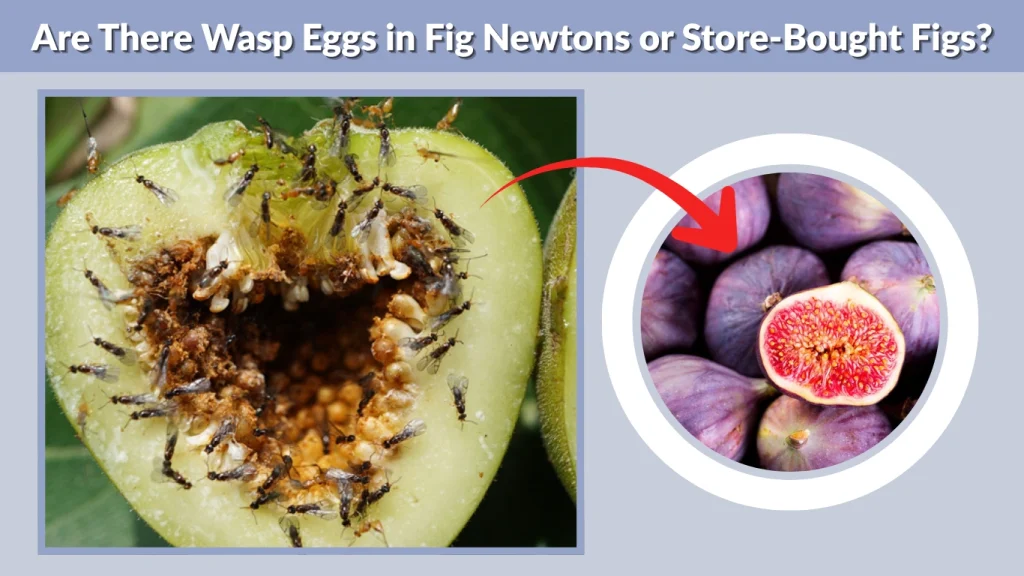
The answer is a definitive no.
Modern agricultural figs used for snacks like Fig Newtons or dried fig products are cultivated from parthenocarpic species. They form fruit naturally without any need for pollination or fig wasps. Farmers no longer rely on the fig-wasp relationship for these crops, ensuring the fruit is 100% plant-based and insect-free.
Wild figs, however, still depend on fig wasps for pollination. In these cases, the wasp’s egg-laying process is an integral part of the tree’s reproduction cycle — though even then, by harvest time, no eggs or larvae remain inside.
The Pollination Partnership
The relationship between figs and fig wasps is a masterpiece of natural balance. As the wasp lays eggs, she simultaneously transfers pollen that allows the fig to form seeds. This dual role of pollination and reproduction keeps both species alive. Without fig wasps, fig trees wouldn’t produce viable seeds, and without figs, wasps would have no place to reproduce.
Why Do Wasps Lay Eggs in Figs?
Female fig wasps lay eggs inside figs because the fruit offers a safe and enclosed nursery for their offspring. The fig provides everything the developing larvae need — protection from predators, consistent humidity, and abundant food in the form of gall tissue. This arrangement is mutually beneficial: while the wasp secures a habitat for her young, the fig gains pollination that ensures its own reproduction.
A Perfect Evolutionary Match
Over millions of years, figs and wasps have developed an exclusive partnership. Each fig species typically has a single corresponding wasp species responsible for its pollination. The wasp’s body structure, ovipositor length, and timing of its life cycle have all evolved to match the fig’s unique floral structure. It’s a living example of coevolution where both species rely entirely on each other to survive.
What Happens After the Eggs Hatch
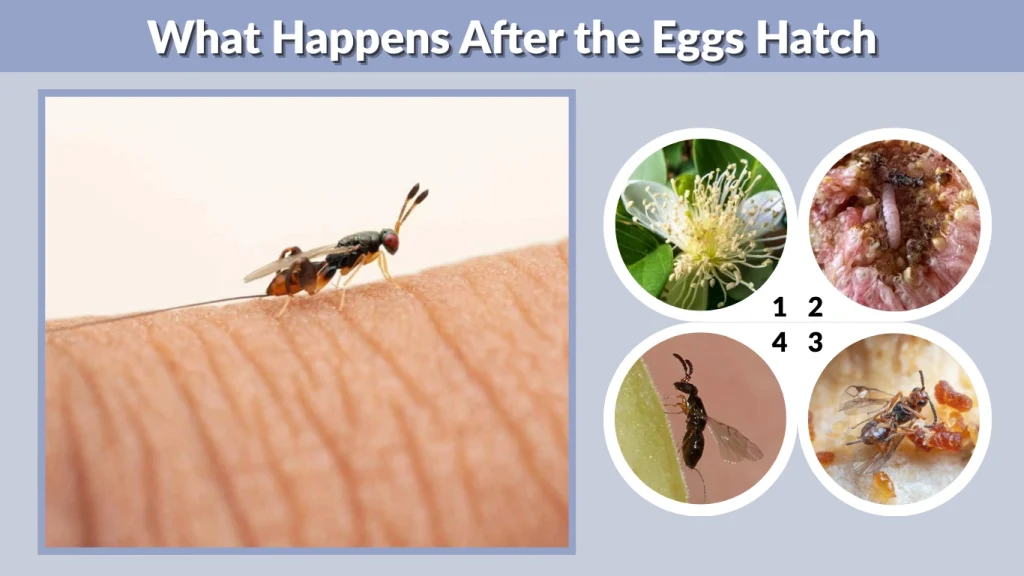
When the eggs hatch, the larvae feed on the gall tissue inside the fig. This phase lasts for several days to weeks, depending on the species and environment. Within the protective enclosure of the fig, they experience no direct exposure to the outside world.
As the larvae mature, they undergo metamorphosis and develop into adult wasps. Males emerge first, mate with the females before they even leave their galls, and then carve small exit tunnels through the fig’s surface. After completing their short-lived purpose, males die inside the fig.
Females, newly fertilized and carrying pollen, exit through these tunnels to locate new figs and restart the life cycle. This continuous cycle ensures the perpetuation of both fig trees and wasps.
The Pollination Process
Mutual Benefit
The wasp’s reproductive act is also a pollination event. As the female moves inside the fig to lay eggs, pollen collected from a previous fig rubs off on the fig’s inner flowers. Some of these flowers develop into seeds rather than galls, allowing the fig to reproduce. Thus, every wasp birth leads to the creation of new fig seeds — a perfect biological exchange.
Pollinating vs. Non-Pollinating Wasps
Not all wasps pollinate figs. Some are non-pollinating fig wasps, which lay eggs in the fig without contributing to pollination. However, these species often rely on the presence of pollinating wasps to thrive, creating a delicate balance within the fig’s ecosystem.
Debunking Common Myths About Fig Wasp Eggs
Despite centuries of folklore, several myths persist about fig wasps and eggs inside figs. Let’s separate fact from fiction:
| Myth | Truth |
| Figs are full of wasp eggs. | False. Only wild figs contain small numbers of eggs, and these are digested long before the fruit ripens. |
| Fig seeds are actually wasp eggs. | False. The crunchy bits are true seeds created by pollinated fig flowers. |
| We eat wasps when we eat figs. | Not really. Any wasp parts are broken down by the fig’s enzyme ficin, leaving nothing but nutrients. |
| Fig Newtons contain wasps. | Completely false. Commercial figs used in processed foods are cultivated without pollination. |
| All figs have wasps in them. | Only some wild species do; most edible figs are parthenocarpic and develop without wasps. |
Understanding these truths helps dissolve the stigma surrounding the fig-wasp partnership and highlights how essential — not disgusting — this relationship truly is.
Ecological Importance of the Fig Wasp Egg Cycle
The fig-wasp egg-laying cycle does much more than support two species. It’s the foundation of entire tropical ecosystems. Because figs fruit year-round, they serve as a keystone resource for hundreds of animals — birds, bats, primates, and insects alike. Without wasps to pollinate fig trees, those trees couldn’t produce fruit, and many forest species would lose a crucial food source.
Chain Reaction in Nature
If fig wasps disappeared, figs would stop reproducing. In turn, animals that rely on figs would face food shortages, and the ecosystem balance could collapse. This interdependence shows how even the smallest creatures play enormous roles in maintaining life on Earth.
Are There Wasp Eggs in Fig Newtons or Store-Bought Figs?
Absolutely not. Commercial fig varieties like Ficus carica are parthenocarpic, meaning they form fruit without pollination. These figs don’t attract fig wasps and therefore contain no eggs, larvae, or insects. Every fig used in Fig Newtons or similar snacks is completely wasp-free.
Even when wasps are part of the natural fig ecosystem, the process of enzyme breakdown ensures that no eggs or wasp material remain in the edible fruit. By the time a fig is ready to eat, it’s entirely plant tissue — soft, sweet, and completely natural.
The Beauty of Coevolution
The partnership between figs and fig wasps has existed for over 60 million years — making it one of the oldest examples of coevolution on the planet. Both species have adapted to one another so precisely that their lifecycles, anatomy, and reproductive processes are inseparable.
This mutual relationship demonstrates nature’s perfection: even an insect as small as a fig wasp has an irreplaceable role in sustaining entire ecosystems.
FAQs
Are there wasp eggs in the figs we eat?
No. Edible figs grown for human consumption do not require pollination and therefore have no wasp eggs or larvae inside.
Why do wasps lay eggs in figs?
Figs provide a safe environment for the wasp’s offspring to grow. In exchange, the wasp pollinates the fig, ensuring the tree’s reproduction.
Do we eat wasp eggs when we eat figs?
No. Any eggs or wasps that once existed inside a fig are digested naturally by the fruit before it ripens.
Do Fig Newtons contain wasp eggs?
No. The figs used in Fig Newtons are from cultivated, parthenocarpic trees that produce fruit without the help of wasps.
What would happen if fig wasps went extinct?
Without fig wasps, fig trees couldn’t reproduce. This would cause massive ecological disruption, affecting hundreds of animal species that depend on figs as a food source.
