

Dragonflies have one of the most surprising lifespans in the insect world, living far longer than most people realize. Their time as adults is short, but their underwater nymph stage can last months or even years. This dramatic difference creates confusion about how long dragonflies truly live. Understanding each stage—egg, nymph, and adult—reveals how environmental conditions, species type, and climate all shape the lifespan of these remarkable aerial hunters.
Total Lifespan of a Dragonfly

A dragonfly’s lifespan includes more than just its time in the air. Most of its life is spent underwater, developing through multiple molts before emerging as a winged adult. This full lifecycle varies widely by species and climate.
How Long Dragonflies Live Overall
Across all species, dragonflies typically live between six months and several years. The nymph stage accounts for the majority of this lifespan, sometimes lasting up to five years in cold climates. The adult dragonfly stage, although very active and visually striking, represents only a small portion of its total life.
Factors That Influence Total Lifespan
Temperature and habitat play major roles in determining how long dragonflies live. Colder regions extend the nymph stage, allowing them to grow slowly over longer periods. Food availability, water quality, predators, and competition also affect survival. Species that inhabit warmer climates typically develop faster and emerge sooner.
Adult Dragonfly Lifespan

Adult dragonflies live fast, active lives centered around feeding, mating, and territorial defense. While stunning to watch, this stage is surprisingly brief.
How Long Adults Live
Most adult dragonflies live only a few weeks to a few months. After emerging from the water, they must quickly harden their wings and begin hunting. Those that survive this delicate early phase may live long enough to mate and continue the species, but many die from predators or weather.
Life After Emerging from Water
Once a dragonfly leaves the nymph stage, it climbs onto a rock or plant stem to shed its exoskeleton. After emerging, the wings expand and harden. This vulnerable period lasts a few hours, during which survival can be challenging. Those that succeed gain the ability to fly and begin the adult phase of their lifespan.
Conditions That Affect Adult Lifespan
Adult longevity depends heavily on environmental conditions. Strong winds, storms, and cold snaps can shorten their life. Access to prey is crucial, as dragonflies require large amounts of food to sustain flight. Predators such as birds, frogs, and spiders also reduce adult lifespan, especially during the first few days of flight.
How Long Adults Survive Without Food
Because dragonflies burn energy quickly, they cannot survive long without eating. In warm weather, an adult may only live a couple of days without food. Their reliance on constant hunting means empty habitats or poor weather conditions can shorten their life dramatically.
Unusual Conditions
Dragonflies trapped indoors have difficulty surviving. Limited space prevents proper flight, and reduced insect availability leads to starvation. Similarly, darkness interferes with their vision, making it nearly impossible for them to hunt. As a result, dragonflies in homes or other enclosed areas rarely live more than a short period.
Nymph (Larval) Lifespan – The Longest Stage
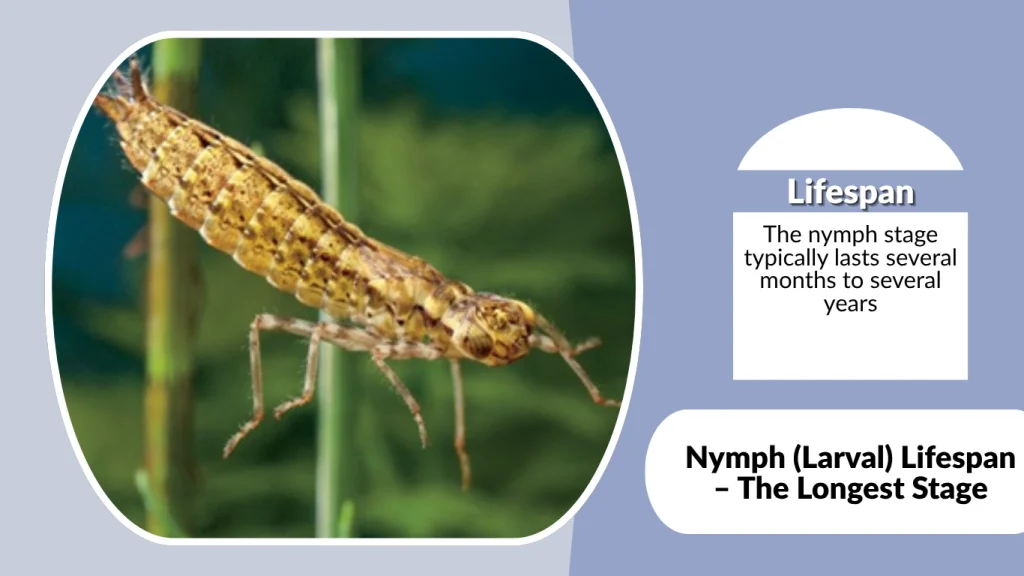
Dragonfly nymphs spend most of their lives underwater, where they hunt aggressively and molt repeatedly before becoming adults. This stage is essential to the species’ survival and dramatically influences overall lifespan.
Nymph Stage Duration
The nymph stage typically lasts several months to several years, depending on the species and climate. Warmer water speeds up development, while colder water slows it. Some large species, especially in northern regions, may spend up to five years as nymphs before emerging.
How Long Nymphs Live in Water
Nymphs thrive in ponds, lakes, marshes, and slow-moving streams. They can live underwater for long periods because they breathe through specialized internal gills. In regions with harsh winters, nymphs remain active beneath the ice, feeding and growing until conditions allow them to emerge.
Species-Specific Lifespan Variations

Different dragonfly species have distinct lifespans based on size, climate, and ecological demands. Some species develop quickly, while others remain underwater for years.
Emperor Dragonflies
Emperor dragonflies typically spend one to two years as nymphs before emerging as adults. Their adult stage is brief, lasting a few weeks to a couple of months. Their lifespan varies with season length, food availability, and temperature, especially in cooler European climates.
Green Darner Dragonflies
Green darners are known for their impressive migrations. Some generations complete their full life cycle in a single year, while others develop over two years, depending on whether they overwinter as larvae or migrate south. Adults usually survive only a few months after emerging.
Red Dragonflies
Red dragonflies tend to live shorter adult lives. Their vivid coloration peaks during late summer, and many species die shortly after mating. In warmer regions, they may survive longer, but in cooler areas, their adult stage can be brief due to changing temperatures.
Lifespan in Different Locations
Environmental conditions shape how long dragonflies survive. Cooler climates extend the nymph stage, while warm regions allow quicker development.
Dragonflies in the UK
In the UK, dragonflies often spend up to three years as nymphs due to cooler water temperatures. Their adult flight season is short, typically lasting only a few months during summer. This creates a longer overall lifespan compared to tropical species.
Dragonflies in Canada & Minnesota
In northern regions like Canada and Minnesota, dragonfly nymphs may live underwater for two to five years. Cold winters slow their metabolism and molting schedule. Adults have a shorter season, emerging only during the warmest months before winter returns.
Dragonflies in Alaska (AK)
Alaska’s extreme climate results in some of the longest dragonfly nymph stages in the world. Some species take four to six years to develop underwater. Adults live briefly during the short Arctic summer, often just long enough to mate and reproduce.
Lifespan in Captivity
Captive dragonflies rarely live long because they require constant access to open airspace and abundant flying insects. Their high energy needs make them difficult to maintain outside natural environments.
How Long Dragonflies Live in Captivity
Most dragonflies kept in captivity survive only a few days to a few weeks. Limited space prevents proper flight, and feeding them enough live prey is challenging. Even with careful care, captivity fails to replicate the conditions they need to thrive.
Why Captive Care Is Rarely Successful
Dragonflies become stressed when confined. They also require wide hunting areas, sunlight for thermoregulation, and clean water for nymph development. Because captivity disrupts these conditions, their lifespan is significantly shortened.
Life Cycle Breakdown

Egg Stage
Dragonfly eggs typically hatch within a few weeks, though some species overwinter in the egg stage. The conditions of the water, temperature, and season determine how quickly eggs develop.
Nymph Stage (Longest)
The nymph stage shapes most of the dragonfly’s life. Nymphs molt multiple times, growing larger before emerging as adults. Species in colder climates remain in this stage the longest, sometimes for several years.
Adult Stage (Shortest)
Adults focus on feeding, mating, and reproduction. This stage is short-lived, lasting weeks to a few months. Environmental threats, predators, and lack of food can shorten adult lifespan significantly.
How Long Dragonflies Live in Special Conditions
Without Water
Nymphs cannot survive without water, as they rely on it for breathing and hunting. Adults, however, leave the water permanently after emerging.
After Leaving Water
Once adults emerge, they face their highest risk of death. If they survive the initial days, they can live long enough to feed, mate, and lay eggs.
Indoors or in the Dark
Dragonflies trapped indoors rarely survive long because they cannot hunt or navigate properly without open space and sunlight. Darkness affects their vision, making flight and feeding difficult.
Interesting Facts About Dragonfly Lifespan
- Some species spend over 90% of their life underwater.
- Migratory dragonflies may live longer due to multi-stage generational cycles.
- Large species generally have longer nymph stages than smaller ones.
- Weather changes can delay emergence for days or weeks.
- Adult dragonflies may fly hundreds of miles during their lifetime.
FAQs
How long do adult dragonflies live?
Most adult dragonflies live for a few weeks to a few months. Their later life is spent flying, hunting, and mating. Survival depends on weather, predators, and the availability of prey. While short-lived in the air, this stage is only a small part of their overall lifespan, which includes years underwater.
How long do dragonfly nymphs live underwater?
Dragonfly nymphs can live underwater for several months to several years. Cold climates extend this period significantly, sometimes up to five years. During this stage, nymphs molt repeatedly, hunt aquatic insects, and grow until conditions become suitable for emerging as adults.
Why do adult dragonflies live such short lives?
Adult dragonflies focus solely on feeding and reproduction. Their fragile wings, exposure to predators, and constant energy demands shorten their time above water. Their brief adult life ensures that they reproduce quickly while their nymph stage provides long-term population stability.
Do dragonflies live longer indoors or outdoors?
Dragonflies live much longer outdoors. Indoors, they cannot hunt properly, often lack sunlight, and may collide with windows. These conditions lead to starvation or injury. Outdoors, they have access to prey, open flight paths, and the natural habitat needed for survival.
Can dragonflies live for several years?
Yes, but only when including the nymph stage. The underwater stage may last one to six years depending on species and climate. Adults, however, live only a short time. When combined, the full dragonfly lifespan can span multiple seasons or even several years in total.
