
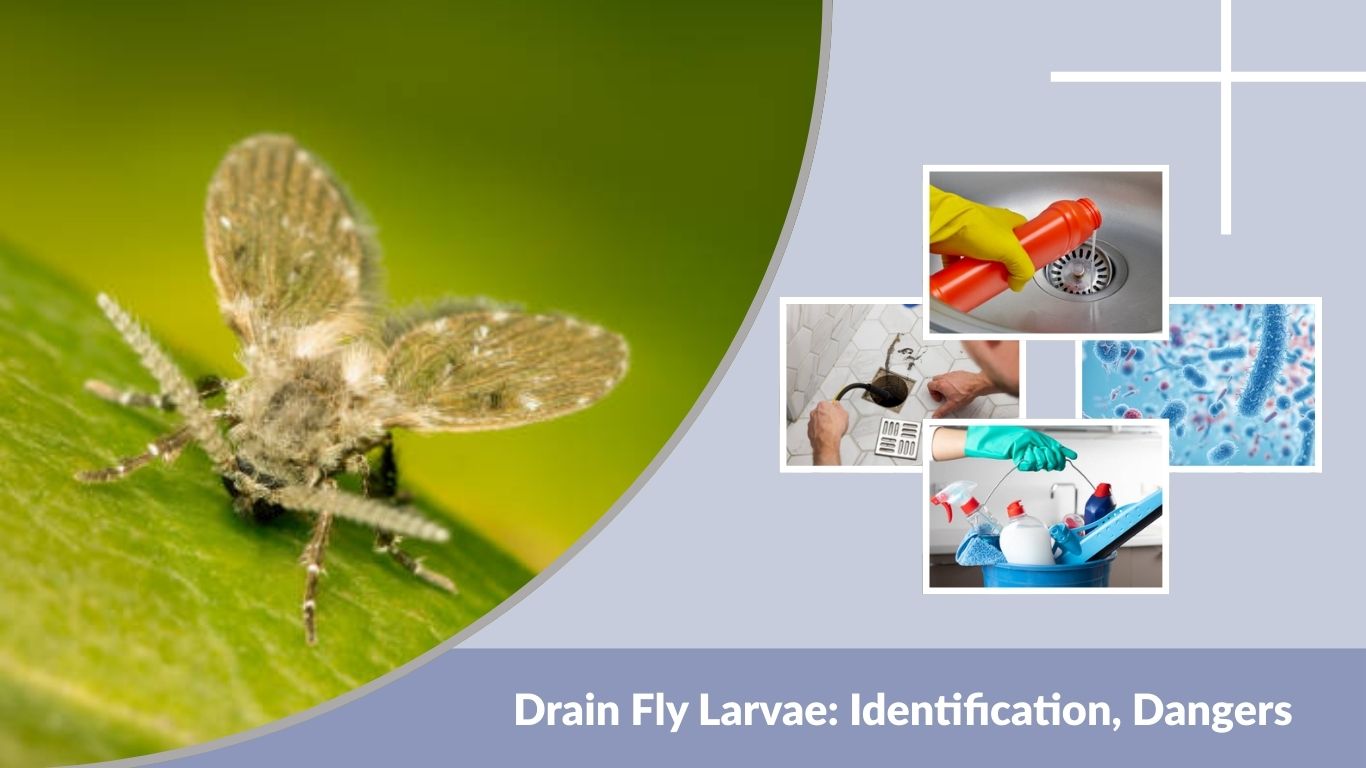
Drain fly larvae are small, worm-like pests that often appear in toilets, showers, sinks, and other damp areas of the home. Many people mistake them for maggots or mosquito larvae, especially when they show up in bathroom drains or standing water. While they may look alarming, they are usually more of a nuisance than a serious health threat. This guide explains what drain fly larvae are, what they look like, where they come from, and whether they are harmful.
What Are Drain Fly Larvae?
Drain fly larvae are the immature stage of drain flies, which belong to the Psychodidae family. These insects are also known as moth flies or sewer flies because the adults have fuzzy wings that resemble tiny moths.
Adult drain flies lay eggs in moist, organic material found inside drains. Within 24 to 48 hours, the eggs hatch into larvae. These larvae feed on the slimy buildup inside pipes before developing into pupae and eventually emerging as adult flies. The full life cycle can take as little as 1 to 3 weeks, depending on temperature and moisture levels.
Because they thrive in damp, dirty environments, drain fly larvae are most commonly found in:
- Bathroom sinks
- Shower drains
- Toilet overflows
- Floor drains
- Septic tanks
- Garbage disposals
Where Do Drain Fly Larvae Come From?
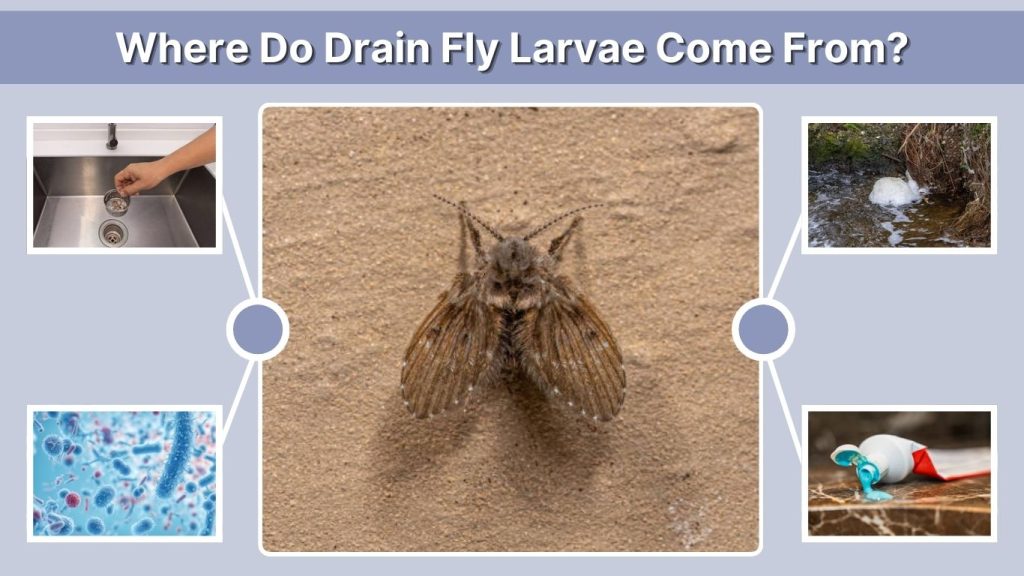
Drain fly larvae develop in organic sludge, also known as biofilm. This sticky layer builds up inside drains and contains:
- Hair
- Soap scum
- Toothpaste residue
- Food particles
- Bacteria
- Grease
When adult drain flies find this material, they lay their eggs in it. The larvae then feed on the decomposing organic matter until they mature.
If you see drain fly larvae in your toilet or shower, it usually means there is buildup somewhere in the plumbing system. In some cases, they may also breed in:
- Leaky pipes
- Septic system filters
- Standing water in rarely used drains
- Dirty grout in showers
- Pet water bowls left uncleaned
They do not appear randomly — their presence almost always signals a moisture and sanitation issue.
What Do Drain Fly Larvae Look Like?
Many people search for “drain fly larvae pictures” because the worms can look disturbing at first glance.
Drain fly larvae are typically:
- 4 to 10 millimeters long
- Thin and worm-like
- Black, gray, white, or translucent
- Slightly shiny in appearance
They have no visible legs and move in a slow, wriggling motion. One end of the body may appear darker due to a breathing tube that helps them survive in wet environments.
Are Drain Fly Larvae Black or White?
They can appear either black or white depending on their stage of development and the material they are feeding on. Newly hatched larvae are often pale or translucent. As they mature and feed on dark organic sludge, they may look darker.
Drain Fly Larvae vs Maggots
Drain fly larvae are often confused with maggots, but there are differences:
- Maggots usually come from rotting meat or garbage.
- Drain fly larvae live inside drains and moist plumbing.
- Maggots are thicker and more tapered.
- Drain fly larvae are thinner and more uniform in shape.
If you are seeing worms inside a drain rather than in trash, they are most likely drain fly larvae.
Drain Fly Larvae vs Mosquito Larvae
Mosquito larvae live in standing water and actively swim. Drain fly larvae, on the other hand, tend to stay attached to surfaces inside drains and move in a slow, crawling motion rather than swimming freely.
Where Are Drain Fly Larvae Commonly Found?
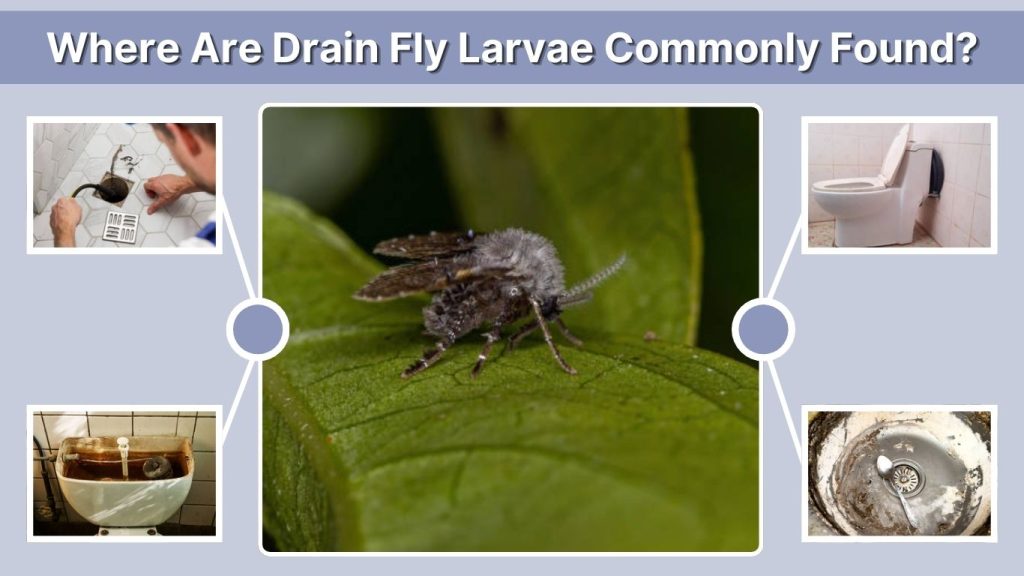
Drain fly larvae can appear in several areas of the home, especially bathrooms and kitchens.
Drain Fly Larvae in Toilet
Finding black or white worms in the toilet bowl can be alarming. In most cases, the larvae are breeding:
- Under the toilet rim
- In the overflow holes
- Inside the drain pipe
- In the toilet tank if it is dirty
They may appear in the bowl after flushing if they are dislodged from the pipe walls.
Drain Fly Larvae in Shower
Showers are one of the most common breeding spots because of constant moisture and hair buildup. You may find larvae:
- Inside the shower drain
- In shower grout
- Along the shower door frame
- On bathroom walls near damp areas
If left untreated, adult moth flies may rest on ceilings and walls.
Drain Fly Larvae in Sink
Kitchen and bathroom sinks are frequent sources due to food particles and soap residue. Garbage disposals are especially attractive to drain flies if not cleaned regularly.
Drain Fly Larvae in Fish Tanks or Pet Water
In rare cases, larvae may appear in aquariums, turtle tanks, or pet water bowls if organic debris builds up. Regular cleaning usually prevents this issue.
Are Drain Fly Larvae Harmful or Dangerous?
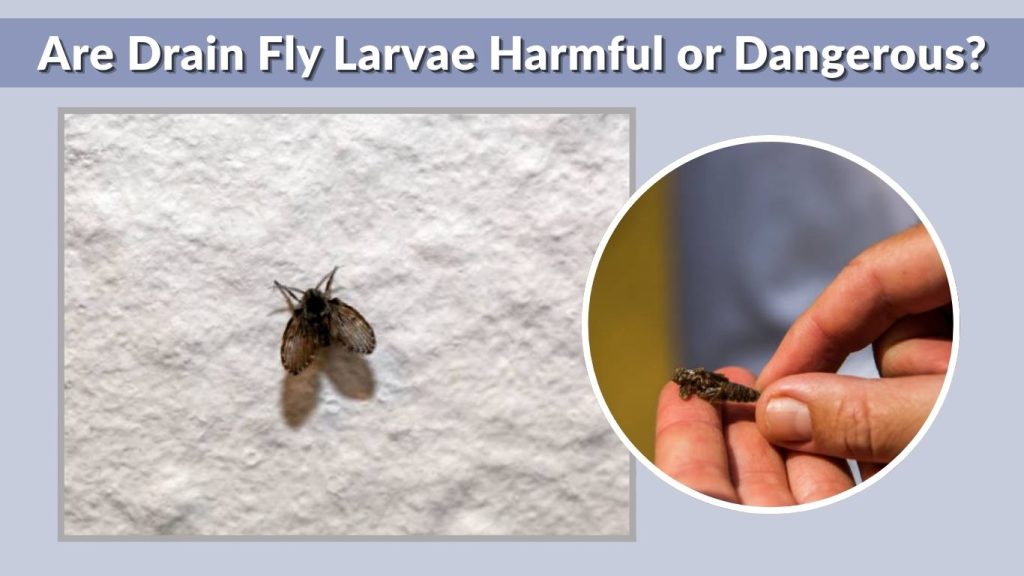
One of the most common concerns is whether drain fly larvae are harmful to humans or pets.
In general, drain fly larvae are not dangerous. They:
- Do not bite
- Do not sting
- Do not burrow into skin
- Are not parasitic
However, they do live in unsanitary conditions. Their presence indicates bacterial buildup inside plumbing. While they are not directly harmful, the environment they inhabit can contribute to unpleasant odors and potential hygiene concerns.
Rare medical cases involving drain flies and humans have been reported, but these are extremely uncommon and usually linked to severe sanitation issues.
For pets, accidental ingestion of a few larvae is unlikely to cause harm, though it may lead to mild stomach upset.
How to Get Rid of Drain Fly Larvae
Eliminating drain fly larvae requires more than just killing the visible worms. The real goal is removing the organic buildup where they breed. If you only kill the larvae but leave the sludge behind, they will return within days.
Here’s the most effective step-by-step approach.
Step 1: Physically Clean the Drain (Most Important Step)
Mechanical cleaning is the most critical part of treatment.
- Remove the drain cover.
- Use a long, stiff drain brush to scrub the inside walls of the pipe.
- Pull out hair, sludge, and debris.
- Clean the P-trap if accessible.
- Wipe the drain cover thoroughly before replacing it.
Drain fly larvae feed on biofilm stuck to pipe walls. Scrubbing removes their food source and breeding area. Without this step, chemical treatments are only temporary fixes.
Step 2: Use Boiling Water
Many people ask: Does boiling water kill drain fly larvae?
Yes — boiling water kills larvae on contact. After scrubbing the drain:
- Slowly pour a kettle of boiling water down the drain.
- Repeat once daily for several days.
Hot water helps flush out remaining organic residue. However, it works best after mechanical cleaning. Avoid using boiling water in PVC pipes if your plumbing is old or fragile.
Step 3: Apply an Enzyme Drain Cleaner
Enzyme-based cleaners are one of the best long-term solutions.
Unlike bleach, enzyme cleaners break down:
- Organic sludge
- Grease
- Hair
- Bacteria buildup
Use the product overnight when the drain won’t be used. Apply it daily for 5–7 days for severe infestations.
This method targets eggs, larvae, and their food source.
Step 4: Does Bleach Kill Drain Fly Larvae?
Yes, bleach can kill drain fly larvae on contact. However, it has limitations.
Bleach:
- May not penetrate thick biofilm.
- Often flows past buildup without fully removing it.
- Does not eliminate eggs embedded in sludge.
If using bleach:
- Pour it slowly to allow contact time.
- Let it sit for at least 30 minutes.
- Rinse with hot water.
Bleach works best as a supplement — not a standalone solution.
Step 5: Does Vinegar Kill Drain Fly Larvae?
Vinegar alone is not strong enough to fully eliminate an infestation. However, when combined with baking soda, it can help loosen debris.
To try this method:
- Pour baking soda into the drain.
- Add vinegar.
- Let it fizz for 30 minutes.
- Flush with hot water.
This method helps with minor buildup but is not as powerful as enzyme cleaners.
What Kills Drain Fly Larvae Instantly?
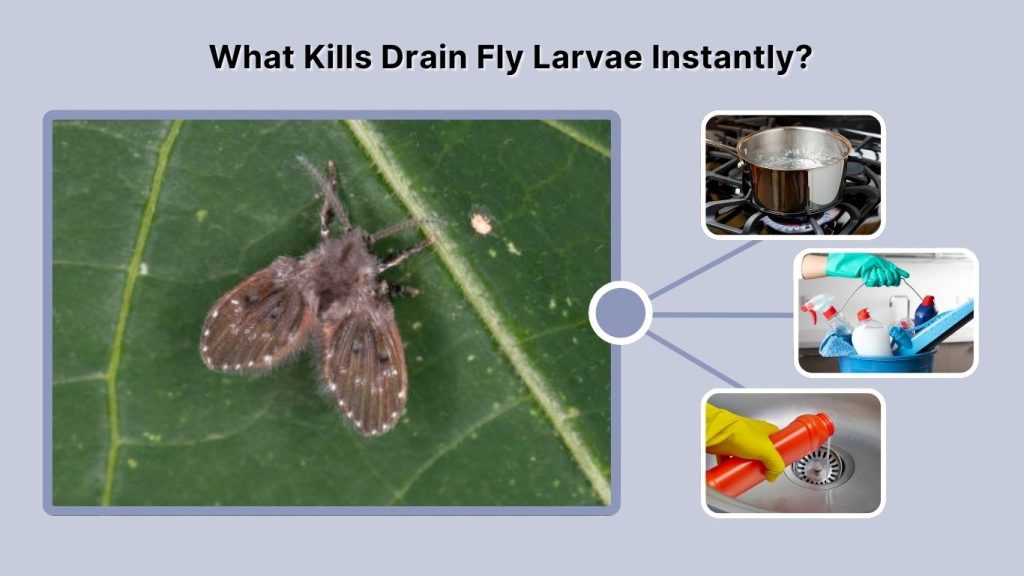
If you want immediate results, the following can kill larvae on contact:
- Boiling water
- Bleach
- Rubbing alcohol
- Commercial drain gels
However, remember: killing visible larvae does not stop the life cycle unless you remove the breeding source.
How to Remove Drain Fly Larvae from Specific Areas
How to Get Rid of Drain Fly Larvae in Toilet
If you see worms in the toilet bowl:
- Scrub under the rim thoroughly.
- Clean overflow holes.
- Pour enzyme cleaner into the overflow tube in the tank.
- Check for hidden leaks around the base.
Sometimes the breeding site is deeper in the drain line rather than the bowl itself.
How to Get Rid of Drain Fly Larvae in Shower
Shower drains are common hotspots due to hair and soap scum.
- Remove drain cover.
- Pull out hair clogs.
- Scrub drain walls.
- Clean shower grout.
- Dry the area when possible.
If larvae appear on shower walls or ceiling, adult flies are likely emerging nearby.
Removing Drain Fly Larvae from Fish Tanks or Pet Water
Do not use bleach or harsh chemicals in aquariums.
Instead:
- Perform a full water change.
- Clean the filter system.
- Remove decaying food or plant matter.
- Rinse gravel if needed.
For pet bowls or cat water fountains:
- Wash daily with hot soapy water.
- Prevent standing water buildup.
Why Do Drain Fly Larvae Keep Coming Back?
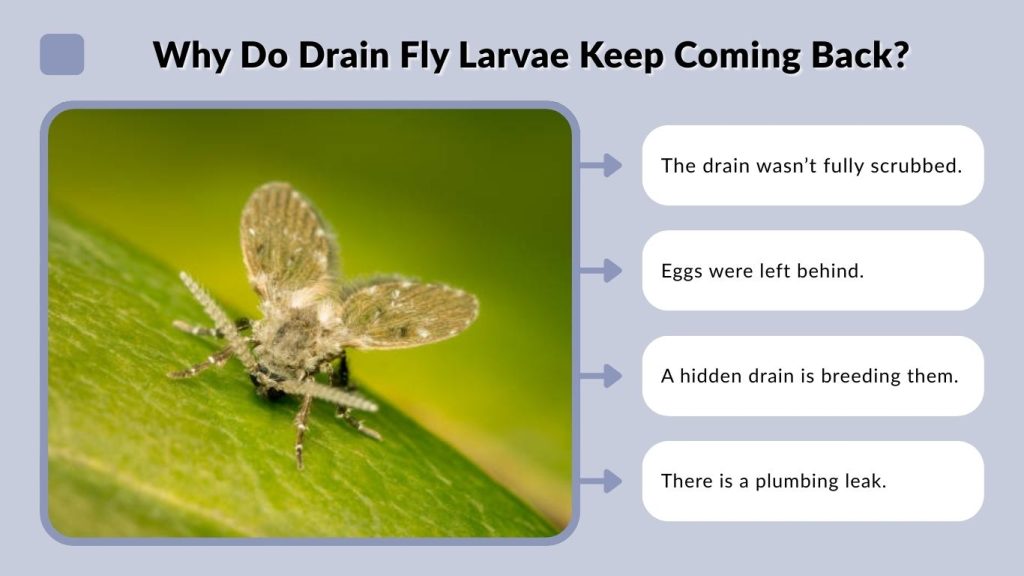
If drain fly larvae return, it usually means:
- The drain wasn’t fully scrubbed.
- Eggs were left behind.
- A hidden drain is breeding them.
- There is a plumbing leak.
- The septic system has buildup.
Unused floor drains in basements are common overlooked sources. Pour water into rarely used drains weekly to prevent dry traps that attract flies.
How to Prevent Drain Fly Larvae
Prevention is easier than treatment.
- Clean drains weekly.
- Use enzyme cleaner monthly.
- Fix leaking pipes quickly.
- Keep bathroom floors dry.
- Clean garbage disposals regularly.
- Maintain septic tanks properly.
- Wash pet water containers daily.
Reducing moisture and organic buildup is the key to long-term control.
Signs of a Drain Fly Larvae Infestation
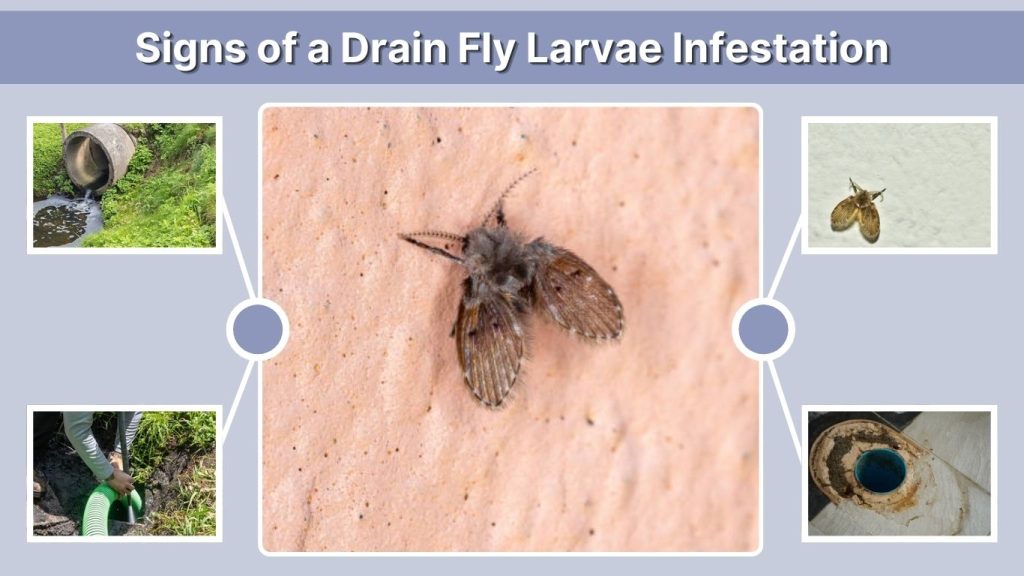
You may have a developing problem if you notice:
- Small moth-like flies resting on walls.
- Worms in toilet or shower drains.
- Slow drainage.
- Foul odors from pipes.
- Larvae crawling on bathroom floors.
Early action prevents a full infestation cycle.
When to Call Pest Control
Professional help may be necessary if:
- Infestations persist after deep cleaning.
- Larvae appear outside drain areas.
- Septic system filters are clogged.
- You suspect broken sewer lines.
A plumber may be needed if the breeding site is deep within the plumbing system.
