
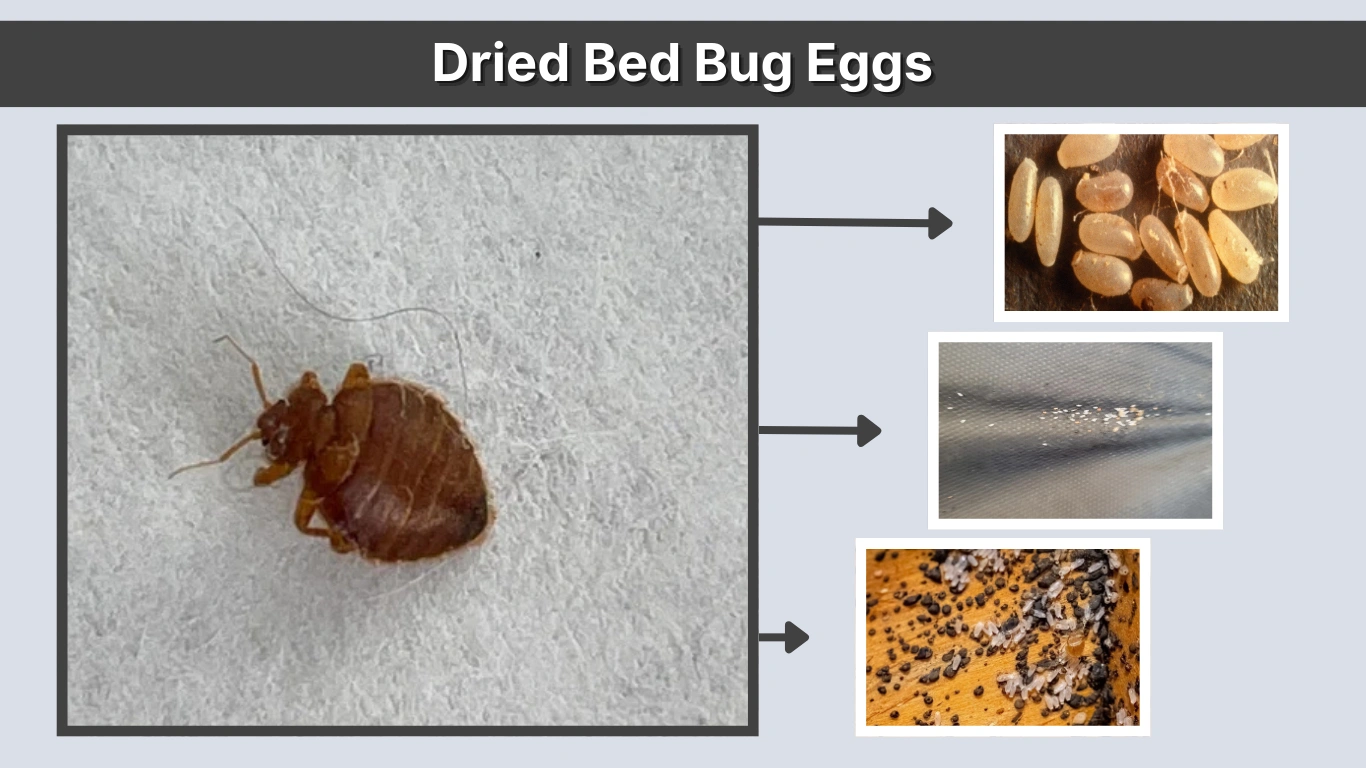
Bed bugs are notorious household pests that thrive in hidden spaces, feeding on human blood at night. While spotting live bugs is alarming, their eggs often provide the earliest and clearest evidence of an infestation. In particular, dried bed bug eggs—old, shriveled remnants of past activity—can reveal whether an infestation has been present for weeks or months. Understanding how these eggs look, where they appear, and what they mean is crucial for early detection and effective control.
Understanding Dried Bed Bug Eggs
What Are Dried Bed Bug Eggs?
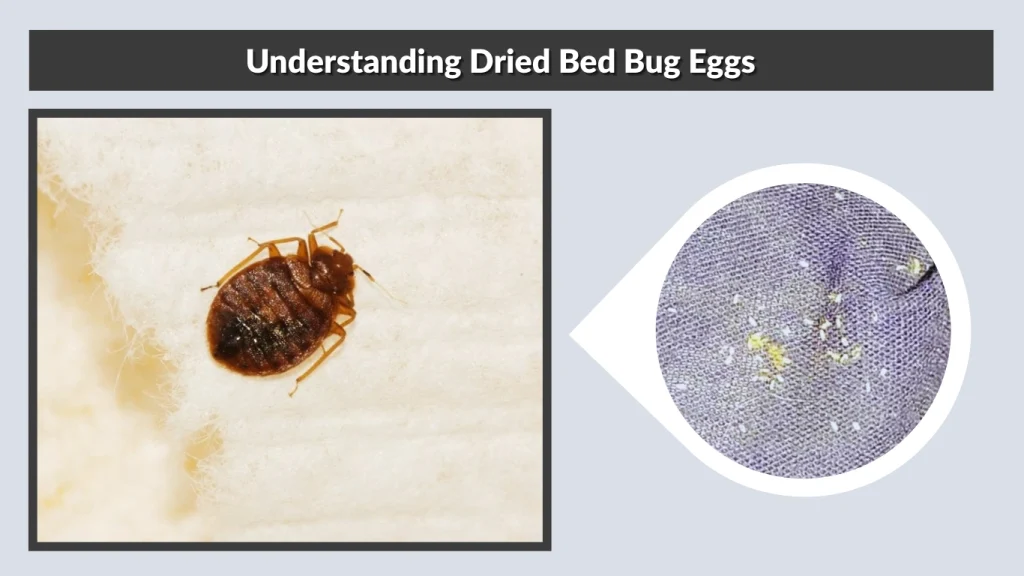
Fresh bed bug eggs are tiny, about 1 mm long, and pearly white in appearance. They have a sticky coating that allows them to adhere to fabrics, wood, and other rough surfaces. When eggs remain unhatched due to natural death, exposure to treatments, or aging, they eventually become dried or old bed bug eggs.
Dried eggs look different from freshly laid ones. Instead of being smooth and shiny, they appear:
- Shriveled or collapsed.
- Translucent or dull white rather than pearly.
- Brittle and flaky when touched.
These changes make them harder to spot and often mistaken for lint, dandruff, or bits of dust.
Why Do Bed Bug Eggs Dry Out?
Bed bug eggs can dry out for several reasons:
- Failed development: Some eggs never hatch due to natural defects or insufficient conditions.
- Exposure to treatments: Heat, rubbing alcohol, and certain pesticides dry out and kill eggs before they hatch.
- Aging: Eggs left behind in old infestations eventually lose their sticky surface and dry up naturally.
While dried eggs don’t hatch, they remain a clear sign that bed bugs have been active in the area.
Early Signs of Dried Bed Bug Eggs

Detecting dried eggs can be challenging because they blend into surfaces, especially light-colored fabrics or wood. However, certain areas are more likely to reveal them.
On a Mattress
The most common place to find dried bed bug eggs is in mattress seams, tufts, and stitching. Old infestations often leave clusters of eggs here, along with fecal stains and shed skins. Dried eggs may look like tiny white flakes stuck near fabric folds or along piping.
On Sheets and Blankets
Although eggs are less commonly laid on sheets, infestations that spread heavily may leave them there. When dried, they resemble specks of lint or dandruff, often near spots where bugs gather to feed.
On Furniture and Upholstery
Couches, chairs, and headboards often harbor both live bed bugs and their eggs. Dried eggs can be found:
- In the cracks of wooden furniture.
- Underneath cushions.
- Along seams of upholstered fabric.
Because of their sticky nature, they can cling firmly to rough or textured surfaces.
On Wood Surfaces
Bed bug eggs adhere well to wood, especially in rough crevices or cracks. On bed frames, nightstands, and drawers, dried eggs appear like tiny whitish flakes embedded in the grain.
On Clothes
Though less common, bed bug eggs may stick to clothing stored near an infestation site. Once dried, they can look like small whitish specks on seams, folds, or collars.
Differentiating Fresh vs. Old Bed Bug Eggs

One of the biggest challenges in inspection is telling whether the eggs you’ve found are active or dried remnants of a past infestation.
- Fresh eggs:
- Smooth, shiny, and pearly white.
- Slightly sticky to the touch.
- Often laid in clusters.
- Smooth, shiny, and pearly white.
- Dried/old eggs:
- Shriveled, dull, and brittle.
- Appear translucent or grayish-white.
- May flake away if touched.
- Shriveled, dull, and brittle.
- Hatched eggs:
- Look like empty, flattened shells left behind.
- Tiny opening at one end where the nymph emerged.
- Look like empty, flattened shells left behind.
Recognizing these differences helps you assess whether you’re dealing with an active infestation or evidence of one that may already have been treated but not fully resolved.
Do Drying Methods Kill Bed Bug Eggs?
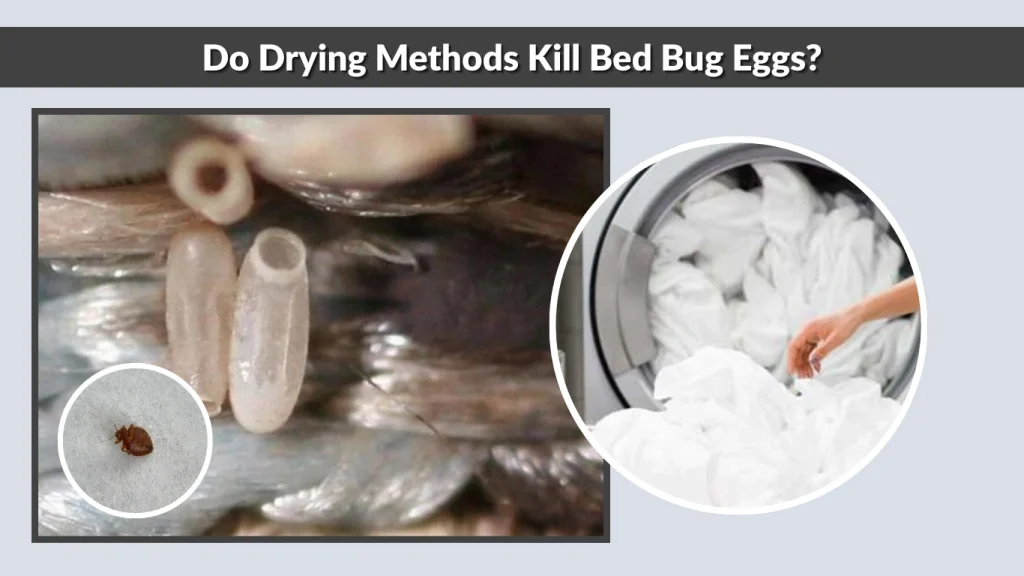
When it comes to eliminating bed bug eggs—whether fresh or dried—different drying and cleaning methods have varying levels of effectiveness.
Drying Clothes and Bedding
High heat is one of the most effective methods. Washing items in hot water (60°C / 140°F or higher) and then drying them on the highest heat setting for at least 30 minutes kills bed bug eggs, regardless of whether they’re fresh or dried. Heat penetrates fabrics and destroys the eggs’ protective coating, preventing any chance of hatching.
Dry Cleaning
Dry cleaning can kill bed bugs and their eggs, but effectiveness depends on the process. Standard chemical-only dry cleaning is less reliable than heat-based dry cleaning systems. If you suspect clothing carries eggs, always inform the cleaner beforehand, or better yet, use home laundering with heat.
Dry Ice and Alcohol
- Dry ice: Extreme cold can kill bed bugs and eggs, but it requires specialized handling and isn’t practical for most households. Some pest control companies use CO₂ snow treatments, but DIY use is risky.
- Rubbing alcohol: While it can dry out eggs, it is not consistently effective because it often fails to penetrate the sticky protective coating. It may kill some eggs on contact but shouldn’t be relied on as a primary treatment.
How to Get Rid of Dried Bed Bug Eggs
Even though dried eggs are no longer viable, removing them is crucial since their presence indicates that live bed bugs may still be hiding nearby.
DIY Methods
- Vacuuming
- Use a vacuum with a HEPA filter to remove dried eggs, shells, and bugs from seams, cracks, and upholstery.
- Always dispose of the vacuum bag in a sealed plastic bag outside the home.
- Use a vacuum with a HEPA filter to remove dried eggs, shells, and bugs from seams, cracks, and upholstery.
- Steam Cleaning
- Steam penetrates fabrics and kills eggs hidden in deep folds or crevices.
- Temperatures above 50°C (122°F) are lethal to bed bugs and eggs.
- Steam penetrates fabrics and kills eggs hidden in deep folds or crevices.
- Heat Treatment for Fabrics
- Wash clothes, sheets, and blankets in hot water and dry them at high heat.
- Store freshly cleaned items in sealed bags until the infestation is cleared.
- Wash clothes, sheets, and blankets in hot water and dry them at high heat.
- Mattress and Pillow Encasements
- Use bed bug-proof encasements to trap hidden eggs and bugs.
- Prevents future hatching nymphs from escaping to feed.
- Use bed bug-proof encasements to trap hidden eggs and bugs.
Professional Pest Control
For moderate to severe infestations, professional treatments are often necessary:
- Pesticide applications: Licensed exterminators use targeted insecticides that kill both live bugs and eggs.
- Integrated Pest Management (IPM): A combination of chemical, mechanical, and heat treatments for comprehensive results.
- Follow-up inspections: Professionals revisit to ensure no surviving eggs are left behind.
Prevention of Future Infestations
After eliminating dried and fresh eggs, prevention is key to avoiding recurrence.
- Inspect regularly: Check mattresses, bed frames, and furniture seams every few weeks.
- Use protective covers: Encase mattresses and pillows in bed bug-proof covers.
- Reduce clutter: Keep storage areas neat to limit hiding places for bed bugs and their eggs.
- Seal cracks and crevices: Repair gaps in furniture, baseboards, and walls to reduce egg-laying spots.
- Be travel-smart: Inspect hotel beds, keep luggage off floors, and wash clothes immediately after returning home.
FAQs
What do dried bed bug eggs look like?
Dried bed bug eggs look shriveled, brittle, and dull white compared to fresh eggs, which are pearly and smooth. They often resemble tiny flakes of dust or lint stuck to fabrics or furniture.
Does drying clothes kill bed bug eggs?
Yes. Exposing infested clothes or bedding to high heat (over 60°C / 140°F) in the washer and dryer for at least 30 minutes will kill both live bed bugs and their eggs effectively.
Can dry cleaning kill bed bug eggs?
Dry cleaning may reduce infestations, but its effectiveness varies. Traditional chemical-only processes are not always strong enough, while heat-based dry cleaning systems are more reliable at killing eggs.
How can you tell the difference between fresh and old eggs?
Fresh eggs are smooth, plump, and sticky, while old or dried eggs are shrunken, flaky, and less adhesive. Hatched eggs appear as empty, transparent shells with a small opening.
How do you permanently get rid of bed bug eggs?
The best approach combines heat treatment, steam cleaning, vacuuming, and professional pest control. Preventive measures, such as using mattress encasements and conducting regular inspections, help stop new infestations.
