
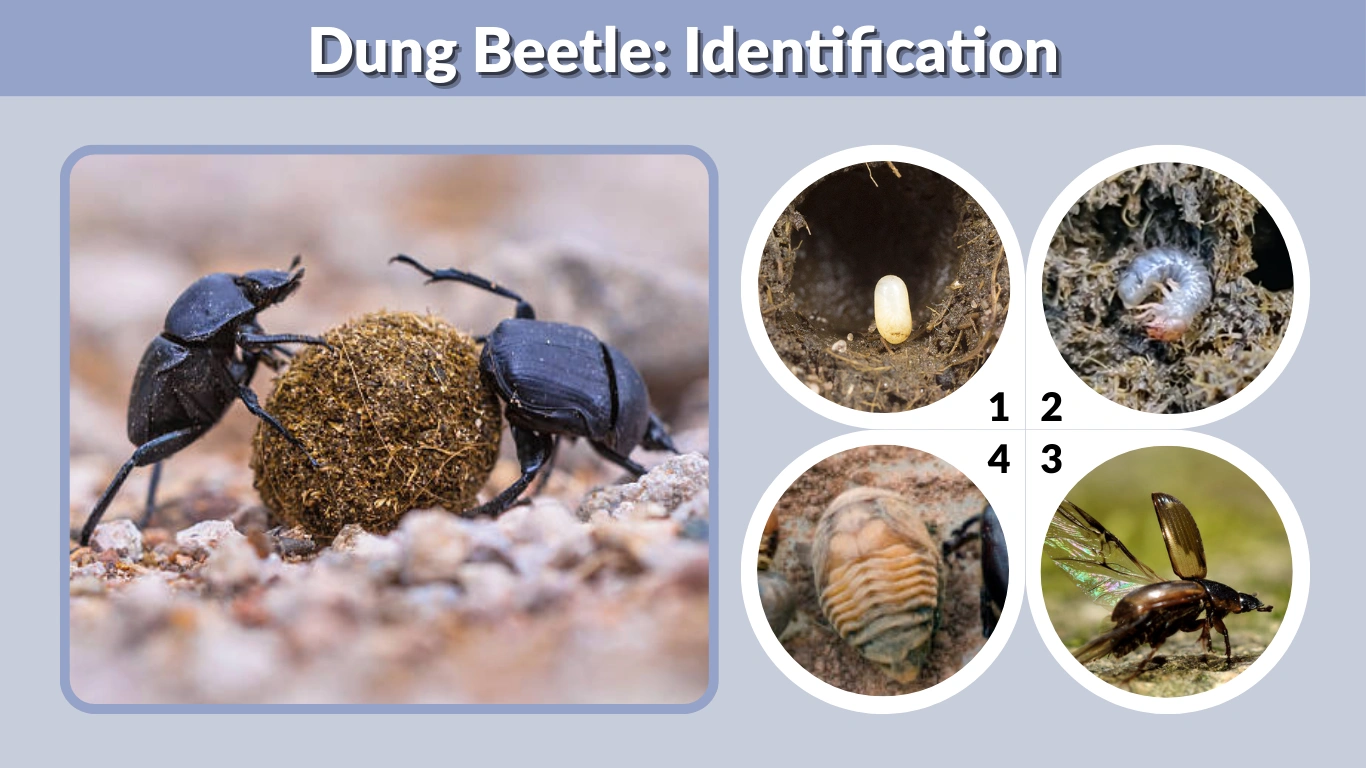
Dung beetles are remarkable insects best known for their close relationship with animal droppings. While often overlooked, they play a powerful ecological role by recycling waste, enriching soil, and reducing harmful parasites and flies. Found on nearly every continent, dung beetles display fascinating behaviors such as rolling dung balls, digging underground chambers, and even navigating using natural light. Although small in size, their impact on ecosystems is enormous. Understanding dung beetles helps reveal how nature efficiently manages waste while supporting healthier soils, plants, and animal populations.
What Is a Dung Beetle?
Dung beetles belong to the scarab beetle family (Scarabaeidae) and are insects that feed partly or entirely on animal dung. More than 6,000 species of dung beetles have been identified worldwide, living in environments ranging from tropical rainforests to open grasslands and dry deserts.
Unlike many insects that simply consume organic matter, dung beetles actively shape their environment. By breaking down and relocating dung, they recycle nutrients back into the soil, prevent waste buildup, and reduce breeding sites for pests such as flies and parasitic worms. Their constant digging improves soil structure, allowing better water absorption and root growth.
Scientific Classification
Dung beetles are part of the order Coleoptera and family Scarabaeidae. Many belong to subfamilies such as Scarabaeinae and Aphodiinae. These groups include hundreds of genera adapted to specific habitats, climates, and types of animal dung.
Why Dung Attracts Beetles
Animal dung is rich in organic material, bacteria, and moisture. For dung beetles, it provides both food and a safe environment for reproduction. Fresh dung releases strong odors that dung beetles can detect from long distances, allowing them to arrive quickly before the dung dries out or is claimed by competitors.
Global Species Diversity
Dung beetles are found on every continent except Antarctica. The greatest diversity occurs in warm regions where large mammals are common. Some species specialize in cow dung, others prefer deer, horse, elephant, or wildlife droppings, showing how closely their evolution is tied to animal life.
Dung Beetle Identification (Key Features)
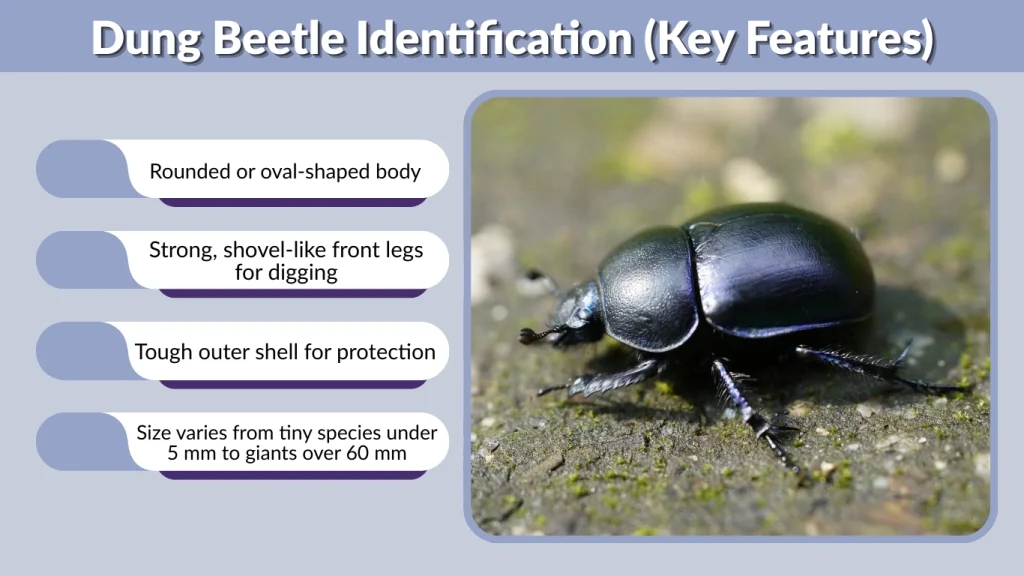
Dung beetles vary widely in appearance, but most share physical traits designed for digging, lifting, and rolling.
- Rounded or oval-shaped body
- Strong, shovel-like front legs for digging
- Tough outer shell for protection
- Colors range from black and brown to metallic green, blue, or copper
- Size varies from tiny species under 5 mm to giants over 60 mm
- Some males possess horns used for fighting and mating displays
Their powerful forelegs allow them to tear apart dung, dig tunnels, and shape dung balls. Many species also have smooth, compact bodies that help them move easily through soil and waste.
Habitat and Distribution
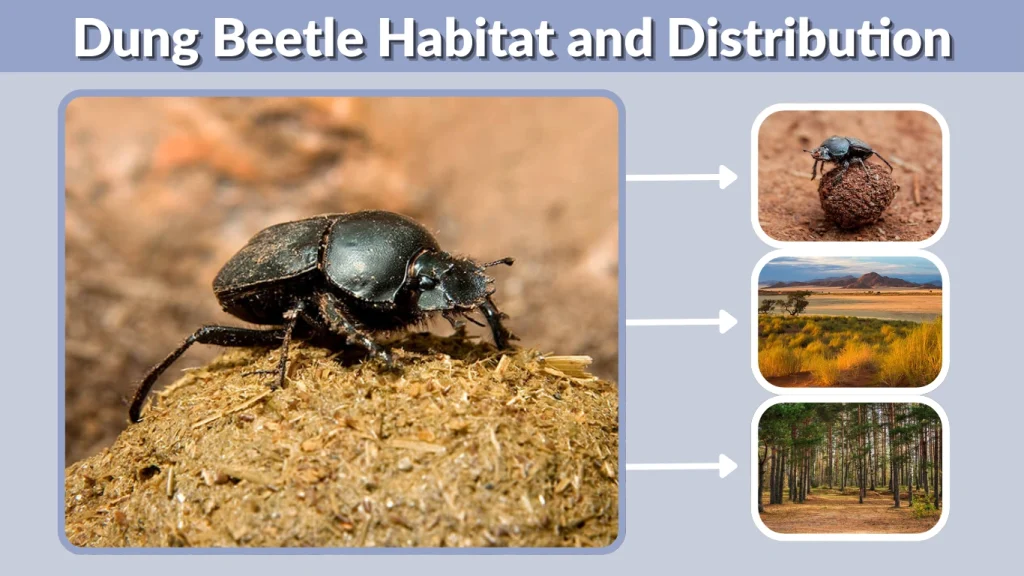
Dung beetles live wherever mammals and large animals produce dung. They are especially abundant in grasslands, savannas, forests, wildlife reserves, and agricultural pastures.
Warm and tropical climates support the greatest number of species, but dung beetles are also common in temperate regions. Some species prefer dry, sandy soils, while others thrive in moist forests or high-altitude environments.
Natural Habitats
In the wild, dung beetles are commonly found near grazing animals such as deer, buffalo, elephants, antelope, and wild cattle. Forest species often rely on dung from monkeys, wild pigs, and large birds.
Farmland and Pastures
Agricultural lands provide ideal habitats due to the constant presence of livestock. Cow, horse, goat, and sheep dung support large dung beetle populations, making farms one of the most active dung beetle environments.
Seasonal and Climate Influence
Dung beetle activity often increases during warm, wet seasons when dung remains moist and easier to shape. Cold or dry conditions reduce activity, and some species overwinter underground.
Diet and Feeding Behavior
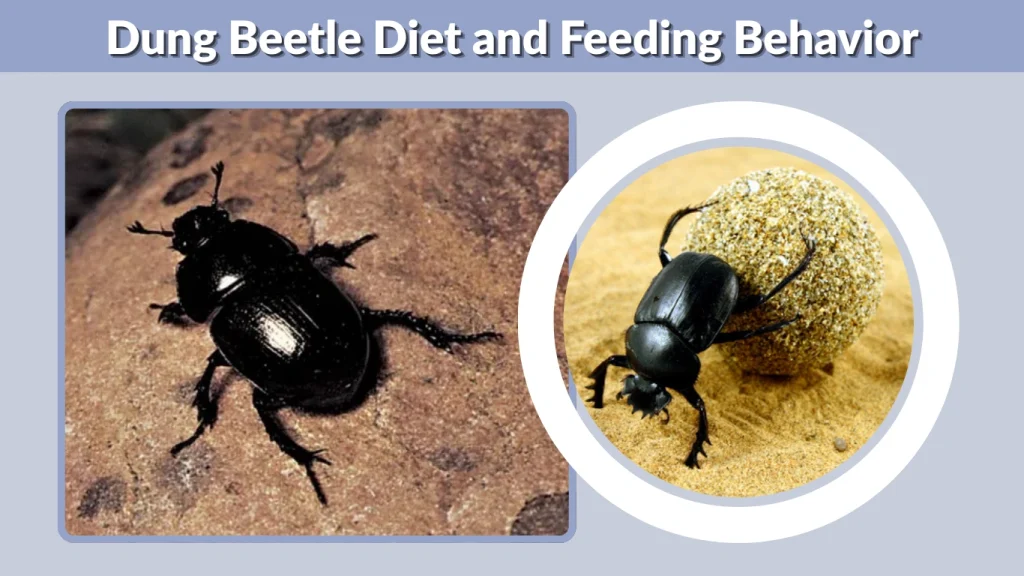
Dung beetles mainly feed on the liquid portion of dung, which is rich in bacteria and partially digested plant material. Adults filter out tiny nutritious particles, while larvae consume dung stored by their parents.
Fresh dung attracts many beetles at once, creating intense competition. Some species quickly carve pieces and fly away, while others dig beneath the pile or remain inside it.
Dung is not only food but also a nursery. Many dung beetles carefully prepare dung balls or underground chambers where eggs are laid. This ensures that developing larvae have a protected food source.
Types of Dung Beetles
Dung beetles are commonly grouped by how they use dung rather than by strict scientific divisions.
- Rollers – shape dung into balls and roll them away
- Tunnelers – dig beneath dung and bury it underground
- Dwellers – live and breed inside dung pats
- Horned dung beetles
- Sacred scarabs
- Rainbow dung beetles
- Giant dung beetles
Each type plays a different role in breaking down dung and improving soil health.
Dung Beetle Life Cycle
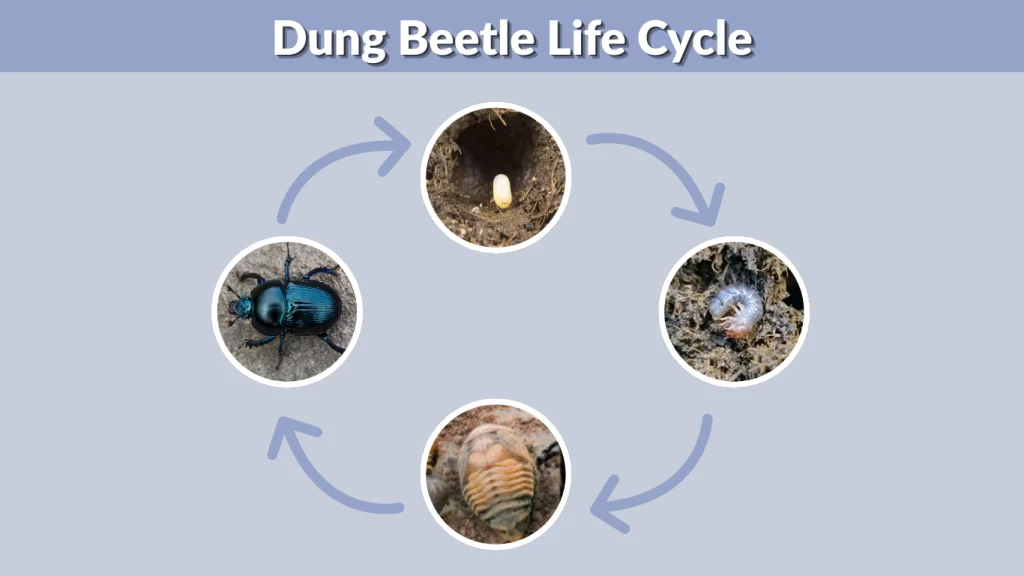
Dung beetles undergo complete metamorphosis, meaning they pass through four distinct stages.
- Egg
- Larva
- Pupa
- Adult
Females lay eggs inside dung balls or underground chambers. Larvae hatch and feed on stored dung, growing through several stages before pupating. After transformation, adult beetles emerge from the soil and begin searching for fresh dung, restarting the cycle.
Rolling and Digging Behavior
Dung beetles are famous for their impressive strength and unique dung-handling behaviors. Some species quickly carve off pieces of fresh dung, shaping them into smooth balls. These balls may be used as food stores or as nesting chambers where eggs are laid. The beetle then rolls the ball away from the main dung pile to avoid competition before burying it underground.
Other species do not roll dung at all. Instead, they dig tunnels directly beneath the dung pat and pull portions of dung down into underground chambers. These tunnels can reach deep into the soil, helping loosen compacted ground and mix organic material into lower layers.
Why Dung Beetles Roll Dung
Rolling dung reduces competition and protects food from drying out or being stolen. It also allows beetles to move the dung to softer soil where burial is easier and safer for developing larvae.
Underground Nest Building
Many dung beetles create complex tunnel systems with side chambers for food storage and egg laying. These underground nests protect offspring from predators, heat, and dehydration.
Competition and Territorial Fights
Fresh dung attracts many beetles at once. Males of some species fight fiercely over dung balls or access to tunnels. Horned species often wrestle rivals, using their horns to flip or block opponents.
Strength, Flight, and Navigation
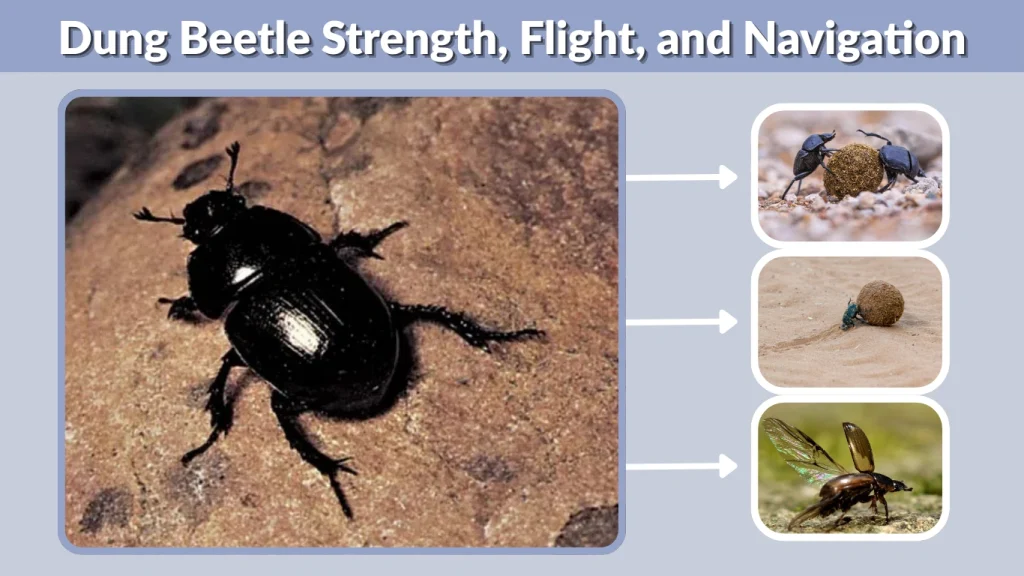
Dung beetles are among the strongest insects relative to their body weight. Some species can move objects more than 1,000 times their own mass. Their powerful muscles and specially shaped legs make this extraordinary strength possible.
Most dung beetles can fly and often locate dung within minutes of its appearance. Their strong sense of smell allows them to detect dung from long distances. Many species are active during the day, while others are nocturnal.
Remarkably, certain night-active dung beetles use the Milky Way and moonlight to navigate. By orienting themselves to bright bands of light in the sky, they can roll dung balls in straight lines, helping them escape competitors quickly and efficiently.
Benefits of Dung Beetles to Ecosystems
Dung beetles provide enormous environmental benefits. By removing dung from the surface, they prevent waste buildup and reduce breeding grounds for flies and parasitic worms. Their digging improves soil aeration, allowing water and oxygen to reach plant roots more easily.
Burying dung enriches soil with nutrients, increasing plant growth and pasture quality. This natural fertilization supports healthier ecosystems and boosts agricultural productivity.
Dung beetles also help reduce greenhouse gas emissions from manure by breaking it down faster and incorporating it into the soil, limiting harmful gas release.
Are Dung Beetles Dangerous to Humans?
Dung beetles are harmless to people. They do not bite, sting, or attack humans, and they rarely come into direct contact with us. Their entire lifestyle revolves around dung and soil.
Although they live in waste, dung beetles actually lower disease risk by removing animal droppings that could otherwise support harmful bacteria, flies, and parasites. Their presence is generally a sign of a healthy, balanced environment.
Dung Beetles and Agriculture
Dung beetles are extremely valuable to farmers and livestock owners. In grazing lands, untreated manure can smother grass, reduce grazing space, and increase pest populations. Dung beetles rapidly break down this waste, returning nutrients to the soil.
Their activity improves pasture hygiene, lowers parasite loads in livestock, and reduces reliance on chemical fly control. Farms with strong dung beetle populations often experience healthier soil, better grass growth, and improved animal conditions.
Because of these benefits, dung beetles are sometimes introduced into agricultural regions to restore ecological balance and improve land productivity.
FAQs
What do dung beetles eat?
Dung beetles feed mainly on the liquid and microorganisms found in animal droppings. Adults filter nutrients from dung, while larvae consume dung stored in underground chambers. They depend almost entirely on dung for both food and reproduction.
Why do dung beetles roll balls of dung?
Dung beetles roll dung to move it away from competition and bury it safely. These dung balls serve as food supplies and breeding chambers where eggs are laid, allowing larvae to develop with a protected, reliable food source.
Are dung beetles helpful or harmful?
Dung beetles are extremely helpful. They recycle nutrients, fertilize soil, reduce flies and parasites, and improve pasture health. Their work supports healthier ecosystems and reduces the need for chemical pest control.
Can dung beetles fly?
Yes, most dung beetles are strong fliers. They use flight to locate fresh dung quickly, sometimes arriving within minutes. Some species are active during the day, while others fly at night and navigate using moonlight and stars.
How long do dung beetles live?
Dung beetle lifespans vary by species and environment. Many live several months to over one year. Their life cycle includes egg, larva, pupa, and adult stages, with much of their development occurring underground.
