

Dust mites are tiny creatures you can’t see with the naked eye, but their impact on your health can be massive. These microscopic pests thrive in beds, carpets, and furniture, feeding on dead skin cells and leaving behind allergenic waste. For people who are sensitive, exposure to dust mites can cause a range of allergy symptoms—some mild, others persistent and disruptive.
If you’re unsure whether dust mites are behind your allergy issues, this guide breaks down 7 key symptoms of dust mite allergy and what you can do to manage them.
1. Frequent Sneezing, Especially in the Morning
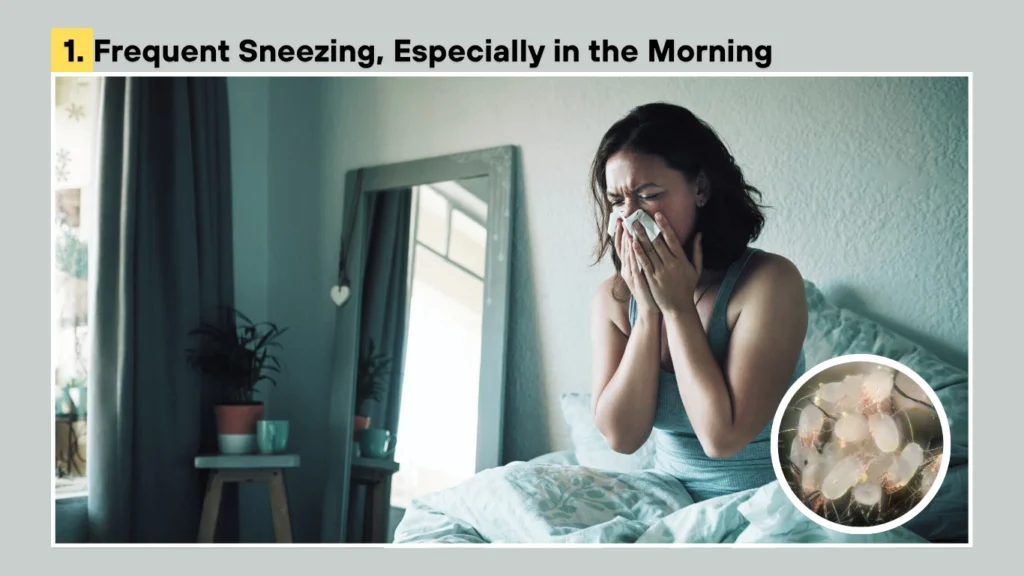
Sneezing is often the first and most noticeable symptom of a dust mite allergy. It may come in rapid fits, especially in the morning when you wake up. That’s because during sleep, your face is in close contact with pillows, blankets, and mattresses—prime habitats for dust mites.
Dust mite waste contains proteins that trigger allergic reactions. As you breathe them in overnight, your immune system responds by releasing histamines, leading to repeated sneezing when you wake up.
Tip: If you sneeze regularly in your bedroom but not elsewhere, dust mites could be the trigger.
2. Runny or Stuffy Nose (Allergic Rhinitis)

A constantly runny or blocked nose—without signs of a cold—is another strong indicator. Dust mite allergens inflame your nasal passages, leading to allergic rhinitis. You may also experience postnasal drip, a tickling feeling in your throat, or the need to clear your throat often.
These symptoms often mimic a lingering cold, but the difference is duration. If your nasal congestion lasts more than a couple of weeks and gets worse in bed, you’re likely dealing with an allergy, not a virus.
Tip: Nasal saline rinses and antihistamines can help relieve rhinitis caused by dust mite exposure.
3. Itchy, Watery, or Red Eyes

Dust mites don’t just affect your nose—they can also irritate your eyes. When allergens come into contact with your eyes during sleep or while lying on fabric surfaces, you might wake up with:
- Red or bloodshot eyes
- Puffy eyelids
- Excessive tearing
- A burning or itching sensation
These symptoms are caused by allergic conjunctivitis, a reaction where your immune system treats harmless proteins like dust mite allergens as threats. In some cases, eye irritation can interfere with your ability to read, use screens, or function normally during the day.
Tip: Use antihistamine eye drops and avoid rubbing your eyes, which can worsen irritation.
4. Itchy Skin or Red Patches Without Bites

One of the most confusing symptoms of dust mite allergy is skin irritation. You might wake up with:
- Small red patches
- General itchiness on your arms, chest, or neck
- Dry or flaky skin
These are not bites. Dust mites don’t bite or sting—they cause allergic skin reactions. Sensitive individuals may develop a rash or eczema flare-ups when their skin comes into direct contact with allergen-laden bedding or clothing.
Tip: Use allergen-proof mattress and pillow covers, and wash bedding in hot water weekly (130°F / 54°C or higher).
5. Worsening Asthma Symptoms at Night
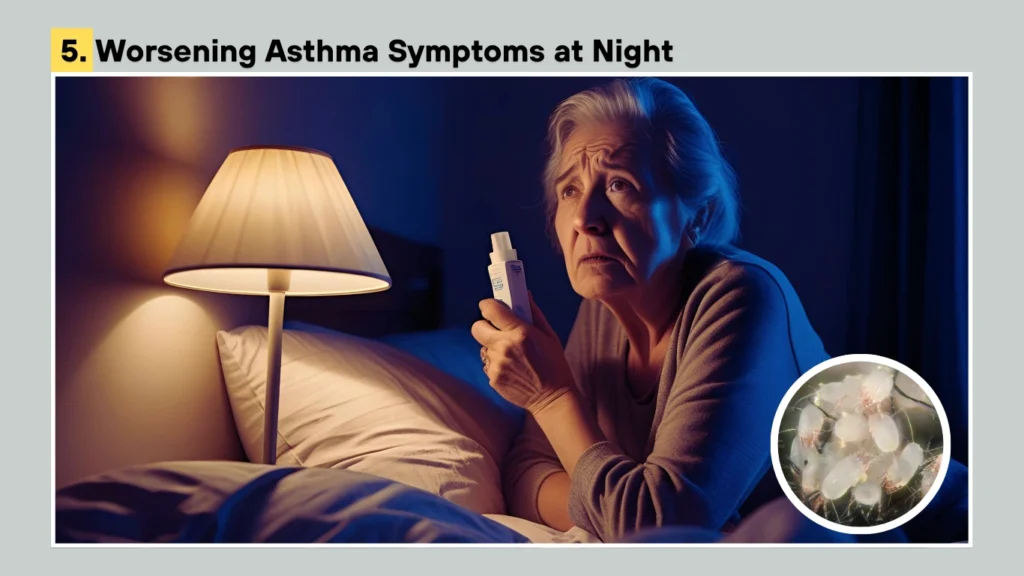
If you have asthma, dust mite allergens can trigger serious flare-ups. As you inhale particles from mite waste while sleeping, your airways may become inflamed. This leads to:
- Wheezing or noisy breathing
- Shortness of breath
- Tightness in the chest
- Nighttime coughing spells
Symptoms often worsen around 2–4 AM and may improve during the day—another sign that your bedding may be full of allergens. Dust mites are one of the top triggers of asthma, especially in children and teens.
Tip: HEPA-filter air purifiers and vacuum cleaners help reduce allergens that trigger asthma attacks.
6. Persistent Cough or Throat Irritation

A chronic cough—especially dry and nagging—is another symptom linked to dust mite allergy. This is often due to postnasal drip, where mucus from inflamed nasal passages drains into the throat and causes constant irritation.
You might also experience:
- A scratchy or dry throat in the morning
- Frequent throat clearing
- Hoarseness or voice fatigue
If your cough is worse at night or in the early morning and persists beyond a typical cold, dust mites could be the cause.
Tip: Raising the head of your bed slightly and using a humidifier with filtered air may help relieve throat symptoms.
7. Fatigue or Poor Sleep Quality

Allergy symptoms don’t just affect your body—they can also impact your sleep and energy levels. Constant sneezing, congestion, coughing, or itching can lead to:
- Restless sleep
- Difficulty falling or staying asleep
- Daytime fatigue or brain fog
- Irritability or poor focus
You may think you’re sleeping through the night, but allergy-driven micro-awakenings reduce the quality of your sleep. Over time, this can affect your mood, immune function, and daily performance.
Tip: Maintaining a clean, allergen-controlled bedroom helps improve sleep and reduce fatigue.
How to Confirm a Dust Mite Allergy
If you experience multiple symptoms from the list above, it’s time to take your suspicion seriously. Here’s how to confirm:
Allergy Testing
- Skin prick test: A small amount of dust mite allergen is applied to your skin to see if there’s a reaction.
- Blood test (IgE): Measures your immune system’s response to dust mite proteins.
Environmental Clues
- Symptoms improve when away from home (e.g., hotel or vacation)
- Allergies flare up specifically in the bedroom
- There’s visible dust buildup or high humidity in your home
Managing and Treating Dust Mite Allergy

While you can’t completely eliminate dust mites, you can greatly reduce your exposure and symptoms:
1. Medical Treatments
- Antihistamines: Reduce sneezing, itching, and nasal symptoms
- Nasal corticosteroids: Help decrease inflammation in the nasal passages
- Eye drops: Alleviate watery, red, or itchy eyes
- Leukotriene inhibitors: Used for severe allergies or asthma
- Immunotherapy: Allergy shots or sublingual drops to desensitize your immune system over time
2. Environmental Controls
- Wash bedding weekly in hot water
- Use allergen-proof mattress and pillow covers
- Vacuum with a HEPA filter regularly
- Use a dehumidifier to keep indoor humidity below 50%
- Install HEPA air purifiers in bedrooms
- Remove carpets or replace with washable rugs when possible
Final Thoughts
Dust mites may be invisible, but their effects are anything but. From sneezing and itchy eyes to full-blown asthma attacks, their presence in your home—especially in the bedroom—can seriously impact your health and well-being.
By recognizing these 7 allergy symptoms early and taking proactive steps to control your environment, you can reduce discomfort, breathe easier, and enjoy better sleep and focus. If symptoms persist, consult an allergist to get tested and create a personalized treatment plan.
