
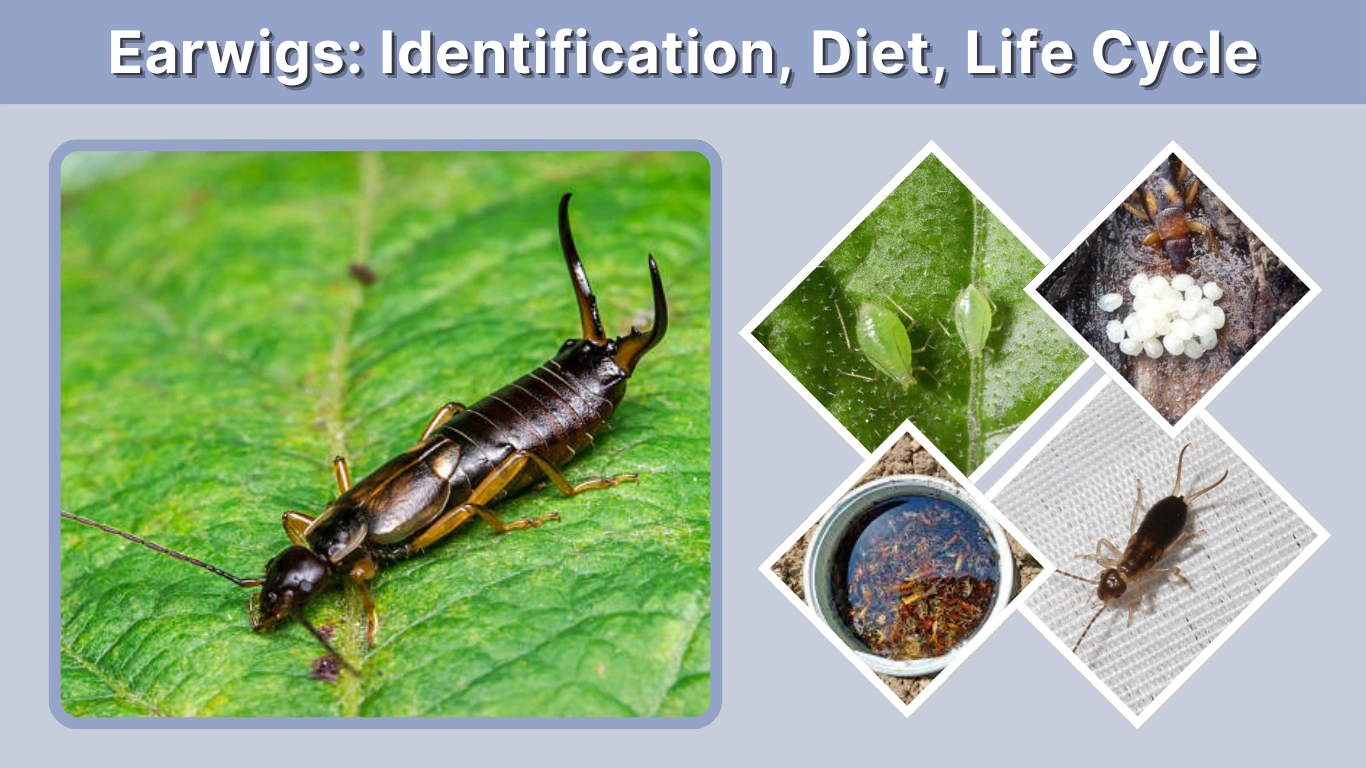
Earwigs are small insects that often cause concern because of their unusual appearance and the myths surrounding them. These insects are easily recognized by the pair of pincers at the end of their bodies. Although earwigs may look intimidating, they are usually harmless to humans. They are commonly found in gardens, under rocks, and in damp areas around homes. Understanding what earwigs are, what they eat, and how they live can help people manage them effectively and prevent infestations.
What Are Earwigs?
Earwigs are insects that belong to the order Dermaptera, a group of insects known for their distinctive pincers and elongated bodies. There are more than 2,000 species of earwigs worldwide, and they can be found in many different climates and environments.
Most earwigs are active at night and prefer dark, moist places during the day. They often hide under rocks, wood, leaves, and other debris. Because of this behavior, they are commonly found in gardens and outdoor areas where moisture and shelter are available.
Despite their somewhat frightening appearance, earwigs are not usually dangerous. They rarely harm humans and do not spread diseases. However, they can become a nuisance when they enter homes or damage certain plants in gardens.
Scientific Classification
Earwigs belong to the insect order Dermaptera, which includes insects with elongated bodies and forceps-like appendages at the end of their abdomen. The name Dermaptera comes from Greek words meaning “skin wings,” referring to their thin hind wings that fold under short outer wings.
The most common species found in homes and gardens is the European earwig (Forficula auricularia). This species has spread to many parts of the world and is often responsible for most household earwig sightings.
Are Earwigs Dangerous?
Many people worry that earwigs are harmful because of their pincers, but in reality, they are mostly harmless. Earwigs do not carry diseases and rarely interact with humans.
They may occasionally use their pincers if they feel threatened, but this is mainly a defensive action. Even then, the pinch is usually mild and does not cause serious injury. Most earwigs prefer to hide or escape rather than confront people.
What Do Earwigs Look Like?
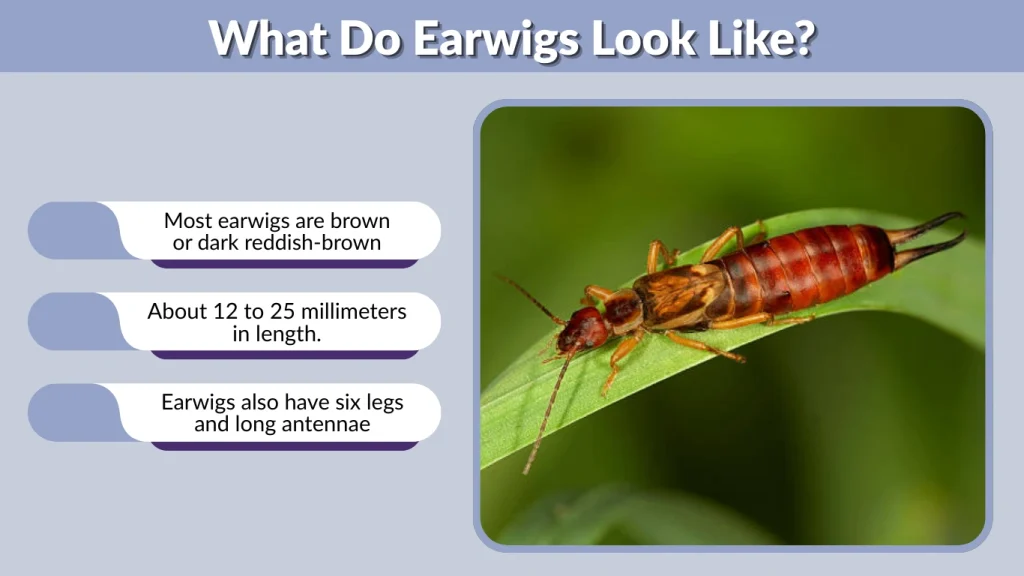
Earwigs have several distinctive features that make them easy to identify. Their bodies are long, narrow, and slightly flattened, allowing them to hide in small cracks and crevices.
Most earwigs are brown or dark reddish-brown and measure about 12 to 25 millimeters in length. Their appearance may seem intimidating because of the forceps-like pincers at the end of their bodies.
Key Physical Features
The most noticeable feature of an earwig is its pincers, also known as cerci. These curved appendages are located at the end of the abdomen and are used for defense, capturing prey, and mating. In many species, male earwigs have larger and more curved pincers than females.
Earwigs also have six legs and long antennae, which help them navigate their environment and locate food. Their bodies are flexible, allowing them to move quickly through narrow spaces.
Wings and Movement
Although earwigs have wings, they rarely fly. Their hind wings are folded underneath short outer wings that act as protective covers. Because flying is uncommon, earwigs usually move by crawling quickly across surfaces.
They are most active during the night, when they leave their hiding places to search for food.
Do Earwigs Bite or Pinch Humans?
One of the most common concerns about earwigs is whether they bite people. Their pincers may look threatening, but earwigs generally do not bite humans.
Do Earwigs Bite?
Earwigs do not bite or sting. Their mouthparts are designed for chewing plant material and small insects, not for biting people.
Why Earwigs Pinch
In rare situations, an earwig may pinch with its pincers if it feels threatened or handled. This pinch is usually mild and rarely breaks the skin. Earwigs mainly use their pincers for defense against predators or during interactions with other earwigs.
The Earwig Myth
One of the oldest myths about earwigs is that they crawl into people’s ears while they sleep. This belief is where the insect gets its name. However, there is no scientific evidence that earwigs intentionally crawl into human ears. Like most insects, they prefer dark, damp hiding places such as soil, wood, or leaf litter rather than human environments.
What Do Earwigs Eat?
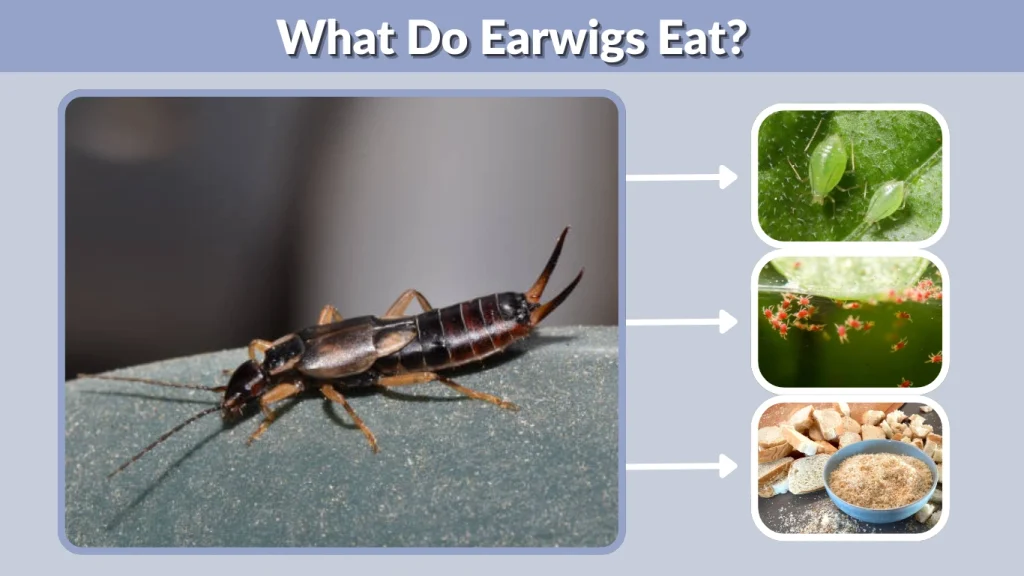
Earwigs are omnivores, meaning they eat both plant material and small insects. Their diet can vary depending on their environment and the availability of food.
Food Sources Outdoors
In outdoor environments, earwigs often feed on decaying plant matter, leaves, and fungi. This behavior can actually be beneficial because it helps break down organic material in the soil.
They may also eat small insects such as aphids, mites, and insect eggs. Because of this, earwigs sometimes help control pest populations in gardens.
However, when their numbers grow too large, earwigs may also feed on flowers, vegetables, and soft plant tissues, which can cause damage to garden plants.
Food Sources Indoors
When earwigs enter homes, they usually search for moisture and small food sources. Indoors, they may feed on crumbs, organic debris, pet food, or decaying material.
Earwigs do not usually cause serious damage inside homes, but their presence can be unpleasant, especially when large numbers appear in kitchens, bathrooms, or basements.
Earwig Life Cycle
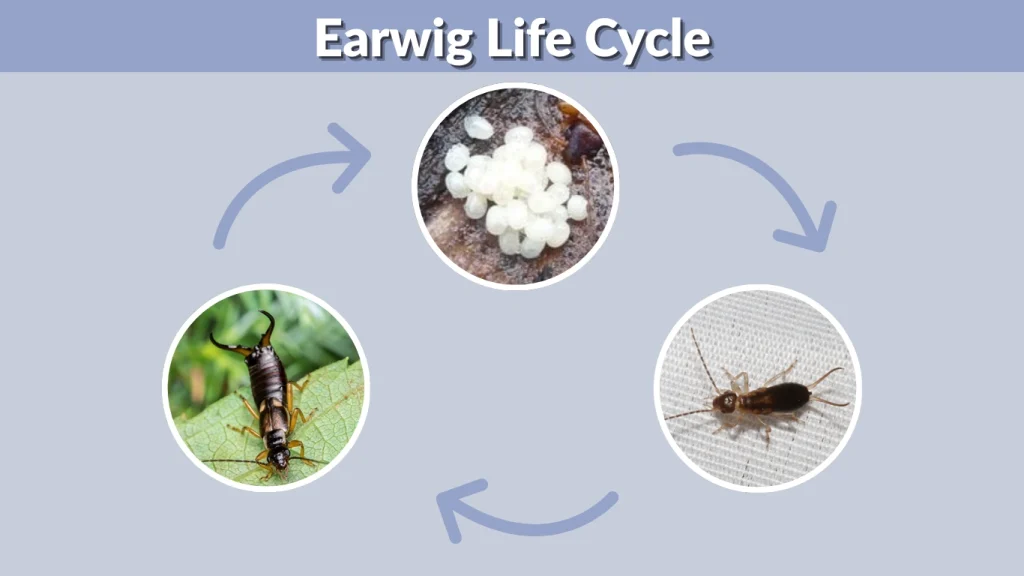
Like many insects, earwigs go through several stages of development as they grow. Their life cycle includes three main stages: egg, nymph, and adult.
Egg Stage
The life cycle begins when a female earwig lays eggs in a small nest in the soil. This usually occurs during late winter or early spring. Female earwigs are unusual among insects because they care for their eggs, protecting them and keeping them clean until they hatch.
A female earwig may lay 30 to 60 eggs at a time, depending on the species and environmental conditions.
Nymph Stage
After the eggs hatch, the young earwigs emerge as nymphs. Nymphs look similar to adult earwigs but are smaller and lighter in color. At this stage, they do not yet have fully developed wings or reproductive organs.
The nymphs remain in the nest for a short time under the protection of their mother. This type of maternal care is unusual among insects, making earwigs particularly interesting to scientists.
As the nymphs grow, they go through several molting stages, shedding their outer skin each time they increase in size. During these stages, they gradually develop the physical features of adult earwigs, including their pincers and wings.
Adult Stage
After several molts, the nymphs become fully developed adult earwigs. Adult earwigs are typically about 12 to 25 millimeters long and have fully formed pincers and wings.
Adult earwigs are mostly nocturnal, meaning they are active at night. During the day, they hide in dark and moist places such as under rocks, logs, mulch, or plant debris. At night, they come out to search for food.
Earwigs usually live for about one year, during which they feed, reproduce, and continue the life cycle. Their populations tend to increase during warm and humid conditions.
Where Do Earwigs Live?
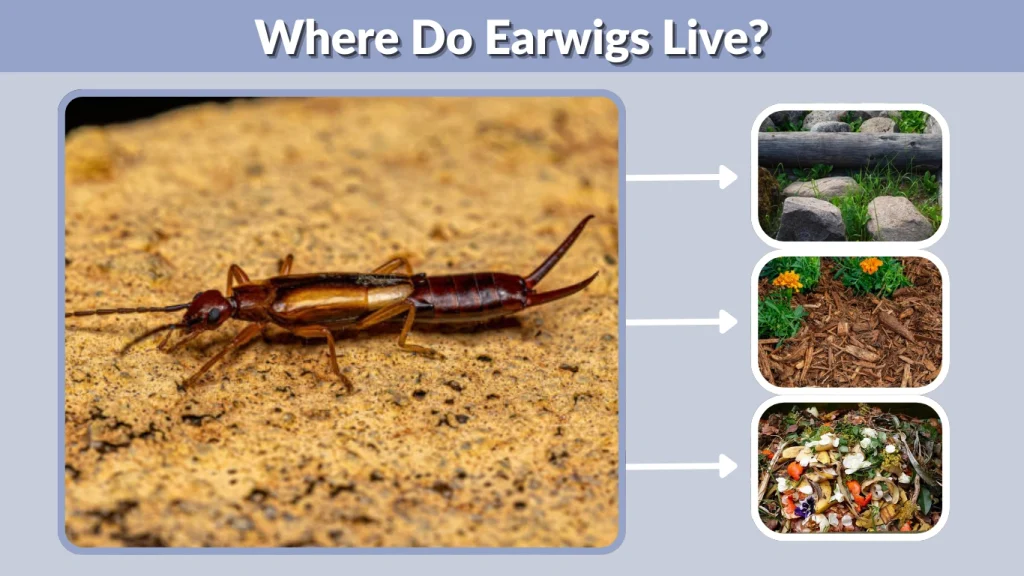
Earwigs prefer environments that provide moisture, shelter, and access to food. Because of these needs, they are commonly found outdoors but may occasionally enter homes.
Outdoor Habitats
In nature, earwigs often live in places that are cool, damp, and protected from sunlight. Common outdoor habitats include:
- Under rocks or logs
- Beneath leaf litter or mulch
- In compost piles
- In cracks in the soil
- Around garden plants
Gardens provide ideal conditions for earwigs because they offer both shelter and food sources. Areas with thick mulch or decaying plant material are especially attractive to them.
Why Earwigs Come Indoors
Earwigs sometimes enter homes while searching for moisture, food, or shelter. This usually happens during very hot, dry weather or after heavy rain when their outdoor hiding places become unsuitable.
They often enter through small cracks, gaps around doors and windows, or openings in foundations. Once inside, they are commonly found in damp areas such as basements, bathrooms, kitchens, and laundry rooms.
Although earwigs may occasionally appear indoors, they usually do not reproduce inside homes and often die quickly without access to suitable outdoor conditions.
Signs of an Earwig Infestation
A few earwigs around the home or garden are usually not a serious problem. However, large numbers may indicate an infestation.
Garden Damage
Earwigs sometimes feed on leaves, flowers, fruits, and vegetables. Signs of earwig damage may include irregular holes in leaves or chewed plant edges.
Plants such as lettuce, strawberries, and flowers may be particularly vulnerable to earwig feeding.
Indoor Sightings
Inside homes, earwigs are often seen in damp areas like bathrooms, kitchens, or basements. They may hide under sinks, behind appliances, or in dark corners during the day.
Because earwigs are active at night, homeowners may notice them crawling across floors or walls after sunset.
How to Get Rid of Earwigs
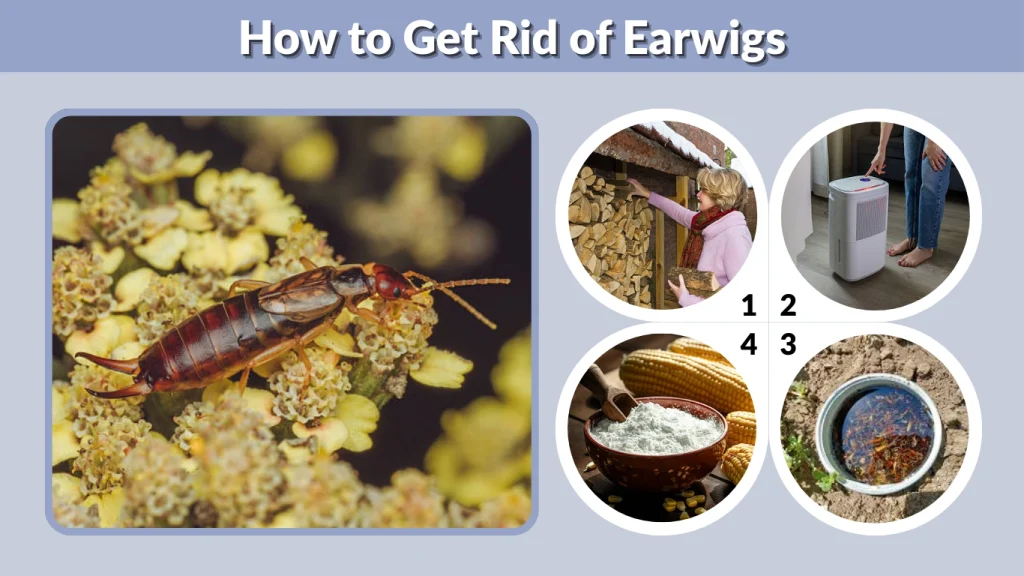
If earwigs become a problem, there are several ways to reduce their numbers and prevent them from entering homes.
Remove Hiding Places
One of the most effective ways to control earwigs is to eliminate their hiding spots. This can include:
- Removing piles of leaves and garden debris
- Reducing excessive mulch near the home
- Storing firewood away from the house
Keeping outdoor areas clean and well-maintained makes the environment less attractive to earwigs.
Reduce Moisture
Since earwigs prefer damp conditions, reducing moisture can help prevent infestations. Fix leaking pipes, improve drainage around the house, and use dehumidifiers in basements or damp areas.
Seal Entry Points
Earwigs often enter homes through small openings. Sealing cracks in walls, foundations, and around doors or windows can prevent them from getting inside.
Use Traps
Simple traps can also help control earwig populations. For example, a shallow container filled with vegetable oil and soy sauce can attract earwigs and trap them overnight.
Interesting Facts About Earwigs
Earwigs are often misunderstood insects, but they have several fascinating characteristics.
- There are over 2,000 species of earwigs around the world.
- Earwigs provide maternal care, protecting and cleaning their eggs until they hatch.
- Although they have wings, most earwigs rarely fly.
- Their pincers help with defense, capturing prey, and even folding their wings.
Conclusion
Earwigs are unusual insects known for their pincers and nocturnal behavior. While their appearance may seem intimidating, they are generally harmless to humans and play a role in natural ecosystems by feeding on decaying plant material and small insects. Understanding their habits, diet, and life cycle can help people manage earwig populations effectively. By reducing moisture, removing hiding places, and sealing entry points, homeowners can prevent earwigs from becoming a nuisance indoors.
