
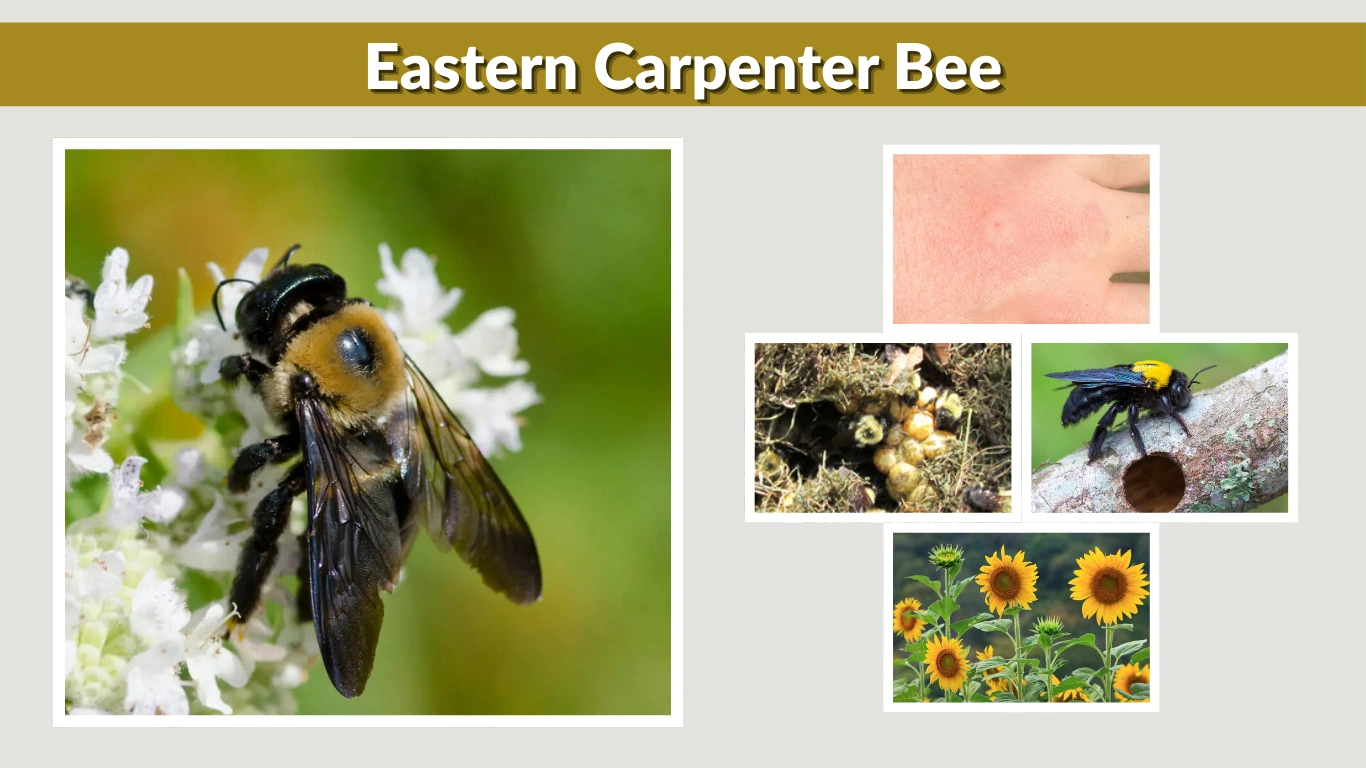
The Eastern Carpenter Bee (Xylocopa virginica) is a large, solitary bee species commonly found across eastern North America. Often mistaken for bumble bees, these insects are known for their shiny black abdomens, wood-boring nests, and vital role in pollination. While they may seem intimidating due to their size and hovering behavior, Eastern Carpenter Bees are generally non-aggressive and rarely sting.
Understanding their appearance, life cycle, and habits can help you appreciate their ecological importance while protecting your property from potential wood damage.
Identification and Scientific Classification

The Eastern Carpenter Bee is a large, solitary bee species with a distinct appearance that sets it apart from bumble bees. Recognizing its features can help with accurate identification and better understanding of its behavior.
Scientific Name
- Xylocopa virginica
Key Identification Features
- Body Size: Large and robust, measuring 0.75 to 1 inch (19–25 mm) in length
- Abdomen: Smooth, shiny black with little to no hair
- Thorax: Covered in dense yellow hairs, contrasting with the abdomen
- Head: Broad and strong, equipped with mandibles for drilling into wood
- Wings: Dark with a slight purplish sheen
- Flight Pattern: Slow and hovering, often observed near nesting sites in wood
Eastern Carpenter Bee Size
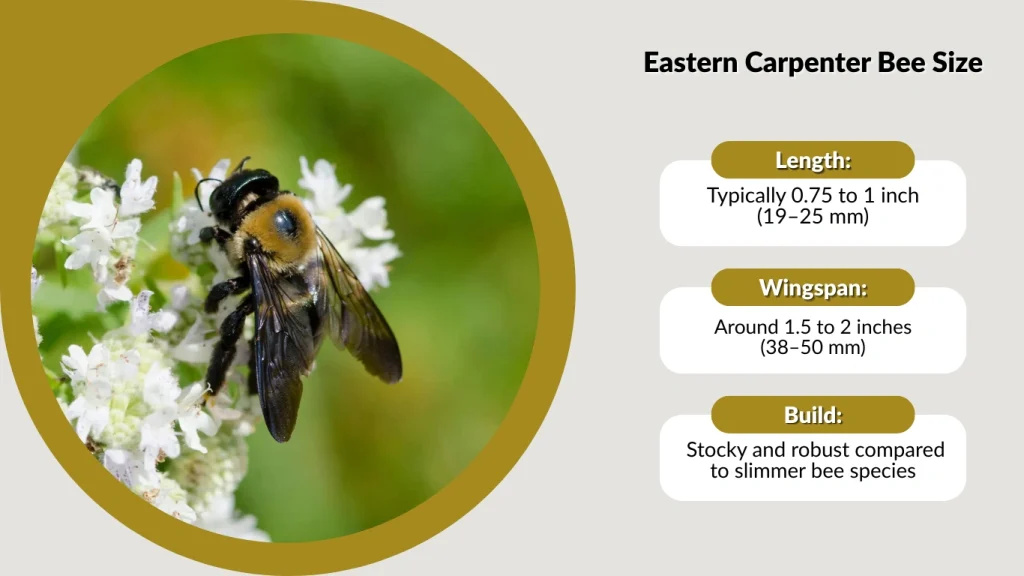
Eastern Carpenter Bees are among the largest bee species in North America, making them easy to spot in gardens and near wooden structures. Their size plays a role in their pollination efficiency and ability to bore into wood for nesting.
Average Size Range
- Length: Typically 0.75 to 1 inch (19–25 mm)
- Wingspan: Around 1.5 to 2 inches (38–50 mm)
- Build: Stocky and robust compared to slimmer bee species
Size Comparison to Bumble Bees
While both species are large, bumble bees appear bulkier due to their dense hair, whereas Eastern Carpenter Bees have a sleeker look because of their shiny, hairless abdomens.
Male vs Female Eastern Carpenter Bees
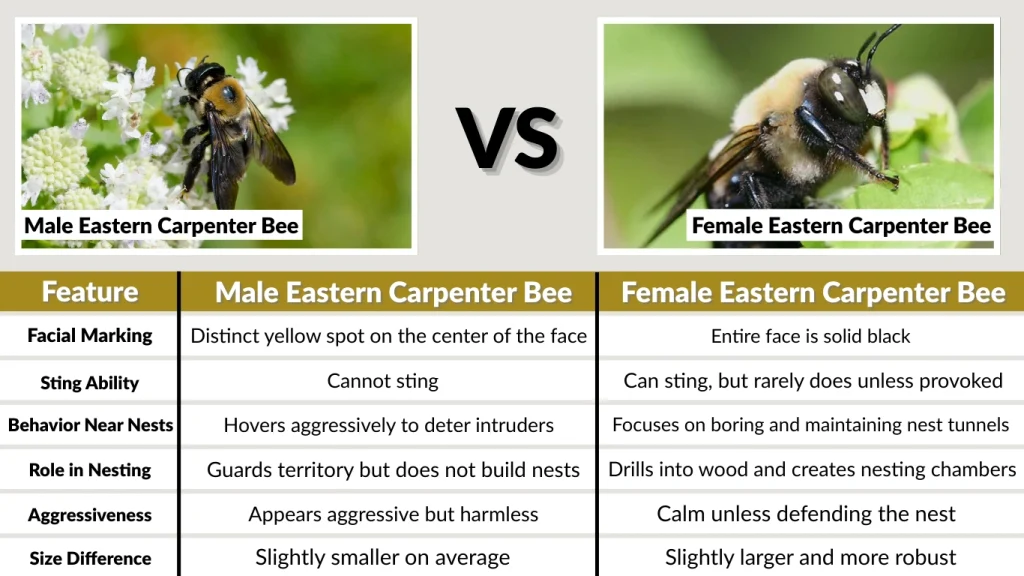
Male and female Eastern Carpenter Bees are similar in size and shape, but they have distinct physical and behavioral differences. Identifying their sex is important for understanding their role in the nesting process and their sting potential.
Here’s a 7-point comparison table for Male vs Female Eastern Carpenter Bees:
| Feature | Male Eastern Carpenter Bee | Female Eastern Carpenter Bee |
| Facial Marking | Distinct yellow spot on the center of the face | Entire face is solid black |
| Sting Ability | Cannot sting | Can sting, but rarely does unless provoked |
| Behavior Near Nests | Hovers aggressively to deter intruders | Focuses on boring and maintaining nest tunnels |
| Role in Nesting | Guards territory but does not build nests | Drills into wood and creates nesting chambers |
| Aggressiveness | Appears aggressive but harmless | Calm unless defending the nest |
| Size Difference | Slightly smaller on average | Slightly larger and more robust |
| Primary Activity | Patrolling and mating | Nest construction, egg laying, and provisioning larvae |
Eastern Carpenter Bee Sting

Although their size and buzzing flight can be intimidating, Eastern Carpenter Bees are not highly aggressive and rarely sting. Knowing the sting risk helps people decide how to manage encounters with them.
Do Eastern Carpenter Bees Sting?
- Males: Cannot sting at all, as they lack stingers
- Females: Can sting, but only when directly handled or threatened
- Stings are uncommon compared to other stinging insects like wasps
Sting Symptoms and Treatment
- Symptoms: Localized pain, redness, swelling, and mild itching
- Home Care: Wash the area with soap and water, apply a cold compress, and use antihistamine cream if needed
- Medical Attention: Seek immediate help if experiencing signs of an allergic reaction such as difficulty breathing, dizziness, or swelling of the throat
Eastern Carpenter Bee Behavior

Eastern Carpenter Bees display unique behaviors that distinguish them from social bees like honey bees or bumble bees. Their solitary nature affects their nesting, feeding, and interactions with humans.
Nesting and Territorial Habits
- Females spend most of their time boring into wood and provisioning nests
- Males hover in front of nests to guard the entrance from rivals and perceived threats
Daily Activity
- Active during the warmer daylight hours, especially in spring and early summer
- Visit flowers for nectar and pollen while also patrolling nesting areas
Interaction with Humans
- Males may appear aggressive when hovering close but pose no sting threat
- Females are usually non-confrontational unless their nest is disturbed
Eastern Carpenter Bee Nest
Eastern Carpenter Bees are famous for their ability to drill perfectly round holes into wood, creating tunnels to raise their young. These nests can cause cosmetic or structural damage if left untreated over time.
Nest Construction
- Females bore circular entrance holes about ½ inch (1.25 cm) in diameter
- Tunnels can extend 6–10 inches (15–25 cm) into the wood
- Each tunnel contains multiple chambers, each with an egg and pollen-nectar provision
Preferred Nesting Sites
- Untreated or unpainted softwoods such as pine, cedar, and redwood
- Commonly found in decks, eaves, railings, fence posts, and wooden siding
- Occasionally use the same nesting tunnels year after year, expanding them further
Eastern Carpenter Bee Habitat
Eastern Carpenter Bees thrive in areas where wood and flowering plants are abundant. They are common around both human structures and natural landscapes.
Geographic Distribution
- Found primarily in eastern North America, from the Gulf Coast to southern Canada
- Most abundant in temperate regions during spring and summer
Typical Environments
- Forest edges, meadows, and gardens with abundant flowers
- Suburban and rural areas with untreated wooden structures
- Occasionally seen in orchards and near farmland where pollination is needed
Eastern Carpenter Bee Life Cycle

The life cycle of the Eastern Carpenter Bee follows a seasonal pattern, with distinct stages from egg to adult. Understanding these stages can help with both appreciation and management of the species.
Mating and Egg Laying
- Mating occurs in spring when temperatures rise and flowers bloom
- Females select a wooden site and begin drilling nest tunnels shortly after mating
- Each tunnel contains several brood cells, each provisioned with a pollen-nectar mixture and a single egg
Larval Development
- Eggs hatch into larvae within a few days
- Larvae feed on the pollen-nectar mixture until fully grown
- Development time varies with temperature but usually lasts several weeks
Pupation and Emergence
- Larvae spin silk cocoons and pupate inside the tunnels
- New adults emerge in late summer or early fall
- Some may remain in the nest over winter, emerging the following spring
Eastern Carpenter Bee Diet

Eastern Carpenter Bees feed exclusively on floral resources, playing an important role in the pollination of many wild and garden plants. Their foraging behavior benefits both native ecosystems and cultivated crops.
Nectar and Pollen Sources
- Visit a wide range of flowers, especially those with open shapes such as sunflowers, morning glories, and passionflowers
- Collect nectar as an energy source and pollen as a protein-rich food for larvae
- Often seen foraging on ornamental plants in gardens and flowering trees in spring
Role in Pollination
- Transfer pollen between flowers while foraging, aiding plant reproduction
- Occasionally engage in “nectar robbing” by cutting into the side of flowers to access nectar without contacting the pollen
- Pollination activity peaks during warm, sunny days in late spring and early summer
Are Eastern Carpenter Bees Dangerous?
Despite their large size and loud buzzing, Eastern Carpenter Bees are generally not dangerous to humans. Most encounters are harmless, especially when their nests are left undisturbed.
Human Safety
- Males: Cannot sting, making them harmless
- Females: Can sting but are reluctant to do so unless provoked
- Risk of stings is far lower than with wasps or hornets
Property Concerns
- Main issue is wood damage from nesting activity
- Repeated use and expansion of tunnels can weaken structures over time
- Preventive measures like painting or sealing exposed wood help minimize problems
FAQs
How do you deter Eastern Carpenter Bees from nesting in wood?
Paint or seal exposed wooden surfaces, as treated wood is far less attractive to them. Filling old nest holes with wood putty and adding a fresh coat of paint can prevent reuse.
What time of year are Eastern Carpenter Bees most active?
They are most active in spring and early summer, which is their primary mating and nesting season. Activity slows in late summer, and many overwinter in nests.
How deep do Eastern Carpenter Bee tunnels go?
Tunnels typically extend 6–10 inches (15–25 cm) into wood, but older reused tunnels can be even longer and more branched.
Can Eastern Carpenter Bees reuse old nests?
Yes. Females often reuse and expand existing tunnels from previous years, which can increase structural damage over time.
